
 Português
  English
  Français
  Русский
  Español
  Deutsch
  العربية
  Italiano
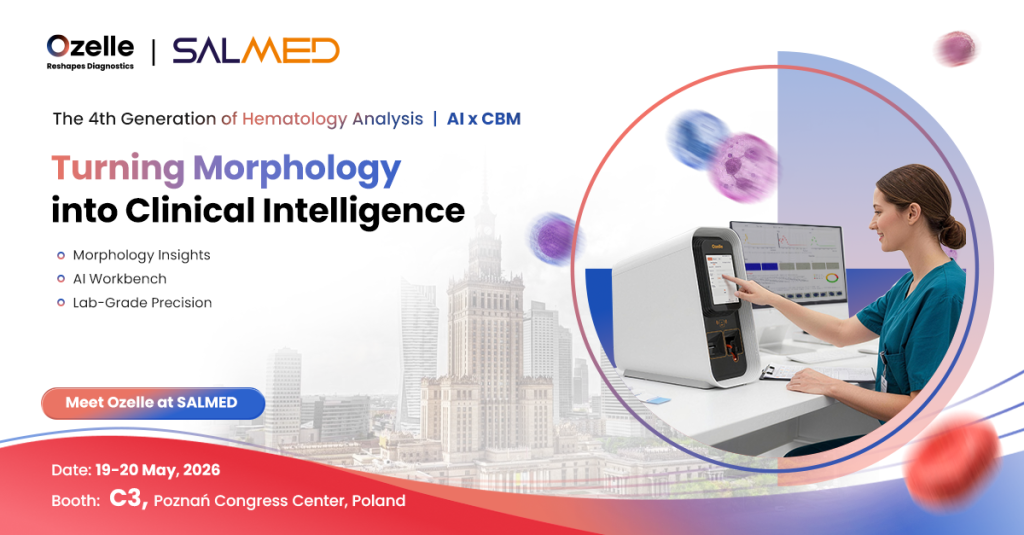
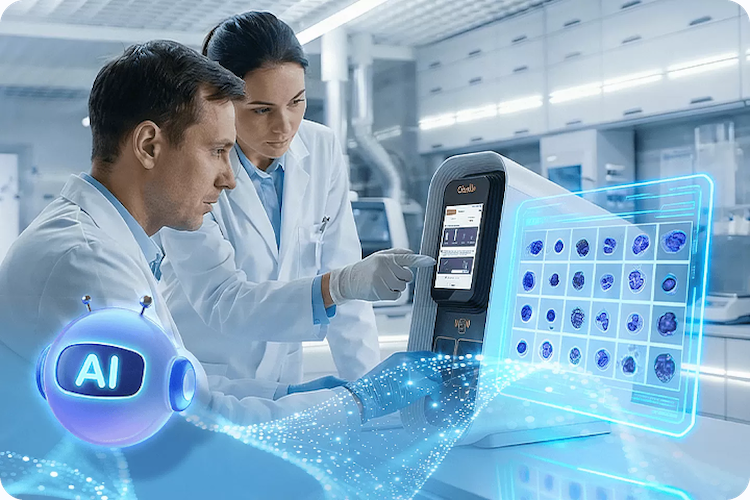
At The SALMED Fair in Central Europe, the cbc test machine is no longer just a simple blood counter; it is turning into a compact AI “mini lab” that reshapes how hospitals, clinics, and veterinary practices work. Ozelle’s latest analyzers, presented in the context of events like SALMED Connect, show what this new generation looks like and hint at where regional diagnostics is heading.
Why CBC test machines are being reinvented
Complete blood count (CBC) remains one of the most frequently ordered tests in human and veterinary medicine, used to screen infections, anemia, inflammation, and many systemic diseases. When healthcare providers in Poland and neighboring countries decide to replace a cbc test machine, they typically want to solve very practical problems:
- Laboratory teams face rising sample volumes with limited staff, so inncreasing reliance on manual smear review and expert morphology interpretation is becoming difficult to sustain at scale.
- Many clinics and hospitals still use older 3‑part or 5‑part analyzers that need frequent maintenance and offer limited automation and connectivity.
- GP clinics, outpatient centers, pharmacies, and ambulances need fast CBC results and basic inflammatory markers but cannot support complex instruments or daily maintenance routines.
- Veterinary practices want to bring CBC, immunoassay, urine sediment, and fecal parasite testing in‑house, yet buying and running separate devices for each category is costly and inefficient.
The new generation of cbc test machine platforms developed by Ozelle is built around these pain points: more automation, more test types in one device, and less maintenance.
Ozelle’s latest CBC test machines and multi‑functional analyzers
Ozelle focuses on AI, imaging, and IoT to modernize both human and veterinary diagnostics, and its current product family shows how the cbc test machine is evolving into an AI‑powered, multi‑modal platform.
EHBT‑50: AI cbc test machine and mini lab for human diagnostics
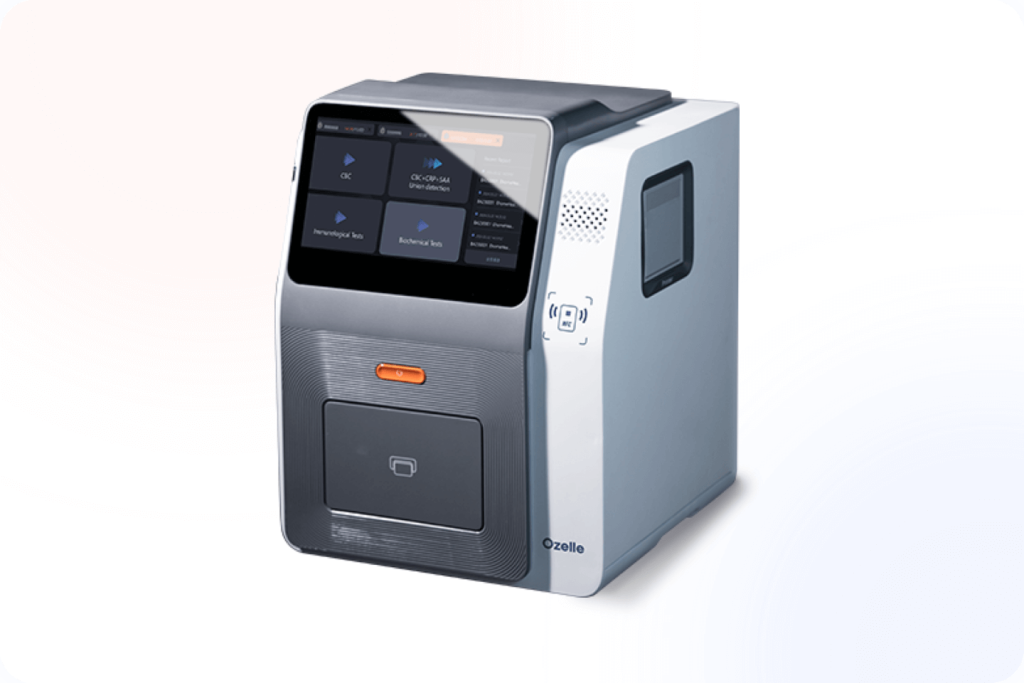
O EHBT‑50 is a 7‑part cbc test machine that combines complete blood count, AI morphology, and multiple additional tests in one compact analyzer. Its key characteristics are:
- IA complete blood morphology (CBM) EHBT‑50 uses high‑resolution imaging and a deep‑learning model trained on over 50 million cell images to analyze white blood cell subsets (including NST, NSG, NSH), red‑cell morphology such as schistocytes and teardrop cells, and platelet aggregates alongside numeric CBC parameters.
- Multi‑functional test menu Within a single cbc test machine, EHBT‑50 can provide 7‑part CBC and run immunoassay and dry chemistry tests, including inflammatory markers (CRP, SAA), cardiac markers, kidney function indicators, HbA1c, and other routine parameters.
- Cartridge‑based, maintenance‑free design The system uses single‑use cartridges with liquid‑phase staining and high-resolution cell morphology imaging, so operators do not handle open reagents or perform daily maintenance. A typical run—from sample loading to results—takes about six minutes and requires no manual pretreatment.
- Suitable for many care settings This compact cbc test machine is designed for hospitals, clinics, pharmacies, ambulances, and emergency centers that want lab‑grade CBC and related tests in a small footprint, without building a full laboratory.
EHBT‑75: AI CBC test machine for morphology‑rich reports
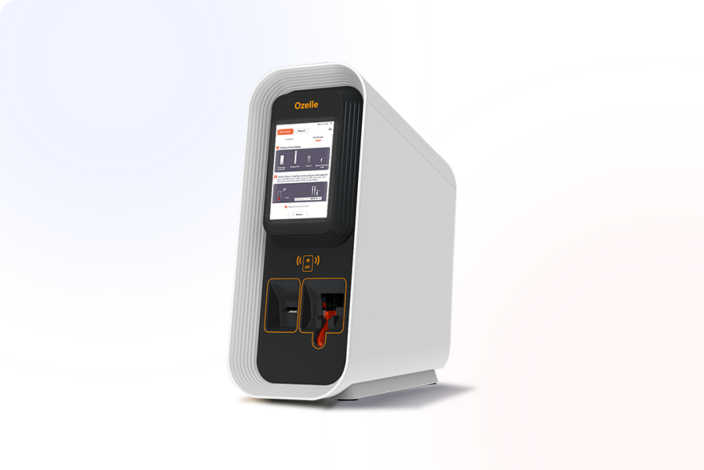
O EHBT‑75 is also a 7‑part cbc test machine, focused on delivering deeper morphology and interpretation while keeping daily operation simple. It uses the same CBM concept as EHBT‑50 but is tuned for sites that want more morphology detail in routine reports. Its main features include:
- IA‑powered complete blood morphology EHBT‑75 uses SwissOptic customized lenses, patented Z‑stack 3D imaging, and a convolutional neural network to capture high‑resolution images and automatically classify white blood cells, red blood cells, and platelets across more than 37 parameters.
- Rich clinical flags and comments The analyzer flags left shifts (NST), hypersegmented neutrophils (NSH), nucleated red cells, reticulocytes, and other abnormalities, and adds structured adds standardized morphology-related flags and workflow guidance comments that help clinicians quickly recognize infection patterns, inflammatory states, or potential hematologic disease.
- One‑click, maintenance‑free workflow Like EHBT‑50, this cbc test machine is designed for streamlined use: load the sample, start the test, and receive a combined numeric and morphology‑aware report without manual smear preparation or daily maintenance.
EHVT‑50: multi‑functional CBC test machine for veterinary diagnostics
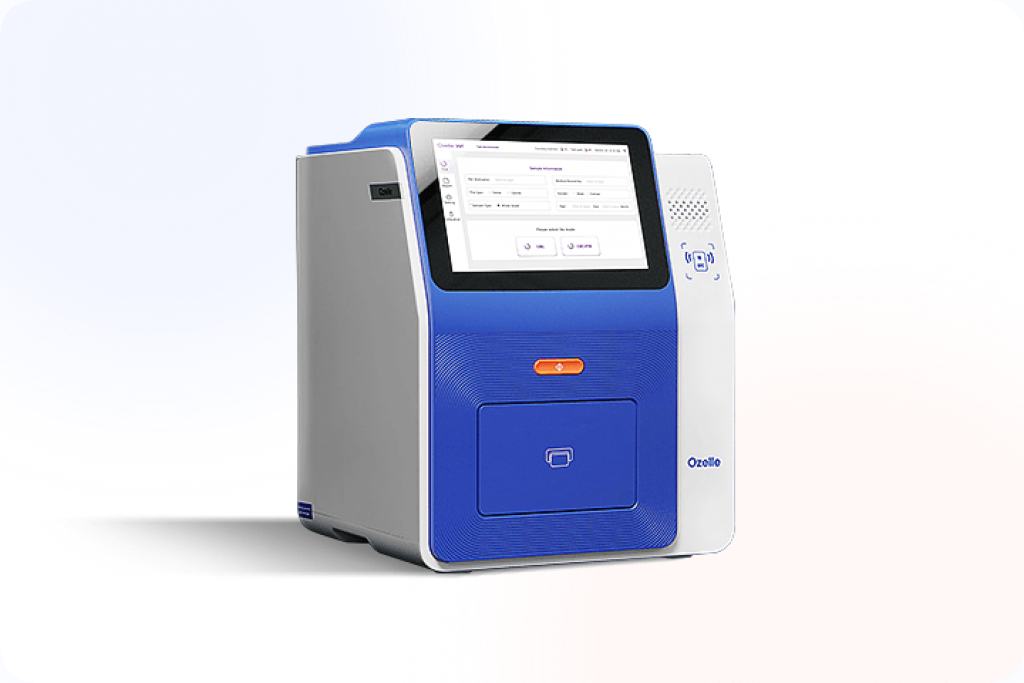
In veterinary medicine, the EHVT‑50 applies the same AI and imaging principles to animal health, acting as an all‑in‑one diagnostic hub for pet hospitals and clinics. Its core capabilities are:
- Veterinary CBC with IA morphology This veterinary cbc test machine provides 7‑part CBC with species‑appropriate reference ranges and AI-assisted classification of neutrophil forms, red‑cell morphology, and platelet parameters for dogs, cats, and other animals.
- Extensive immunoassay panel EHVT‑50 runs a wide immunofluorescence panel, from inflammatory markers (cCRP, fSAA) and kidney markers (SDMA, cystatin C) to hormones and a comprehensive infectious disease menu that includes FeLV, FIV, FCoV, FPV, CPV, CDV, Giardia, and tick‑borne agents.
- Automated urine and fecal analysis The platform performs urine sediment imaging (casts, crystals, bacteria, epithelial cells) and fecal parasite analysis (eggs, protozoa, bacteria, food residues) with AI‑assisted recognition and standardized reports, extending the role of the cbc test machine into a full veterinary mini lab.
- Clinic‑friendly, maintenance‑free workflow EHVT‑50 uses individual test kits and a maintenance‑free design, with LIS connectivity, so veterinary clinics can run it as the center of their in‑house diagnostics.
Clear technology trends for Poland and Central Europe
Ozelle's cbc test machine portfolio makes several technology trends visible for Poland and neighboring markets. Three directions are especially clear.
Trend 1: From basic counting to AI morphology and interpretation
Future-ready CBC analyzers will move beyond cell counting toward AI-assisted morphology assessment and workflow support.. EHBT‑50 and EHBT‑75 show this shift concretely:
- The analyzers automatically recognize band neutrophils, segmented neutrophils, hypersegmented neutrophils, nucleated red cells, reticulocytes, and abnormal shapes that previously required manual smears and expert review.
- The systems add clear, standardized comments to each report, pointing toward patterns consistent with bacterial infection, viral infection, or chronic inflammatory disease, and helping clinicians prioritize follow‑up steps.
For users in Poland and Central Europe, this means a modern cbc test machine will increasingly be judged by how well it delivers morphology‑aware, AI‑assisted insight—not just numeric counts.
Trend 2: Mini‑lab CBC platforms integrate multiple test types
The second clear direction is that the cbc test machine is becoming the core of a compact mini lab. EHBT‑50 and EHVT‑50 each combine several diagnostic categories in a single device.
- Instead of buying a separate analyzer for CBC, CRP/SAA, basic chemistry, urine sediment, and fecal parasite tests, clinics and veterinary hospitals can cover these needs in one platform with harmonized workflows.
- This integrated approach is especially attractive for regional clinics, smaller hospitals, pharmacies, and animal hospitals that want a broader test menu but have limited space, staff, and maintenance capacity.
In practice, this means that the cbc test machine is evolving into the central diagnostic hub in many facilities, particularly outside major university hospitals.
Trend 3: Connected IoT platforms turn analyzers into managed fleets
Finally, Ozelle’s IoT and management tools show that diagnostics is moving from isolated devices to connected fleets.
- Device and consumable management platforms allow distributors and healthcare networks to track instrument status, reagent lots, and usage across many sites through centralized dashboards.
- Sample analysis management platforms standardize test configuration, AI algorithms, and report review, supporting consistent quality and easier regulatory compliance across all cbc test machines in a network.
For Poland and neighboring countries, this means that when decision‑makers choose a cbc test machine, they will increasingly look at what kind of digital platform and remote management tools are included, not just at analyzer specifications.
Regional outlook: how CBC test machine will reshape local diagnostics
From this product and technology base, several likely developments emerge for human and veterinary diagnostics in Poland and Central Europe.
Human diagnostics
- Many existing 3‑part and 5‑part analyzers are reaching the age when replacement makes sense, and hospitals and clinics are likely to move directly to AI‑enabled cbc test machines with integrated morphology to ease staffing pressure and improve diagnostic depth.
- CBC mini labs such as EHBT‑50 are well suited to primary care clinics, ambulatory centers, and even pharmacies that want to offer same‑visit workups for infections, anemia, and chronic conditions without relying entirely on central laboratories.
- Health networks and distributors will increasingly manage fleets of cbc test machines through IoT platforms, supporting better uptime, more predictable operating costs, and standardized quality across multiple sites.
Veterinary diagnostics
- As pet care continues to grow in importance and sophistication, veterinary clinics in Poland and nearby countries will gradually move from basic CBC analyzers to integrated in‑clinic diagnostic hubs.
- Analyzers like EHVT‑50, which combine CBC, immunoassay, urine, and fecal analysis in one maintenance‑free platform, match this direction and are likely to become a common reference point for what a modern veterinary lab should look like.
In both human and veterinary markets, Ozelle’s cbc test machine lineup and multi‑functional analyzers provide a clear picture of where the region is heading: AI‑assisted, mini‑lab‑oriented, and tightly connected through IoT. Events like SALMED Connect make these shifts visible, turning the exhibition floor into a snapshot of how Central European diagnostics will look in the near future.