
 Русский
  English
  Français
  Español
  Deutsch
  Português
  العربية
  Italiano
If you are a medical device distributor or procurement manager evaluating where to source automated hematology analyzers, you already know that auto hematology analyzer price is only one piece of a much larger puzzle. The channel you choose — factory-direct or wholesale — will influence not just your unit cost, but also your margin structure, regulatory workload, after‑sales model, and how quickly you can grow in each target market.
This guide breaks down what B2B buyers need to consider before signing a supply agreement: how procurement channels differ, which certifications and documents to require, how OEM/ODM works in practice, and why next‑generation AI‑powered analyzers like the Ozelle EHBT‑75 are reshaping the value proposition for both distributors and wholesalers worldwide.
Why the sourcing channel matters
Most distributors start with a simple question: “What is the price per unit?”. Experienced procurement managers ask a different question: “What is the total cost of putting a compliant, market‑ready, and serviceable hematology analyzer in front of customers — at scale?”.
Factory-direct sourcing and wholesale sourcing answer this question in different ways. Neither model is inherently superior; each is optimized for different business models, order volumes, and levels of in‑house capability.
- Factory-direct sourcing tends to suit:
- Distributors with stable or growing annual volumes.
- Companies that want OEM/ODM branding, software customization, or integration with their own digital platforms.
- Teams that are comfortable working directly with manufacturers on CE/FDA documentation and local IVD registrations.
- Wholesale / distributor sourcing tends to suit:
- New market entry, pilot projects, or fragmented, smaller orders.
- Distributors who value lower MOQs, shorter lead times, or the ability to combine multiple brands under one partner.
- Teams that prefer the wholesaler to package logistics, inventory and first‑line technical support.
In practice, many successful B2B players use a mix of both: factory-direct for core strategic product lines once volume is proven, and wholesale channels for testing new segments or filling short‑term gaps.
Factory-direct vs. wholesale: structural differences
The table below summarises typical structural differences between factory-direct and wholesale sourcing for auto hematology analyzers. These are general patterns; individual suppliers may vary.
| Фактор | Factory-Direct Sourcing | Wholesale / Distributor Sourcing |
| Unit price | Closer to ex‑works pricing with volume-based discounts; margin captured by distributor. | Includes distributor/wholesaler margin; may bundle logistics and local services. |
| Minimum order quantity (MOQ) | Usually higher (e.g. 10–50+ units), aligned with production planning. | Often lower (e.g. 1–5 units), easier for pilots and mixed portfolios. |
| OEM/ODM availability | Common: branding, firmware, software, packaging, and platform integration. | Limited; some wholesalers offer private label but usually with less depth. |
| CE/ISO documentation | Provided directly by the manufacturer, device‑specific. | Provided via wholesaler; may require extra verification and updates. |
| Lead time | Aligned to production cycles; more planning needed. | Typically shorter if stock is held locally or regionally. |
| After‑sales support | Direct coordination with manufacturer’s technical and R&D teams. | First line via wholesaler; escalation back to manufacturer when required. |
| Настройка | Full OEM/ODM scope possible for qualified partners. | Usually standard configuration, limited customization. |
| Training & onboarding | Manufacturer‑led training programs, documentation, and e‑learning. | Quality depends on wholesaler’s training resources and setup. |
| IoT / platform integration | Direct access to manufacturer’s IoT or data platforms, APIs, and updates. | Depends on wholesaler’s agreement with the manufacturer. |
For distributors and wholesalers, the key is not to treat one channel as “better”, but to understand which model fits your order volume, regulatory responsibility, service commitments, and cash‑flow strategy.
What really drives auto hematology analyzer price
Understanding what sits behind the numbers on a quotation helps you compare offers fairly — regardless of whether they come from a factory or a wholesaler.
Technology tier: 3‑part vs. 5‑part vs. 7‑part differential
The complexity of the CBC engine is one of the biggest price drivers. A 3‑part differential analyzer is typically more affordable and well‑suited to basic CBC testing, while advanced 5‑part and 7‑part systems offer extended differential and morphology capabilities at a higher price point.
As an example, Ozelle’s 3‑part EHBT‑25 provides automated CBC with AI‑assisted morphology, while the 7‑part EHBT‑75 delivers AI‑based Complete Blood Morphology (CBM) across 41+ parameters, including NST, NSG, NSH, ALY, PAg, and RET. These differences in analytical depth and reference parameters directly influence factory‑direct and wholesale pricing alike.
AI and imaging capability
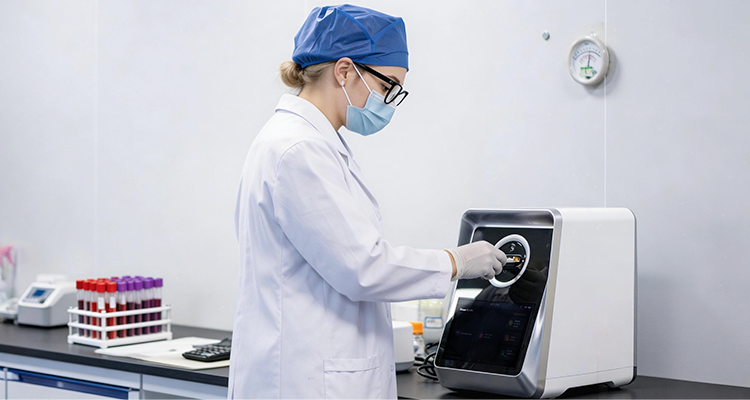
New‑generation analyzers that incorporate deep‑learning‑based cell morphology and imaging can command a premium, because they bring lab‑grade accuracy closer to the point of care and allow distributors to position a more differentiated, higher‑value solution.
Systems like the EHBT‑75 use AI models trained on large volumes of real clinical data to automatically classify abnormal cells and generate rich morphological reports, which is attractive for both hospitals and decentralized testing sites.
Reagent and consumable architecture
Consumables architecture has a major impact on total cost of ownership. Traditional liquid‑reagent analyzers may require cold‑chain logistics, calibration routines, and on‑site maintenance, which adds cost for both factory‑direct importers and wholesalers.
Maintenance‑free, single‑use cartridge designs with room‑temperature storage remove the need for cold chain and significantly reduce field service requirements. Ozelle’s analyzers, such as the EHBT‑75, use single‑use cartridges that store at room temperature, making logistics simpler for multi‑country distributors.
Multi‑functionality
Multi‑functional analyzers that combine hematology with immunoassay and biochemistry testing in a single footprint naturally carry a higher purchase price, but may reduce the number of separate devices each clinic needs to buy and maintain.
For example, Ozelle’s EHBT‑50 integrates CBC, AI cell morphology, selected biochemistry, and immunoassays into one platform, creating a “mini lab” that is easier for distributors to position as a complete solution rather than a single analyzer.
Certification level and market access
Finally, certification status is a critical price driver at the B2B level. Devices with CE Mark, ISO 13485, FDA registration, and other relevant approvals simplify market entry and reduce the time and cost your own team must invest in regulatory work.
A device that is only registered in its country of manufacture may be cheaper up front, but distributors and wholesalers then have to invest more heavily in local registrations and post‑market surveillance compliance.
Essential certifications for any supplier
Regardless of whether you are buying from a manufacturer or a wholesaler, professional B2B procurement requires robust regulatory documentation. At minimum, you should see:
- CE Mark (MDR/MDD) – Confirms compliance with EU medical device regulation and supports entry into the European Economic Area.
- ISO 13485:2016 – Medical device quality management standard, widely used as a global benchmark for suppliers in the diagnostic space.
- ISO 9001:2015 – General quality management standard indicating consistent processes across the organization.
- FDA registration / listing (where applicable) – Required for the U.S. market and often recognized as a quality signal in other regions.
- National quality certifications (e.g. CQC / NMP in China) – Confirm manufacturing origin and compliance with domestic quality requirements.
- IVD registration in target markets – Country‑specific registrations that legally permit sales and clinical use.
Ozelle, for example, holds CE Mark, ISO 13485, ISO 9001, FDA registration, supported by an extensive patent portfolio in AI diagnostics, optical systems, and smart detection algorithms. This type of certification stack can significantly reduce the regulatory burden for both factory‑direct partners and wholesalers building local networks.
Always request full certificate copies with issue and expiry dates, and confirm that CE and other approvals explicitly cover the analyzer model you intend to procure, not only the manufacturer as an entity.
OEM blood analyzer options for distributors
One of the biggest advantages of working closely with the original manufacturer — whether you engage them directly or via a master distributor — is access to OEM and ODM customization.
For distributors building a proprietary brand or aiming to differentiate in crowded markets, a qualified OEM partner can usually support:
- Branding and physical labeling – Device name, logo placement, color scheme, and packaging presentation.
- Software interface and report templates – Customized UI, languages, and report layouts reflecting your brand identity or the needs of specific healthcare customers.
- Firmware localization – Menus, alerts, and outputs localized for different regions.
- Reagent and consumable co‑branding – Private‑label consumables that create recurring revenue and stronger customer stickiness.
- IoT/platform integration – Connecting your installed base to centralized dashboards for device status, consumable tracking, and analytics.
Ozelle offers full‑cycle OEM/ODM support, including customization, documentation, and after‑sales service, so partners can launch a market‑ready, brandable solution without building their own manufacturing infrastructure. This flexibility is valuable for both factory‑direct importers and wholesalers who want to offer exclusive product lines to their downstream resellers.
Ozelle EHBT‑75: a reference device for 7‑part pricing
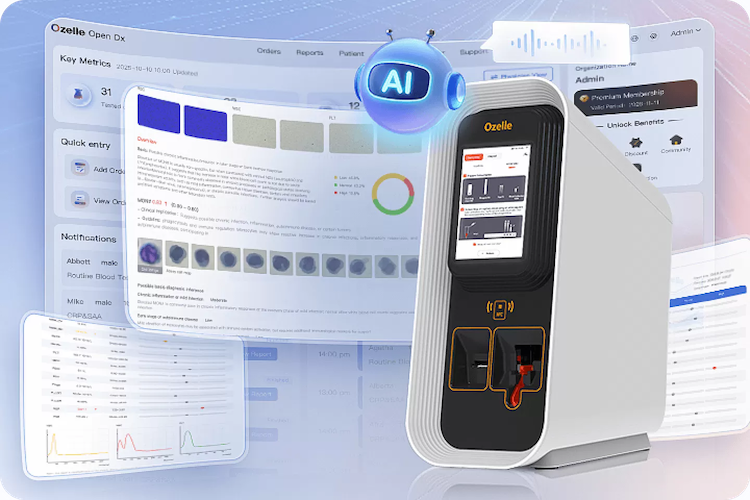
When benchmarking auto hematology analyzer price in the 7‑part differential segment, the Ozelle EHBT‑75 can serve as a useful reference point for both factory‑direct and wholesale quotations.
Key specifications relevant to B2B evaluation include:
- Technology: AI cell morphology plus photoelectric colorimetry for HGB.
- Differential: 7‑part, including NST, NSG, NSH, ALY, PAg, RET and others.
- Parameters: 41+ CBC parameters.
- Sample volume: Approximately 30–100 µL (capillary or venous whole blood).
- Throughput: Around 10 samples per hour.
- Turnaround time: AI‑powered morphological report in about 6 minutes.
- Consumables: Single‑use, room‑temperature cartridges; no liquid reagent packs or daily maintenance.
- Maintenance: Maintenance‑free design aiming to minimise field service visits.
- Connectivity: Wi‑Fi, Bluetooth, Ethernet, USB; LIS/HIS integration capable.
- Display: Touchscreen user interface.
- Certifications: CE‑marked model with defined certificate reference.
The maintenance‑free, single‑use cartridge approach helps reduce one of the biggest hidden costs for distributors and wholesalers: ongoing technical support and maintenance at the end‑user site. This can materially improve the total cost of ownership and strengthen the business case in markets where on‑site service resources are limited.
Distributor value beyond the device: IoT and platform support
A growing differentiator between commodity suppliers and long‑term strategic partners is what happens after the analyzer is installed. Ozelle’s Smart IoT Platform, for example, is designed specifically to support distributors and wholesalers managing large fleets of devices across multiple regions.
The ecosystem typically covers three core areas:
- Operations management platform – Centralised backend for managing clinics, partners, test volumes, and business intelligence.
- Equipment & consumables management platform – Real‑time tracking of device status, location, batch information, and consumable inventory.
- Sample analysis management platform – Remote report review, algorithm configuration, quality control, and audit tools.
For B2B partners handling dozens or hundreds of units, this turns a one‑off hardware sale into an ongoing service relationship, enabling new revenue streams such as remote QC, analytics, and subscription‑based support.
How to evaluate and compare supplier quotes
When you receive quotations from multiple suppliers — whether they are factories, regional masters, or general wholesalers — use a structured framework so you can compare like‑for‑like:
- Verify certifications independently
- Request full copies of CE, ISO, FDA, and any local registrations, including device‑specific annexes.
- Confirm validity periods and model coverage.
- Request clinical validation data
- Ask for correlation studies against established analyzers (e.g. Sysmex, Beckman Coulter), ideally with R² and bias data for WBC, RBC, HGB, PLT, RET and other key parameters.
- Ozelle, for example, publishes correlation data demonstrating strong agreement with major reference systems.
- Assess consumables and supply security
- Check cartridge/reagent shelf life, storage conditions (room temperature vs. cold chain), and guaranteed lead times.
- Clarify which party (factory or wholesaler) is responsible for buffer stock and expiry management.
- Negotiate post‑sale support terms
- Warranty duration, replacement policy, spare‑part availability, firmware updates, and training should all be clearly described.
- Understand whether first‑line support is provided by the wholesaler, by your own team, or jointly with the manufacturer.
- Define OEM/ODM scope in writing
- If branding or customization is important, make sure scope, timelines, and responsibilities are documented in the OEM agreement or distribution contract.
This approach helps you compare a factory quote and a wholesale quote on equal footing, taking into account more than just the unit price.
Frequently asked questions (FAQs)
Q1: What is a typical auto hematology analyzer price range for bulk B2B procurement?
Auto hematology analyzer price varies widely depending on technology tier (3‑part vs. 7‑part), AI capability, consumables design, and certification stack. Factory-direct and wholesale quotations can be quite close once you factor in volume discounts, bundled services, and OEM support. For accurate budgeting, it is best to request a tailored bulk quotation based on your configuration, certification needs, and target markets.
Q2: What is the minimum order quantity (MOQ) for factory‑direct hematology analyzer purchasing?
MOQ depends on the manufacturer and model, but factory‑direct MOQs are typically higher than wholesale, reflecting production planning and pricing structures. Wholesale partners may offer lower MOQs that are better suited for small projects, new market pilots, or distributors just starting in the hematology segment.
Q3: Is CE certification enough to sell automated hematology analyzers in all markets?
No. CE Mark supports access to the European Economic Area, but the United States requires FDA registration, and many regions (Middle East, Southeast Asia, Latin America, Africa) have additional local IVD registrations. Working with a manufacturer experienced in multi‑market registration — directly or via a regional master distributor — can significantly simplify your market entry.
Q4: What does OEM support typically include?
OEM support often covers device branding, enclosure and packaging changes, firmware and UI localization, custom report templates, co‑branded consumables, and regulatory documentation assistance. Ozelle’s OEM services, for example, are designed to give distributors a ready‑to‑launch branded solution backed by factory technical support.
Q5: Why is a maintenance‑free design important for B2B distributors and wholesalers?
Maintenance‑free analyzers reduce field service burdens, complaints, and downtime. Systems that rely on multiple liquid reagents, regular cleaning cycles, or complex calibration routines can generate higher service costs over the lifetime of the installed base. Single‑use cartridge‑based systems such as the EHBT‑75 largely eliminate these issues by simplifying consumables handling and routine maintenance.
Q6: How can I verify clinical accuracy before committing to a bulk order?
Request internal validation and, where possible, peer‑reviewed data that compare the analyzer against gold‑standard systems. Look for R² values, bias, and precision across key CBC parameters. Many manufacturers, including Ozelle, can provide detailed comparison reports to support your due diligence.
Q7: Can these analyzers integrate with existing LIS/HIS systems?
Most modern hematology analyzers now support LIS/HIS connectivity via LAN, serial interfaces, USB, or wireless protocols. Ozelle’s EHBT‑50 and EHBT‑75, for example, are designed to connect to common LIS/HIS environments to streamline data flow for clinics and hospitals.
Choosing the right sourcing strategy
Choosing between factory-direct and wholesale sourcing for auto hematology analyzers is a strategic decision, not a simple “which is better” comparison. Both models can be highly profitable for distributors and wholesalers when matched to the right market focus, order volume, and internal capabilities.
The most resilient partners are those who work with upstream manufacturers that combine strong certifications, proven clinical performance, OEM flexibility, reliable consumables supply, and robust digital platforms. If you are exploring AI‑powered hematology analyzers and considering different sourcing routes, you can request quotations either directly from a manufacturer like Озель or via regional wholesale partners, then compare each offer against the same checklist of price, regulatory support, service, and long‑term platform value.