
 Русский
  English
  Français
  Español
  Deutsch
  Português
  العربية
  Italiano
Introduction: Why CBC matters in infection care
CBC testing is a routine component of infection-related and inflammatory assessment. Beyond providing white blood cell counts and differentials, timely CBC results can contribute to clinical review, follow-up planning and laboratory workflow efficiency when interpreted alongside other clinical and diagnostic information. The key question is less about whether CBC can be performed and more about how to integrate timely CBC testing into clinical workflows without creating unnecessary delays or additional review burden.
A published study in PubMed have explored CBC-derived indices such as the neutrophil-to-lymphocyte ratio (NLR) and platelet-to-lymphocyte ratio (PLR) as inexpensive markers associated with systemic inflammatory responses in specific diseases and patient populations. However, these ratios are nonspecific and should not be interpreted as direct measures of infection burden or overall immune status. When reviewed alongside the total white blood cell count, differential, clinical findings, and other biomarkers, they can provide additional hematologic context for infection-related or inflammatory assessment.

In this context, the value of a hematology CBC analyzer depends not only on analytical performance but also on how efficiently CBC, differential data and morphology-related information can be incorporated into routine clinical and laboratory workflows.
Clinical question: infection and inflammation monitoring
When patients present with fever, respiratory symptoms, or other signs suggestive of infection, teams need more than a binary answer. They must estimate how strong the inflammatory response is, whether it is evolving, and how closely the patient should be monitored or followed up. Serial CBC results can provide one component of this assessment by showing changes in leukocyte counts, differentials and other hematologic parameters over time.
In primary care and community settings, CBC can provide objective hematologic information during the initial assessment of patients with suspected infection or inflammation. In hospitals, serial CBC results may be reviewed alongside clinical findings and other biomarkers to follow changes in leukocyte counts, differentials and platelet parameters over time.
Across these environments, the shared requirement is clear: hematology testing should deliver reliable, structured information that can support clinical decision-making with objective data. Hematology cbc analyzer systems therefore play an active role in shaping how infection and inflammation are monitored, even though they do not in themselves determine treatment choices.
CBC information in infection and inflammation monitoring
In infection and inflammation monitoring, clinicians typically focus on several categories of CBC information.
- White blood cells and differentials. Total WBC and leukocyte differentials provide important hematologic context. Leukocytosis or neutrophilia may occur in infection, inflammation, physiologic stress and other conditions, while leukopenia can have infectious, drug-related, hematologic or other causes. These findings are nonspecific and must be interpreted with the clinical presentation and other laboratory information.
- CBC-derived inflammation indices. NLR is calculated from neutrophil and lymphocyte counts, while PLR relates platelet and lymphocyte counts. Both have been investigated as inflammation-associated hematological indices in a variety of clinical conditions, but their interpretation is context-dependent and they should not be treated as disease-specific biomarkers.
- Platelet and red cell parameters. Platelet counts may change during acute or chronic inflammatory states and can provide additional hematologic context, but platelet count alone should not be interpreted as a measure of thrombotic risk. Hemoglobin and red cell indices can also identify coexisting anemia or other hematologic abnormalities relevant to overall patient assessment.
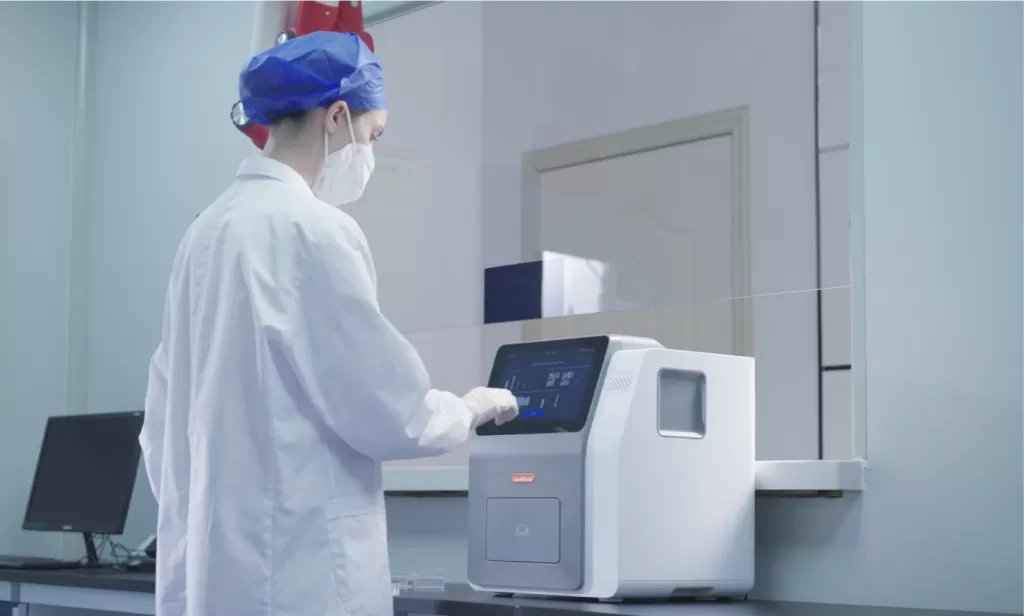
Table lists commonly used CBC parameters in infection and inflammation care and summarizes their typical interpretation.
| Параметр | Definition | Typical infection / inflammation relevance |
| WBC | Total white blood cell count | May increase or decrease during infection or systemic inflammation. Changes are nonspecific and should be interpreted with the differential, clinical findings and other laboratory tests. |
| NEU | Neutrophils | Neutrophilia may occur in bacterial infection, acute inflammation, physiologic stress and other conditions. Neutrophil changes alone do not establish infection type or severity. |
| LYM | Lymphocytes | Lymphocyte counts may change during viral infections and other immune responses. Both lymphocytosis and lymphopenia can occur depending on the disease and clinical context. |
| MON | Monocytes | Monocytosis may occur in certain infections, inflammatory or autoimmune conditions, and other disorders, but is not specific for infection or inflammation. |
| NLR | Neutrophil-to-lymphocyte ratio | A CBC-derived index investigated as a marker associated with systemic inflammatory responses in a range of clinical conditions. Its interpretation is context-dependent and it should not be used alone to determine infection severity. |
| PLR | Platelet-to-lymphocyte ratio | A CBC-derived index reflecting platelet count relative to lymphocyte count. It has been studied as an inflammation-associated marker in several conditions but is nonspecific and should be interpreted alongside other findings. |
These parameters and indices are used repeatedly in outpatient, community and inpatient settings to contribute to describing hematologic changes over time and identifying findings that may warrant additional clinical or laboratory evaluation.
Morphology and AI in infection monitoring
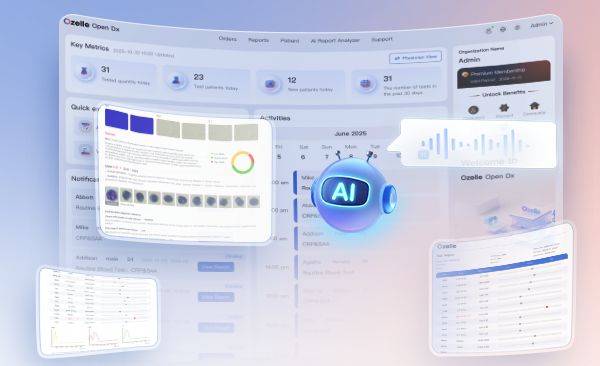
Counts and ratios provide a numerical overview, while morphology analysis adds a structural description to infection and inflammation monitoring. Extended morphology analyzers report seven-part differentials and additional categories such as band neutrophils (NST, band neutrophils), segmented neutrophils (NSG, segmented neutrophils), hypersegmented neutrophils (NSH, hypersegmented neutrophils), abnormal lymphocytes (ALY, abnormal lymphocytes), and reticulocytes (RET, reticulocytes).
Different morphology-related parameters have different clinical relevance. Neutrophil maturation patterns and left-shift-related findings may provide additional context in infection or inflammation, while parameters such as RET primarily reflect erythropoietic activity and are more relevant to anemia assessment. Morphology findings should therefore be interpreted according to their specific hematologic meaning rather than combined into a single “infection” profile.
AI-powered morphology extends this idea further by combining high-resolution imaging with deep learning algorithms for fully automated cell recognition and classification. Instead of relying on manual smears for every case, AI-assisted systems can highlight atypical cells, maintain consistent classification across operators and sites, and integrate morphology into routine CBC workflows. In infection monitoring, this means morphology evidence is available more frequently and can be linked directly to CBC indices generated by the same hematology cbc analyzer.
Ozelle Hematology Solutions in Infection-Related Assessment
Ozelle develops hematology and multi-functional diagnostic platforms that can support infection-related and inflammatory assessment as part of broader clinical workflows.
EHBT-50 Minilab: CBC and inflammatory panels
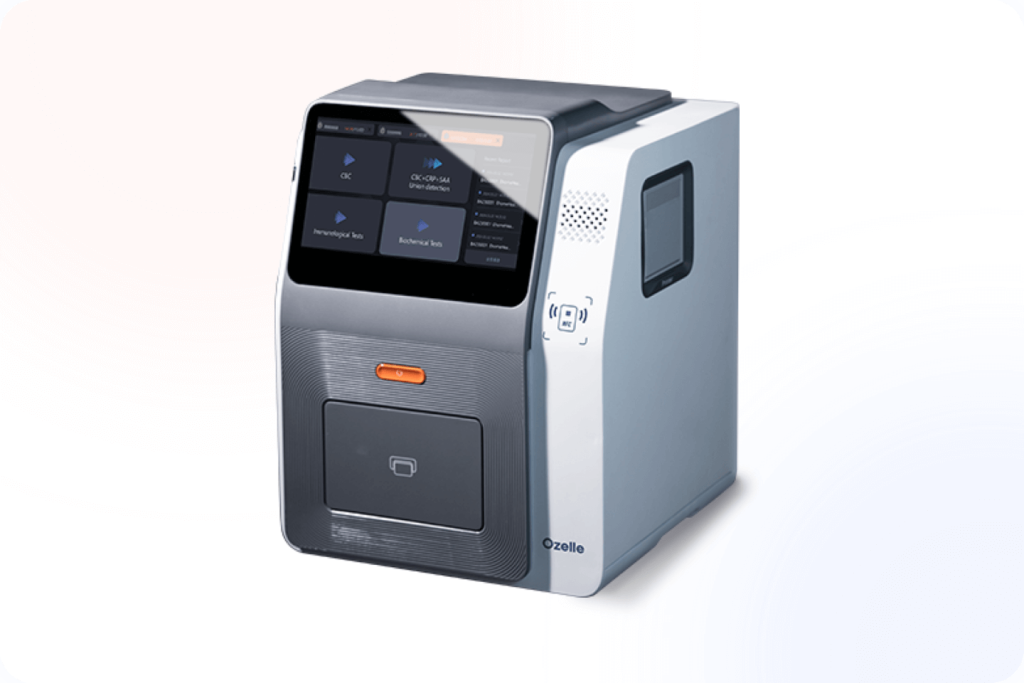
EHBT-50 Minilab is a multi-functional analyzer that integrates CBC, immunoassay and biochemistry in one device. One channel provides CBC and morphology, while additional channels can host panels that include inflammation markers such as C-reactive protein (CRP), interleukin-6 (IL-6) and procalcitonin (PCT), alongside chronic disease tests. For infection and inflammation monitoring, CBC indices and targeted markers can be obtained from a single sample, supporting more comprehensive assessments in outpatient and community settings. The EHBT-50 Minilab is positioned as an option for clinics that require CBC plus panel-based inflammation testing in a unified workflow.
EHBT-75: AI-Assisted 7-Diff Hematology with Morphology Support
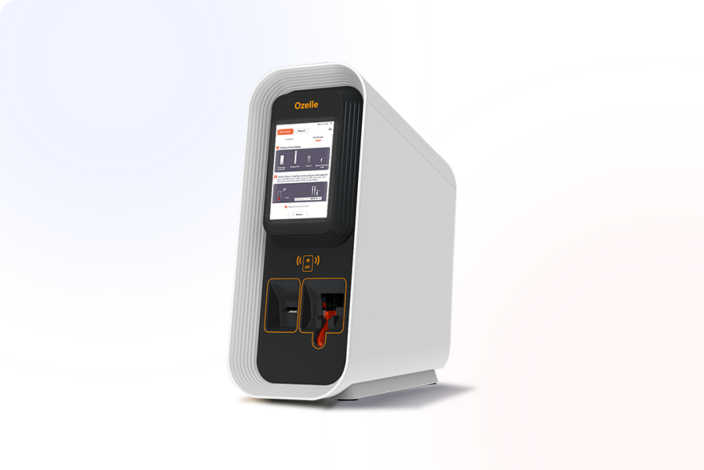
EHBT-75 is a 7-diff auto hematology analyzer that combines CBC reporting with image-based morphology and deep learning-driven classification. It delivers core CBC parameters and extended morphology indices, including NST, NSG, NSH, NLR, PLR, ALY, PAg and RET, in a fully automated workflow. In infection and inflammation monitoring, this allows clinicians to review both numerical indices and detailed morphology from a single hematology cbc analyzer report. A 7-diff analyzer EHBT-75 can therefore act as a central tool for infection-related CBC evaluation in laboratories focused on morphology-rich reporting.
O-Cyte 1: AI × CBM morphology intelligence
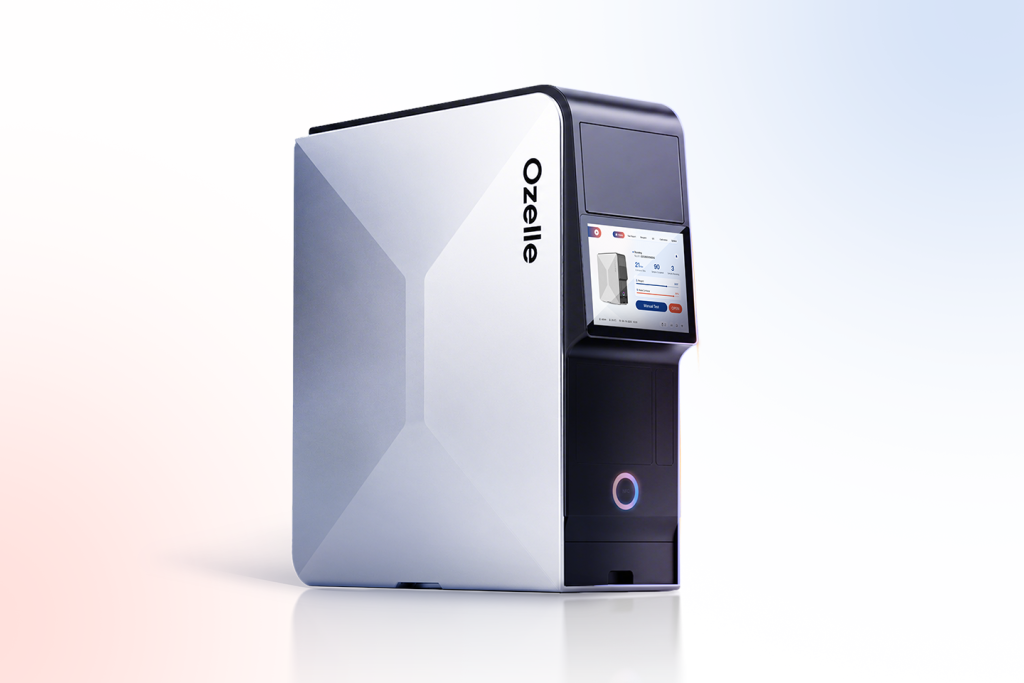
O-Cyte 1 extends Ozelle’s AI × CBM approach into higher-throughput automated hematology workflows. Rather than functioning as a dedicated infection analyzer, it adds image-based morphology information and visible cellular evidence to routine hematology testing, with throughput of up to 60 tests per hour as a standalone unit and up to 360 tests per hour through cascaded expansion.
For hospitals and laboratories handling larger CBC workloads, this architecture can make morphology-related information available within the same automated workflow while preserving laboratory review and clinical correlation as essential parts of interpretation.
Conclusion: CBC indices, morphology and infection pathways
Emergency departments and frontline clinics need tools that match the growing demand for fast, reliable infection and inflammation assessment. As healthcare services face higher volumes and more complex cases, the ability to obtain accurate CBC data and morphology insights in a timely manner becomes central to maintaining safe, efficient care.
In this context, investing in hematology cbc analyzer platforms that combine CBC indices, AI-powered morphology and, where needed, panel-based inflammation testing can be a cost-effective way to strengthen infection monitoring workflows. For teams committed to improving infection pathways and overall patient outcomes, adopting advanced CBC analyzers such as EHBT-75, EHBT-50 Minilab or O-Cyte 1 can make a measurable difference in how inflammation is assessed and managed.
Healthcare professionals and institutional decision-makers who wish to explore these options can contact us directly to discuss scenario-specific implementation and integration into existing infection monitoring workflows.