
 Русский
  English
  Français
  Español
  Deutsch
  Português
  العربية
  Italiano
As global laboratory medicine continues to move toward more intelligent, distributed and high-efficiency models, the themes expected to be highlighted around ADLM 2026 offer a useful perspective on the next stage of hematology analyser development.
From AI-driven cell morphology to compact, modular and scalable throughput designs, hematology analysers are shifting from simply completing CBC tests toward providing morphology-related information, improving workflow efficiency, and fitting more real-world clinical scenarios.
ADLM 2026, organized by the Association for Diagnostics & Laboratory Medicine in Anaheim, California, is one of the most important international conferences in laboratory medicine and in vitro diagnostics. The meeting covers clinical chemistry, hematology, molecular diagnostics, automation and point-of-care testing, while the Clinical Lab Expo brings together exhibitors across a wide range of diagnostic and laboratory technology categories, including hematology analysers, POCT devices, laboratory information systems and automation solutions.
Decentralized Hematology Analysers Are Entering a New Technical Stage
Historically, hematology analysers deployed closer to patients—such as systems in satellite labs, outpatient centers or check-up facilities—have been understood mainly as on-site devices that emphasize speed and convenience. Today, their role is changing. As regional hospitals, check-up centers, outpatient departments and multi-site laboratories demand higher efficiency, result consistency and data connectivity, these decentralized hematology analysers are beginning to take on more complex tasks—not only completing CBC testing, but also supporting deeper morphology analysis, workflow coordination and throughput expansion.
. Market projections also support this shift. Mordor Intelligence estimates the hematology analyzers market at about USD 7.12 billion in 2026 and projects it to reach about USD 9.87 billion by 2031, reflecting continued demand for automated hematology systems and workflow upgrades. At the same time, the focus of competition is moving beyond traditional parameter counts toward AI-assisted morphology, low-maintenance architectures, data connectivity and multi-scenario compatibility.
Four Key Trend Signals in Hematology Devices
Moving from Pure Counting to AI Morphology Intelligence
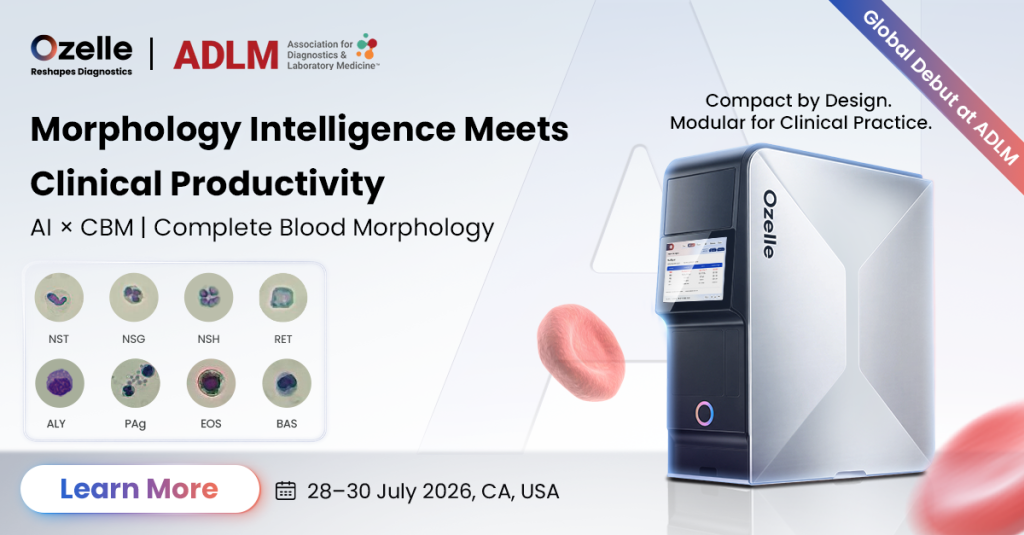
The core value of traditional CBC devices has been cell counting and basic differentiation, but in samples involving suspected infection, abnormal flags, or morphology-related review needs, more institutions now want higher‑dimensional information. Recent products and industry content repeatedly point to one direction: hematology analysis is shifting from pure numeric output to morphology‑intelligent stages represented by Ozelle AI × Complete Blood Morphology (AI × CBM).
This technical route uses high-resolution cell imaging and AI-assisted analysis to provide morphology-related information on leukocyte patterns, red blood cell features, platelet-related findings, and abnormal flags. For medical institutions, this means CBC testing can offer more visual and morphology-based context, while final interpretation remains part of the clinical and laboratory review process. In practice, hematology analysers no longer provide only “how many”, but also offer “what cells look like and what their morphology may suggest”, giving CBC testing greater value in clinical decision-making across different care settings.
Compact Systems Are Covering More Clinical Settings
The demand from check‑up centers, regional hospitals and small to medium‑sized laboratories is no longer limited to “being able to run CBC”. They pay more attention to whether devices can work stably in limited spaces, be deployed quickly and adapt to changing sample volumes. As a result, compact analysers with small footprints, high automation and low maintenance burdens are becoming increasingly important options when upgrading hematology capacity.
This trend is closely linked to the formation of distributed diagnostic networks. As testing capabilities extend from a single central laboratory to more service nodes, compact hematology analysers add value not just by saving space, but by providing stable, standardized, and clinically relevant laboratory information closer to where patients are seen.
Modular and Low‑Maintenance Architectures Become Key Elements of Competitiveness
In real clinical operations, device downtime, fluidics maintenance, reliance on engineers and service recovery speed directly affect laboratory efficiency and operating costs. As a result, more hematology devices are emphasizing disposable fluidics, reagent cartridges with integrated fluid paths, modular components and faster service recovery, to reduce daily maintenance complexity and shorten service fault recovery times.
This evolution is especially relevant for medical networks where resources are distributed. For regional hospitals and check‑up centers, devices must not only have adequate performance but also reduce daily maintenance and downtime costs. For distributors and service providers, modular design means faster response times and more stable device availability.
Throughput and Data Connectivity Are Redefining Product Value
As hematology services expand from single instruments to multi-department, multi-site and multi-institution coordination, throughput scalability and system connectivity have become more important. A hematology analyser that only solves single tests has limited value; institutions also need batch loading, cascade expansion and robust LIS/HIS integration to embed analysers into broader workflows.
This is a typical signal of the market shifting from “selling devices” to “selling workflow capability”. Future competition will happen not only around parameters and pricing, but also around how hematology analysers embed into clinical pathways, laboratory processes and regional data structures.
These changes together point to a clear direction: next-generation hematology analysers need morphology intelligence, maintenance-friendly designs, scalable architectures and scenario compatibility at the same time. New products are increasingly being designed as direct responses to these requirements.
O‑Cyte 1: Combining AI × CBM and Compact Modular Design in a New Hematology Analyser
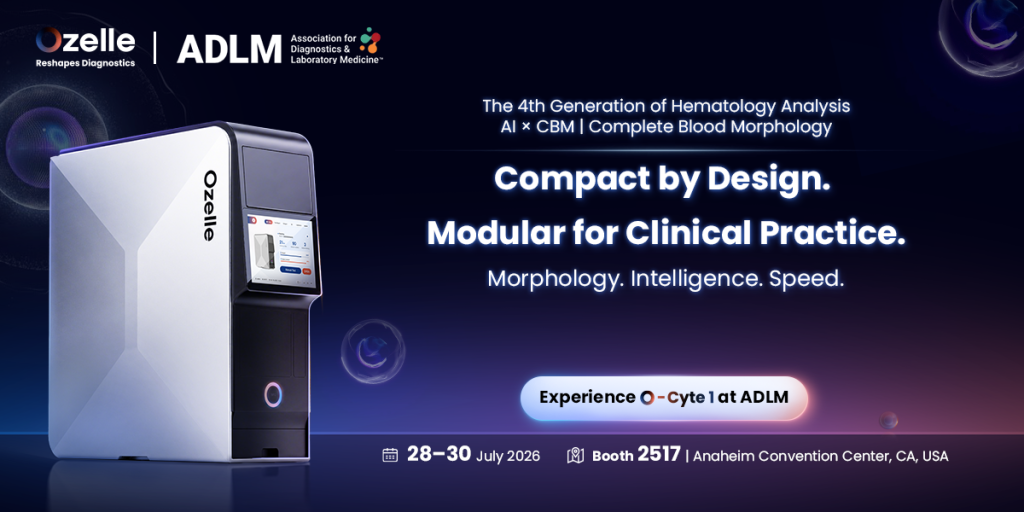
O‑Cyte 1, which is set to make its global debut at ADLM 2026, is Ozelle’s automated hematology analyser built around the principle “Compact by Design. Modular for Clinical Practice”. It focuses on AI morphology, low‑maintenance architecture, modular service and throughput expansion. Within Ozelle’s broader hematology solutions, O‑Cyte 1 extends the AI × CBM route already highlighted across Озель, further integrating blood cell images, CBC parameters and automated workflows into a more compact system.
Morphology Intelligence: AI × CBM Turning Cell Images into Clinical Insight
One of O‑Cyte 1’s core highlights is Morphology Intelligence based on AI × CBM. The analyser uses single-cell imaging for image acquisition and AI-assisted algorithms for cell classification and abnormal flagging, allowing morphology analysis to enter routine blood workflows more naturally instead of relying solely on manual microscopy.
The value of this route lies in moving hematology testing beyond parameter counting and providing structured information on morphology abnormalities. This provides additional morphology-related information for laboratory review in cases involving suspected infection, inflammation, or anemia. For institutions aiming to improve the interpretive power of CBC, this “image-to-information” workflow is closer to where hematology is heading than traditional analysers.
Low‑Maintenance Design: Fluidics Contained in Consumables to Reduce Routine Maintenance
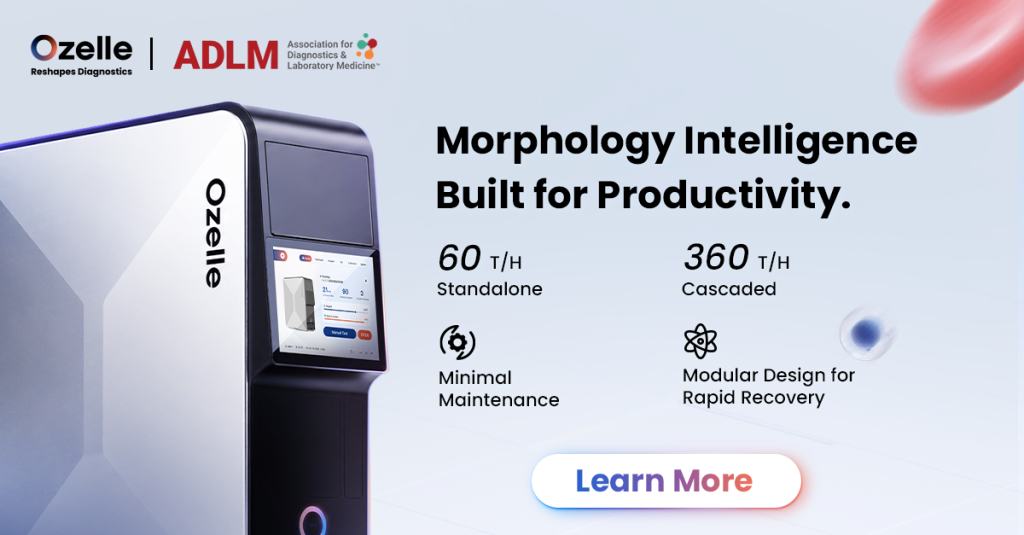
O‑Cyte 1 adopts a closed‑fluidics design and encapsulates key fluid systems inside consumables, reducing internal complexity and the risks associated with open fluid paths. This architecture not only helps lower carryover risk but also cuts the amount of daily cleaning and calibration work required, which in turn supports longer continuous operating periods.
For check‑up centers, regional hospitals and smaller laboratories, the level of routine maintenance directly affects real‑world analyser efficiency. A low‑maintenance design does not only improve user convenience; it also reduces dependence on engineers and frequent service visits, making the system better suited to high‑turnover environments with limited personnel or multi‑site deployments.
Service‑Ready Modular Design: Modular Architecture for Faster Service Recovery
Another key design feature of O‑Cyte 1 is its modular architecture tailored for clinical workflows. Within this structure, key functional modules can be replaced or serviced quickly, shortening recovery times when issues occur and reducing overall downtime.
Modularity delivers more than service convenience; it improves stability at the management level. For institutions with rapid sample turnover, the ability to restore operation quickly is an important complement to analytical performance, because recovery speed directly influences clinic schedules, check‑up report turnaround and lab capacity utilization.
Flexible Throughput Expansion: From Single Analyser to Cascaded Capacity
In terms of throughput, O‑Cyte 1 supports up to 60 tests per hour as a standalone unit, and can expand to 360 tests per hour through cascaded configurations. This design allows the analyser to fit both single‑site deployments and growing sample volumes, without requiring complete platform replacement.
Throughput scalability significantly extends O‑Cyte 1’s deployment range. For mid‑sized check‑up centers, it can handle peak CBC workloads; for regional hospitals and laboratories, cascaded configurations can support higher sample loads, enabling a smooth transition from baseline deployment to expanded capacity.
Application Scenarios: Check‑Up Centers, Regional Hospitals and Laboratories
The scenario value of O‑Cyte 1 lies in its ability to fit check‑up centers with limited space and high turnover, as well as regional hospitals and laboratories with more complex sample structures and faster operational rhythms. In check‑up centers, higher throughput and structured outputs support efficient mass screening; in regional hospitals, AI morphology and faster workflows help clinicians recognize risk in outpatient and emergency settings; in laboratories, cascaded expansion, low maintenance and modular service support continuous operation and capacity growth.
By combining morphology intelligence, modular maintenance and throughput expansion within a compact architecture, O‑Cyte 1 responds not to a single feature upgrade, but to multiple real‑world demand shifts in hematology devices. These design choices are consistent with Ozelle’s broader push toward AI‑driven, scenario‑ready hematology solutions.
Data‑Level Trend Analysis: Why This Category Deserves More Attention After 2026

Hematology analysers are expected to remain in a growth phase beyond 2026. Mordor Intelligence estimates that the market will reach about USD 7.12 billion in 2026 and expand to around USD 9.87 billion by 2031. Taken together, these projections point in the same direction: hematology devices are still operating in a growing market, and technology upgrades will continue to be one of the main drivers of that growth.
In terms of technical structure, growth is not evenly distributed across all product types. Devices and solutions centered on AI morphology, compact systems, integrated workflows, and decentralized testing are becoming focal points in upgrade and procurement decisions. This shows that the market is looking not simply for cheaper or larger analysers, but for systems that deliver stable value under limited space, limited maintenance resources and more complex scenarios.
From the scenario angle, growing demand from regional hospitals, check-up centers, outpatient departments and distributed laboratory networks is enhancing the strategic importance of hematology analysers that can be deployed outside central labs. When analysers must handle both screening tasks and a certain degree of morphology-related review and data connectivity, product combinations that integrate AI × CBM, low-maintenance design and throughput scalability are more likely to show differentiated advantages in practice.
Заключение
The future platform direction of hematology analysers is becoming clearer: systems are expected not only to complete CBC testing, but also to embed morphology intelligence, support more laboratory and clinical workflow scenarios, reduce maintenance burdens and integrate more effectively into distributed, data-driven workflows. From this perspective, hematology analysers—whether in central laboratories or decentralized sites—are evolving into key platform nodes within modern diagnostic networks rather than remaining simple, stand-alone testing devices.
Within this broader shift, O-Cyte 1 reflects how AI morphology, modular design and scalable throughput can be combined in a compact automated hematology analyser platform, aligning with the direction that Озель is pursuing in its diagnostic solutions.