
 Português
  English
  Français
  Русский
  Español
  Deutsch
  العربية
  Italiano
Why Pharmacies and GP Clinics Need a Modern Hemo Analyzer
More pharmacies and GP clinics are adding in‑house CBC testing to attract patients, shorten diagnosis time and open new revenue streams. A hemo analyzer that supports finger‑prick sampling, is maintenance‑free and easy to use lets non‑laboratory staff run reliable CBC tests in minutes instead of sending patients to external labs.
Traditional hematology analyzers, however, are often designed for large hospital labs, with complex reagents, daily maintenance and venous blood sampling, which does not match the workflow of small primary‑care sites.
What Is a Hemo Analyzer for Primary Care?
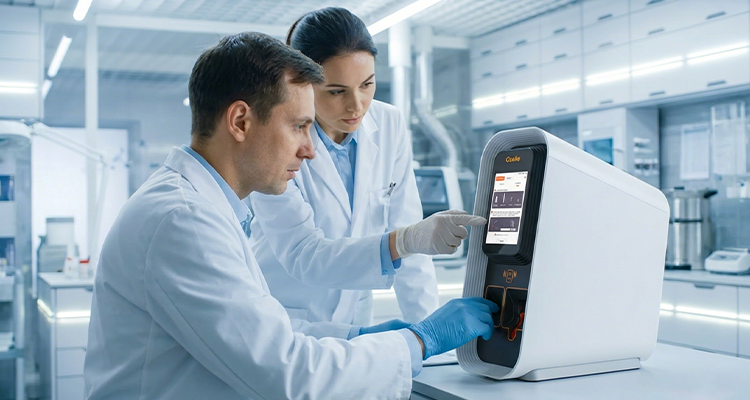
A hemo analyzer (hematology analyzer) is an automated instrument that measures complete blood count (CBC) parameters such as WBC, RBC, HGB, platelets and red cell indices.
For pharmacies and GP clinics, an ideal device should:
- Use small‑volume capillary or venous whole blood, often from finger‑prick.
- Provide a clinically meaningful WBC differential, ideally 7‑part, for deeper infection and inflammation assessment.
- Offer simple, guided operation for staff without formal lab training.
- Minimize or eliminate daily maintenance and liquid waste handling.
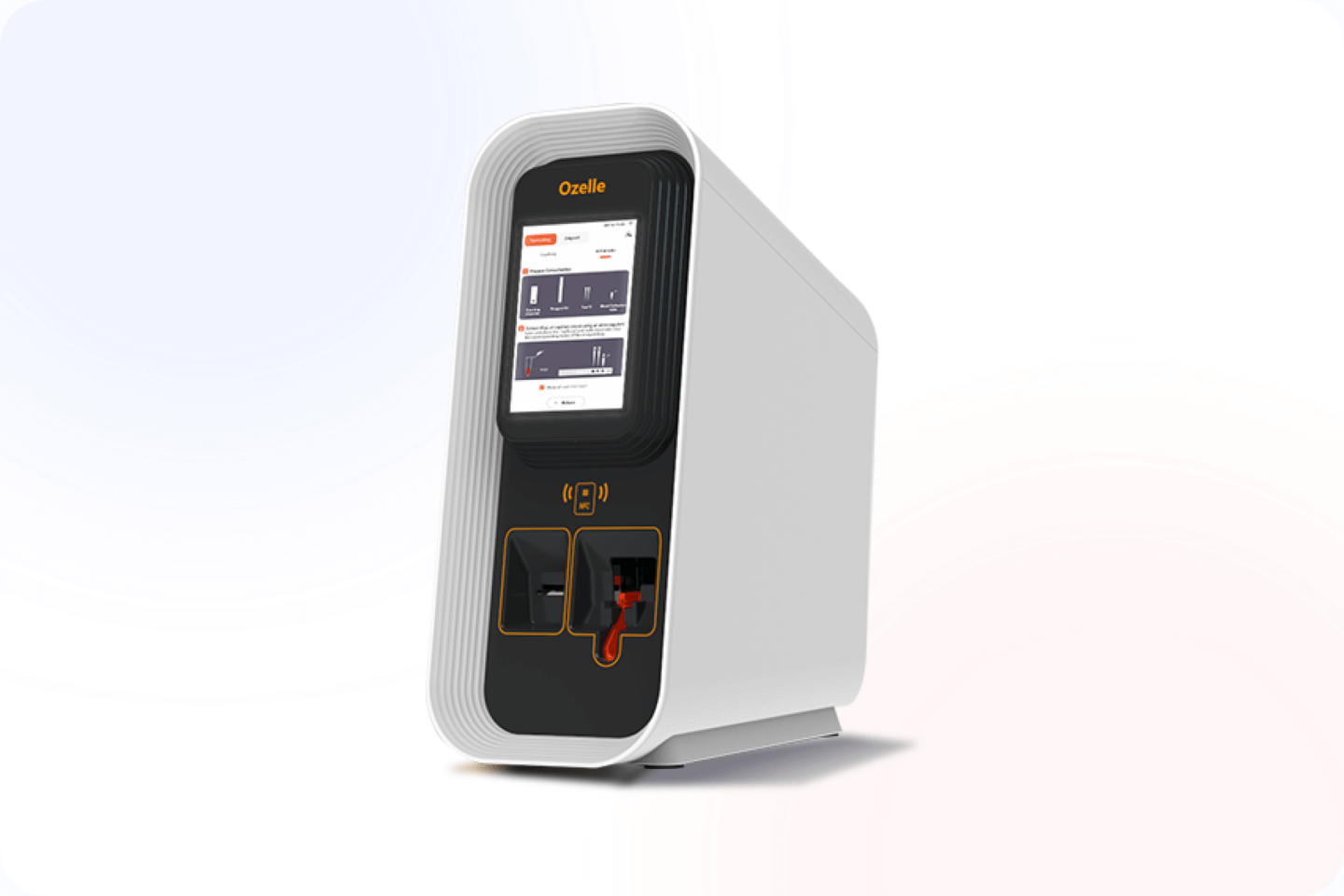
Ozelle’s EHBT‑75 is a WBC 7‑Diff auto hematology analyzer built on AI‑driven cell morphology, designed to serve multi‑scenario settings including family doctors, clinics, pharmacies, laboratories and emergency care.
Key Features to Look for in a Pharmacy‑Friendly Hemo Analyzer
Finger‑Prick and Low Volume Sample Capability
In a retail pharmacy or GP clinic, finger‑prick collection is often preferred to venous draws because it is faster, less invasive and can be performed by trained staff without a phlebotomy room.
The EHBT‑75 and similar analyzers address this by:
- Supporting finger blood application, i.e., small‑volume finger‑prick samples.
- Accepting both capillary and venous whole blood for flexible workflows.
- Maintaining high correlation with reference analyzers across typical CBC parameters.
This makes it realistic to integrate CBC testing into a busy front‑line environment while maintaining diagnostic quality.
Maintenance‑Free Service and Sealed Reagents
Daily maintenance, liquid reagents and waste management are major barriers for small sites that lack full‑time lab technicians.
A pharmacy‑ready hemo analyzer should provide:
- Maintenance‑free service, with no need for daily manual cleaning of internal fluidic systems.
- Sealed reagent systems or cartridges that enhance bio‑safety and simplify handling.
- Internal waste storage and room‑temperature transportation to avoid special infrastructure.
The EHBT‑75 is designed around these principles, combining all‑in‑one cartridges with a maintenance‑free architecture tailored to primary‑care use.
AI‑Enhanced Complete Blood Morphology and 7‑Diff CBC
Many smaller analyzers rely only on impedance methods and limited WBC differentiation. Ozelle’s CBM (Complete Blood Morphology) approach uses image‑based AI cell morphology to upgrade both count and morphological insight.
Key aspects of the EHBT‑75 include:
- 7‑Diff WBC classification, covering NEU, LYM, MON, EOS, BAS and sub‑populations like NSG, NST and NSH.
- More than 37 CBC parameters, including extended red cell and platelet indices and clinically relevant ratios such as NLR and PLR.
- AI‑powered recognition of abnormal cells, aided by deep learning models trained on over 40 million samples and recognized at WAIC.
This allows pharmacies and GPs to go beyond basic counts, leveraging morphology‑driven insights usually reserved for larger labs.
Simple One‑Key Operation for Non‑Lab Staff
One of the biggest user problems is whether staff with limited lab experience can reliably operate a hemo analyzer without making errors.
The EHBT‑75 tackles this with:
- One‑key test operation and fully automated sample pretreatment and analysis.
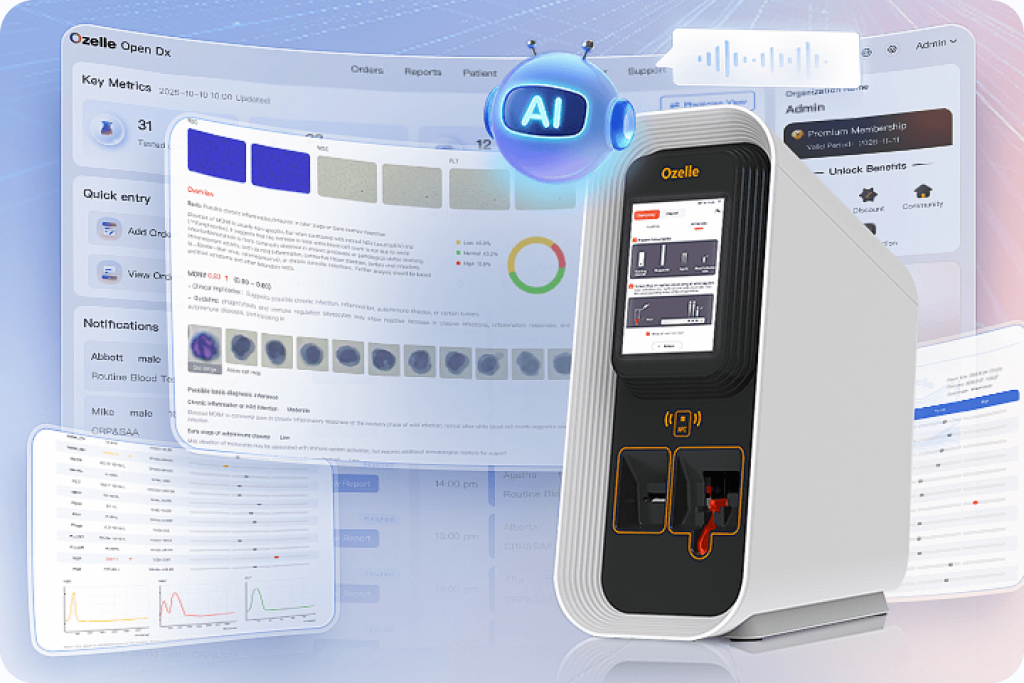
- A graphic touch‑screen interface that guides placement of the counting chamber and reagent kit.
- Smart camera detection to confirm correct consumable placement before starting a run.
This makes it realistic to delegate testing to pharmacy or GP staff after brief training, without needing a dedicated lab technologist on site.
Compact Design and Multi‑Scenario Usability
Space is limited in many pharmacies and GP consultation rooms, so a compact footprint and flexible scenario design are essential.
The EHBT‑75 is described as a desktop auto hematology analyzer suitable for:
- Family doctors and clinics.
- Pharmacies and private clinics.
- Laboratories and emergency units.
Its design supports rapid deployment across different care points while keeping operation consistent, which is valuable for groups running multiple sites.
Cost, Workflow and Patient Experience: Comparison Table
The table below compares a typical hospital‑style hematology analyzer (generalized) with a pharmacy‑oriented AI hemo analyzer such as the EHBT‑75.
| Aspeto | Traditional Lab Analyzer (Generic) | Pharmacy‑Oriented Hemo Analyzer (e.g., EHBT‑75) |
| Princípio | Impedance or flow cytometry | Image‑based AI cell morphology + colorimetry |
| Sample type | Venous whole blood only | Capillary and venous whole blood |
| WBC differential | 3‑ or 5‑part | 7‑Diff with detailed sub‑populations |
| Manutenção | Daily cleaning and liquid waste | Maintenance‑free, sealed cartridges |
| Reagentes | Bulk liquid reagents | All‑in‑one hematology cartridges |
| Abnormal cell insight | Limited or separate smear review | Integrated CBM morphology with AI |
| Operator skill level | Trained lab technologist | Pharmacy or GP staff after brief training |
| Nível de automatização | Partial automation | One‑key fully automated processing |
| Typical scenarios | Hospital laboratory | Pharmacy, GP clinic, lab, emergency, ambulance |
How to Decide if a Hemo Analyzer Is Feasible in Your Pharmacy or GP Clinic
When considering adding a hemo analyzer, decision‑makers often ask whether the investment, training and workflow changes are justified. The following factors help clarify feasibility.
Patient Volume and Test Mix
Estimate how many CBC tests you realistically expect per day or week, including:
- Patients with suspected infection or anemia.
- Chronic disease follow‑up and treatment monitoring.
- Wellness or health‑check programs.
The EHBT‑75 delivers about 6 minutes per sample with high automation, making it suitable for typical pharmacy or GP volumes without creating bottlenecks.
Regulatory and Certification Requirements
In some countries, pharmacies can run point‑of‑care tests under specific certifications, and many markets now permit pharmacies to provide medical testing.
Decision‑makers should:
- Confirm local regulations for CBC or hematology testing in pharmacies and GP clinics.
- Check whether the selected analyzer holds relevant approvals such as CE and fits near‑patient testing frameworks.
Staff Training and Workflow Integration
Because the analyzer provides one‑key fully automated analysis and a guided interface, staff can reach proficiency quickly, especially when supported by vendor training.
To integrate smoothly:
- Define who is responsible for sample collection, running the test and releasing results.
- Place the analyzer near consultation areas to keep turnaround time short.
- Use available connectivity options to reduce manual data entry.
Custo total de propriedade
Even with lower acquisition cost than large analyzers, total cost includes consumables, training and potential service. Ozelle emphasizes:
- Low‑cost yet high‑accuracy operation via all‑in‑one cartridges.
- Maintenance‑free design, reducing service and downtime.
- Room‑temperature transportation and long shelf life for hematology cartridges.
This model aligns well with pharmacies and GP clinics that need predictable per‑test costs and minimal fixed overhead.
Example: EHBT‑75 Hemo Analyzer at a Glance
Below is a concise overview of the EHBT‑75’s positioning and major capabilities relevant to pharmacies and GP practices.
| Caraterística | EHBT‑75 Hemo Analyzer |
| Tecnologia | CBM image‑based AI cell morphology + HGB colorimetry |
| CBC parameters | 37+ parameters with extended indices and ratios |
| WBC differential | 7‑Diff (NEU, LYM, MON, EOS, BAS + NST, NSG, NSH) |
| Sample type | Whole blood and capillary (finger blood application) |
| Automation | One‑key fully automated pretreatment and analysis |
| Turnaround time | Approx. 6 minutes per sample |
| Reagent system | All‑in‑one hematology cartridge, internal waste storage |
| Manutenção | Maintenance‑free service |
| Imaging | High‑resolution digital microscopy with AI‑based recognition |
| Typical scenarios | Family doctors, clinics, pharmacies, labs, emergency, ambulance |
Further information on Ozelle’s hemo analyzers and digital diagnostics ecosystem is available on the official site at https://ozellemed.com/en/.
FAQs About Hemo Analyzers for Pharmacies and GP Clinics
What is the difference between a hemo analyzer for hospitals and one for pharmacies?
Hospital analyzers usually focus on very high throughput, broad parameter panels and complex workflows handled by lab technologists, with liquid reagents and regular maintenance.
Pharmacy‑oriented devices such as Ozelle’s EHBT‑75 emphasize compact size, finger‑prick compatibility, sealed cartridges and maintenance‑free operation, so non‑laboratory staff can run reliable 7‑Diff CBC tests in a single automated step.
Can a finger‑prick hemo analyzer deliver accurate CBC results?
Yes, provided the device is specifically engineered for small‑volume capillary samples and validated against reference analyzers. The EHBT‑75 supports finger blood application and combines image‑based CBM analysis with photoelectric colorimetry to achieve high accuracy across WBC, RBC, HGB, PLT and differential parameters.
How much training is needed for pharmacy staff?
Because the workflow is centered on one‑key fully automated processing and a guided touch‑screen interface, training is usually limited to:
- Correct finger‑prick or venous sampling and loading of the consumables.
- Basic operation of the instrument and awareness of flags and alarms.
- Understanding that results must be interpreted together with clinical symptoms.
Vendors such as Ozelle typically provide onboarding and reference materials tailored to primary‑care teams.
Do we need special plumbing or waste disposal?
The EHBT‑75 uses all‑in‑one cartridges with internal waste storage and is designed to be maintenance‑free, so it does not require dedicated plumbing or complex liquid waste systems.
Used cartridges are handled as medical biohazard waste according to local regulations, similar to other point‑of‑care consumables.
What parameters are essential for a primary‑care CBC?
For most pharmacies and GP clinics, an extended CBC with 7‑Diff WBC classification and more than 30 parameters is sufficient to screen for:
- Infection and inflammation, including nuanced neutrophil, lymphocyte and monocyte patterns.
- Anemia and red cell disorders via RBC, HGB, HCT, indices and RDW.
- Platelet abnormalities via PLT, MPV, PCT and related indices.
If highly specialized hematology is needed, physicians may still refer patients to hospital labs, but the in‑house CBC provides rapid, morphology‑informed initial insight.
Conclusion: Turning CBC Testing into a Practical Point‑of‑Care Service
By choosing a hemo analyzer designed specifically for pharmacies and GP clinics, you turn CBC testing into a fast, reliable point‑of‑care service instead of a logistical burden. With maintenance‑free cartridges, finger‑prick sampling and AI‑enhanced 7‑Diff analysis, solutions like the EHBT‑75 make it practical to deliver lab‑grade insight within a few minutes of seeing the patient.