
 Português
  English
  Français
  Русский
  Español
  Deutsch
  العربية
  Italiano
Hospital laboratories, independent diagnostic laboratories, and centralized testing networks may face substantial CBC workflow pressure when morning outpatient collections, inpatient rounds, referral samples, and urgent requests arrive within the same limited time window. Average daily volume alone does not show whether a laboratory can manage these peaks, as delays may arise across sample receiving, barcode identification, batch loading, STAT handling, result review, quality-control procedures, and reporting.
When capacity planning becomes a priority, procurement teams often look for cbc machine distributors that offer more than an analyzer with a high tests-per-hour figure. Due diligence should also confirm local registration status, manufacturer authorization, and responsibility for importation, installation, operator training, technical support, and after-sales service. The right partner should be able to assess the laboratory’s workflow and recommend a high-throughput configuration that fits both operational needs and the local regulatory pathway.
Why Daily Test Volume Does Not Define High-Throughput Needs
Daily CBC volume is a useful planning reference, but it does not show how demand develops during the working day. Morning outpatient collections, inpatient rounds, referral deliveries, and urgent requests can converge within a short period, creating sample queues even when the total daily workload appears manageable. High-throughput planning should therefore start with workload timing and operational pressure, not with a single daily-volume figure.

Understand Peak Workload, Not Daily Volume Alone
A laboratory processing the same number of CBC samples as another site may have very different capacity requirements if most specimens arrive within one short morning window. Procurement teams should examine arrival patterns, routine batch size, referral activity, staffing coverage, and the proportion of urgent requests. These factors show whether the laboratory needs stronger batch capacity, clearer queue management, or a scalable configuration that can be reassessed as demand changes.
The point is not to select the highest stated throughput by default. It is to match analyzers and support arrangements to documented peak workload, including the surrounding tasks that influence daily operations.
Map the Full Sample-to-Result Workflow
Real capacity is determined across the sample path, from receiving and barcode identification to loading, analysis, result review, quality control, and reporting. Manual sorting, tube mixing, sample transfers, and review of instrument flags can add pressure outside the analyzer, particularly during concentrated intake periods.
Routine batches and STAT specimens also need defined handling procedures. Automated CBC systems can provide quantitative parameters, differentials, calculated indices, instrument-specific flags, histograms, scattergrams, and—in certain systems—image-based morphology-related information. These outputs should be incorporated into laboratory review criteria, quality procedures, and professional interpretation; they do not independently establish a diagnosis.
What Procurement Teams Should Assess When Choosing CBC Machine Distributors
Choosing a CBC machine distributor involves more than comparing analyzer models, pricing, or stated tests-per-hour capacity. A high-throughput hematology project may affect sample handling, staffing, quality procedures, supply planning, and technical response over an extended period. Procurement teams should therefore assess whether a distributor can support the full operating model required by the laboratory.

Ability to Understand Workload and Configure the Workflow
A suitable distributor should begin by understanding the laboratory’s workload rather than recommending a system from daily CBC volume alone. Relevant discussions may include peak sample-arrival periods, routine batch size, STAT sample requirements, sample receiving procedures, manual handling steps, result-review practices, staffing patterns, and expected changes in demand.
This assessment should lead to a practical configuration discussion. The distributor should be able to explain how the proposed analyzer fits the laboratory’s sample path, operating priorities, available space, and capacity plan. Where workload growth is possible, the discussion should distinguish between immediate requirements and a realistic future expansion path instead of recommending maximum capacity by default.
Installation, Training, and Go-Live Support
Procurement teams should clarify which party is responsible for site preparation, equipment delivery, installation, commissioning, initial operating checks, and user training. Training should cover the laboratory procedures that operators will use in routine work, including sample loading, quality-control routines, alert handling, basic maintenance, and escalation of technical issues.
The distributor should also define what support is available when the system enters routine use. This may include on-site assistance, remote technical support, application guidance, refresher training, or coordination with the manufacturer. The agreed service scope should be documented before procurement is finalized, rather than assumed after installation.
Consumables, Technical Service, and Continuity Planning
Reagent availability, quality-control materials, consumables, replacement parts, and maintenance support are central to a high-throughput CBC workflow. Procurement teams should ask how the distributor forecasts consumable demand, manages stock, communicates lead times, and supports replenishment during periods of changing workload.
Technical support arrangements require the same level of clarity. The laboratory should understand who conducts first-line troubleshooting, which issues can be resolved locally, when field service is required, and how unresolved problems are escalated. A clear plan does not guarantee uninterrupted operation, but it gives the laboratory a structured way to manage service risk and maintain continuity.
Quality Procedures and Long-Term Partnership Readiness
A distributor should understand that analyzer deployment occurs within an established quality framework. Procurement teams should confirm whether the proposed training and support model is compatible with the laboratory’s quality-control procedures, review criteria, recordkeeping requirements, and routine operating protocols.
Long-term fit also matters when laboratory demand changes. A distributor that can revisit workload patterns, sample queues, service needs, and future expansion requirements may provide more useful support than one focused only on the initial transaction. This matters particularly when a high-throughput CBC analyzer may become a central component of the laboratory’s daily operation.
| What to verify | Questions procurement teams should ask |
| Manufacturer authorization | Is the distributor authorized for this territory and product line? |
| Regulatory readiness | Is the product registered locally? Who manages regulatory documentation and import responsibilities? |
| Workflow capability | Can the distributor assess peak workload, STAT flow, review workload, and space requirements? |
| Installation & integration | Who prepares the site, installs the system, supports LIS connectivity, and coordinates acceptance? |
| Application training | Who trains operators on routine use, QC, flags, maintenance, and escalation? |
| Consumable continuity | What are lead times, shelf-life considerations, safety-stock recommendations, and replenishment procedures? |
| Technical service | Are trained engineers available locally? What spare parts/modules are stocked? |
| Escalation | When and how are unresolved issues escalated to the manufacturer? |
| Warranty & commercial terms | What is covered, for how long, and which costs/responsibilities sit with each party? |
| Expansion capability | Can the partner support future analyzer additions, automation modules, training, and service capacity? |
High Throughput Depends on Workflow Continuity, Not Speed Alone
A high-throughput CBC analyzer should be assessed as part of a connected workflow. The most useful systems do not merely process samples quickly; they support a sequence of receiving, loading, analyzing, reviewing, maintaining, and—when needed—expanding capacity in a way that laboratory teams can manage consistently.

Batch Processing and Sample Traceability
Batch loading can reduce the number of individual loading interventions required when multiple routine samples are ready for analysis. When paired with reliable identification and traceability processes, it can also help laboratories maintain control over larger sample queues. For procurement teams, the relevant question is whether the system’s sample-management design aligns with the laboratory’s accessioning and rack-handling practices.
Traceability should be viewed as a workflow feature, not simply a technical specification. Barcode recognition and structured sample routing can support clearer sample handling, but local procedures still determine how exceptions, unreadable labels, duplicate requests, and sample-quality concerns are managed.
Automated Preparation and Closed-Tube Handling
Automated mixing and closed-tube sampling can reduce repetitive manual steps and help support a more consistent pre-analytical process. These functions may be especially relevant in laboratories where staff must process substantial numbers of routine CBC samples within concentrated time periods.
However, automated preparation does not eliminate operator responsibility. Laboratories still require training, defined handling procedures, quality checks, and appropriate responses to instrument messages. Distributors should frame automation as support for process consistency rather than as a replacement for trained laboratory practice.
Reviewable Data Within Automated CBC Workflows
Modern hematology workflows depend on the availability of information that laboratory personnel can review. Quantitative CBC results, leukocyte differentials, flags, histograms, and other graphical outputs form part of the routine analytical record. When a system also provides morphology-related images or image-based classification, it can add another layer of evidence for review.
That additional information should be positioned carefully. It may support laboratory professionals in examining results within established review rules, but it does not independently establish a diagnosis. Interpretation remains linked to quality procedures, repeat or confirmatory testing where appropriate, previous laboratory information, and clinical correlation.
Service Recovery and Capacity Scaling
Continuity also depends on what happens when maintenance or technical intervention is required. Clear service escalation, accessible replacement parts, trained personnel, and realistic recovery procedures all influence whether a system can support sustained operation. This is particularly important when the analyzer plays a central role in a laboratory’s daily CBC workload.
Scalable capacity should be assessed through the same operational lens. Adding capacity can be valuable when workload grows, but the customer must also be prepared for the associated requirements: adequate space, network planning, reagent logistics, staffing, service coverage, and a consistent operating model across the expanded configuration.
O-Cyte 1 as a Scalable High-Throughput Hematology Option
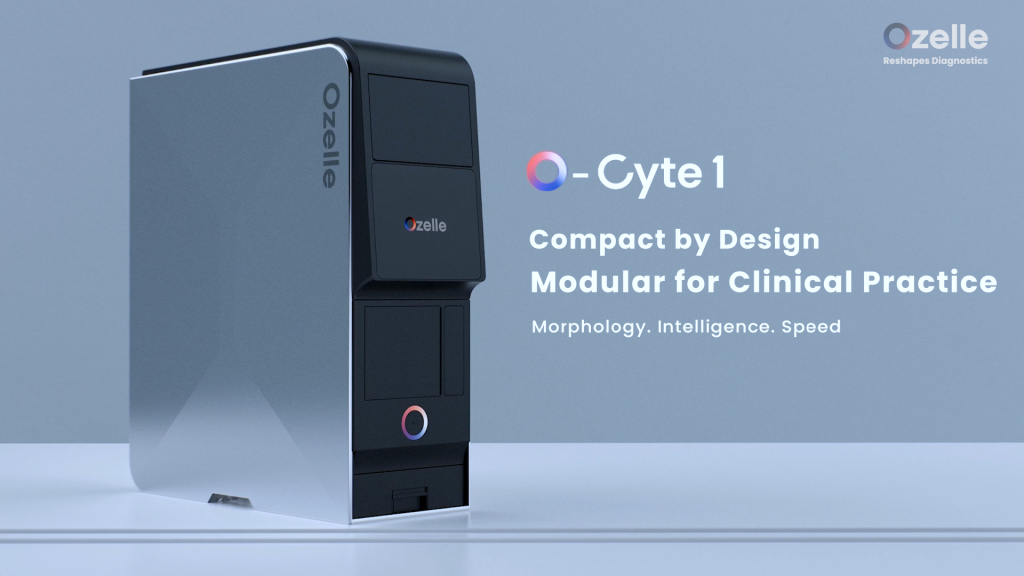
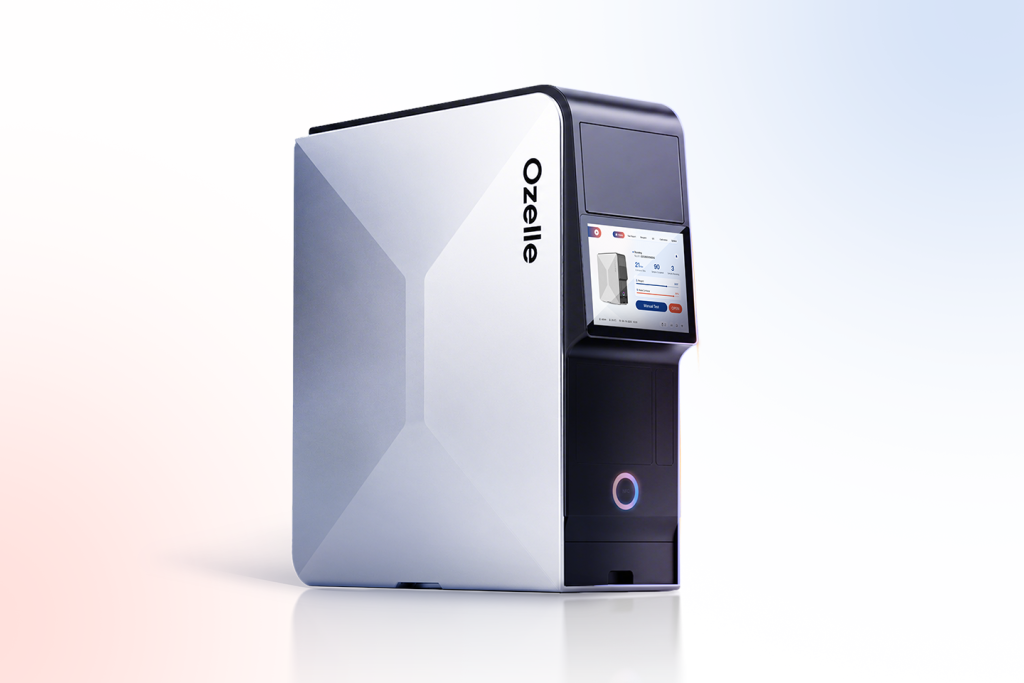
Once procurement teams have assessed distributor capability, laboratory workflow requirements, and long-term support arrangements, they can evaluate whether a specific analyzer architecture fits the intended high-throughput CBC model. The Analisador hematológico automatizado O-Cyte 1 from Ozelle provides one example of a system designed for automated batch processing and scalable hematology capacity.
Scalable Capacity From Standalone to Cascaded Operation

O-Cyte 1 supports up to 60 tests per hour in standalone operation. Where laboratory demand and site readiness justify a larger configuration, up to six analyzers can operate in a cascaded arrangement with a stated maximum throughput of up to 360 tests per hour. The cascaded system can use automated loading and unloading modules with a centralized operation console to support a unified workflow across the expanded installation.
This architecture gives procurement teams a way to consider present and future capacity separately. A laboratory may begin with standalone operation and evaluate expansion later if its sample volume, peak workload, staffing, physical space, reagent planning, and technical support model change. The stated maximum throughput should not be interpreted as a guaranteed turnaround time, because real operating capacity also depends on sample mix, review requirements, maintenance planning, and local workflow conditions.
Batch Handling and Priority Sample Workflow
The analyzer supports 25-sample loading through five five-position racks, random tube placement, and automatic barcode identification. Automatic mixing, closed-tube piercing, STAT Mode, and Auto Loader Mode are also included in the workflow.
These functions can be considered when a laboratory needs to manage routine batches while retaining a defined route for priority samples. Batch loading may help organize a concentrated queue of accessioned samples, while barcode identification may support traceability within the sample-handling process. STAT Mode should be configured around the laboratory’s own urgent-testing procedures, staffing arrangements, and result communication process.
AI-Assisted Morphology Information for Laboratory Review
O-Cyte 1 provides 7-diff CBC testing with AI-assisted morphology through its AI × CBM approach. The analyzer reports 37 parameters and presents cell images, histograms, and morphology-related information within the reporting workflow. Its image-based classification is designed to provide visible evidence that laboratory teams can review alongside automated hematology results.
This information should be treated as an additional layer for laboratory review rather than as a replacement for professional interpretation. Automated parameters, cell images, morphology-related outputs, and graphical information may add context when results are assessed according to laboratory review criteria. Quality-control procedures, repeat or confirmatory testing where appropriate, professional review, and clinical correlation remain necessary.
Modular Service Design and Distribution Readiness
O-Cyte 1 uses a closed-fluidics architecture in which fluidics are contained in consumables. Its modular system design supports module replacement when required. These design elements may support cleaner operation and help shorten aspects of service recovery when they are combined with suitable local training, spare-part planning, and technical escalation procedures.
The practical value of a modular design depends on the service structure behind it. Procurement teams should confirm who is trained to perform first-line checks, how replacement modules are managed, what support is available locally, and when issues are referred to the manufacturer. The system should not be presented as maintenance-free in an absolute sense, nor should any analyzer be described as guaranteeing uninterrupted operation.
Questions to Confirm Before Positioning O-Cyte 1
O-Cyte 1 should be evaluated against the laboratory’s actual requirements rather than presented as a universal answer to high-throughput demand. Procurement teams and cbc machine distributors can use the following considerations to determine whether its architecture is relevant to a proposed project.
Where Is the Actual Capacity Bottleneck?
The relevant issue may be a recurring early-morning queue, rising referral volume, growth in outpatient testing, routine batches competing with urgent work, or a need to consolidate samples from multiple sites. If the laboratory has no defined capacity bottleneck, a higher nominal T/H figure may not address its principal operational issue.
A workflow assessment should identify whether delays arise during sample receiving, loading, analysis, review, or reporting. This helps determine whether the issue is best addressed through additional analyzer capacity, sample-handling changes, review-workload planning, or stronger service support.
Does the Capacity Plan Match the Deployment Model?
Procurement teams should determine whether standalone capacity of up to 60 tests per hour fits current peak requirements, or whether a future case for cascaded expansion is credible. A larger configuration should be considered only after reviewing space, staffing, network planning, consumable supply, quality procedures, and local technical support.
The availability of a six-analyzer cascade can provide a defined expansion path, but it should not be treated as the default option for every laboratory. Capacity planning is most effective when it reflects documented workload patterns and a realistic operational plan.
Can the Local Team Support the Full Operating Model?
Installation and routine operation require clear responsibility for training, quality control, consumable management, maintenance, troubleshooting, and escalation. The distributor and laboratory should agree on these responsibilities before the system becomes part of a routine testing workflow.
A high-throughput system performs within a broader operating model. The analyzer architecture matters, but sustained use also depends on trained staff, defined procedures, appropriate quality oversight, and a distributor support structure that matches the laboratory’s needs.
Conclusion: A Supportable High-Throughput Distribution Model
High-throughput hematology should be assessed as a complete laboratory workflow rather than as a comparison of tests-per-hour figures. Peak sample arrivals, routine batch handling, STAT priorities, result review, quality-control procedures, site readiness, technical response, and future capacity plans all influence whether a CBC configuration can support daily operations.
For procurement teams, choosing cbc machine distributors means evaluating not only the analyzer portfolio but also the distributor’s ability to support equipment selection, workflow configuration, installation, training, consumables, technical service, and long-term capacity planning. O-Cyte 1 provides one option for laboratories assessing automated batch handling, AI-assisted image-backed morphology information, and scalable capacity from standalone operation to cascaded expansion.
To discuss distribution opportunities, laboratory workflow requirements, or local service planning, contactar Ozelle or email info@ozellepoct.com.