
 Português
  English
  Français
  Русский
  Español
  Deutsch
  العربية
  Italiano
MEDITECH International Health Fair is organized by Corferias and Messe Düsseldorf North America in alliance with the Colombian Association of Hospitals and Clinics. The event brings together healthcare institutions, technology suppliers, distributors, and clinical professionals from Colombia and other Latin American markets.
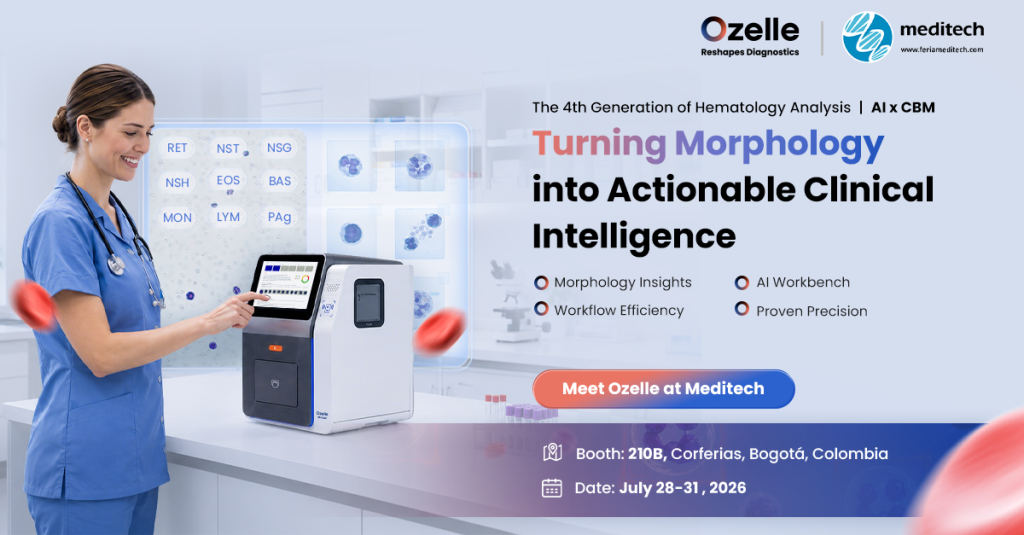
As a broad healthcare technology exhibition, MEDITECH provides a useful setting for discussing hematology analyzers alongside laboratory information systems, automation and digital workflow tools. This broader context reflects an industry-wide interest in how diagnostic instruments fit into laboratory operations, although procurement priorities continue to vary by country, institution type and available infrastructure.
Latin America’s Diagnostic Baseline: From Core Capability to Upgrade Pressure
According to market analyses from IndexBox and other research providers, the hematology analyzers and clinical cell analyzers segment in Latin America and the Caribbean is entering a steady growth phase, with projected CAGR in the 5–7% range between 2026 and 2035. The regional product mix ranges from compact 3-part CBC analyzers used in smaller facilities to 5-part and extended-differential systems deployed in larger hospitals and laboratories. More advanced configurations may add automated sample handling, digital morphology review, slide-making or connected laboratory workflows, depending on the platform.
Across Latin America, analyzer maturity varies substantially by country, institution type and funding model. Some large urban hospitals and private laboratory groups are investing in higher automation and connectivity, while smaller or geographically dispersed facilities may continue to prioritize affordability, serviceability and straightforward routine operation.This means Latin America has a basic diagnostic system in place, but still needs higher automation, better maintenance efficiency and richer morphology-related information and more structured laboratory outputs, forming the groundwork for development over the next 3–5 years.
Latin America’s Healthcare Outlook for the Next 3–5 Years
Expanding and Tiering Diagnostic Infrastructure

Global hematology analyzer market reports show the segment growing from around USD 4.33 billion in 2025 to over USD 7 billion by 2034, driven by continued demand for routine blood testing, hospital capacity expansion, laboratory modernization and the need for more efficient diagnostic workflows. Within that global trajectory, Latin America is highlighted as an emerging region where hospitals and labs are upgrading existing systems rather than building from zero.
In Latin America, tertiary hospitals and regional reference laboratories are seeing rising demand for higher‑throughput clinical CBC analyzer systems with higher throughput, automated sample handling, stronger connectivity and expanded morphology-related information. At the same time, mid‑size hospitals and independent laboratories show stronger interest in compact, maintenance‑simplified hematology analyzers that are better aligned with everyday clinical assessment needs. This tiered expansion is helping to lay the groundwork for future hospital and laboratory automation, as well as for scenario‑based complete blood count applications over the coming years.
Digitalization and Laboratory Automation
Digitalization is a broader priority across Latin American healthcare, affecting hospital operations as well as laboratory diagnostics. For CBC analyzers, this increases the importance of LIS/HIS connectivity, barcode workflows, QC traceability and structured result management.
Faster Testing and Clinically Meaningful CBC Information
Across Latin America, hospitals and laboratories manage a broad mix of routine screening, acute care, infection-related evaluation, anemia assessment, oncology follow-up and chronic disease monitoring. These diverse workloads increase demand for timely CBC results, reliable abnormal flags and more efficient review of samples that may require additional morphology assessment.
- Provide extended hematology parameters and ratios that may add context to inflammatory patterns, anemia assessment and platelet-related findings when interpreted alongside other laboratory and clinical information.
- Include morphology‑related information and image‑based evidence in the results, enabling more systematic evaluation of suspected hematologic abnormalities and simplifying subsequent microscopy workflows without fully replacing expert review.
Laboratory Automation: From Single Analyzers to Coordinated Workflows
Automation as a Baseline Expectation
MEDITECH and its conference signals indicate that laboratories in Latin America are moving beyond evaluating CBC analyzers purely on counting performance. Instead, they increasingly prioritize:
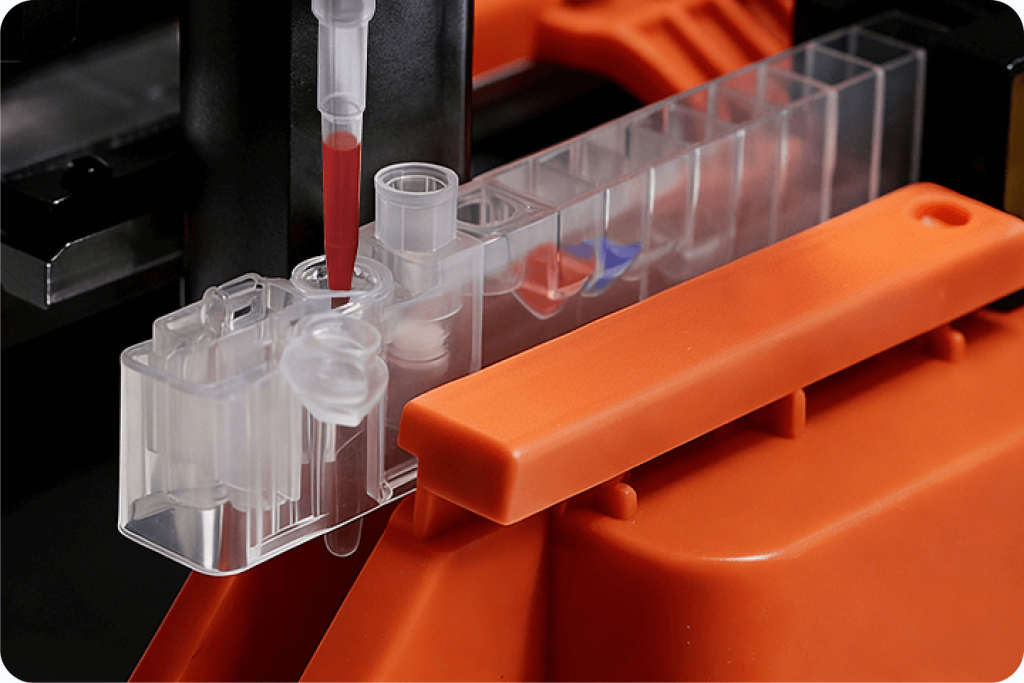
- Automation quality, including auto‑loading, closed‑tube sampling, barcode identification and automatic mixing.
- Maintenance efficiency and uptime stability.
- Interpretive depth and suitability for both centralized and decentralized testing environments.
As a result, features that previously belonged to high‑end systems—such as automatic loading racks, sealed tube piercing, internal QC routines and standardized reporting formats—are becoming baseline expectations for clinical CBC analyzer deployments, especially in medium‑size facilities.
The Role of Mid‑Size and Small Institutions
In Latin America, a large share of routine diagnostic work is carried out by mid‑size hospitals, community clinics and independent laboratories that operate with limited space and staffing. For these institutions, building fully automated testing lines is often difficult, yet they still need analyzers that can help simplify day‑to‑day testing workflows, improve turnaround times and maintain consistent quality.
For these institutions, commercially relevant priorities often include affordable automation, predictable reagent supply, manageable maintenance and access to local technical support.
How Ozelle Aligns with Latin America’s Next 3–5 Years
Ozelle’s current human diagnostics portfolio addresses several needs relevant to Latin American laboratories, including compact morphology-based hematology, integrated multi-test diagnostics, simplified maintenance and scalable automated workflows. These directions closely align with how laboratories in Latin America are expected to evolve over the next three to five years.
AI‑Powered Complete Blood Morphology and Maintenance‑Simplified Design
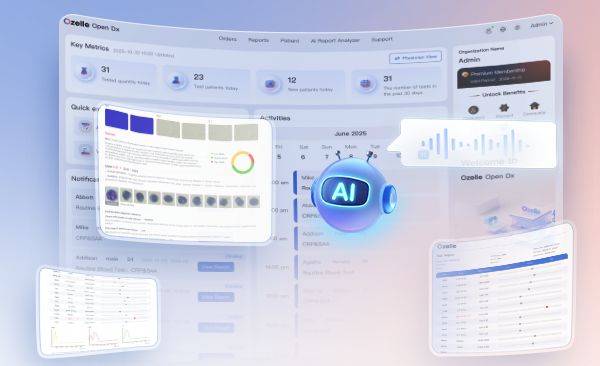
Ozelle’s AIx+CBM, or AI‑powered Complete Blood Morphology, combines high‑resolution cell imaging Ozelle’s AI × Complete Blood Morphology (CBM) approach combines high-resolution cell imaging with AI-assisted classification to provide structured morphology-related information and visible cellular evidence. It is designed to support laboratory review and more consistent cell classification while preserving the role of qualified professionals in final interpretation.
At the same time, Ozelle’s system use no-fluid-path architecture and single-use reagent kits to reduce daily cleaning, blockage risk and routine maintenance burden. This design can be commercially relevant in markets where service coverage, engineer availability and logistics vary significantly by location.
Product Roadmap: Scalable CBC Solutions for Different Care Levels
Ozelle’s current portfolio reflects different approaches to clinical hematology.
EHBT-25 is positioned as a compact morphology analyzer for primary care and community settings.
EHBT-75 focuses on AI-assisted 7-diff hematology and high-resolution cell imaging, while EHBT-50 combines 7-diff hematology with immunoassay and biochemistry in an integrated mini-lab platform.

O-Cyte 1 extends the portfolio into higher-throughput automated hematology, supporting up to 60 tests per hour as a standalone unit and up to 360 tests per hour through cascaded expansion.
Market and Service Approach: Matching a Tiered Healthcare System
According to the visitor profile of MEDITECH, attendees include hospital directors, procurement managers, laboratory professionals and clinical staff. Therefore, Ozelle’s presence at the fair goes beyond showcasing product features; it also encompasses:
- Collaboration with local partners to discuss installation, training and application support, so that laboratories can better integrate AI‑powered CBC and morphology outputs into their assessment processes.
- Sharing insights on AIx+CBM, integrated mini‑lab concepts and maintenance‑simplified workflows during meetings and side events, helping stakeholders form realistic expectations and planning paths for adopting new hematology technologies.
By aligning products, services and educational efforts with the tiered structure of Latin American healthcare systems, Ozelle aims to provide laboratories at different levels of care with a progressive upgrade path—from basic CBC automation to more advanced, morphology‑enabled diagnostics.
To explore Ozelle’s current hematology and CBC solutions, readers can visit Ozelle hematology analyzer solutions.
FAQ: Common Questions About Clinical CBC Analyzers
- What is a clinical CBC analyzer?
A clinical CBC analyzer is an automated hematology analyzer designed to perform a complete blood count, including white blood cell differential, red cell indices, hemoglobin, hematocrit and platelet parameters, from a small blood sample. It provides hematology information that can support anemia evaluation, infection-related assessment and review of other hematologic abnormalities.
- What should laboratories in Latin America consider when selecting a clinical hematology analyzer?
Laboratories in Latin America should balance sample volume, budget, maintenance capacity and IT infrastructure when choosing a clinical hematology analyzer. For many mid‑size and smaller facilities, compact design, simplified maintenance, essential automation features and LIS compatibility are more critical than maximum throughput alone.
- How does AI‑powered morphology add value to CBC analyzer technology?
AI-assisted morphology can support cell classification, generate morphology-related flags and link selected results with underlying cell images. This provides additional visual context and may help laboratories prioritize samples for further review, while final interpretation remains with qualified laboratory professionals.
- How do clinical CBC analyzers support laboratory automation and digitalization?
Depending on model and workload segment, clinical CBC analyzers may include barcode scanning, automated loading, closed-tube sampling, QC management and LIS/HIS connectivity. These capabilities reduce manual data entry, streamline sample handling and enable more standardized workflows, making it easier for laboratories to move toward digital, traceable operations.
- How is Ozelle’s CBC strategy aligned with Latin American needs?
Ozelle’s current portfolio addresses different laboratory requirements through compact morphology analyzers, integrated mini-lab systems and scalable automated hematology platforms. Across these configurations, the common focus is AI-assisted morphology, visible cellular evidence, simplified daily operation and workflow fit for different testing environments.
Conclusão
Latin American laboratories are unlikely to follow a single technology path. Larger institutions may prioritize throughput, automation and connectivity, while smaller facilities may place greater weight on compact design, serviceability and predictable operating costs. Across both segments, AI-assisted morphology and integrated testing are emerging as differentiated capabilities rather than universal replacements for established hematology systems.
Ozelle’s current portfolio reflects this diversity through compact morphology-focused analyzers, an integrated mini-lab platform and a scalable higher-throughput hematology system. The commercial opportunity lies not in presenting one analyzer as the answer for every institution, but in matching product architecture, service support and testing scope to the realities of each local market.