
 Português
  English
  Français
  Русский
  Español
  Deutsch
  العربية
  Italiano
O diagnóstico in vitro encontra-se num ponto de inflexão. Os analisadores de hematologia tradicionais, concebidos para laboratórios centralizados, têm dificuldade em acompanhar o ritmo de um mundo que exige cada vez mais conhecimentos rápidos e de alta resolução no local de prestação de cuidados. De um lado estão os analisadores numéricos que fornecem contagens e índices, mas carecem de contexto morfológico; do outro estão os esfregaços manuais e a microscopia que fornecem detalhes ricos, mas permanecem lentos, dependentes do operador e difíceis de escalar.
IA de Ozelle × CBM (morfologia do sangue total) A arquitetura do Ozelle é uma resposta a esta tensão estrutural. Ao fundir a imagem da morfologia celular, o reconhecimento de IA multi-classe e os testes multi-ensaio integrados num sistema preparado para o cenário, o Ozelle tem como objetivo fornecer uma profundidade de nível laboratorial a partir de uma única gota de sangue - quer o dispositivo se encontre num hospital terciário, numa clínica primária, numa farmácia ou num ambiente móvel.
Este artigo analisa os fundamentos técnicos e as implicações clínicas da IA × CBM e explora a forma como esta pode remodelar o futuro do diagnóstico de sangue.
Os cuidados de saúde modernos enfrentam três pressões convergentes no domínio dos diagnósticos:
- Aumento do volume e da complexidade dos testes O envelhecimento das populações, as doenças crónicas e a multimorbilidade conduzem a um maior número de testes por doente, enquanto a gama de biomarcadores clinicamente relevantes continua a aumentar. Os laboratórios centrais enfrentam cargas de trabalho crescentes sem um aumento proporcional do pessoal qualificado.
- Descentralização dos cuidados. Os cuidados estão a aproximar-se dos doentes - em clínicas de cuidados primários, farmácias, centros comunitários e até em ambientes móveis e domiciliários. Estes locais exigem dispositivos compactos e de baixa manutenção que possam fornecer rapidamente informações acionáveis, muitas vezes com pessoal não laboratorial.
- Limitações das plataformas hematológicas convencionais Plataformas convencionais de 3 partes ou Analisadores diferenciais de 5 partes são excelentes em parâmetros numéricos, mas são cegos para a morfologia celular subtil e para as formas anormais. Quando é necessário um conhecimento mais profundo, os laboratórios têm de recorrer à análise manual do esfregaço, que é:
- Demorado e muito dependente do operador
- Difícil de normalizar e escalar
- Pouco adequado para ambientes descentralizados ou de elevado rendimento
Ao mesmo tempo, os médicos esperam cada vez mais do que números brutos. Precisam de informações sintetizadas: que padrões são anormais, o que podem significar e que testes adicionais são mais relevantes - idealmente num fluxo de trabalho único e simplificado.
É neste contexto que surge a IA × CBM: não apenas como mais um analisador, mas como uma nova arquitetura de diagnóstico que integra morfologia, ensaios multimodais e software nativo da IA.
Núcleo técnico: Algoritmos e dados de IA × CBM
Da contagem de hemogramas à morfologia do sangue completo
Os analisadores de hematologia tradicionais medem a impedância eléctrica ou a dispersão ótica para obter contagens e índices de células. A abordagem CBM da Ozelle mantém a espinha dorsal quantitativa, mas acrescenta uma camada completa de imagem e IA no topo.
A nível do hardware, o CBM combina:
- Microscopia e ótica de alta resolução Um sistema ótico personalizado capta imagens microscópicas com uma resolução de nível de imersão em óleo em tempo real, permitindo a visualização do tamanho, forma, segmentação nuclear e caraterísticas citoplasmáticas das células.
- Coloração em fase líquida e imagem em Z A coloração húmida (por exemplo, protocolos do tipo Wright-Giemsa) enriquece o contraste de cor, enquanto a imagem em Z reconstrói representações celulares em 3D. Isto produz vistas multidimensionais que são altamente informativas para modelos de IA.
- Varrimento de campo completo a alta velocidade O varrimento automatizado cobre todo o campo, capturando milhares de células por lâmina - equivalente sem navegação manual.
Estas imagens são depois introduzidas no motor de IA que alimenta o CBM.
Reconhecimento de células multi-classe: Para além da “Difusão de 5 partes”
Enquanto um diferencial tradicional pode separar neutrófilos, linfócitos, monócitos, eosinófilos e basófilos, a MFC alarga a classificação a um conjunto mais vasto de morfologias clinicamente importantes, incluindo:
- Subtipos de neutrófilos
- NST: granulócitos neutrofílicos em estafilococos (formas em banda / precursores anteriores), reflectindo o desvio para a esquerda e o stress da medula óssea
- NSG: Granulócitos segmentados neutrofílicos (neutrófilos maduros, primeira linha de defesa)
- NSH: Granulócitos neutrófilos hipersegmentados, frequentemente associados a maturação desregulada ou processos megaloblásticos
- Células linfóides anormais e atípicas
- ALY: Linfócitos atípicos, que podem sugerir infecções virais ou linfocitose reactiva
- Parâmetros relacionados com a eritroide
- RET: Reticulócitos, indicando a resposta da medula óssea à anemia ou hemólise
- Plaquetas e outros elementos formados
- PAg e parâmetros plaquetários detalhados, com a capacidade de visualizar plaquetas e padrões de agregados
- Hemácias morfologicamente anormais: esquistócitos, equinócitos, células em lágrima, etc.
Este reconhecimento multi-classe não é um conjunto de regras adicionais; é conduzido por modelos de aprendizagem profunda treinados de ponta a ponta em dados de imagem do mundo real.
Motor Algorítmico: Aprendizagem profunda em escala
A pilha de IA da Ozelle é construída em torno de redes neurais convolucionais (CNNs) treinadas num dos maiores conjuntos de dados conhecidos de imagens reais de células sanguíneas na prática de rotina.
As principais caraterísticas incluem:
- Com mais de 50.000 analisadores instalados em todo o mundo e dezenas de milhões de imagens de células geradas todos os dias, a base de dados cumulativa do Ozelle ultrapassa os 100 mil milhões de pontos de dados. Isto permite que o sistema capture:
- Variabilidade entre doentes
- Diversidade étnica e regional
- Desvio do instrumento e do reagente ao longo do tempo
- Morfologias raras que são difíceis de recolher em estudos controlados
- Entradas multidimensionais e melhoramento avançado O pipeline de imagiologia fornece vistas multi-espectrais e multi-ângulo, com melhoramento de imagem baseado em CNN e técnicas de super-resolução para ultrapassar os limites da ótica bruta. Isto melhora a definição dos bordos, a segmentação nuclear e a visibilidade dos grânulos - todos cruciais para uma classificação morfológica robusta.
- Auto-ML e aprendizagem contínua O conjunto de modelos não é estático. O desempenho do algoritmo é aperfeiçoado de forma iterativa utilizando pipelines de aprendizagem automática e feedback de um sistema de controlo de qualidade ao nível da indústria. Isto permite:
- Calibração contínua em implantações globais
- Redução de falsos positivos/negativos em classes de células raras
- Alinhamento progressivo com o desempenho a nível de patologista especialista
O resultado é um motor de reconhecimento de IA que pode classificar um vasto conjunto de subtipos de glóbulos brancos, células anormais e elementos formados com elevada precisão, mantendo a velocidade e a reprodutibilidade esperadas de um analisador automático.
Arquitetura integrada: Hematologia, Bioquímica, Imunoensaio num único fluxo de trabalho
Painéis orientados por cenários construídos numa única plataforma
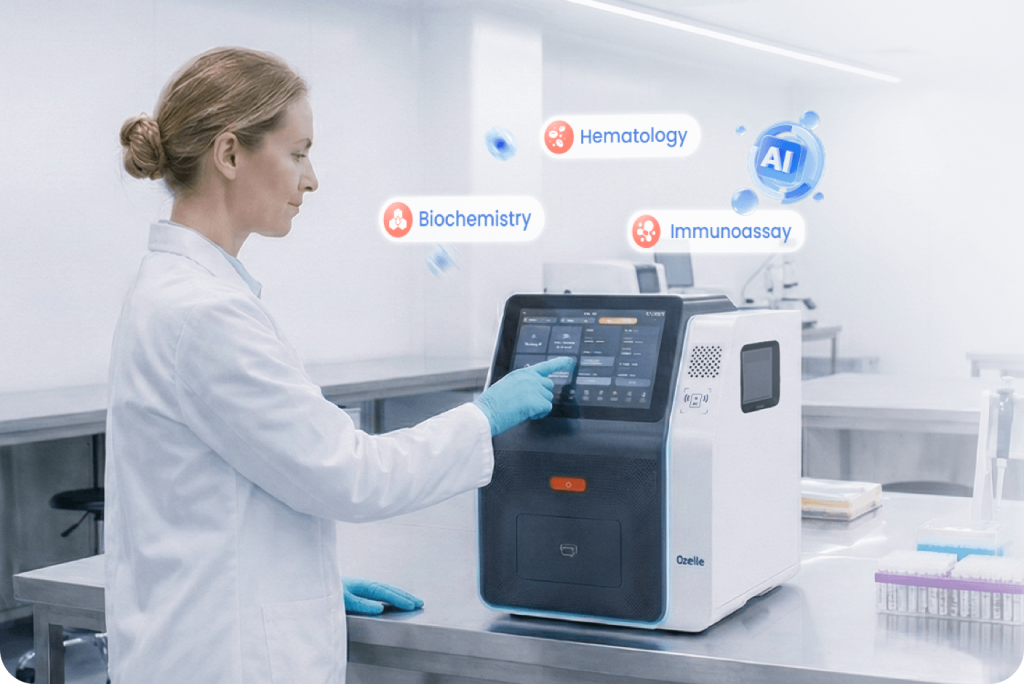
O conceito AI × CBM vai para além da morfologia. A plataforma da Ozelle foi concebida como um mini-laboratório integrado que unifica:
- Hematologia / CBM: Hemograma completo, morfologia e parâmetros alargados
- Bioquímica (química seca): por exemplo, GLU, TG, TC, UA, marcadores de função renal e hepática
- Imunoensaio (imunocromatografia de fluorescência): marcadores de infeção e de inflamação, hormonas, marcadores cardíacos, etc.
Todos os testes são efectuados através de um sistema baseado em cartuchos, isento de manutenção, que:
- Utiliza kits de teste integrados de utilização única (hematologia, bioquímica, cartões de imunoensaio)
- Elimina os sistemas tradicionais de líquidos, a tubagem e a manutenção frequente
- Minimiza o risco de contaminação cruzada e simplifica o funcionamento para utilizadores não pertencentes ao laboratório
A partir desta plataforma unificada, os médicos podem configurar painéis específicos do cenário, tais como:
- Tipagem da infeção: CBC + CRP + SAA
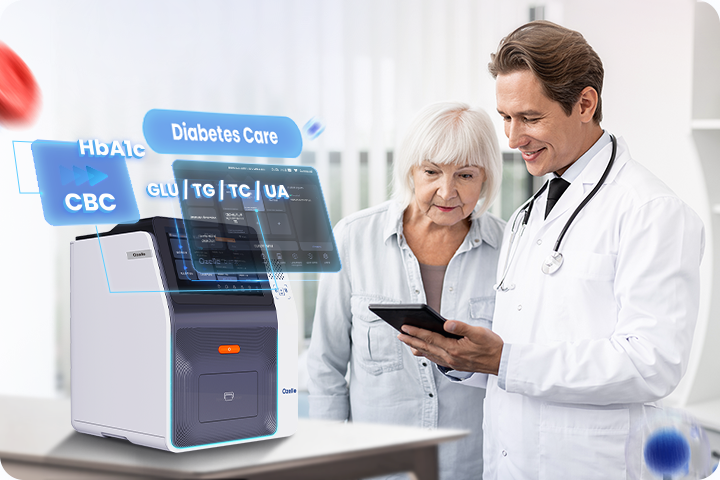
- Controlo da diabetes: Hemograma + HbA1c
- Rastreio cardíaco: CBC + NT-proBNP, com troponina e CK-MB opcionais
- Painéis da tiroide, dos rins ou do metabolismo ósseo, e outros, à medida que o menu se expande
Assim, o sistema não é apenas um analisador de hematologia com IA, mas um motor de diagnóstico multimodal que pode adaptar o seu menu de testes à questão clínica em causa.
Fluxo de trabalho de gota única e alta eficiência
Em termos práticos, IA × CBM traduz-se em:
- Necessidade de amostra tão baixa como ~30 µL de sangue capilar para hematologia em muitas configurações - adequado para recolha por picada no dedo em ambulatório e em farmácias
- Rendimento de cerca de 10 amostras por hora, equilibrando as necessidades do ponto de tratamento com fluxos de trabalho de pequenos laboratórios
- Funcionamento com um só clique com pré-tratamento, coloração, imagiologia, análise e relatório automatizados de amostras
Este design aborda os pontos problemáticos comuns dos sites descentralizados: pessoal limitado, tempo limitado e tolerância limitada para manutenção complexa.
Banco de trabalho de IA inteligente (Open Dx): Dos números à orientação
Bancada de trabalho digital integrada no interior do analisador
Uma camada crítica da IA × CBM é o Intelligent AI Workbench (Open Dx), que transfere a inteligência de diagnóstico para o núcleo da interface do utilizador do analisador.
O Open Dx integra-se:
- Encomenda de testes e seleção de painéis
- Visualização de resultados em tempo real, com acesso a:
- Parâmetros numéricos brutos
- Histogramas de células e gráficos de dispersão
- Imagens celulares de alta resolução e mosaicos morfológicos
- Orientação e interpretação assistidas por IA
Isto transforma o analisador de uma fonte de dados passiva numa consola de diagnóstico interactiva.
De relatórios estáticos a informações de diagnóstico interactivas
Os analisadores tradicionais produzem relatórios impressos estáticos. Em contraste, o Open Dx fornece:
- Deteção automatizada de anomalias O sistema destaca desvios dos intervalos de referência, distribuições anormais e padrões morfológicos suspeitos.
- Marcação de riscos e reconhecimento de padrões Utilizando padrões de diagnóstico pré-treinados, o workbench pode sugerir possíveis cenários clínicos - por exemplo:
- Infeção bacteriana precoce com desvio à esquerda e marcadores de inflamação
- Infeção viral com alterações do padrão linfocitário e dinâmica da SAA
- Potenciais anomalias hematológicas que justifiquem um acompanhamento
- Interpretações panorâmicas estruturadas Em vez de deixar os clínicos a sintetizar manualmente dezenas de parâmetros, o banco de trabalho de IA apresenta uma secção de interpretação concisa, oferecendo:
- Resumo das principais anomalias
- Possíveis mecanismos fisiopatológicos
- Sugestões para outros testes ou correlação clínica
- IA de conversação para consulta de relatórios Uma interface semelhante a um diálogo permite que os médicos consultem diretamente o sistema: “Porque é que a NST está elevada?” “O que poderá significar esta combinação de LYM baixo e MON elevado?” O sistema responde contextualizando os resultados com conhecimentos relevantes baseados na literatura e em regras, ajudando os médicos a interpretar padrões complexos com mais rapidez e confiança.
Para aplicações veterinárias, o mesmo quadro estende-se a orientações específicas para cada espécie e a referências de medicamentos, realçando a extensibilidade do conceito de banco de trabalho de IA.
Impacto clínico e operacional: Redefinindo a eficiência na linha de frente
Para os médicos: Perceção mais profunda, deteção mais precoce
Ao combinar IA × CBM com painéis baseados em cenários, os médicos ganham:
- Deteção precoce de anomalias subtis A análise multiclasse de neutrófilos (NST/NSG/NSH), linfócitos anormais, reticulócitos e anomalias da forma das hemácias podem revelar infecções precoces, stress da medula óssea ou doenças hematológicas que poderiam passar despercebidas com contagens simples.
- Contexto mais rico a partir de um único encontro Em vez de enviar várias amostras para diferentes analisadores ou laboratórios externos, os médicos podem aceder ao hemograma, morfologia, marcadores inflamatórios, marcadores cardíacos e indicadores metabólicos a partir de um único dispositivo e visita.
- Apoio à decisão em ambientes com limitações de tempo As interpretações geradas por IA e os indicadores de risco ajudam os não especialistas - como os médicos de cuidados primários ou os farmacêuticos - a interpretar rapidamente relatórios complexos e a determinar se devem ou não fazê-lo:
- Manter a gestão a nível primário
- Encaminhar para um especialista
- Encomendar testes de acompanhamento mais específicos
Para cuidados primários, farmácias e locais descentralizados
Em ambientes descentralizados, a IA × CBM visa as principais barreiras operacionais que anteriormente limitavam os diagnósticos avançados:
- Manutenção e formação mínimas A conceção baseada em cartuchos, a ausência de condutas fluídicas e os fluxos de trabalho guiados reduzem a dependência de técnicos de laboratório altamente qualificados.
- Um único dispositivo substitui os analisadores de hematologia, bioquímica e imunoensaio separados, poupando espaço e simplificando a aquisição e a assistência.
- Economia melhorada A consolidação de testes em cartuchos tudo-em-um e a minimização da manutenção do instrumento reduzem o custo total de propriedade, tornando o diagnóstico avançado viável para locais mais pequenos.
O efeito cumulativo é uma redistribuição da capacidade de diagnóstico: mais do que anteriormente estava confinado aos laboratórios hospitalares torna-se acessível mais perto dos doentes, sem comprometer a profundidade analítica.
Perspectivas futuras: Para onde a IA × CBM pode ir a seguir
A IA × CBM não é um produto estático; é uma arquitetura de plataforma com uma margem de manobra significativa para a inovação.
Há várias direcções que se destacam:
- Menus de biomarcadores expandidos através de actualizações de software Com cartões de ensaio modulares e capacidades de atualização OTA (over-the-air), podem ser adicionados novos parâmetros - desde novos marcadores cardíacos a assinaturas inflamatórias ou oncológicas emergentes - sem redesenhar o hardware principal.
- Deteção mais granular e de células raras À medida que o corpus de dados globais cresce, os modelos de IA podem ser treinados para reconhecer morfologias cada vez mais raras (por exemplo, tipos específicos de blastos, formas displásicas) e integrá-los em algoritmos de rastreio para deteção precoce de doenças hematológicas.
- Análise personalizada e longitudinal Aproveitando a plataforma Ozelle IoT mais ampla, os analisadores podem ser conectados a sistemas baseados em nuvem que rastreiam as tendências dos pacientes ao longo do tempo, permitindo:
- Linhas de base personalizadas e intervalos de referência dinâmicos
- Alerta para desvios subtis antes de a doença se manifestar
- Os percursos de cuidados integrados e os relatórios de telemedicina enriquecidos com IA podem ser partilhados de forma segura com especialistas remotos, constituindo a espinha dorsal da tele-hematologia e dos modelos de cuidados colaborativos entre os prestadores de cuidados primários e os centros terciários.
- Expansão inter-espécies e inter-domínios As implementações veterinárias da IA × CBM ilustram como o mesmo quadro morfológico e de IA pode ser adaptado a diferentes contextos biológicos. As futuras extensões podem incluir domínios clínicos de nicho ou aplicações de investigação específicas.
Conclusão
“IA × CBM: A próxima geração de morfologia do sangue total” é mais do que um slogan. Encapsula um repensar estrutural da forma como a hematologia e os diagnósticos relacionados devem funcionar num sistema de cuidados de saúde que está a tornar-se mais distribuído, rico em dados e orientado para os resultados.
Por combinação:
- Morfologia de alta resolução e com recurso a IA
- Reconhecimento de células multi-classe para além dos diferenciais tradicionais
- Testes integrados de hematologia, bioquímica e imunoensaio num único dispositivo sem manutenção
- E um banco de trabalho de IA inteligente que transforma dados brutos em orientações de diagnóstico interactivas
A plataforma de IA × CBM da Ozelle oferece um modelo para diagnósticos prontos para o cenário: suficientemente profundo para especialistas, mas suficientemente simples e robusto para ser utilizado na linha da frente.
Para os líderes de laboratórios, tecnólogos médicos e decisores de tecnologias de saúde, a principal conclusão é a seguinte: A IA nos diagnósticos oferece o maior valor não quando é aparafusada aos analisadores existentes, mas quando é concebida em toda a pilha de diagnóstico - desde a ótica e os ensaios aos algoritmos, fluxos de trabalho e apoio à decisão clínica. A IA × CBM representa um dos exemplos mais maduros dessa integração de ponta a ponta que está agora a entrar na prática de rotina.
Perguntas frequentes
Q1: O sistema não necessita de manutenção? R1: Sim. Os cartuchos de utilização única e a ausência de linhas de líquido internas eliminam a limpeza de rotina.
P2: É necessária a compra de reagentes adicionais? A2: Não. Todos os reagentes necessários estão integrados nos kits de teste.
P3: Qual é o grau de dificuldade da operação? R3: O funcionamento é totalmente automatizado após o carregamento do cartucho, adequado para pessoal não pertencente ao laboratório.
Q4: Os reagentes necessitam de transporte em cadeia de frio? A4: Não. Mantêm-se estáveis à temperatura ambiente normal.
Q5: A IA × CBM pode ligar-se ao LIS/HIS?
A5: Sim. A plataforma suporta LIS/HIS padrão e conetividade de rede para integração de dados.