
 Português
  English
  Français
  Русский
  Español
  Deutsch
  العربية
  Italiano
In a high-throughput automatic hematology laboratory, the first CBC result is only one part of the workflow. Laboratories also need to decide how differential information is reported, how flagged samples enter further review, when morphology-related information becomes available, and how the system will handle increasing sample volume.
In a conventional standalone hematology workflow without integrated image-based morphology, CBC and differential results, analyzer flags, and laboratory review rules typically determine whether a specimen proceeds to additional morphology review. O-Cyte 1 introduces a different route by combining 7-part differential reporting, image-backed morphology, and AI-assisted cell classification during the same automated run.
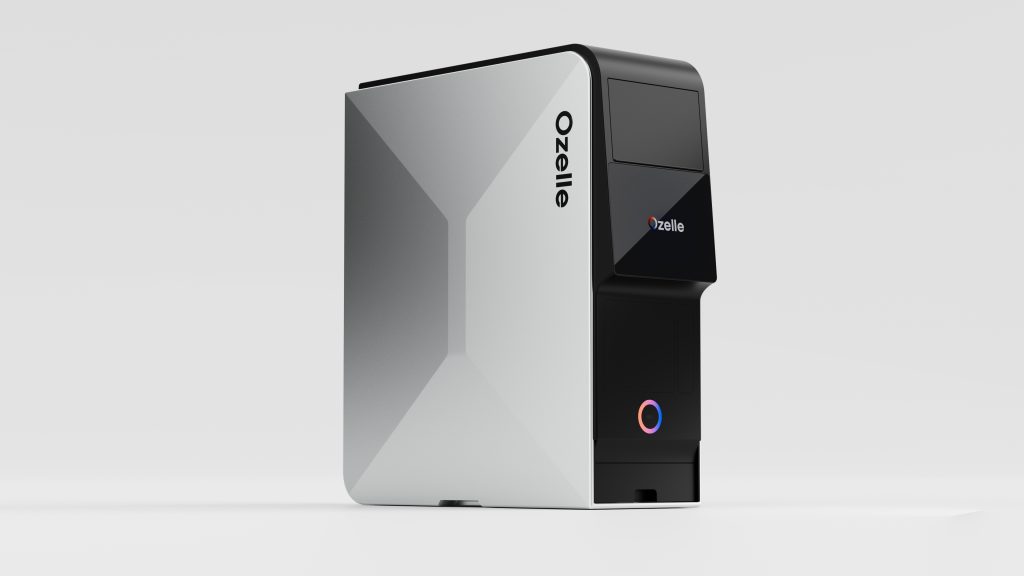
The following comparison examines how each automatic hematology analyzer approach affects reporting scope, morphology workflow, sample loading, standalone throughput, reagent setup, footprint, and capacity expansion. O-Cyte 1 follows a different architecture by combining 7-diff CBC, image-backed morphology, and AI-assisted cell classification within one automated hematology workflow.
| Comparison dimension | O-Cyte 1 | Anonymized representative analyzer | Why it matters |
| Differential architecture | 7-part differential with additional neutrophil-related categories and extended hematology outputs | 5-part differential; 34 or 41 reportable parameters depending on the test mode | Defines the structure of differential reporting and the type of hematology information available during routine review |
| Morfologia | image-backed morphology and AI-assisted cell classification integrated into the CBC workflow | CBC, differential results, analyzer flags, and graphical outputs; morphology review follows the laboratory’s flag- and rule-based workflow | Determines whether image-backed cell information is available during the initial review stage or obtained through a later review route |
| RET | Included in the O-Cyte 1 hematology workflow; up to 60 tests/hour | Available in relevant testing modes; up to 45 tests/hour | Shows whether reticulocyte information is supported and how it fits into the routine test workflow |
| ESR | Not included in this O-Cyte 1 comparison configuration | Supported in the reference configuration; up to 50 tests/hour | Important for laboratories that require ESR within the same hematology installation |
| Carregamento de amostras | Auto Loader Mode | Open-vial loading | Affects how primary tubes enter the workflow, operator involvement, and sample handling during busy periods |
| Rendimento | Up to 60 tests/hour standalone; up to 360 tests/hour with up to six cascaded analyzers | Up to 80 CBC + differential tests/hour in the referenced standalone configuration; throughput varies by test mode | Compares standalone routine capacity with a scalable expansion path for higher workload requirements |
| Reagent/consumable model | Integrated consumable-based model | Multi-reagent liquid configuration | Affects inventory structure, storage organization, replenishment planning, and daily workflow management |
Differential Reporting and Review Information
A common 5-part differential separates white blood cells into neutrophils, lymphocytes, monocytes, eosinophils, and basophils. This familiar structure supports routine CBC workflows and can be combined with reticulocyte, platelet-related, or ESR functions according to the installed configuration.

The reference system’s review path begins with CBC results, differential outputs, flags, and graphical information. Where a result meets the laboratory’s established action criteria, the sample can enter a follow-up sequence that may include repeat analysis, smear preparation, staining, microscopy review, and manual documentation. This architecture directs manual review activity toward selected specimens.
O-Cyte 1 reports 41 hematology parameters and uses a 7-part differential structure. Its output includes red blood cell and platelet-related information, reticulocyte-related results, nucleated red blood cell information, immature granulocyte-related outputs, and image-based Complete Blood Morphology information. Single-cell images and AI-assisted classification are generated during the same analytical run as the CBC result.
The comparison is therefore about when morphology-related information reaches the reviewer. In the conventional route, manual morphology review usually follows a flag or laboratory rule. In the O-Cyte 1 workflow, quantitative hematology outputs and cell-image information are available together during the initial result-review stage.
| Reporting area | Anonymized representative analyzer | O-Cyte 1 |
| Differential structure | 5-part differential | Diferencial em 7 partes |
| Reticulocyte-related information | Available in configured testing modes | Included in the hematology report |
| Nucleated red blood cell information | Available in configured testing modes | Included in the hematology report |
| Immature granulocyte-related outputs | Available in configured testing modes | Included in the hematology report |
| Morphology-related information | Flags and subsequent review procedures | Cell images and AI-assisted classification during automated processing |
| Review emphasis | Quantitative outputs, flags, and rule-triggered follow-up | Quantitative outputs and image-based morphology information in one workflow |
Automatic Hematology Analyzer Workflow: Sample Loading and Reagents
An automatic hematology analyzer workflow includes sample entry, tube handling, consumable management, result review, and the handling of flagged samples—not only cell counting.

The common high-throughput reference system uses open-vial loading. This route can align with laboratory workflows that assign personnel to direct analyzer loading and operate a defined manual process for selected flagged samples. Its eight-reagent configuration also supports its broader combination of CBC, differential, reticulocyte, and ESR-related testing modes.
O-Cyte 1 supports Auto Loader Mode. Primary tubes enter an automated process that includes image-backed morphology and AI-assisted classification before result review. O-Cyte 1 uses an integrated consumable-based reagent model, while the common reference system operates with a multi-reagent liquid configuration.
The key difference is where morphology enters the workflow: downstream review after CBC screening in the reference architecture versus image-backed morphology integrated within the O-Cyte 1 hematology workflow. The consumable model also affects inventory monitoring, replenishment planning, and routine workflow management.
| Deployment factor | Anonymized representative analyzer | O-Cyte 1 |
| Sample entry | Open-vial loading | Auto Loader Mode |
| Reagent types | Multi-reagent liquid configuration | Integrated consumable-based reagent model |
| Routine structure | CBC, differential, flags, and configured test modes | CBC, 7-part differential, imaging, and AI-assisted classification |
| Morphology route | Follow-up review after a flag or defined trigger | Image-based information generated during automated processing |
Throughput and Capacity Expansion
The common reference analyzer is configured for up to 80 CBC-plus-differential tests per hour. In reticulocyte-related mode, its stated throughput is up to 45 tests per hour; in ESR-related mode, it is up to 50 tests per hour. These figures can be relevant where a laboratory prioritizes high standalone output for routine CBC work while also requiring specific reticulocyte or ESR functions.

O-Cyte 1 supports up to 60 tests per hour in standalone operation. Its workflow combines 7-part differential reporting, image-backed morphology, and AI-assisted classification within the same automated hematology workflow. The trade-off is clear: the selected reference configuration provides the higher stated standalone CBC-plus-differential rate, while O-Cyte 1 integrates image-based morphology-related information and offers a defined cascade path for capacity growth.
A single throughput figure does not define the complete capacity of an automatic hematology analyzer. Peak sample arrivals, load/unload steps, review queues, repeat analysis, QC procedures, maintenance activity, and downstream smear review can all determine how quickly reviewed results move through the laboratory.
O-Cyte 1 can be cascaded with up to six analyzers for a stated maximum of 360 tests per hour. In a cascaded configuration, automated loading and unloading modules and a centralized operation console coordinate the expanded workflow. This enables capacity growth while retaining the same differential and imaging-based workflow across connected analyzers.
| Capacity factor | Reference configuration | O-Cyte 1 |
| CBC + differential throughput | Up to 80 tests/hour | Up to 60 tests/hour |
| Reticulocyte throughput | Up to 45 tests/hour | Up to 60 tests/hour |
| ESR throughput | Up to 50 tests/hour | Not a central function in this configuration |
| Standalone sample loading | Open-vial loading | Auto Loader Mode |
| Expansion route | Additional analyzers, modules, or automation components | Cascade of up to six analyzers |
| Maximum stated capacity | Depends on the installed system architecture | Up to 360 tests/hour |
| System coordination | Depends on module layout and automation design | Automated loading/unloading and centralized operation console |
Matching the System to Laboratory Workflow
The selected reference configuration may align with laboratories that prioritize standalone CBC-plus-differential speed, open-vial processing, reticulocyte or ESR-related functions, and a flag-led route to selective microscopy review. It may also fit facilities that already have established roles for direct sample loading, smear preparation, additional morphology review and review documentation.

O-Cyte 1 can align with laboratories that want image-based morphology information available at the same time as routine CBC reporting. Its 7-part differential, image-backed morphology, AI-assisted classification, Auto Loader Mode, integrated consumable-based reagent model, and cascade architecture create a distinct operating model for laboratories seeking to expand capacity while retaining the same O-Cyte workflow architecture.
A practical comparison should begin with the laboratory’s actual sample journey:
- CBC and differential volume during the busiest hour or shift
- Required differential structure and reportable information
- Need for reticulocyte-related, ESR, platelet-related, or morphology-related outputs
- Current process for flags, repeat analysis, smear preparation, microscopy review, and manual reporting
- Preferred sample-entry method: open-vial loading or automated loading
- Reagent storage, stock-monitoring, and replenishment requirements
- Bench space, staff access, service access, and supporting-equipment needs
- Current capacity and future expansion timeline
Ozelle hematology solutions cover different human hematology workflow requirements. O-Cyte 1 is relevant to laboratories comparing an integrated 7-diff, image-backed workflow with standalone hematology architectures in which additional morphology review occurs downstream of the initial CBC result.
Conclusion: A Workflow-Led Choice for High-Throughput CBC Testing
The most appropriate architecture depends on whether the laboratory prioritizes:
higher standalone CBC throughput
Integrated RET/ESR functions, image-based morphology within the primary hematology workflow, automated sample loading, or modular capacity expansion.
O-Cyte 1 is differentiated by combining 7-diff hematology, image-backed morphology, automated loading, and an expandable 60-to-360 T/H architecture within one workflow.
Explore the O-Cyte 1 automatic hematology analyzer to review its 7-part differential workflow, AI-assisted morphology and image-backed review sample-loading configuration, and capacity expansion options.