
 Italiano
  English
  Français
  Русский
  Español
  Deutsch
  Português
  العربية
Across the Middle East and Africa (MEA), demand for reliable blood diagnostics is rising faster than laboratory infrastructure and staffing can comfortably keep pace. Hematology analyzers sit at the core of this transformation because complete blood count testing underpins infection management, oncology, chronic disease monitoring, and emergency care across nearly every healthcare system.
The hematology analyzers market in MEA is projected to grow at around 6% CAGR through the latter part of this decade, driven by population growth, hospital expansion, and greater emphasis on laboratory accreditation and quality. Within this environment, regional exhibitions such as WHX Labs Lagos in Nigeria and Africa Health ExCon in Egypt serve as high-signal reference points for how hematology analyzer company strategies are evolving across both Africa and the broader Middle East.

Signals from West Africa and North Africa
In West Africa, Nigeria has become a focal point for healthcare investment, with projections indicating annual health-sector growth above 7% and growing attention to diagnostic capacity and laboratory infrastructure. The country’s status as the region’s largest economy and a key logistics hub makes it an important test bed for new laboratory technologies and business models.
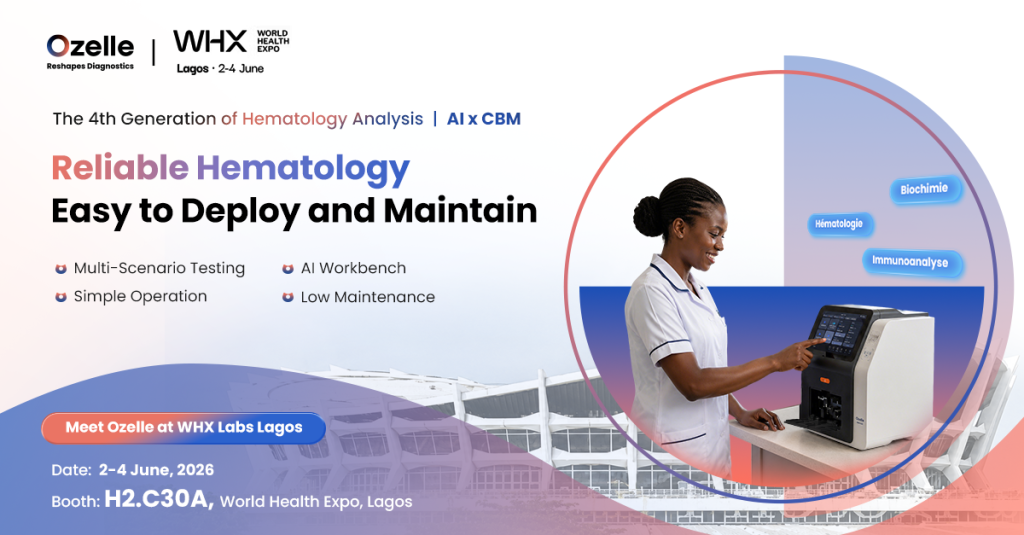
WHX Labs Lagos was held at the Landmark Centre in Lagos from June 2–4, 2026 as a laboratory-focused environment that brought together suppliers, hospital laboratories, private diagnostic chains, and policymakers. The show’s positioning as a dedicated trade fair for medical laboratories, diagnostics, and laboratory technology in West Africa underscored how central high-quality testing has become to broader healthcare ambitions in the region.
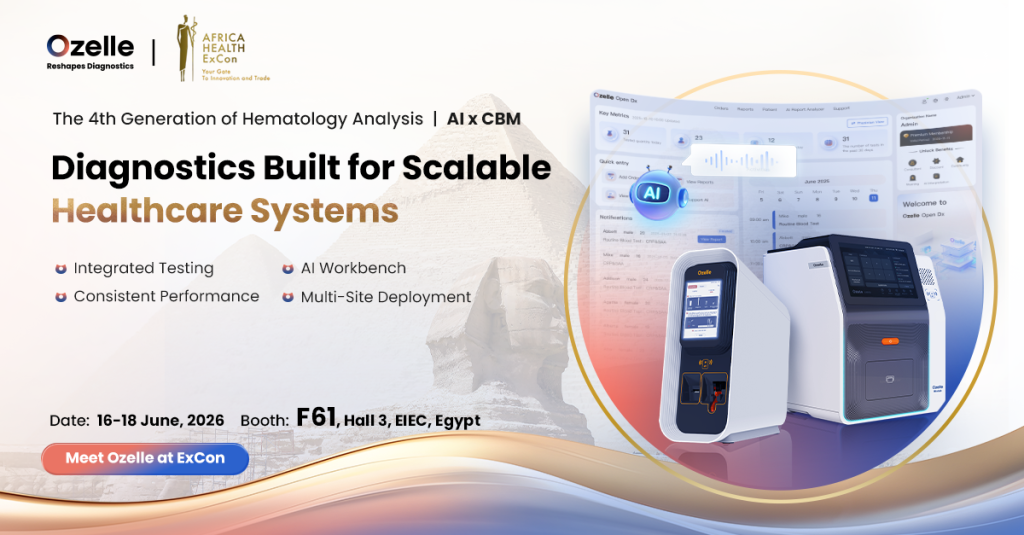
Further north, Africa Health ExCon took place in Cairo from June 16–18, 2026 at the Egypt International Exhibition Center, as one of the largest healthcare events on the continent. The exhibition covered pharmaceuticals, medical devices, diagnostics equipment, laboratory services, and digital health, with a stated aim of serving as a gateway for investment and technology transfer into African healthcare. Together, Lagos and Cairo provide a complementary view: West Africa as a fast-growing, highly import-dependent diagnostic market, and Egypt as a bridge between Africa and the broader Middle East in terms of manufacturing, regulation, and innovation.
Technology trends across MEA: from counts to AIxCBM and mini labs
AI-powered Complete Blood Morphology
Globally, the hematology analyzer market, valued in the mid-single-digit billion-USD range, is projected to nearly double by the mid-2030s, with much of the incremental value coming from systems that go beyond simple cell counts. In MEA, one of the clearest technology shifts visible around major regional exhibitions is the move toward AI-powered Complete Blood Morphology, or AIxCBM.
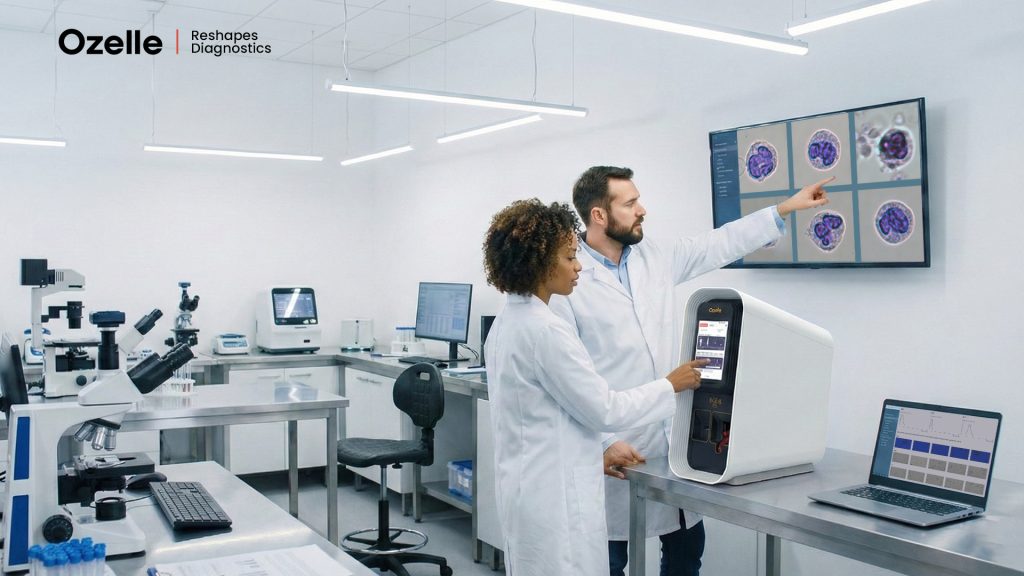
Instead of relying solely on impedance or flow-based counts, AIxCBM solutions combine high-resolution imaging with deep learning to classify white blood cell subtypes, assess red cell morphology, and capture platelet-related features while retaining full-field images for review. For laboratories that face a shortage of highly trained trained morphology reviewers or must manage high workloads with limited staff, this combination of automated morphology and visual traceability is particularly compelling.
Industry presentations at recent MEA-linked events have framed AIxCBM as a practical tool for decentralized and high-demand clinical environments rather than a distant future concept, underscoring how quickly such capabilities are moving toward the center of hematology roadmaps.
Integrated mini labs for constrained environments
A second trend cutting across both African and Middle Eastern markets is the rise of integrated mini labs that combine CBC, immunoassay, and dry biochemistry on a single, compact platform. These systems are typically designed with maintenance-light architectures, room-temperature reagents, and simplified workflows, making them well suited to primary care clinics, regional hospitals, and decentralized testing hubs where space, staffing, and logistics are constrained.
In discussions around WHX Labs Lagos and Africa Health ExCon, multi-functional analyzers have been highlighted as a way to increase the clinical information obtained from each blood draw without requiring multiple instruments, separate supply chains, and additional training tracks. This “more from each sample” logic is especially attractive in MEA settings, where every additional test parameter must justify its operational and financial footprint.
Intelligent workbenches and scenario-ready workflows
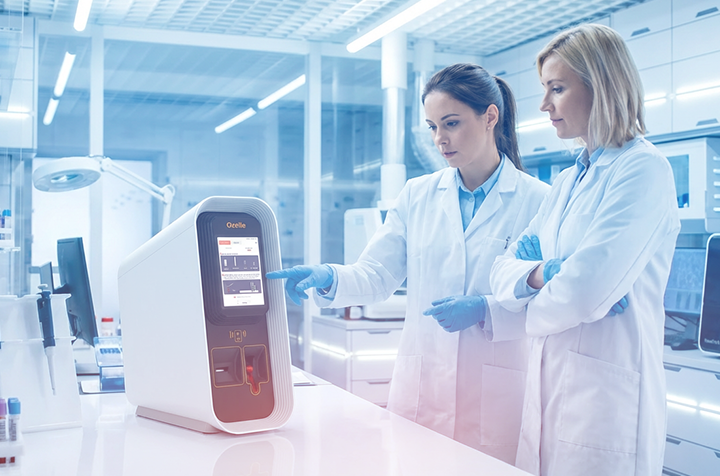
A third, more software-driven trend is the emergence of intelligent diagnostic workbenches embedded within hematology and multi-analyte platforms. Instead of acting as black-box devices that output only numerical results, next-generation analyzers increasingly feature AI-powered interpretation, rules-based reflex testing, and scenario-specific panels that guide clinicians from raw data to actionable insights.
For hematology analyzer companies serving MEA markets, this emphasis on workflow-aware design reflects pressure on clinical staff time, variable levels of training, and the need for consistent decision support across distributed networks. Solutions that unify CBC values, morphology images, and structured comments into a single interface, while exposing data for LIS/HIS integration and remote quality control, are becoming a reference point for what modern hematology looks like in the region.
Ozelle as a workflow case
Ozelle is moving in step with these MEA technology trends through a combination of AI-powered Complete Blood Morphology, integrated mini-lab architecture, and workflow-oriented software design. Through its broader hematology portfolio, Ozelle has positioned AIxCBM not as a niche add-on but as part of a larger shift toward decentralized, scenario-ready diagnostics that connect imaging, CBC analysis, and multi-analyte testing within a single operational logic.
A useful reference point is Ozelle’s broader product and technology direction, which brings together compact CBC analyzers, 7-diff morphology platforms, and all-in-one mini labs designed for settings where staffing, logistics, and workflow efficiency are constant constraints. This makes the company a relevant example of how a hematology analyzer company can translate regional demand for AI-driven morphology and integrated testing into a portfolio strategy rather than a single flagship device.
Deployment and business models: from spot sales to long-term partnerships
Total cost of ownership in import-dependent markets
Many Middle Eastern and African countries rely heavily on imported analyzers and reagents, making them vulnerable to foreign-exchange risk, shipping delays, and supply-chain disruptions. As a result, buyers in both public and private sectors are shifting focus from headline purchase price to total cost of ownership, including reagent stability and pricing, maintenance frequency, spare-parts availability, downtime risk, and the training needed to keep systems running at scale.
This shift is reflected in the commercial discussions around WHX Labs Lagos and Africa Health ExCon, where framework agreements, reagent-bundled contracts, leasing options, and pay-per-test models are increasingly part of negotiation. Manufacturers that can demonstrate predictable operating costs, low maintenance requirements, and transparent uptime metrics are better positioned to secure multi-year partnerships rather than isolated tenders.
Hybrid service networks and digital control
Another visible direction in MEA is the move toward hybrid service networks that combine local engineering and training capacity with cloud-based monitoring and analytics. In practice, this can mean anchoring service hubs and spare-parts warehouses in countries such as Nigeria and Egypt, while using remote diagnostics and update mechanisms to support installed bases across West, East, and North Africa, as well as the Gulf.
For hematology analyzer companies, this approach transforms fleets of analyzers into managed assets rather than stand-alone boxes in individual labs. Remote monitoring can flag drifts in performance, usage anomalies, or emerging maintenance needs before they result in downtime, a capability that is particularly valuable in regions where on-site visits are costly and time-consuming.
Future layout of hematology analyzer companies in MEA

Tiered portfolios aligned to regional realities
Looking ahead, hematology analyzer companies operating in MEA are likely to continue building tiered product portfolios rather than relying on a single flagship device. At the lower end, compact three-part CBC analyzers play a crucial role in extending testing to primary care and community settings; at the high end, AIxCBMAI-CBM-enabled analyzers and integrated mini labs support central laboratories and large private providers; in between, five- and seven-part differential systems fill out the continuum for district and regional hospitals.
For any hematology analyzer company, the strategic question is how to map such a portfolio onto Nigeria, Ghana, Egypt, the Gulf, and other markets in ways that balance performance, affordability, and long-term support.
Ozelle as a portfolio case
Ozelle provides a useful example of how manufacturers are structuring product portfolios for diverse MEA use cases. Its EHBT-25 addresses compact CBC and cell morphology needs in routine clinical settings, while the EHBT-75 extends this direction through AI-powered 7-diff hematology and deeper morphology analysis. At a more integrated level, the EHBT-50 Mini Lab combines hematology, immunoassay, and biochemistry within a single platform, a configuration that reflects growing MEA demand for higher diagnostic density per device and per patient visit.
This portfolio logic is notable because it mirrors the wider market shift discussed across regional exhibitions: entry-level access expansion at the base, AI-enhanced morphology for more advanced workflows, and multi-modal systems for decentralized yet information-rich testing.
Regulation, accreditation, and regional initiatives
Regulatory and accreditation frameworks across MEA are also evolving in ways that will shape how hematology analyzer companies position themselves. Initiatives linked to African laboratory excellence programs, highlighted around earlier editions of Africa Health ExCon, aim to harmonize quality standards, strengthen accreditation, and promote systematic training across the continent’s laboratory networks.
In parallel, Middle Eastern markets are tightening requirements around data integrity, cybersecurity, and interoperability for analyzers connected to hospital information systems. Systems that combine AI-driven analytics, full-field image retention, structured morphology reporting, and traceable quality controls are better aligned with these emerging standards than legacy count-only analyzers. For hematology analyzer companies, compliance and quality will increasingly sit alongside price and performance as core differentiators in MEA.
Conclusione
Taken together, the developments spotlighted around WHX Labs Lagos and Africa Health ExCon show how Middle Eastern and African markets are reshaping what it means to be a hematology analyzer company. The conversation has shifted from isolated instrument sales to AI-powered morphology, integrated mini labs, intelligent workbenches, and digitally coordinated service networks as foundational elements of long-term strategy.
For manufacturers and distributors, the implication is clear: success in MEA will depend less on single-feature advantages and more on the ability to deliver coherent, tiered portfolios and resilient service architectures that reflect the realities of Nigeria and Ghana, Egypt and the Gulf, and beyond. Companies such as Ozelle—through AIxCBM technology, integrated diagnostic platforms, and IoT-enabled operations—offer a useful illustration of how future-ready hematology strategies may take shape across the Middle East and Africa.