
 Italiano
  English
  Français
  Русский
  Español
  Deutsch
  Português
  العربية
Vomiting and diarrhea are among the most common reasons dogs and cats visit a small animal clinic, but they are not always simple cases. A pet with mild gastrointestinal signs may only need supportive care, while another may be dealing with dehydration, intestinal parasites, pancreatitis, inflammation, blood loss, or a broader systemic problem that is not obvious from symptoms alone.
Ozelle EHVT-50 is an all-in-one veterinary CBC machine that goes beyond a simple blood count by adding urine, feces, and immunoassay testing on a single platform, which is especially useful when dogs and cats present with vomiting and diarrhea. Instead of relying on separate devices or send-out tests, small animal clinics can complete a more useful in-house gastrointestinal workup during the same visit and give owners clearer answers before they leave.
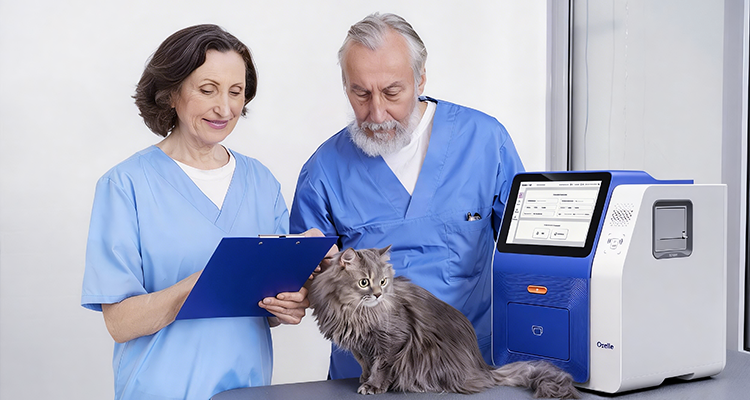
Why Vomiting and Diarrhea Cases Need More Than a CBC
A CBC is an important first step in many gastrointestinal cases, but it rarely gives the whole picture on its own. A clinic may also need to know whether intestinal parasites, including protozoal organisms are present, whether dehydration or kidney stress is affecting the patient, and whether inflammatory or disease-specific markers should guide a different treatment plan.
This is why vomiting and diarrhea workups can become fragmented when they rely on separate analyzers, manual microscopy, rapid tests, and outside laboratories. Each extra step adds time, increases handoffs, and makes it harder to complete a clear diagnostic path during the same visit. For small animal clinics that want faster and more complete in-house answers, a wider testing workflow makes a meaningful difference.
What Ozelle EHVT-50 Can Do
Ozelle positions EHVT-50 as an all-in-one veterinary mini lab rather than a CBC-only machine. On one compact platform, it integrates 7-diff hematology, AI-supported morphology, urine microscopy, feces microscopy, and immunoassay for dogs and cats.
For many clinics, EHVT-50 functions as more than a routine veterinary CBC machine. It replaces a basic CBC-only workflow with a broader diagnostic path that brings blood, urine, feces, and marker testing together on one analyzer. That combination is especially useful in symptomatic cases, where clinicians need more than one type of information to support clinical assessment.
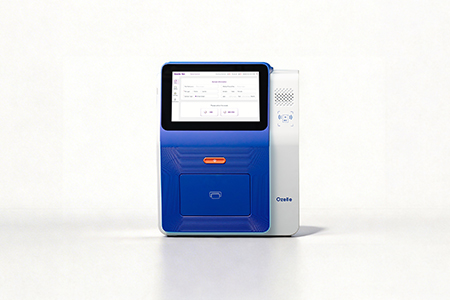
Core functions of EHVT-50
| Function | What it adds to vomiting and diarrhea diagnosis |
| 7-diff hematology | Evaluates inflammation, anemia, platelet status, and dehydration-related blood changes. |
| AI cell morphology | Helps identify abnormal or immature cells with clearer visual interpretation. |
| Analisi delle feci | Screens for parasite eggs, intestinal protozoa, microorganisms, inflammatory cells, and digestive abnormalities. |
| Analisi delle urine | Adds useful context when dehydration, urinary findings, kidney stress, or systemic involvement is suspected. |
| Immunodosaggio | Supports deeper workups with markers such as cCRP, fSAA, cPL, fPL, cT4, fT4, cProg, and cNT-proBNP. |
The EHVT-50 is built to be easy to live with in a real clinic. It uses sealed, single-use kits and has no internal fluid lines, so there are no daily cleaning cycles, no rinse programs, and no clogged tubing to deal with. You run the test, throw the kit away, and move on to the next patient. For a team that is already busy with consultations and procedures, this means less time maintaining machines and more time actually treating animals.
Why EHVT-50 Fits Small Animal Clinics
Small animal clinics often need diagnostic tools that are broad enough for everyday symptomatic cases, but simple enough to use without a large laboratory setup. EHVT-50 is positioned for exactly that space, combining several commonly needed test types in one compact system for companion-animal practice.
Compared with a basic veterinary CBC machine, EHVT-50 gives clinics a wider in-house diagnostic workflow for dogs and cats with vomiting, diarrhea, lethargy, loss of appetite, hematochezia, or urinary problems. That makes it a practical fit for clinics that want to complete more of the initial workup before deciding on outpatient treatment, hospitalization, or referral.
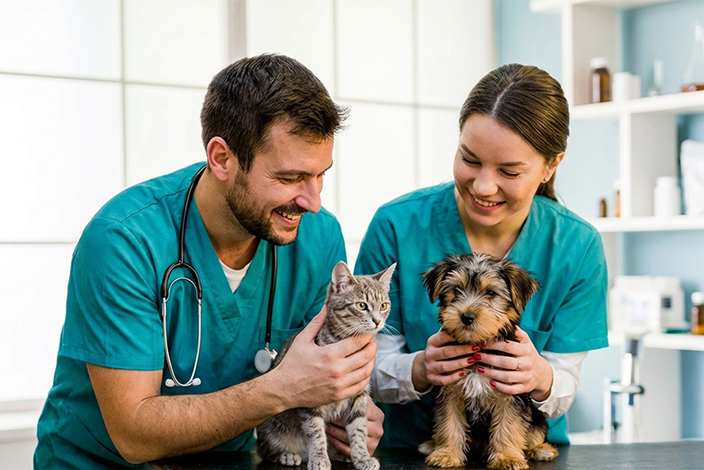
How EHVT-50 Helps with Vomiting and Diarrhea Workups
Vomiting and diarrhea cases often look similar when they first arrive, but the causes behind them can be very different. One pet may have a mild digestive upset, while another may have clinically important dehydration, significant inflammation, parasitic disease, pancreatitis, or a combination of problems that requires broader testing.
EHVT-50 helps because it brings together the kinds of information vets often need in these cases. A CBC can show whether the patient is anemic, hemoconcentrated, thrombocytopenic, or mounting an inflammatory response. Feces analysis can reveal parasites or protozoa that change the treatment plan immediately. Urine analysis adds context when kidney involvement, urinary abnormalities, or systemic stress may be part of the picture. Immunoassays can provide additional diagnostic information when routine screening results are insufficient.
Because these steps can be handled on one analyzer, the clinic is better positioned to complete a fuller same-visit workup instead of breaking the process into disconnected parts.
One Case That Shows the Difference
Consider a small animal clinic seeing a dog with several days of vomiting, intermittent diarrhea, weight loss, and occasional blood in the stool. This is not a case where a CBC result alone is likely to answer enough questions. The team may need hematology to assess dehydration and inflammation, stool findings to look for parasites or digestive abnormalities, urine findings to check for broader systemic clues, and additional markers if the presentation appears more complicated.
With EHVT-50, that workup can happen on one platform during the same appointment. That helps the clinic keep more GI cases in-house, shorten the time from testing to decision, and give the pet owner a clearer explanation of what the team sees and what should happen next.
What to Review Before Choosing an Analyzer
The most useful question is not whether an analyzer has the longest feature list. The real question is whether it matches the kinds of cases your clinic sees every week and whether your team can use it efficiently in day-to-day practice. When choosing the next veterinary CBC machine for a small animal clinic, it helps to ask whether the system will only provide CBC results or also support urine, feces, and immunoassay testing for common vomiting and diarrhea cases.
EHVT-50 is especially worth reviewing if your clinic wants to:
- Complete more gastrointestinal workups during a single visit.
- Combine CBC, urine, and feces testing on one platform.
- Reduce dependence on separate analyzers and manual microscopy.
- Simplify daily operation with single-use kits and low-maintenance workflow design.
- Give pet owners clearer answers before they leave the clinic.
Next Step
If your clinic is looking for a more complete way to evaluate vomiting and diarrhea cases, EHVT-50 is worth reviewing in detail. Ozelle’s veterinary hematology page gives an overview of the broader diagnostic platform, while the EHVT-50 product page shows how the analyzer combines hematology, urine, feces, and immunoassay in one workflow for dogs and cats.
For small animal clinics that want to move beyond a basic veterinary CBC machine and build a more complete in-house gastrointestinal diagnostic path, EHVT-50 offers a practical next step.
Domande frequenti
What makes EHVT-50 different from a standard veterinary CBC machine?
EHVT-50 is an all-in-one veterinary analyzer rather than a CBC-only instrument. It combines 7-diff hematology with urine, feces, and immunoassay on one platform for dogs and cats.
Is EHVT-50 suitable only for complicated cases?
No. Ozelle positions EHVT-50 for everyday companion-animal practice, especially for symptoms such as vomiting, diarrhea, lethargy, loss of appetite, hematochezia, and urinary problems. That makes it relevant for routine symptomatic cases as well as more complicated workups.
Why is an integrated analyzer useful when evaluating vomiting and diarrhea cases?
Because these cases often need more than a CBC alone. An integrated analyzer helps the clinic assess blood changes, stool findings, urine context, and targeted markers in one workflow, which makes same-visit decisions easier and more complete.
Is EHVT-50 practical for clinics with limited space?
Ozelle describes EHVT-50 as a compact veterinary mini lab that can replace several separate workflows with one system, which is useful for clinics that want more capability without building a full traditional lab setup.