
 Français
  English
  Русский
  Español
  Deutsch
  Português
  العربية
  Italiano
General practice clinics are often the first place patients go when they develop fever, fatigue, chest discomfort, or symptoms that need follow-up for chronic disease. In busy outpatient settings, doctors face a full waiting room, limited staff, and no central laboratory on site, yet they still need reliable blood results before making treatment decisions. To see how an automated blood testing machine fits into this kind of workflow, clinics can refer to Ozelle AI-powered blood diagnostics for more details on Ozelle’s hematology and multi-panel analyzers.
In this environment, an automated blood testing machine is becoming an increasingly practical option for clinics that want to bring more routine testing closer to the point of care. It becomes a practical way to turn multiple test requests into fast, structured results within the same visit. The EHBT-50 Mini Lab is designed to act as that all-in-one automated analyzer for CBC, immunoassay, and biochemistry in outpatient GP settings.
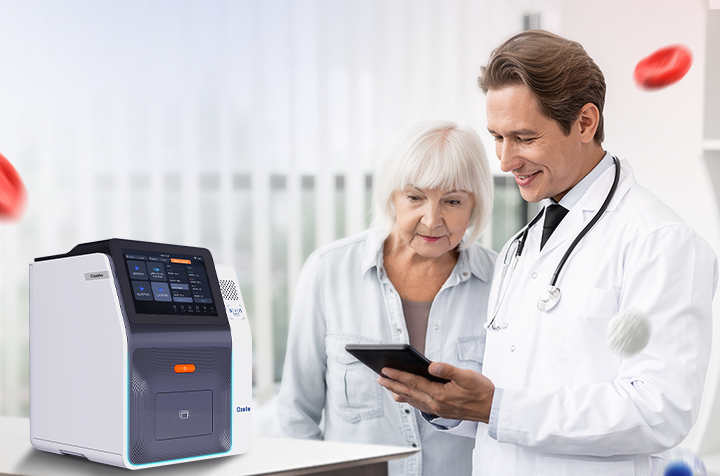
What Is an Automated Blood Testing Machine?
An automated blood testing machine is a compact diagnostic system that can analyze blood samples with minimal manual intervention. Instead of relying entirely on separate benchtop devices or manual review steps for routine panels, it uses integrated channels and automation to deliver CBC, morphology-related information, and selected additional test results through one workflow. In GP clinics, this kind of clinic blood testing machine functions as a point-of-care analyzer that can support same-visit diagnosis and reduce dependence on off-site laboratory processing.
For outpatient practices, the value of automation is not only speed. It is also about workflow simplification. When blood testing is brought closer to the consultation room, the doctor can use the results during the visit rather than after it, which improves efficiency for both patients and staff.
Why GP Clinics Need an Automated Blood Testing Machine
In an overloaded GP clinic, delays often come from fragmented testing pathways. One patient with fever may need CBC and inflammation markers, another with diabetes requires HbA1c and lipid results, an elderly patient needs kidney and liver tests, and someone else presents with thyroid-related symptoms. All of these demands converge on a small team with limited time.
If every test type must be sent to an external laboratory, staff spend considerable effort organizing transport, tracking reports, and arranging follow-up appointments. Treatment decisions are pushed into second visits because key data is missing at the moment of consultation. This creates extra workload for nurses, front-desk teams, and physicians, while also reducing the clinic’s ability to give immediate, confident guidance.
A clinic-friendly automated blood testing machine, or GP clinic lab analyzer, changes this dynamic when it can consolidate different workups into one workflow. The real value lies in helping GP teams move from symptoms to actionable blood data with fewer handoffs, fewer delays, and less manual coordination.
How the EHBT-50 Point-of-Care Analyzer Works
The EHBT-50 Minilab multi-functional analyzer works as a rapid blood test system that combines 7-part differential hematology, immunoassay, and dry biochemistry in one compact analyzer. Instead of relying on one device for CBC and separate arrangements for inflammation, diabetes, thyroid, cardiac, and basic chemistry tests, GP clinics can configure single, dual, or triple panels based on what each patient actually needs.
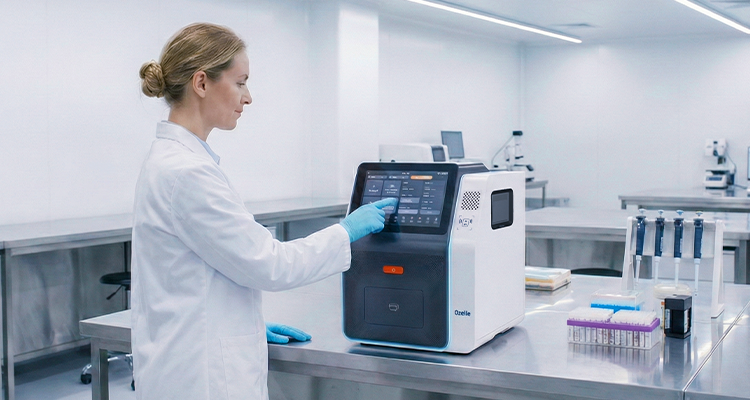
From a workflow perspective, the process is straightforward. The blood sample is loaded into a single-use kit and placed into the EHBT-50, which then runs the configured panel automatically across its hematology, immunoassay, and biochemistry channels. Within minutes, the system displays a structured report that brings these elements together. This on-site blood testing approach supports same-visit diagnosis without requiring a full central laboratory inside the clinic.
Clinic Blood Diagnostic Machine for Everyday GP Decisions
In general practice, blood testing is most valuable when it supports decisions that happen during the consultation. EHBT-50 serves as a clinic blood diagnostic machine that combines a strong CBC foundation with additional menus aligned to everyday GP scenarios.
The hematology channel provides 7-Diff Complete Blood Morphology with an extended parameter set, supporting evaluation of white cells, red cells, platelets, reticulocytes, and inflammation-related ratios such as NLR and PLR. This helps strengthen first-line assessment in patients with suspected infection, anemia-related symptoms, or possible hematologic abnormalities.
Beyond CBC and morphology, the immunoassay and biochemistry capabilities cover the main themes GP clinics handle daily: inflammation and infection, diabetes and broader metabolic control, anemia and thyroid function, and basic cardiac and organ status. Instead of building separate workflows for each of these clinical questions, one automated blood testing machine can support them within a single, compact diagnostic analyzer.
Clinical Applications in Busy GP Clinics
Infection Assessment
In suspected infection, a GP doctor can order a panel that combines CBC, morphology, and selected inflammation markers. The EHBT-50 point-of-care analyzer processes this panel and returns results showing white cell patterns, morphology-related information, and inflammatory marker levels. Together with clinical findings, these results can support earlier decisions on follow-up, additional testing, or referral.
Chronic Disease Follow-Up
For chronic disease management, clinics can use the EHBT-50 as a GP clinic blood test machine for diabetes and metabolic follow-up. A visit may include CBC, HbA1c, and selected chemistry items relevant to ongoing care. Having this profile available during the consultation helps doctors adjust medication, discuss lifestyle adherence, and set follow-up plans without waiting for off-site lab reports.
Acute Presentations and Referral Decisions
In selected acute presentations, such as fatigue, breathlessness, or symptoms requiring further risk assessment, the system may combine CBC with selected cardiac- or renal-related markers. These results can provide additional laboratory information to support triage, follow-up planning, or referral decisions when interpreted alongside clinical assessment.
Sampling Workflow with EHBT-50 in GP Clinics
An overloaded clinic needs blood testing that is gentle for patients and straightforward for staff. EHBT-50 supports capillary and venous whole blood, serum, and plasma, giving GP teams flexibility in how samples are collected during routine care.
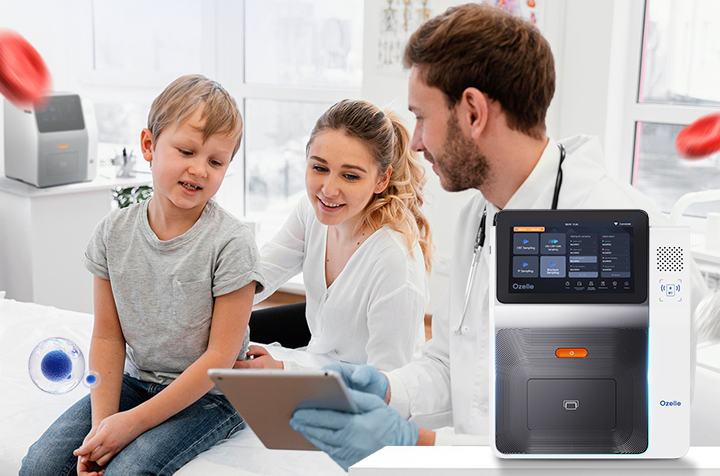
Finger-tip capillary sampling is particularly useful for children and elderly patients, where smaller volumes and less invasive collection can reduce discomfort and anxiety. With a sample volume of just 30 µL, the analyzer helps minimize the impact of blood draws in high-turnover outpatient settings.
Once the sample and single-use kit are loaded, EHBT-50 runs a fully automated workflow. Staff do not need to perform complex pretreatment steps, and the instrument processes hematology, immunoassay, and biochemistry according to the configured panel. For busy GP clinics, this combination of flexible sampling and automation makes the clinic blood testing machine easier to integrate into daily practice for different patient groups.
Maintenance-Free Clinic Analyzer Reducing Operational Pressure and Costs
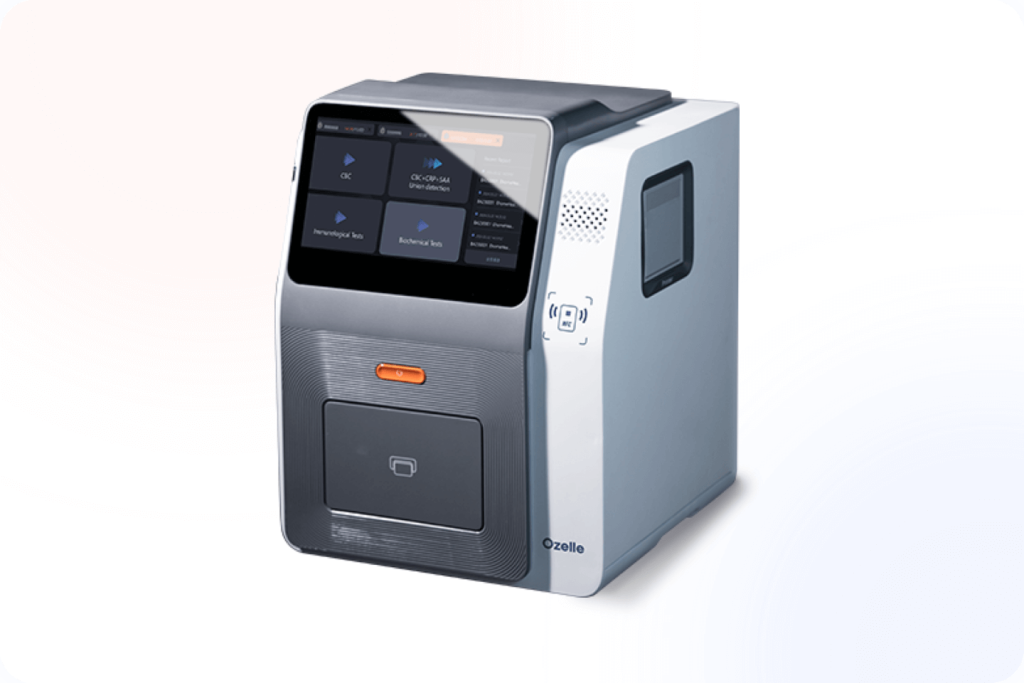
In high-workload GP clinics, maintenance can quietly consume time and attention. Devices that require frequent cleaning, fluid management, or troubleshooting add extra tasks to an already busy team. EHBT-50 addresses this with single-use, highly integrated consumables and a maintenance-free workflow designed to reduce cross-contamination risk and daily upkeep.
Because there is no traditional fluid path, clinics avoid many of the clogging and cleaning issues common in conventional analyzers. Reagent kits are stored at room temperature, removing cold-chain requirements and simplifying inventory management.
For individual GP clinics, this translates into less downtime and fewer interruptions in daily testing. For chain practices, it supports clearer cost per test, easier staff training, and more consistent processes across branches. In both cases, the GP clinic lab analyzer becomes a predictable, low-friction tool rather than another maintenance burden. Teams seeking a broader overview of related solutions can also refer to Ozelle’s hematology analyzers to see how EHBT-50 aligns with other CBC and morphology options.
On-Site Blood Testing vs Traditional Central Lab
Traditional central laboratories can process high volumes and a wide range of tests, but they sit outside the day-to-day workflow of most GP clinics. Samples must be prepared, transported, and scheduled, and results arrive on a different timeline. For many primary care decisions, this separation introduces delays and extra communication steps.
An on-site blood testing solution such as the EHBT-50 point-of-care analyzer is not designed to replace every central lab function. Instead, it focuses on the core panels that drive GP decisions: CBC and morphology, inflammation and infection markers, metabolic and endocrine status, and basic cardiac and organ assessment. For these use cases, having a rapid blood test system inside the clinic shortens diagnostic paths and simplifies communication with patients.
Traditional lab testing remains important for complex or specialized analysis, but it becomes more efficient when routine panels are handled locally. Using an automated blood testing machine in the clinic allows doctors to reduce dependence on external laboratory processing for selected routine panels, while managing common scenarios on site with same-visit diagnosis.
FAQ
Q: What is the main benefit of an automated blood testing machine in a GP clinic?
A: The main benefit is faster and more integrated decision-making. A single point-of-care analyzer can deliver CBC, inflammatory markers, diabetes and metabolic indicators, and basic cardiac or organ status in one workflow, which supports same-visit diagnosis and reduces follow-up delays.
Q: Is EHBT-50 suitable for clinics without dedicated lab technologists?
A: Yes. EHBT-50 is designed with a fully automated workflow and single-use consumables, which makes it easier for general medical staff to operate in routine outpatient care after appropriate training.
Q: Can on-site blood testing replace central laboratory work?
A: On-site blood testing is most useful for routine panels that drive most GP decisions. Central laboratories still play an important role in specialized or complex testing, but many routine outpatient testing needs can be supported on site.
Q: How does EHBT-50 support same-visit diagnosis?
A: By running multi-panel CBC, immunoassay, and biochemistry tests in one automated cycle, EHBT-50 gives doctors structured results during the consultation, which helps them make decisions and plan next steps without waiting for external reports.
Conclusion
When a GP clinic is overloaded, the challenge is not only to run tests faster, but to move from symptoms to treatment decisions without adding complexity to everyday workflows. The EHBT-50 Mini Lab addresses this need by bringing 7-Diff hematology, clinically relevant immunoassay markers, and core biochemistry items together in one compact, automated system.
With flexible panel configuration, low sample volume, capillary and venous sampling options, and maintenance-free consumables, EHBT-50 offers a practical way for clinics to consolidate blood testing and reduce dependence on external laboratories. For general practice teams looking for a more efficient automated blood testing machine, a more capable GP clinic blood test machine, or a more useful rapid blood test system for everyday care, the EHBT-50 Minilab multi-functional analyzer provides a concrete starting point for improving outpatient workflows and supporting more same-visit result review, patient communication, and test-informed clinical planning.