
 Deutsch
 English
 Français
 Русский
 Español
 Português
 العربية
 Italiano

Bringing laboratory testing into a veterinary clinic involves more than selecting an instrument. The practical questions are which test results are needed during the consultation, which tests can be performed within the same workflow, and whether the equipment can be supported reliably after installation. A veterinary blood analyzer should be evaluated within that wider operating model, rather than as an isolated purchase.
For Middle East veterinary diagnostics, country-specific requirements and local service arrangements deserve attention alongside analytical capabilities. Regulatory status, consumable supply, operator training, and locally available configurations can all affect whether an analyzer fits the intended workflow. Three priorities worth considering are same-visit testing, integrated diagnostics, and straightforward day-to-day operation.

Three Priorities for In-Clinic Veterinary Diagnostics
These priorities connect the clinical purpose of testing with the practical demands of running a clinic laboratory. Same-visit testing focuses on turnaround time, integrated diagnostics on the range of tests available, and technician-friendly operation on the team’s ability to perform those tests consistently.
Same-Visit Testing With a Veterinary Blood Analyzer
An in-house CBC can make hematology information available while an animal is still at the clinic. This can provide timely hematologic information to support clinical assessment in cases involving suspected anemia, pre-anesthetic evaluation, or an unwell animal, provided the results are interpreted alongside examination findings and other relevant information. The objective is timely access to useful information, not simply a shorter instrument run.
The complete turnaround time includes animal identification, sample collection, preparation, analysis, result review, and any necessary repeat or follow-up testing. An instrument’s stated analysis time represents only one stage in that process. Clinics should therefore assess whether the complete workflow fits their consultation schedule and staffing arrangements.
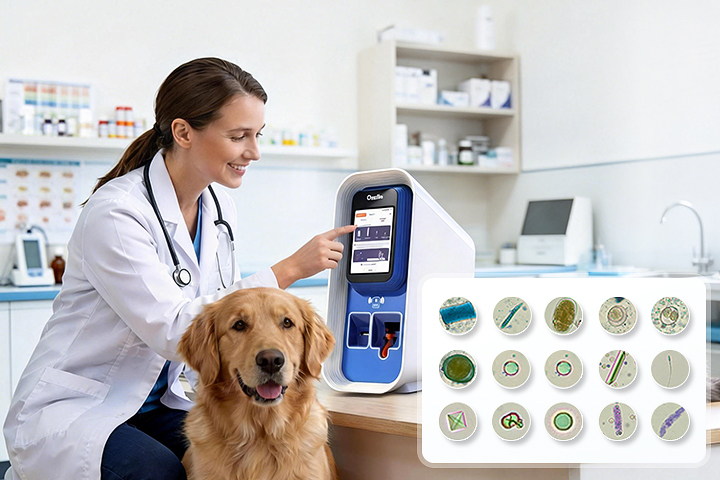
Cell counts, differential results, instrument flags, and cell images, where available, provide different types of information. Image-based morphology can add visual context to automated results, but it does not remove the need for qualified review or blood smear examination when indicated. Reference laboratories also remain part of the workflow for tests outside the in-house menu and cases requiring further investigation.
A practical evaluation should distinguish routine demand from peak demand. A clinic that receives several samples close together needs to understand how preparation, instrument occupancy, and review steps interact, rather than relying only on its average daily sample count.
Integrated Testing Beyond the CBC
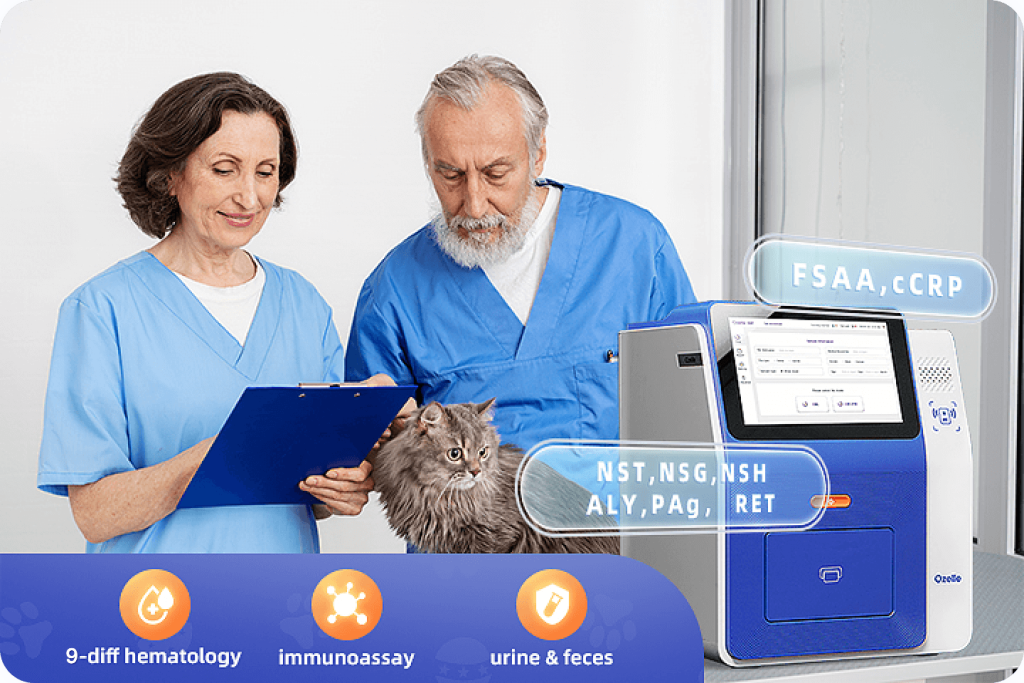
In-clinic veterinary diagnostics often involves more than blood cell analysis. Depending on the case, the laboratory workup may also include urine examination, fecal testing, immunoassays, or biochemistry. These categories provide different information and should not be treated as interchangeable extensions of the CBC.
An integrated analyzer can bring selected test categories into one instrument, potentially reducing the number of separate devices required. The practical value depends on how frequently those tests are requested, whether the available menu matches the clinic’s needs, and how the analyzer handles different sample types. Integration should be assessed in terms of how it supports daily work, not simply the length of the feature list.
The boundaries between methods remain important. Hematology examines blood cells and related parameters; biochemistry measures selected chemical constituents; immunoassays detect particular markers; and urine or fecal analysis provides information from different specimen types. Combining them in one analyzer does not mean that every sample supports every test or that one result can substitute for another.
Local configuration is especially relevant when comparing integrated systems. Clinics and distributors should confirm which modules, assays, reagents, and software functions are supplied in the destination country. A capability described for the wider product family should not automatically be assumed to be included in the proposed configuration.
Technician-Friendly Workflows and Manageable Upkeep
A clinic analyzer must fit the people who operate it. Clear sample identification, straightforward preparation steps, accessible quality-control procedures, and readable reports all matter alongside the analytical method. A workflow that relies on a single experienced operator can become difficult to sustain during staff changes or busy periods.
Single-use kits and cartridge-based designs can simplify selected handling and cleaning tasks. Their advantages should still be evaluated against the full operating procedure, including storage, preparation, waste handling, quality control, and manufacturer-specified checks. A maintenance-free design should not be interpreted as eliminating all operator responsibilities.
Training should cover more than starting a test. Operators need to recognize unsuitable samples, respond to instrument messages, follow review criteria, and understand when results require further investigation. Written procedures and access to refresher training help maintain continuity when responsibilities move between team members.
Connectivity also needs a practical check. Where a clinic uses a laboratory information system, the proposed connection should be evaluated with its existing software and case-identification process. Where electronic integration is unavailable, the team still needs a reliable method for transferring results into the animal’s record.
How to Choose a Veterinary Hematology Analyzer for a Clinic
These three priorities shift the comparison from parameter counts to operational fit. Before shortlisting a veterinary blood analyzer, the clinic and its distributor should establish the required species coverage, routine test menu, expected workload, and available staffing. The next step is to confirm that the proposed configuration can be supplied and supported locally.
Verify Regulatory Status and the Available Configuration
Requirements should be checked country by country rather than assumed to be uniform across the Middle East. For the intended destination, request documentation confirming the applicable registration or authorization status and check that it covers the exact model and intended use. Regulatory questions should be verified with the relevant authority or a qualified local regulatory partner.
Regulatory and import requirements differ across Middle Eastern markets. For example, the UAE’s Emirates Drug Establishment has established approval and import-permit procedures covering veterinary diagnostic equipment and supplies, while Saudi Arabia’s Ministry of Environment, Water and Agriculture provides an import-permit service for veterinary equipment. The applicable requirements depend on the product, importing entity, and intended use, making country-specific regulatory verification an important part of supplier evaluation.
The quotation should identify the analyzer model, enabled modules, software configuration, accessories, and currently available test menu. Development-stage assays and optional functions should be distinguished from what will be delivered at installation. This prevents a product-family description from being mistaken for a specification of the local package.
Review Consumable Supply and Operating Costs
Reliable consumable supply is essential to keeping an analyzer in routine use. Discussions with the distributor should cover replenishment lead times, storage requirements, shelf life, and arrangements for supply interruptions. The same checks should apply to quality-control materials and any other items required for routine operation.
Running costs should be assessed against the clinic’s expected testing volume rather than the purchase price alone. Relevant items include test consumables, quality-control materials, repeat testing, service charges, and any software or connectivity costs. For lower-volume clinics, the relationship between pack size, shelf life, and actual test demand also deserves attention.
Assess Local Distributor Service
For distributors and local partners, installation is the beginning of the support relationship. The service proposal should explain who provides operator training, how technical questions are escalated, and what happens if the instrument cannot run. Clinics should also understand whether support is remote, on-site, or a combination of both.
The service agreement should clearly define where support is available and what it includes. Ask about response arrangements, spare-parts access, and retraining after staff changes. These details provide a more useful basis for comparison than a general statement that after-sales service is available.
Integrated Analyzer Examples: The Ozelle EHVT Series
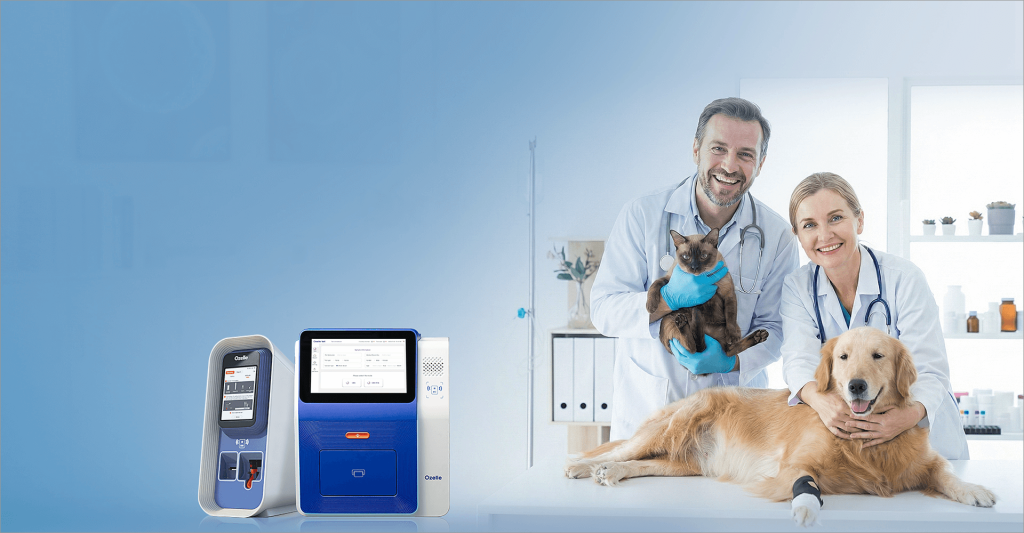
Die Ozelle veterinary range illustrates how hematology and additional test categories can be combined within a compact analyzer. The EHVT series offers CBC testing with a 9-part differential and AI-powered morphology-related information, while its two models differ in the additional testing functions they integrate.
The distinction is primarily one of test-menu configuration rather than a simple hierarchy of hematology capability. Comparing the models therefore starts with the clinic’s required combination of blood, urine, fecal, immunoassay, and biochemistry testing.
EHVT-75: CBC, Urine, and Fecal Analysis
Die EHVT-75 combines CBC testing with a 9-part differential, urine analysis, and fecal analysis. High-resolution imaging and AI-powered recognition provide morphology-related information, while LIS connectivity enables results to be transferred to the clinic’s information system. Its single-use cartridge design removes the need for daily cleaning of the internal structure.
This configuration is relevant for clinics seeking an integrated blood, urine, and feces testing workflow within limited laboratory space. The local proposal should confirm the available test configuration, consumable requirements, LIS connectivity and integration arrangements, operator training, and after-sales support.
EHVT-50: Adding Immunoassay and Biochemistry
Die EHVT-50 combines CBC testing with a 9-part differential, urine analysis, fecal analysis, immunoassay, and biochemistry. These additional methods broaden the types of laboratory information available within one analyzer; they should not be described as additional CBC parameters.
Evaluation should focus on the assays and configurations available in the destination market. The quotation and training plan should distinguish the requirements of each test category, including specimen preparation, consumables, quality control, and result review.
Putting the Three Priorities Into Practice
A veterinary blood analyzer is most useful when its analytical functions, operating workflow, and support arrangements fit together. Same-visit testing depends on the complete sample-to-result process; integrated diagnostics depends on a relevant and locally available menu; straightforward operation depends on training and manageable routine procedures.
Clinics, distributors, and local partners can use these priorities to define their testing, installation, and support requirements. Confirm the required tests, verify the local configuration and applicable regulatory status, and document consumable supply and service responsibilities. That provides a more practical basis for evaluating in-house testing than a comparison of instrument features alone.
Explore Ozelle Veterinary Diagnostic Solutions
Choosing the right veterinary analyzer starts with understanding your clinic’s testing needs and the support available in your market.
Explore Ozelle’s veterinary diagnostic solutions or contact our team to discuss EHVT-50 and EHVT-75 configurations, locally available assays, consumable requirements, and distribution opportunities across Middle Eastern markets.z