
 Deutsch
  English
  Français
  Русский
  Español
  Português
  العربية
  Italiano
Vom 10. bis 13. Februar 2026 treffen sich Innovatoren des Gesundheitswesens aus aller Welt bei WHX Labs Dubai im Dubai World Trade Centre. Am Stand S1.D58 wird Ozelle aufzeigen, wie KI-gestützte Vollblutmorphologie (CBM) und All-in-One-Diagnostik verändern den klinischen Alltag, insbesondere in dezentralen und stark nachgefragten Bereichen.
Ein neuer Standard für die Morphologie des vollständigen Blutes
Unter dem Motto “AI × CBM: The Next Generation of Complete Blood Morphology” wird Ozelle sein neuestes System als Brücke zwischen der Hämatologie in Laborqualität und den Anforderungen des realen Workflows positionieren. Anstatt sich nur auf numerische CBC-Werte zu verlassen, wird die Plattform hochauflösende Blutzellbildgebung mit Echtzeit-KI-Algorithmen kombinieren, die mehrere Zelltypen - zum Beispiel NST, NSG, ALY und RET - aus nur einem einzigen Blutstropfen erkennen und klassifizieren können. Das bedeutet, dass Kliniker in der Lage sein werden, sich einem echten morphologischen Einblick zum Zeitpunkt der Untersuchung zu nähern, was eine frühere Erkennung von Anomalien und eine sicherere Entscheidungsfindung ermöglicht, ohne jeden komplexen Fall an ein Zentrallabor zurückzuschicken.
Auf der Messe wird die CBM-Fähigkeit nicht als Nischenzusatz, sondern als zentrales Diagnoseverfahren vorgestellt. Die Besucher werden sehen, wie echte patientenähnliche Proben sowohl in visuelle Zellbilder als auch in strukturierte KI-interpretierte Ausgaben übersetzt werden, um zu veranschaulichen, wie KI das, was bisher nur mikroskopisches Fachwissen war, in standardisierte, skalierbare Informationen verwandeln kann. Für viele Laborleiter und Kliniker wird der eindrucksvollste Moment kommen, wenn sie erkennen, dass die Morphologie, die bisher ein manueller Engpass war, nun in einen sechsminütigen, automatisierten Arbeitsablauf in einem kompakten Analysegerät integriert werden kann.
All-in-One-Tests für reale Szenarien
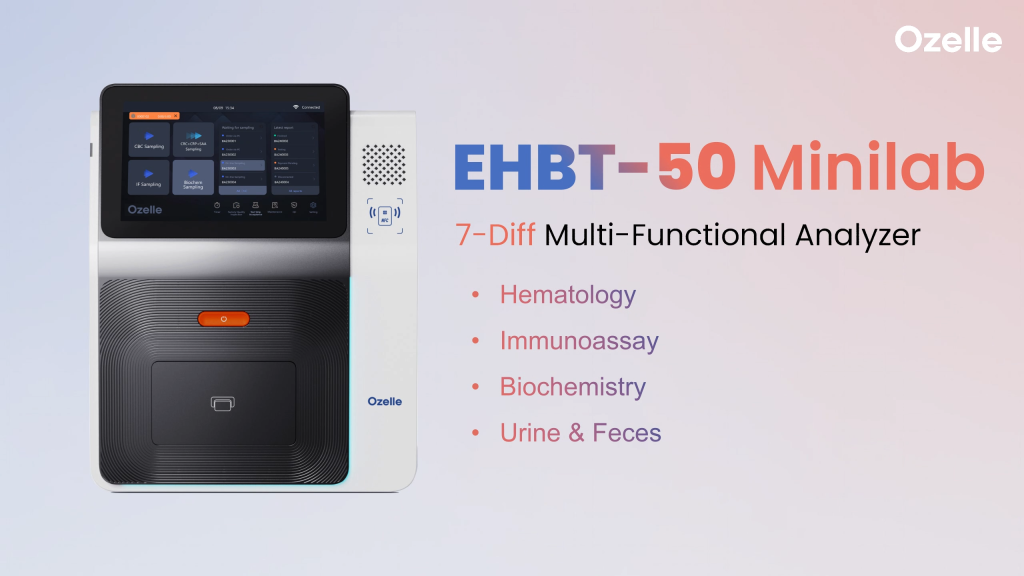
Über CBM hinaus ist ein wichtiges Gesprächsthema am Stand S1.D58 der All-in-One-Ansatz von Ozelle: Hämatologie, Biochemie und Immunoassay in einem einzigen, wartungsfreien System. Anstatt die Benutzer auf feste Menüs festzulegen, unterstützt die Plattform flexible, szenariobasierte Testpanels, die entsprechend den klinischen Anforderungen konfiguriert werden können.
Zu den typischen Anwendungsfällen, die den Besuchern vorgestellt werden, gehören:
- Untersuchungen auf Infektionen: CBC in Kombination mit CRP und SAA zur Unterscheidung und Überwachung von Infektions- und Entzündungserkrankungen.
- Diabetes-Management: CBC plus HbA1c zur Unterstützung der Bewertung der Stoffwechselkontrolle und des allgemeinen Gesundheitszustands anhand einer Stichprobe.
- Bewertung des kardialen Risikos und der Symptome: CBC mit NT-proBNP zur frühzeitigen Erkennung der kardialen Belastung im ambulanten Bereich oder in der Notaufnahme.
Diese Kombinationen kommen vor allem bei Ärzten in der Primärversorgung, in Notfallambulanzen und apothekenbasierten Kliniken gut an, wo Platz, Personal und Zeit begrenzt sind. Für sie ist das Versprechen einfach: weniger Instrumente, weniger manuelle Schritte und eine breitere diagnostische Abdeckung pro Patientenkontakt, mit Panels, die an die sich entwickelnden Richtlinien und die lokale Praxis angepasst werden können.
Intelligente KI-Werkbank: von Zahlen zu Anleitungen
Ein weiterer Schwerpunkt der Vorführungen von WHX Labs ist die Intelligent AI Workbench (Open Dx) von Ozelle, eine einheitliche digitale Ebene, die direkt in das Analysegerät integriert ist. Anstatt Test, Überprüfung und Interpretation als separate Inseln zu behandeln, vereint die Workbench Testbestellung, Ergebnisvisualisierung und KI-gestützte klinische Anleitung in einer durchgängigen Schnittstelle.
Bei Live-Demos sehen die Besucher, wie das System funktioniert:
- Automatische Markierung abnormaler Befunde und potenzieller Risikomuster in Echtzeit.
- Erzeugt strukturierte Übersichtsinterpretationen anstelle von statischen, reinen Zahlenberichten.
- Ermöglicht eine konversationelle Untersuchung der Ergebnisse, bei der die Ärzte das System nach möglichen Ursachen, nächsten Schritten oder leitliniengerechten Überlegungen befragen können.
Für Veterinärmediziner erstreckt sich die gleiche Werkbank auf artspezifische diagnostische Anleitungen und Medikamentenempfehlungen, was das Bestreben von Ozelle widerspiegelt, sowohl die menschliche als auch die tierische Gesundheit innerhalb eines gemeinsamen KI-Rahmens zu unterstützen. Vor Ort wird diese interaktive Erfahrung von den Teilnehmern oft als der Moment beschrieben, in dem das Analysegerät aufhört, “nur eine Maschine” zu sein, und beginnt, sich wie ein praktischer Assistent zu verhalten - immer noch unter der Kontrolle des Klinikers, aber aktiv dabei helfend, die Lücke zwischen Daten und Entscheidungen zu schließen.
KI in der Diagnostik: Von den Zentrallabors an die Frontlinie
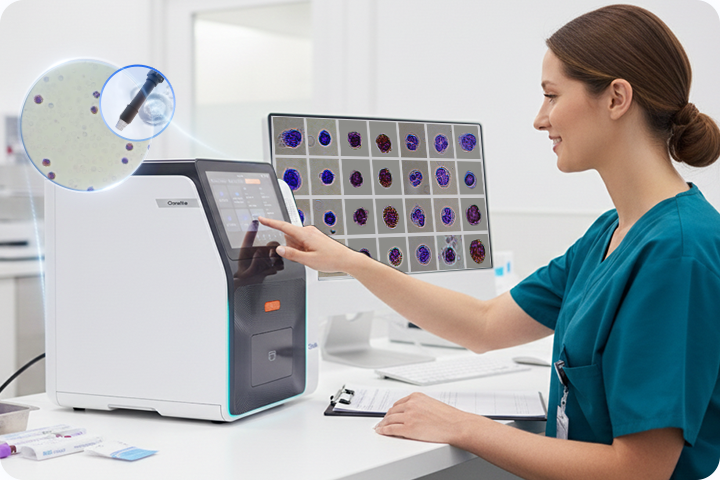
Die Diskussionen rund um den Stand von Ozelle veranschaulichen einen breiteren Trend, der bei WHX Labs Dubai zunehmend sichtbar wird: KI bewegt sich vom Konzeptnachweis zur eingebetteten Infrastruktur in diagnostischen Arbeitsabläufen. Anstelle von isolierten KI-Apps verlagert sich der Fokus auf integrierte Systeme, die kombinieren:
- Edge AI, die eine nahezu sofortige Analyse auf Geräteebene ermöglicht.
- Morphologische und quantitative Fusion, die Zellbilder mit CBC-Parametern für einen umfassenderen diagnostischen Kontext vereint.
- Multidisziplinäre Tests in einem einzigen Durchgang, die Hämatologie, Biochemie und Immunoassay abdecken, ohne dass die Bediener einen zusätzlichen Aufwand betreiben müssen.
Diese Entwicklung ist besonders für dezentralisierte und hochvolumige Umgebungen wie Gemeindekrankenhäuser, Einzelhandelskliniken und Einrichtungen in Schwellenländern von Bedeutung, in denen fortschrittliche Diagnostik oft durch Infrastruktur, Kosten oder Personal eingeschränkt ist. Das System von Ozelle ist darauf ausgelegt, diese Herausforderung mit wartungsfreier Hardware, kassettenbasierten Arbeitsabläufen und Software zu bewältigen, die aktualisiert und verfeinert werden kann, wenn die KI-Modelle aus einem ständig wachsenden realen Datensatz lernen.
Globaler Maßstab, Validierung in der realen Welt
Hinter dem Vorzeigeprojekt von WHX Labs steht eine beachtliche installierte Basis: mehr als 50.000 Installationen weltweit, die täglich mehr als 50 Millionen Zellbilder erzeugen und einen Datensatz mit inzwischen mehr als 100 Milliarden realen Datenpunkten liefern. Diese Datenmenge bildet die Grundlage für das Training, die Validierung und die Qualitätskontrolle der Ozelle-Algorithmen und sorgt für ein Maß an Robustheit, das sowohl von Regulierungsbehörden als auch von klinischen Anwendern zunehmend gefordert wird.
Das Unternehmen legt Wert auf ein branchenweit einzigartiges Qualitätskontrollsystem, das die KI-Leistung in allen Installationen kontinuierlich überwacht und so sicherstellt, dass Verbesserungen nicht nur schnell, sondern auch reproduzierbar und sicher eingesetzt werden können. Für Teilnehmer, die KI-Lösungen erkunden, ist diese Kombination aus Größenordnung und systematischer Validierung ein entscheidendes Unterscheidungsmerkmal: Sie signalisiert einen Wechsel von experimentellen KI-Add-ons zu ausgereifter, klinisch integrierter Technologie.
Voices From the Floor: Immersive Demos und Konversationen
Während der viertägigen Veranstaltung wird der Ozelle-Stand weniger wie eine statische Ausstellung als vielmehr wie ein offenes Demonstrationslabor aufgebaut sein. Die Besucher werden zwischen Live-Testläufen, interaktiven Workbench-Sitzungen und Einzelgesprächen mit Produktexperten wechseln, die verschiedene klinische Szenarien durchspielen - von der Infektionseinstufung in der Notfallversorgung über das longitudinale Diabetesmanagement in der Primärversorgung bis hin zu Arbeitsabläufen in der Tierarztpraxis.
Viele Gespräche werden sich darum drehen, wie KI + CBM implementiert werden können, ohne die bestehenden Prozesse zu stören: wie die Ergebnisse in LIS/HIS-Systeme eingespeist werden, wie die Schulung des Personals gehandhabt wird und wie die Plattform von einem einzelnen Gerät in einer Klinik bis hin zu vernetzten Einsätzen in verschiedenen Regionen skaliert werden kann. Für Distributoren und Partner wird das multifunktionale, KI-gesteuerte Design auch als Möglichkeit gesehen, das Portfolio in reifen CBC-Märkten zu differenzieren und neue Mehrwertdienste rund um Daten, Konnektivität und Fernsupport zu eröffnen.
Blick in die Zukunft
Mit dem Näherrücken von WHX Labs Dubai 2026 wird die Anwesenheit von Ozelle eine klare Botschaft vermitteln: Bei den KI-Blutanalysatoren geht es nicht mehr nur um schnellere Zählungen - sie definieren neu, was “vollständige Blutmorphologie” in der täglichen klinischen Praxis bedeutet. Durch die Verschmelzung von CBM, Multi-Analytik-Tests und intelligenter Interpretation in einer einzigen, szenarioreifen Plattform wird Ozelle KI nicht als fernes Zukunftsversprechen, sondern als sofort einsetzbares Werkzeug für Kliniker auf jeder Ebene des Gesundheitssystems positionieren.
Für Gesundheitsdienstleister, Partner und Medien, die wissen wollen, wohin sich die diagnostische Innovation entwickelt, bietet der Stand S1.D58 bei WHX Labs Dubai eine kurze Vorschau: eine Zukunft, in der mehr gesehen und intelligenter diagnostiziert werden kann - in einem kompakten, KI-gestützten System.
FAQs
- Was ist AI CBM? KI-gestützte vollständige Blutmorphologie das CBC-Parameter mit einer Zellbildanalyse kombiniert, um einen tieferen diagnostischen Einblick zu erhalten.
- Wie viel Blut wird benötigt? In der Regel 30-60 μl aus Kapillar- oder Venenproben.
- Ist es für die Primärversorgung geeignet? Ja, das kompakte Design, der vereinfachte Arbeitsablauf und der Betrieb mit Kartuschen eignen sich für Kliniken und Apotheken.
- Kann es mit LIS/HIS verbunden werden? Unterstützt Standardschnittstellen für die Integration in bestehende Krankenhaussysteme.
- Wie lange dauert ein Test? Vom Laden der Probe bis zur Anzeige eines vollständigen Berichts vergehen etwa 6 Minuten.
- Welche Wartung ist erforderlich? Minimal; Einwegkartuschen vermeiden Schläuche, reduzieren die Reinigung und verringern das Ausfallrisiko.
- Ist es für gefährdete Patienten geeignet? Ein geringes Probenvolumen und die Entnahme per Fingerstich sind für Kinder und ältere Patienten geeignet.
- Wie wird die Datensicherheit verwaltet? Die Patientendaten können verschlüsselt und der Zugriff auf sie gemäß den institutionellen Richtlinien und Vorschriften kontrolliert werden.