 Italiano
  English
  Français
  Русский
  Español
  Deutsch
  Português
  العربية
Exploring what it takes to make AI-enabled diagnostics reliable, reviewable, and practical in everyday clinical use
Artificial intelligence is expanding what laboratory systems can detect, analyze, and interpret. As these capabilities move closer to routine use, the questions become more practical: Can the results be properly validated? And can advanced diagnostic tools work consistently beyond highly specialized laboratories?
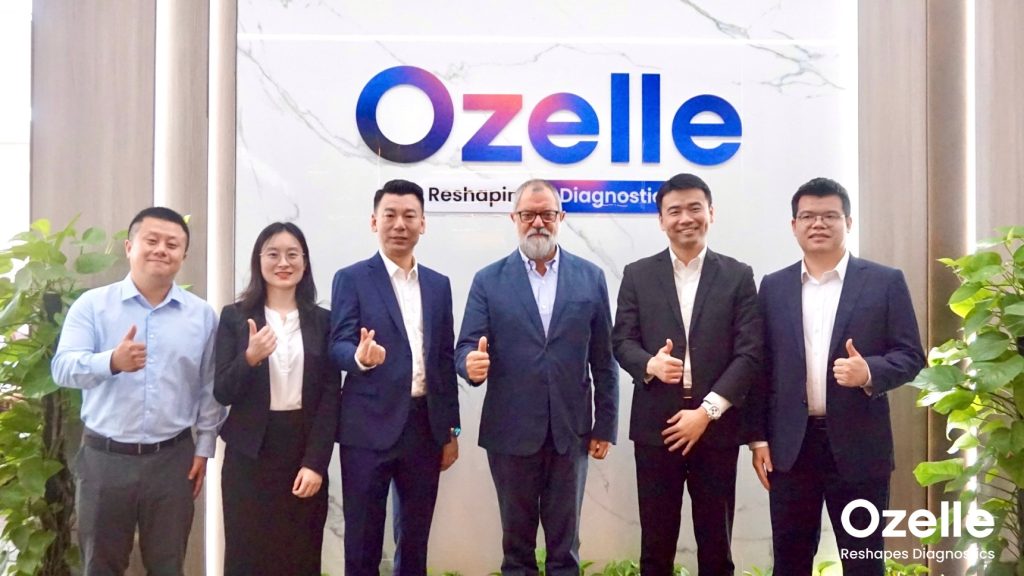
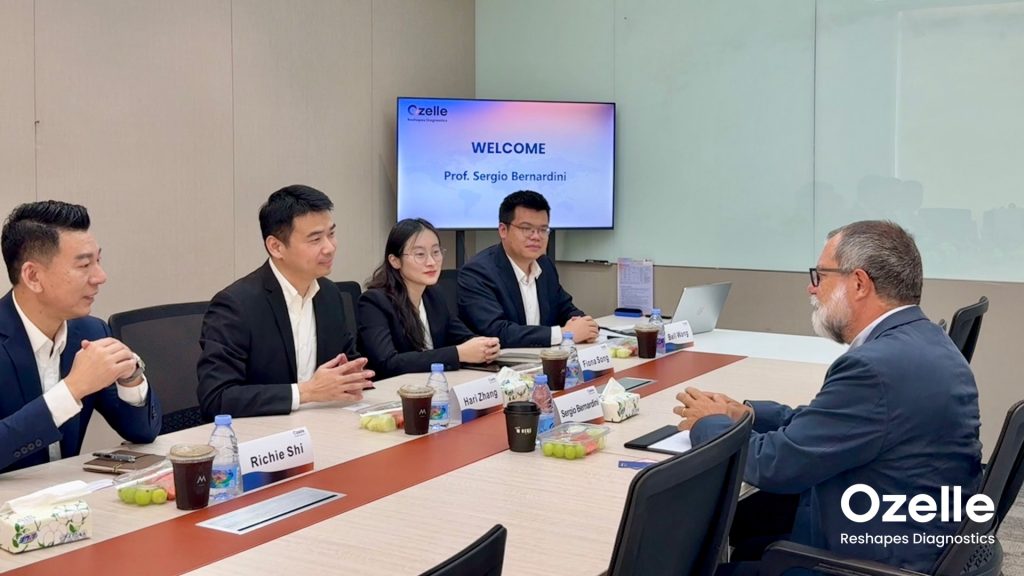
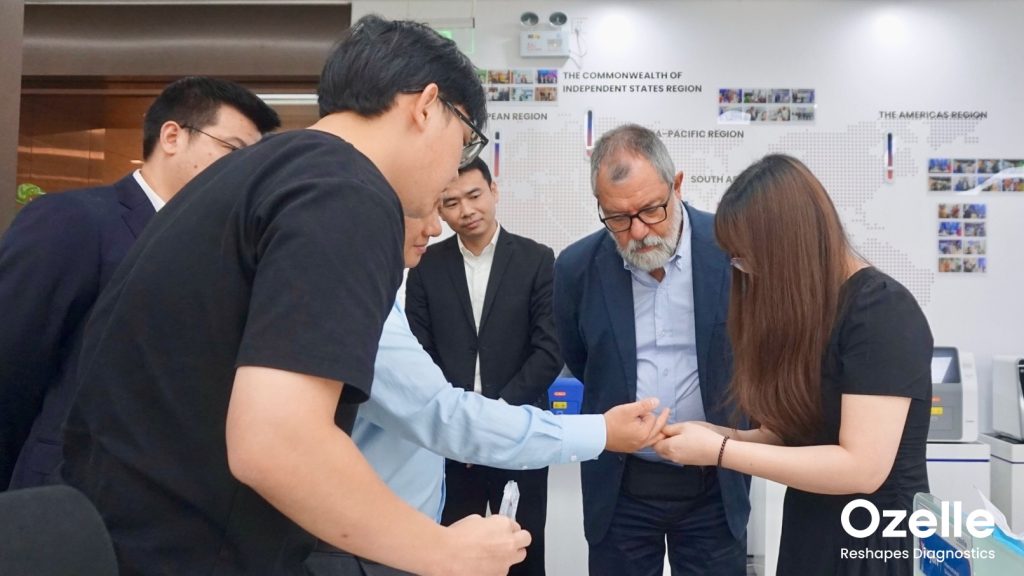
These were among the topics discussed during a recent visit to Ozelle by Prof. Sergio Bernardini, Secretary of the International Federation of Clinical Chemistry and Laboratory Medicine (IFCC). Prof. Bernardini is also Consultant and Executive Board Liaison to the IFCC Emerging Technologies Division (ETD). During meetings with Ozelle’s leadership, R&D, and medical teams, Prof. Bernardini exchanged views on how laboratory medicine is evolving with AI and digital technologies—from image-based hematology and digital morphology to clinical validation, standardization, and their role in routine diagnostic workflows.
Bringing Morphology into the Routine Hematology Workflow
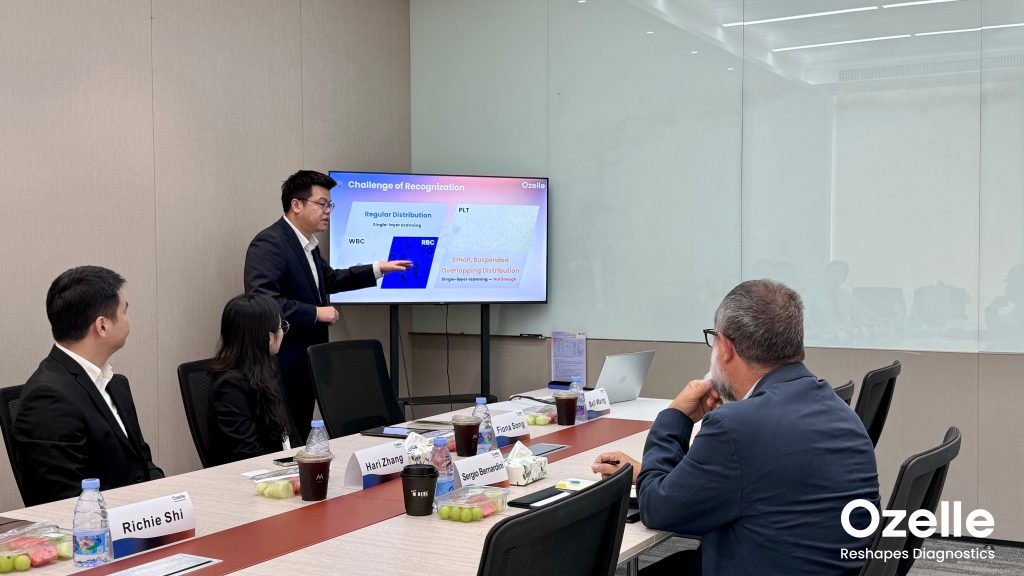
Hematology is one area where this shift is already becoming visible. Routine CBC testing is highly automated, but morphology still often sits outside the main automated workflow. When abnormal or atypical cells require closer review, laboratories may need additional smear preparation, microscopy, and specialist expertise. Ozelle developed AI × CBM (Complete Blood Morphology) around this gap. By combining standardized cell imaging with AI-assisted morphology analysis, the approach brings cell images, classification, and review into the hematology workflow itself rather than treating morphology as a separate step after routine CBC testing.
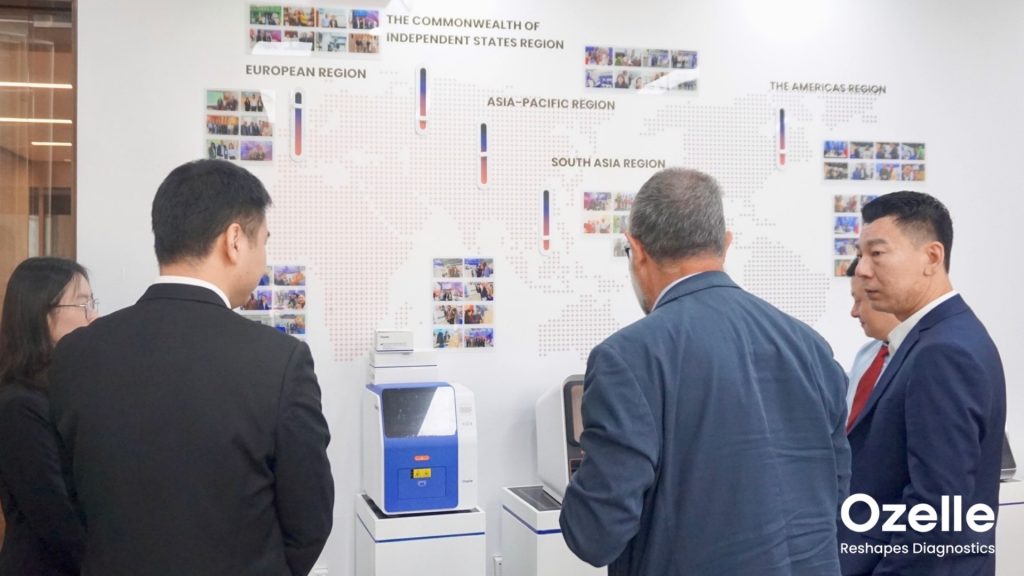
During his visit, Prof. Bernardini took a closer look at O-Cyte 1, Ozelle’s high-throughput hematology analyzer built around this approach. O-Cyte 1 is designed to bring morphology intelligence into settings where throughput also matters. It processes 60 tests per hour as a standalone system, while its modular architecture allows capacity to expand up to 360 tests per hour as testing demand grows.
This gives image-based morphology a broader role in routine hematology. Rather than remaining primarily a lower-throughput review step, morphology can become part of the pace and workflow expected across hospitals, laboratories, and other diagnostic settings. O-Cyte 1 also addresses a less visible but equally practical issue: maintenance. Much of the fluid path and key fluid-contact components are contained within the consumable system rather than remaining inside the analyzer over extended periods. Keeping more fluid handling within the consumable helps the internal system stay cleaner and reduces routine maintenance demands.
Together, morphology intelligence, speed, modular capacity, and lower maintenance requirements reflect a straightforward principle: advanced morphology becomes more useful when it fits the way routine diagnostics actually operate.
Integrated Diagnostics Beyond the Central Laboratory
The conversation also looked at how diagnostic needs differ across healthcare systems. Prof. Bernardini noted that decentralized and point-of-care testing does not develop in the same way everywhere. Laboratory organization, healthcare economics, and local care pathways all influence where testing can realistically move closer to the point of need. In more centralized systems, settings such as community pharmacies, private laboratories, smaller clinics, and primary care facilities may offer different opportunities for broader access to diagnostic testing.
In this context, EHBT-50 drew particular interest. Prof. Bernardini was especially interested in the way EHBT-50 combines hematology, immunoassay, and biochemistry on a single platform. Rather than requiring separate instruments for different testing disciplines, the system brings multiple types of diagnostic information into one workflow.
The value is not simply “three functions in one analyzer.” For smaller or decentralized care settings, it creates the possibility of accessing a broader diagnostic picture without adding the space, maintenance, training, and workflow burden of multiple standalone systems.
From AI Analysis to Reviewable Evidence
Another recurring theme was evidence. As AI becomes part of clinical diagnostics, algorithm performance alone is not enough. Standardization, traceability, and clinical validation all influence whether a new technology can be used with confidence in routine practice.
Image-based morphology adds an important dimension here. Within Ozelle’s AI × CBM workflow, AI-assisted classifications remain linked to the underlying cell images. Users are not limited to a numerical or categorical result; they can also review the cellular evidence behind that classification.
In other words, the result does not stand apart from the evidence that produced it. For Ozelle, this is an important part of responsible AI in diagnostics. The goal is not simply to improve what an algorithm can recognize, but to make its output easier to review, evaluate, and validate over time.
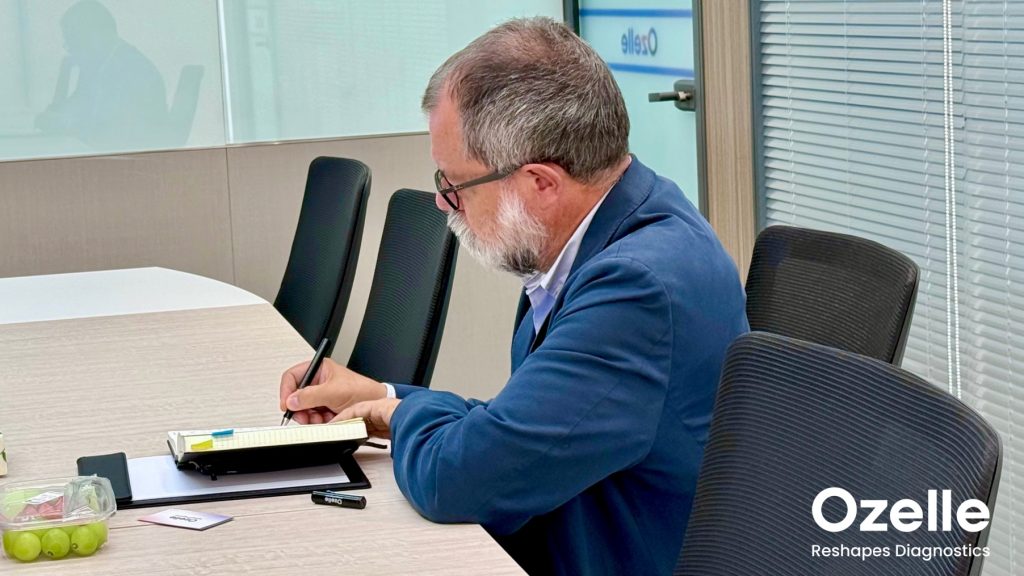
The discussion also pointed to opportunities for continued scientific and academic exchange around how emerging diagnostic technologies can be assessed and how stronger evidence can support their wider clinical adoption. As laboratory medicine becomes more digital, intelligent, and distributed, progress will depend on more than smarter algorithms or more capable analyzers. The technologies that matter will be the ones that can fit into real workflows, stand up to scientific scrutiny, and remain reliable in everyday use.
That is the direction behind Ozelle’s work in AI × CBM, integrated diagnostics, and connected diagnostic systems—moving AI from technical possibility toward practical clinical value, and making intelligent diagnostics work reliably in the real world.