
 Italiano
 English
 Français
 Русский
 Español
 Deutsch
 Português
 العربية

Choosing a hematology analyzer manufacturing partner involves more than comparing product specifications. For an automated blood cell analyzer distributor, the decision should connect product capabilities with target customers, manufacturing quality, local market requirements, technical support, and long-term supply.
A partnership may involve distributing the manufacturer’s existing branded products, establishing regional sales representation, or developing a private-label offering. Product configuration, branding, and territorial rights should be considered separately. OEM customization becomes relevant when specific market, branding, or integration requirements justify the additional investment.
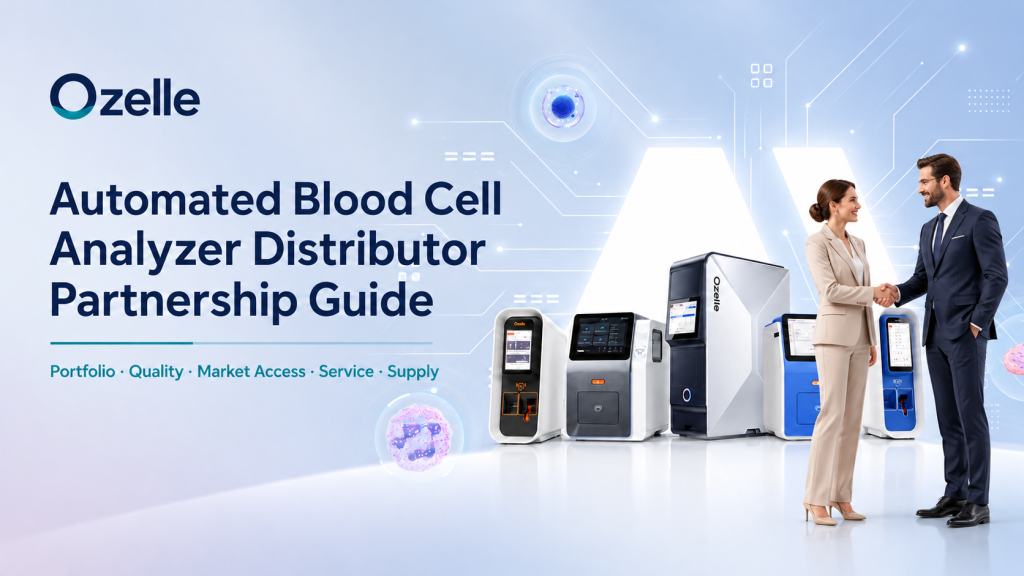
Product Portfolios and Customer Coverage
Distinct Roles Within the Product Range
A hematology portfolio may differ in testing scope, level of automation, differential reporting, morphology capabilities, and processing capacity. These characteristics help distributors position individual analyzers for different customer requirements.
Portfolio selection begins with the customers the distributor already serves. Hospital laboratories, smaller clinical laboratories, decentralized testing sites, and veterinary practices require different sales coverage and technical knowledge.
An initial portfolio can focus on models with clearly differentiated roles. This can help distributors avoid unnecessary overlap in product positioning while keeping demonstration, training, inventory, and service requirements manageable during market entry.
Differentiation Through Hematology Capabilities

Hematology analyzers can differ in their quantitative CBC parameters, leukocyte differential classification, and morphology-related outputs. These capabilities provide different but complementary information and should be evaluated using performance evidence relevant to each function.
Image-based hematology makes cell-level information available together with routine CBC results, providing additional visual context for healthcare teams. The value of these capabilities depends on the intended clinical application, the quality of the available information, and how the results are used in everyday practice.
Workflow design provides another basis for differentiation. Automated tube handling and scalable processing capacity address different customer requirements from compact hematology systems or integrated platforms combining CBC with selected immunoassay and biochemistry tests.
Human and Veterinary Business Lines
Human and veterinary product lines require different customer access, application knowledge, and service preparation. A distributor with established human IVD channels may begin with human-use analyzers, while a veterinary equipment supplier may prioritize animal hospitals and practices.
Distributors can evaluate human and veterinary product lines independently according to their existing customer networks and technical resources. Expanding into both segments requires consideration of species-specific applications, product training, consumable management, and applicable market requirements.
Manufacturing Quality and Analytical Performance
Manufacturing quality covers both analyzers and their associated consumables across successive deliveries. Distributors should review the manufacturer’s applicable quality-management certifications, production controls, final inspection and release procedures, traceability, and processes for handling nonconforming products. Where ISO 13485 certification is relevant, its validity and scope should be confirmed.
Traceability of instrument serial numbers, software versions, and consumable lot numbers supports complaint investigation, troubleshooting, and applicable corrective actions.
Changes affecting analytical performance or intended use may also require additional verification, validation, or regulatory assessment.
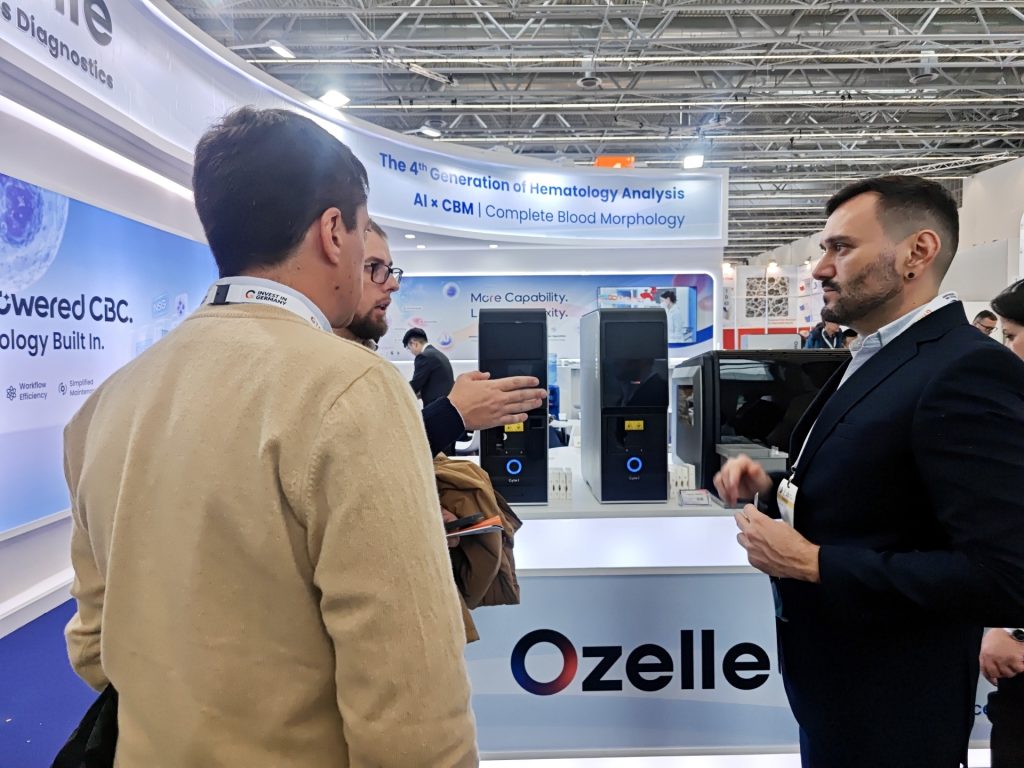
Assess Analytical Performance Evidence
Manufacturing consistency and analytical performance are related but distinct considerations. Distributors should request performance evidence relevant to the analyzer’s intended use, supported specimen types, reported parameters, and software configuration.
For hematology analyzers, relevant evaluations may include precision, method comparison, analytical measurement ranges, carryover, and the performance of automated cell classification and morphology-related outputs, where applicable.
For veterinary analyzers, performance evidence should also reflect the supported species and intended applications. A general statement of species compatibility does not establish equivalent performance across every reported parameter or animal species.
Distribution Models and Regional Cooperation
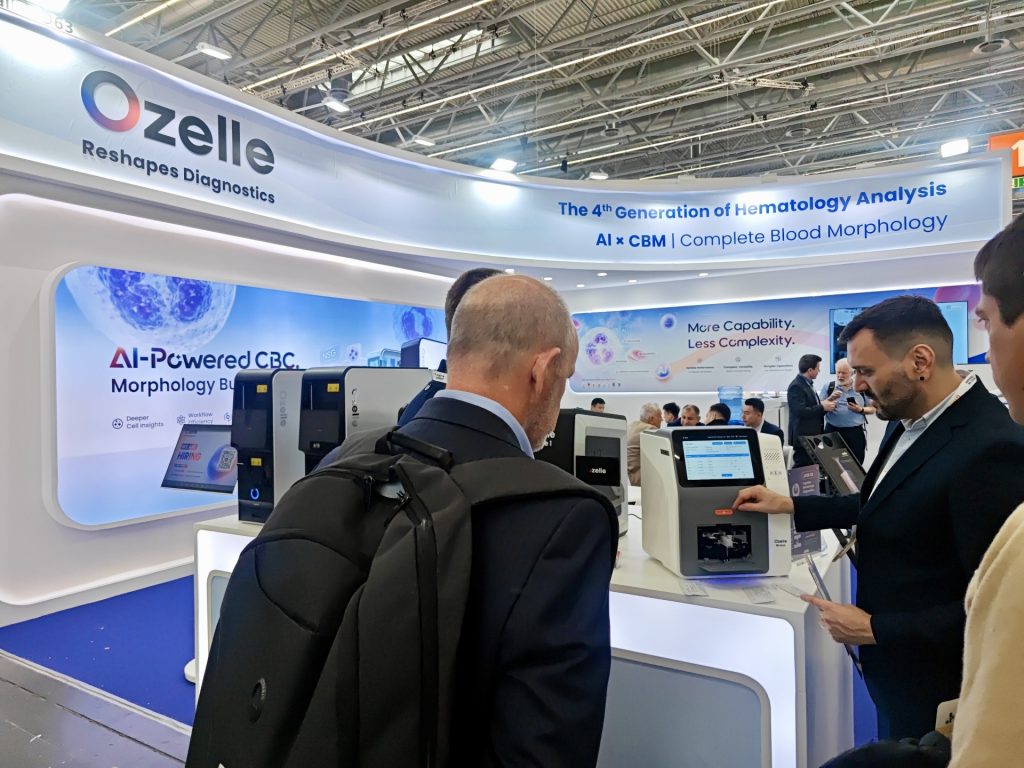
Standard Branded Product Distribution
Standard branded distribution involves supplying the manufacturer’s established products without developing a separate customized configuration. Commercial terms should define the available models, ordering arrangements, payment conditions, warranty responsibilities, and technical support.
The distributor’s investment may include demonstration instruments, local materials, application training, registration work, and inventory. These costs influence the number of products introduced and the pace of expansion.
Regional Representation
Territorial representation can form part of a standard distribution or private-label arrangement. The agreement should define authorized products, geographic coverage, permitted sales channels, exclusive or non-exclusive conditions, key account arrangements, and any approved sub-distribution activities.
Purchase commitments and market-development obligations, where agreed, need to reflect the territory’s customer base and launch stage. Demonstration coverage, local service resources, and sales targets belong within the same commercial plan.
Continuity of the Partnership
Distribution agreements should also address what happens when an appointment changes or ends. Outstanding orders, remaining inventory, warranty responsibilities, and support for installed instruments may continue to require coordination. The agreed arrangements should clarify access to consumables, replacement items, and technical information for existing customers, subject to applicable legal and contractual obligations.
Local Market Access and Manufacturer Responsibilities
The Locally Available Offering
The available commercial portfolio depends on the products, intended uses, and configurations permitted in the target market. Distributors should confirm the applicable regulatory status, product labeling, instructions for use, supported test menus, and documentation for the specific instruments, consumables, and software being supplied.
Registration costs, local representation, renewals, and product-change submissions may affect launch schedules and ongoing operating costs. Responsibilities for these activities should be established before commercial commitments are made.
Human-use and veterinary diagnostic products require separate regulatory assessment. The EU IVDR provisions discussed below apply to human in vitro diagnostic medical devices and should not be treated as a common regulatory pathway for both product lines.
Legal Manufacturer Responsibilities
Under the EU IVDR, the legal manufacturer may manufacture a device itself or have it designed or manufactured and market it under its name or trademark. Its obligations include technical documentation, performance evaluation, conformity assessment, and post-market activities.
Importers and distributors have their own regulatory responsibilities, depending on their actual roles in the supply chain. Commercial agreements may allocate supporting activities, but they do not remove the obligations assigned by applicable law.
Regional sales rights do not automatically transfer manufacturer status. Similarly, the term OEM does not, by itself, determine which organization assumes manufacturer responsibilities.
Private-Label Arrangements
Private labeling introduces a separate responsibility structure. Under EU IVDR Article 16, making a device available under a distributor’s or importer’s own name or trademark generally brings manufacturer obligations. An exception applies where an agreement identifies the original manufacturer as such on the label and leaves it responsible for meeting the regulation’s manufacturer requirements.
Where the brand owner assumes manufacturer obligations, the business needs access to the documentation, regulatory expertise, and lifecycle support required to maintain compliance. Where the original manufacturer retains that role, the branding and contractual arrangement must remain consistent with it.
Changes to intended purpose or modifications that may affect compliance can also trigger manufacturer obligations.
The scope and cost of a private-label arrangement may therefore extend beyond artwork and packaging, particularly when it introduces additional regulatory, documentation, or technical responsibilities. These EU provisions provide a jurisdiction-specific example; the applicable responsibility structure depends on the target market.
After-Sales Resources and Local Service
Installation, operator training, application support, troubleshooting, and repairs require different levels of technical expertise. Distributors should assess which activities can be managed locally and which require manufacturer support, together with the available training, technical resources, spare parts, and warranty arrangements.
Analyzer design also influences the service model. Automated operation, consumable-based fluidics, single-use test kits, and modular service architectures can simplify selected aspects of routine operation and technical intervention. Their practical relevance should be assessed against the maintenance procedures of each model and the distributor’s local service capabilities.
A sustainable service model should consider both the work required to deploy new instruments and the resources needed to support the growing installed base.
Support After Installation
Software updates, revised instructions, recurring application questions, and product changes create continuing support requirements.
Service recovery depends on local expertise, available parts, and replacement logistics as well as remote communication. A growing installed base therefore requires service capacity to develop alongside sales coverage.
Manufacturer and distributor support can assist with installation, application training, and troubleshooting, while the end-user laboratory remains responsible for applicable performance verification, routine quality control, and result-review procedures.
Recurring Supply and Inventory Planning
Consumables and Replenishment
An installed base creates recurring supply requirements for compatible test consumables, QC materials, and service items, with actual demand depending on instrument utilization and testing volume. Pack sizes, minimum orders, freight, storage conditions, and remaining shelf life influence local stock levels.
For an automated blood cell analyzer distributor, instrument ordering and recurring-material replenishment require different planning. Initial placements may arrive in batches, while consumption develops according to each customer’s testing volume.
Demonstration activity, new installations, and routine consumption may grow at different rates. Inventory commitments need to accommodate this uneven demand, particularly during market entry.
Product Lifecycle Support
Supply agreements should address product lifecycle changes, including software revisions, consumable compatibility, replacement items, spare-parts availability, and product discontinuation. Advance notification and continued access to relevant technical information help distributors plan inventory and support instruments already in service.
When OEM Customization Fits the Business

OEM customization may be appropriate when a distributor has an established private-label strategy, a specific localization requirement, or an integration need that cannot be addressed through the existing product configuration.
Depending on the scope, customization may involve engineering work, minimum order quantities, non-recurring engineering costs, additional verification, regulatory documentation, separate inventory, and ongoing support. Distributors should evaluate these requirements against expected sales volume and the resources needed to maintain the customized product.
Standard branded distribution may offer a more straightforward route when the existing analyzer already meets local customer requirements. The choice between standard supply and customization should therefore be based on the distributor’s business strategy, technical requirements, and the commercial viability of the proposed project.
Selecting from Ozelle’s Portfolio
Built on AI × CBM (Complete Blood Morphology), Ozelle’s human diagnostic portfolio combines image-based hematology with different levels of testing scope and workflow automation. The range allows distributors to evaluate distinct customer segments, from primary care clinics and smaller laboratories to hospitals and larger diagnostic facilities.
| Product | Core capabilities | Customer segments to evaluate |
| O-Cyte 1 | AI-assisted 7-diff hematology, automated tube handling, scalable capacity from 60 to 300 tests/hour across up to six analyzers | Hospital laboratories and diagnostic networks with higher-volume or expanding testing requirements |
| EHBT-75 | Compact 7-diff hematology with high-resolution cell imaging and AI-assisted morphology | Clinics and laboratories requiring more detailed hematology and morphology information |
| EHBT-50 | Integrated 7-diff hematology, immunoassay, and dry biochemistry | Clinics and diagnostic facilities requiring selected tests across multiple diagnostic categories |
For distributors serving animal hospitals and veterinary clinics, Ozelle’s veterinary diagnostic portfolio includes EHVT-50 and EHVT-75, combining digital cell morphology with different integrated-testing capabilities across hematology, urine and feces analysis, and additional diagnostic methods where supported.
Across its human and veterinary portfolios, Ozelle combines AI-assisted morphology, flexible diagnostic configurations, and maintenance-efficient design. For distributors, these capabilities provide different ways to position products across their customer networks while planning the appropriate training, consumable supply, and local technical support.
Standard distribution opportunities and any proposed OEM or private-label requirements can be discussed according to the selected product line and target market.
Build Your Hematology Distribution Partnership With Ozelle
Choosing a manufacturing partner means finding a diagnostic portfolio that fits your customer network, supported by consistent product quality, appropriate market documentation, technical service, and reliable consumable supply. The partnership structure should reflect your business objectives, whether through standard branded distribution, regional representation, or a defined customization project.
Interested in becoming an Ozelle distributor?
Visit our Distributor Partnership page oppure via e-mail info@ozellepoct.com. Share your target market, customer segments, distribution experience, and preferred product lines to discuss suitable configurations, local support requirements, and potential cooperation opportunities.