
 Français
 English
 Русский
 Español
 Deutsch
 Português
 العربية
 Italiano

Choosing a point of care CBC machine starts with a practical question: what testing capabilities does the clinic actually need? Some facilities require routine CBC testing, while others may benefit from extended differential and morphology information or a broader menu combining hematology with selected chemistry and immunoassays.
The right configuration depends on clinical requirements, testing frequency, specimen handling, staffing, and the resources needed for quality control and routine operation. A broader test menu is valuable only when the clinic can use and support those additional functions consistently.
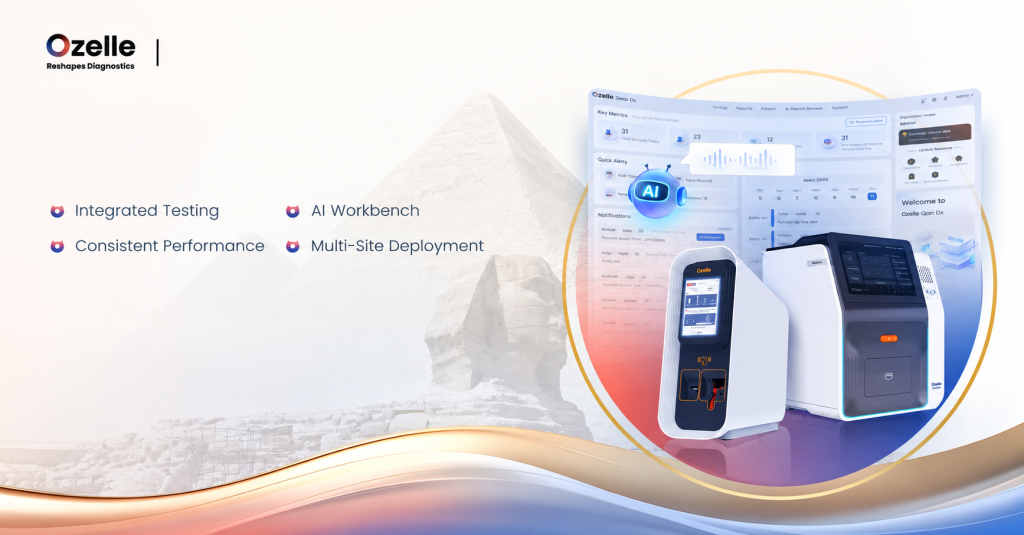
Defining the Clinic’s Testing Menu
Clinical Requirements and Local Testing Scope
Before comparing equipment, clinics should identify the clinical purpose of each proposed test and determine which investigations need to be performed on-site. POCT programme guidance emphasizes assessing clinical needs, available resources, and the intended use of results before selecting a testing system.
For hematology, the first consideration is whether routine CBC reporting meets the clinic’s needs or whether more detailed differential and morphology-related information is required. Different levels of leukocyte classification and image-based morphology provide different types of information, and their suitability depends on the clinic’s clinical services and result-review procedures.
Chemistry and immunoassay testing address other clinical questions. Adding these methods expands the local testing service beyond hematology, even when they are performed on the same instrument. Clinics should therefore distinguish essential CBC requirements from additional tests that may support recurring clinical needs.
Tests that are not suitable for local implementation can remain within an established referral laboratory pathway. In-house testing should complement, rather than automatically replace, external laboratory services, particularly when confirmatory testing or specialist review is required.
Request Frequency and Test Combinations
Testing frequency affects consumable use, inventory planning, operator experience, and ongoing quality-control requirements. An assay requested only occasionally may introduce additional storage and QC obligations, particularly if reagent pack sizes or shelf life do not align with expected demand.
Recurring combinations are equally important. A clinic that primarily requests CBC has different requirements from one that regularly orders CBC together with selected inflammation markers, metabolic tests, or other investigations. The selected analyzer should reflect these established request patterns rather than the maximum number of functions listed in a brochure.
Clinics should also distinguish the tests required at service launch from those considered for future expansion. Additional methods should be introduced only after confirming their clinical relevance, local availability, consumable requirements, and implementation needs.
Configuring a Point of Care CBC Machine for Clinic Use

Dedicated Hematology or Integrated Testing
A dedicated hematology analyzer focuses on CBC testing and its associated review process. Depending on the model, it may provide routine differential reporting, more detailed leukocyte classifications, or image-based morphology information. This can be appropriate when the clinic’s primary requirement is hematology and other investigations are already supported through separate testing arrangements.
An integrated diagnostic analyzer extends the available menu to supported chemistry or immunoassay methods. It may reduce the need for separate instruments, but each method still has its own specimen, quality-control, consumable, and reporting requirements.
The following comparison provides a starting point for identifying the required level of testing capability.
| Clinic testing requirement | Relevant analyzer capabilities | Key selection question |
| Routine CBC | 3-diff or another suitable routine CBC configuration | Does the reporting scope meet the clinic’s established hematology needs? |
| Extended hematology and morphology | More detailed differential reporting and image-based morphology, where supported | Are the additional findings clinically relevant, and can staff review them appropriately? |
| Integrated diagnostic testing | CBC with selected immunoassay or biochemistry tests | Are the additional tests requested frequently enough to justify their consumables, QC, and operating requirements? |
The distinction is one of testing scope, not an automatic ranking of analytical quality. A broader function set is useful only when the additional methods correspond to actual clinical demand and can be maintained within the clinic’s resources.
Differential and Morphology Requirements
The required leukocyte differential and the need for morphology-related information should be evaluated separately from the overall test menu. Routine CBC configurations may meet the needs of some facilities, while others require more detailed differential outputs and structured review of selected findings.
A more detailed differential provides information about specific cell populations, while image-based morphology adds visible cell-level detail to routine CBC results, making morphology information more accessible in everyday clinical settings.
Clinics should therefore connect each available function to a defined purpose. The key questions are which outputs the analyzer provides, how their performance has been evaluated, and how abnormal or uncertain findings enter the clinic’s established review and referral process.
Specimen Requirements and Workload
The selected analyzer must support the specimen types and collection procedures required for its intended tests. CBC commonly uses anticoagulated whole blood, while selected chemistry and immunoassay methods may require whole blood, serum, or plasma. An integrated menu should therefore be evaluated using assay-specific instructions rather than a single assumed collection procedure.
For capillary CBC testing, where supported, clinics should confirm the required sample volume, collection device, anticoagulation or mixing requirements, and procedures for handling insufficient or compromised specimens. Collection competency is particularly important when low-volume samples are involved.
Workload assessment should distinguish daily totals from the timing of requests. A modest average volume may still include several specimens arriving during a concentrated consultation period. Operator availability, preparation tasks and report review can then affect turnaround time alongside instrument processing.
Physical placement needs to accommodate the testing activity rather than only the analyzer. Consumable storage, documentation, waste disposal, power and network access form part of the implementation assessment.
Operational Requirements for Clinic Testing
Operator Training and Ongoing Competency
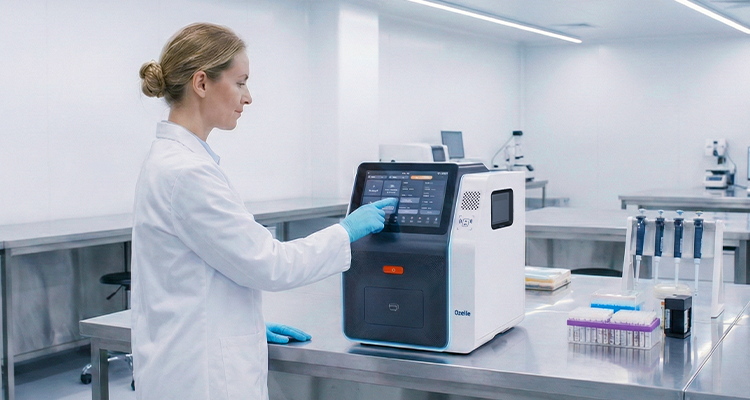
Operator training should cover the complete testing procedure, including specimen identification, collection and acceptance, device operation, quality control, result handling, and appropriate responses to instrument messages. Familiarity with the user interface alone does not establish competency across the testing workflow.
Practical competency assessment should confirm that operators can complete routine testing and recognize situations requiring further action, such as an unsuitable specimen, an unresolved instrument message, or an unacceptable QC result. For integrated analyzers, competency requirements should reflect each method performed rather than CBC operation alone.
Clinics should also plan refresher training and reassessment according to testing frequency, staff turnover, and applicable local requirements. This is particularly relevant where some assays are performed infrequently or testing responsibilities are shared among several team members.
Quality Control, Consumables, and Routine Upkeep
Quality-control requirements should be established for each selected testing method. Clinics need to confirm the applicable QC materials, procedures, acceptance criteria, documentation, and actions required when results fall outside defined limits. Internal instrument checks should not automatically be treated as substitutes for all required quality-control procedures.
Maintenance and QC address different issues. Single-use test kits or designs without reusable internal fluid paths may reduce selected cleaning and maintenance tasks, but they do not remove the need for quality checks, appropriate specimen handling, waste disposal, or other manufacturer-specified procedures.
Consumable planning should reflect actual testing volume, pack size, shelf life, storage conditions, and replenishment arrangements. Clinics should evaluate ongoing costs using the materials and procedures required for reportable results, rather than the purchase price or price of an individual test kit alone.
A clear response plan is also needed when QC fails, equipment becomes unavailable, or essential consumables cannot be supplied. The clinic should know when local testing must be suspended and what alternative testing route is available.
Reporting and Follow-Up
A completed analysis is not necessarily a reportable result. Laboratory-defined result-review and authorization procedures should address instrument flags, unreportable measurements, and findings that require additional assessment before clinical use.
Clinics should confirm the reporting options supported by the proposed analyzer, such as an integrated or external printer, LIS connectivity, or other available data-transfer arrangements. Where electronic integration is required, sample or patient identifiers, units, reference intervals, and result status should be checked in the receiving system. Network connectivity alone does not establish a functioning clinical interface.
Responsibility for pending or referred results should remain clear when testing extends beyond the consultation. This includes follow-up communication and additional investigations performed by an external laboratory.
Matching Ozelle CBC Analyzers to Clinic Needs
EHBT-75: Extended Hematology and Image-Based Morphology
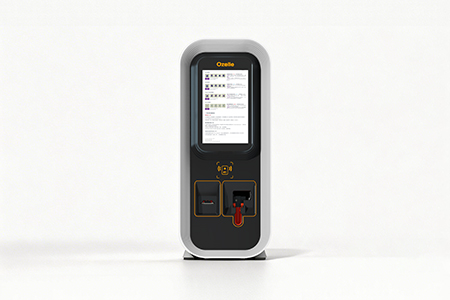
Le EHBT-75 hematology analyzer represents a dedicated configuration for human-use CBC testing. It combines seven-part differential hematology with image-based cellular analysis and accepts capillary or venous whole blood. Automated loading, staining and mixing consolidate preparation within the instrument, while high-resolution imaging and AI-assisted classification provide morphology-related information for review.
For a clinic, the relevant features are the organisation of preparation, the supported specimen options and access to cellular images alongside hematology results. Its single-use test kit allows consumables to be managed around individual tests. Collection competency, QC, cleaning and result-review procedures remain part of the local service.
EHBT-50: Integrated CBC, Immunoassay, and Biochemistry
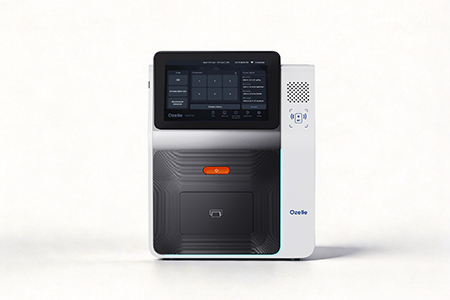
Le EHBT-50 integrated analyzer combines seven-part differential hematology with immunoassay and dry chemistry. Supported single, dual or triple combinations can be configured within a testing batch, allowing the selected menu to reflect requested investigations rather than a fixed combination.
This configuration is relevant where recurring demand extends beyond CBC. Its value for POCT lies in bringing selected methods into one instrument, while each assay retains its own specimen, quality and reporting requirements. The choice between these configurations follows the clinic’s testing scope rather than a simple preference for more functions.
Clinic Configuration and Local Implementation
The appropriate point of care CBC machine depends on the scope of testing the clinic intends to provide. Focused routine CBC, extended hematology with image-based morphology, and integrated diagnostic testing represent different requirements rather than a simple progression from basic to advanced equipment.
Before implementation, clinics and local partners should also confirm that the selected analyzer, intended use, test menu, and operator arrangements meet applicable local regulatory and quality requirements.
A practical selection process begins with the required tests, expected sample volume, collection procedures, reporting needs, and staffing arrangements. These should then be matched with the proposed configuration, consumables, quality-control requirements, and service support.
To explore Ozelle’s CBC analyzer options, contactez notre équipe or email info@ozellepoct.com. Clinics, distributors, and local partners can share their required test menu, expected workload, target market, and implementation needs to discuss suitable configurations and local availability.