
 Français
  English
  Русский
  Español
  Deutsch
  Português
  العربية
  Italiano
A hematology cbc analyzer distributor is no longer judged only by shipment capacity or price execution. In today’s diagnostics market, the more important question is whether the distributor can translate analyzer features, application education, workflow adaptation, and post-installation support into sustainable regional growth, which is also consistent with how Ozelle diagnostics presents its business around integrated diagnostic operations rather than standalone hardware sales.
This matters because CBC and hematology analyzers are not passive products. They sit inside workflows that involve operator training, result interpretation, maintenance expectations, LIS or HIS connectivity, and different customer needs across clinics, laboratories, emergency settings, pharmacies, and decentralized care environments.
For that reason, evaluating a distributor requires more than checking whether the company already sells medical devices. A strong channel partner usually needs product fit, technical support capacity, market education ability, and enough local execution strength to help analyzers move from initial installation into routine use.
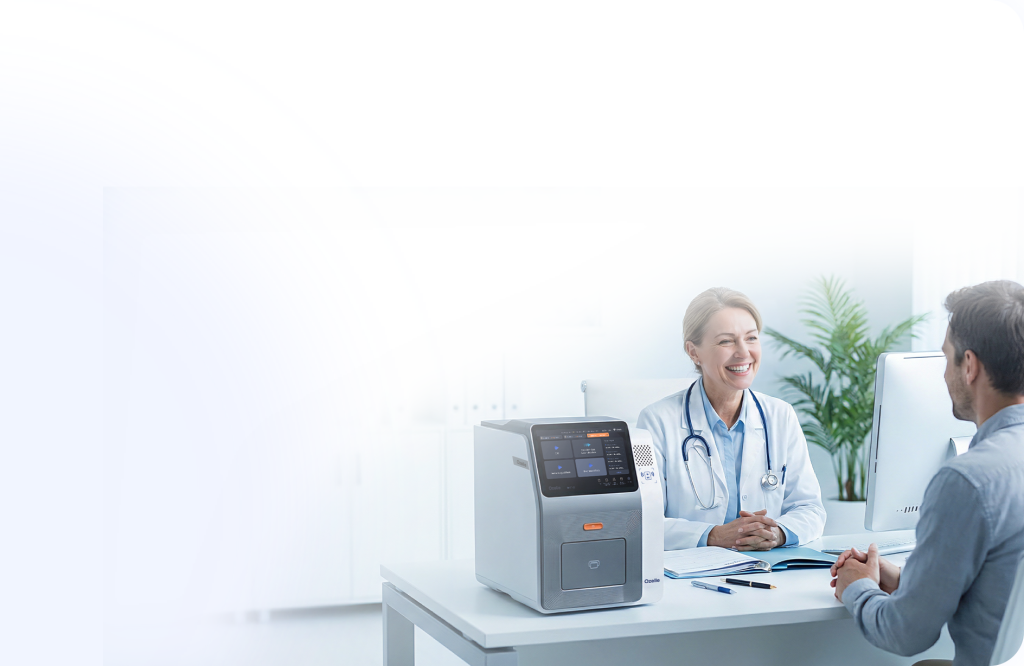
Why distributor evaluation matters
Choosing a hematology cbc analyzer distributor has a direct effect on how quickly a product portfolio can enter a market and how well it performs after launch. In hematology, installation alone does not create demand; distributors often need to help customers understand workflow value, maintenance logic, and the practical role of CBC and morphology in daily testing.
This is especially true for analyzers that combine AI-powered Complete Blood Morphology with simplified operation. When a product includes image-based detection, workflow software, or integrated diagnostics, the distributor needs enough technical confidence to explain where the analyzer fits and which care settings will benefit most from its design.
In other words, the distributor becomes part of market development rather than only part of logistics. That shift is becoming more visible as diagnostics moves toward maintenance-free operation, room-temperature reagent storage, connected reporting, and broader decentralization of first-line testing.
Market development depends on repeatability
A distributor can open doors with pricing and local contacts, but long-term performance usually depends on repeatability. If the partner cannot support training refresh, application explanation, or early troubleshooting, installed systems may remain underused even when the initial sales process looked successful.
This is one reason hematology channels need to be evaluated differently from commodity medical supply channels. CBC analyzers often require a more consultative model, especially when the product line includes morphology-supported interpretation, multiple workflow types, and different levels of analyzer complexity.
Product portfolio fit comes first
A hematology cbc analyzer distributor should be assessed first on portfolio fit, not only on general market coverage. The most effective distributors usually understand which analyzer type fits which customer segment, and they can explain that logic clearly across entry-level screening sites, dedicated hematology workflows, and integrated diagnostic environments.
Entry-level access
Le EHBT-25 hematology analyzer represents a compact morphology-based hematology workflow for primary care use. Its 3-diff CBM structure, 40 μL capillary blood requirement, four-step operation, maintenance-free design, and room-temperature reagent logic make it relevant to community clinics, decentralized settings, and sites that want simpler CBC deployment.
A distributor working with this kind of analyzer needs to understand front-line use cases. The commercial message is not only about parameters, but also about easier deployment, smaller footprint, lower cleaning burden, and access to in-house blood testing where laboratory resources are limited.
Dedicated hematology workflow
Le Analyseur hématologique automatique EHBT-75 is positioned around dedicated hematology use, AI-powered morphology, high-resolution imaging, and Open Dx workflow integration. Its 41-parameter structure, single-use cartridge design, room-temperature storage, and 10 samples per hour throughput make it relevant to sites that want deeper blood-analysis workflow with maintenance-reduced operation.
A distributor handling this analyzer needs stronger application depth. It should be able to discuss dedicated hematology workflows, morphology-supported interpretation, and how features such as automated processing, report visibility, and connectivity can fit more advanced clinical environments.
Integrated diagnostic workflow
Le Analyseur multifonction EHBT-50 combines hematology with immunoassay and biochemistry in one analyzer, while also supporting AI + CBM, flexible panel configuration, and 10 samples per hour throughput. This makes it relevant to distributors targeting laboratories, emergency settings, and mixed-use facilities that evaluate one analyzer across several testing needs rather than CBC alone.
The distribution requirement here is different again. A partner needs to understand not only blood testing, but also how integrated workflows can affect instrument planning, panel design, and customer conversations around consolidation rather than single-function replacement.
Technical support and training capacity
A distributor’s technical team often determines whether an analyzer becomes part of daily workflow or remains an occasional device. For CBC and morphology analyzers, training is rarely limited to button-by-button operation; it often includes sample handling, report interpretation, maintenance logic, and explanation of how the analyzer fits the site’s diagnostic routine.
Application training matters
When analyzers use AI-powered morphology, visualized results, or integrated reporting, users may need more than standard installation training. Distributors that can explain CBC use cases, morphology relevance, and workflow differences between compact, dedicated, and multi-function analyzers are usually better positioned to support adoption after delivery.
This does not require the distributor to behave like a clinical authority. It does require enough product and workflow literacy to support customer onboarding in a structured way and to reduce hesitation around new analyzer logic.
Connectivity and workflow support
The same principle applies to LIS, HIS, and workflow integration. Internal strategy notes and product positioning emphasize that connected diagnostics, result management, and broader digital workflows are part of the value proposition, so distributors need at least a practical understanding of how those functions affect customer operations.
Without that capability, a distributor may still sell analyzers, but it will be harder to build stable user confidence. In long-cycle markets, the ability to support implementation can be as important as the ability to win the first purchase order.
Localization and workflow adaptation
A distributor should also understand that hematology demand is not uniform across markets. Customer expectations can differ widely between private clinics, hospital laboratories, pharmacies, emergency departments, and mobile or community-based care settings.
This is where localization becomes practical rather than abstract. A good partner knows whether a market responds more strongly to compact size, maintenance-free operation, room-temperature storage, broader panel integration, or dedicated hematology depth, and it adjusts the channel strategy accordingly.
Scenario fit is part of channel quality
For example, a compact analyzer may be more relevant in primary care expansion, while a dedicated hematology analyzer may be more relevant in sites focused on blood-analysis workflow. A multi-functional analyzer may make more sense in markets where users want hematology, immunoassay, and biochemistry inside one instrument to save space or simplify procurement.
This means distributor quality is partly measured by scenario mapping. The strongest partners usually know how to position different analyzers against different workflows rather than trying to force one sales narrative across every customer type.
Service model after installation
A hematology cbc analyzer distributor should be evaluated on what happens after installation, not only before it. Post-installation support affects user retention, reorder stability, reference quality, and whether the installed base becomes a real market asset.
What post-installation support should include
A stronger service model usually includes onboarding follow-up, refresher training, consumables continuity, troubleshooting coordination, and help with workflow questions as users expand their routine testing. For analyzers positioned around AI + CBM, connected reporting, or multi-panel workflows, that support becomes even more important during the first months of use.
This is also where weak distribution models often become visible. A partner that focuses only on first-order conversion may struggle to build satisfaction, while a partner that stays involved after installation is more likely to generate referrals, stable demand, and better account retention.
Commercial logic beyond price
Price is always part of distributor evaluation, but it is rarely the only useful criterion in hematology. A low-price channel without training depth, service continuity, or application education may weaken long-term market development even if early shipment numbers look attractive.
By contrast, a distributor with better technical communication, stronger scenario mapping, and more reliable post-installation support may contribute more to installed-base quality over time. In diagnostics, channel quality often shows up in how consistently analyzers are used, not only in how quickly they are sold.
Industry direction
The role of a hematology cbc analyzer distributor is shifting from traditional product reseller to technical market partner. As analyzers increasingly combine AI-powered morphology, maintenance-free design, room-temperature storage, connected reporting, and decentralized deployment models, channel partners need more than commercial reach to compete effectively.
That trend is likely to continue because diagnostic adoption depends on workflow confidence as much as on hardware availability. In this environment, the distributors most likely to create long-term market development are those that can connect portfolio structure, local application education, and post-installation support into one consistent channel model.
For manufacturers building regional coverage, the central question is no longer only who can sell analyzers fastest. It is which partner can turn analyzers such as those shown by Ozelle diagnostics into repeatable clinical workflows, stronger installed bases, and more durable market presence over time.