
 Español
  English
  Français
  Русский
  Deutsch
  Português
  العربية
  Italiano
Introducción: La base del diagnóstico moderno
El hemograma completo sigue siendo la prueba de laboratorio solicitada con más frecuencia en la práctica clínica en todo el mundo. Este completo panel mide tres poblaciones celulares fundamentales (glóbulos rojos, glóbulos blancos y plaquetas), proporcionando a los médicos información crítica para el diagnóstico de infecciones, anemia, trastornos hemostáticos y enfermedades sistémicas. Comprender el análisis del hemograma, sus parámetros y los errores más comunes es esencial tanto para los profesionales sanitarios como para los pacientes informados.
La evolución de la microscopía manual al análisis automatizado basado en IA ha transformado los tiempos de respuesta de 30-60 minutos a 6 minutos, lo que permite tomar decisiones clínicas críticas en casos de sepsis, hemorragia aguda y emergencias hematológicas.
Comprender los parámetros del hemograma: El cuadro completo
Parámetros de los glóbulos rojos (GR): Capacidad de transporte de oxígeno
El panel de GR incluye siete mediciones críticas que evalúan la capacidad de transporte de oxígeno y clasifican las anemias. El recuento de glóbulos rojos (normal: varones 4,35-5,65 × 10¹²/L; mujeres 3,92-5,13 × 10¹²/L) cuantifica el total de glóbulos rojos circulantes. La hemoglobina (normal: varones 13,2-16,6 g/dL; mujeres 11,6-15,0 g/dL) es la proteína que se une al oxígeno dentro de los glóbulos rojos y representa el marcador distintivo de la gravedad de la anemia. El hematocrito (normal: varones 38,3-48,6%; mujeres 35,5-44,9%) expresa el porcentaje del volumen sanguíneo ocupado por los glóbulos rojos.
Los índices de GR permiten una clasificación precisa de la anemia. El volumen corpuscular medio (VCM) (normal: 80-100 fL) mide el tamaño medio de los GR, clasificando las anemias en microcíticas (100). La hemoglobina corpuscular media (HCM) (normal: 27-31 pg) indica el contenido medio de hemoglobina por célula. La concentración media de hemoglobina corpuscular (MCHC) (normal: 32-36 g/dL) calcula la densidad de hemoglobina y representa uno de los parámetros más estables. La Anchura de Distribución de los Glóbulos Rojos (RDW) (normal: 12,0-14,3%) cuantifica la variación en el tamaño de los glóbulos rojos y sirve como indicador precoz de anemia.
Parámetros de los glóbulos blancos (GB): Infección e inmunidad
El recuento total de glóbulos blancos (normal: 3,5-9,5 × 10⁹/L) constituye la base de la evaluación inmunológica. La elevación por encima de este rango (leucocitosis) sugiere infección aguda, inflamación o procesos leucémicos, mientras que la reducción (leucopenia) indica supresión de la médula ósea o infección abrumadora.
El diferencial de glóbulos blancos de 5 partes identifica células inmunitarias específicas. Los neutrófilos (normal: 1,8-6,3 × 10⁹/L) constituyen la principal defensa bacteriana del organismo y aumentan rápidamente durante las infecciones agudas. Los linfocitos (normal: 1,0-4,0 × 10⁹/L) orquestan la inmunidad adaptativa y aumentan durante las infecciones víricas. Los monocitos (normal: 0,2-0,8 × 10⁹/L) funcionan como carroñeros sistémicos. Los eosinófilos (normal: 0,1-0,4 × 10⁹/L) responden a infecciones parasitarias y alergias. Los basófilos (normal: 0,02-0,10 × 10⁹/L) participan en las respuestas alérgicas.
Los analizadores avanzados detectan ahora células inmaduras (neutrófilos en banda, metamielocitos y blastos), lo que mejora la detección precoz de la gravedad de las infecciones y las neoplasias hematológicas.
Parámetros plaquetarios: Evaluación de la hemostasia
El recuento plaquetario (normal: 150-400 × 10⁹/L) evalúa directamente el riesgo de hemorragia. Los valores por debajo de 150.000 aumentan el riesgo de hemorragia, mientras que las elevaciones por encima de 400.000 pueden indicar inflamación reactiva o trastornos mieloproliferativos. El volumen plaquetario medio (VPM) (normal: 7,6-9,3 fL) indica el tamaño de las plaquetas; un VPM elevado sugiere una liberación de plaquetas inmaduras que refleja estrés de la médula ósea. El plaquetocrito (PCT) (normal: 0,1-0,28%) refleja la masa plaquetaria total.
Cómo funciona el análisis de hemograma: De la muestra al resultado
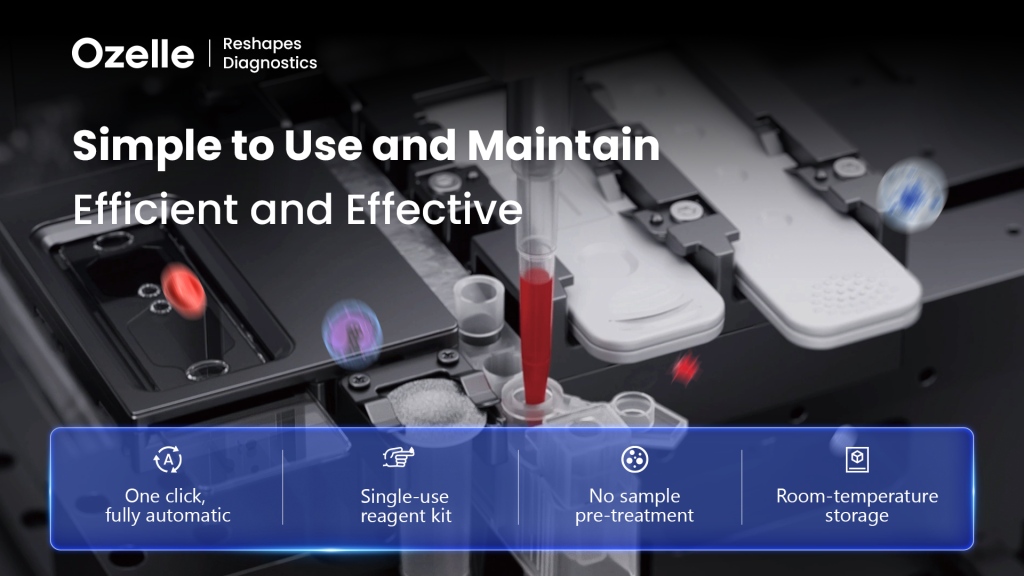
Los analizadores de hemograma modernos ofrecen resultados completos en seis minutos mediante un proceso estandarizado. La muestra se somete a una dilución y tinción precisas, seguidas de su paso por cámaras de detección óptica y de impedancia. Las células individuales se cuentan, dimensionan y caracterizan simultáneamente. Los analizadores avanzados emplean imágenes digitales de alta resolución para fotografiar células individuales, con inteligencia artificial entrenada en más de 40 millones de muestras clínicas para identificar anomalías morfológicas, una capacidad que los analizadores tradicionales no pueden igualar.
Los requisitos diarios de control de calidad incluyen el análisis de tres niveles de control (normal, anormal, patológico) antes de iniciar la prueba del paciente. Esta ventana de calibración de 23 minutos, que a menudo se pasa por alto en los cálculos de eficiencia, representa el tiempo de funcionamiento real. La precisión analítica demuestra un rendimiento excepcional con coeficientes de correlación superiores a 0,98 en todos los parámetros: WBC r² = 0,9962; RBC r² = 0,9787; Hemoglobina r² = 0,9867; Plaquetas r² = 0,9834.
Errores comunes en el análisis CBC: Marco de tres fases

Los errores de laboratorio se producen en tres fases distintas, y los errores preanalíticos representan el 50-80% de todos los errores, una proporción que pone de relieve la importancia crítica de la manipulación de las muestras.
Errores preanalíticos: La fuente dominante (50-80% de errores)
Los problemas de recogida de muestras representan los errores más frecuentes. Las muestras de hemograma coaguladas representan 64-80% de los rechazos preanalíticos, seguidas de la hemólisis (5-10%) y el volumen insuficiente (3-7%). La selección incorrecta de los tubos, la mezcla inadecuada, el retraso en el transporte o las proporciones incorrectas de anticoagulantes comprometen la integridad de las muestras.
Los problemas de calidad de las muestras plantean retos analíticos específicos:
- La hemólisis (rotura de glóbulos rojos por manipulación brusca) eleva falsamente el potasio e interfiere en la medición de la hemoglobina.
- La lipemia (triglicéridos sanguíneos elevados) causa hemoglobina, MCH y MCHC falsamente elevadas por interferencia óptica; la centrifugación a 10.000 × g durante 10 minutos elimina esta interferencia.
- Las muestras coaguladas impiden una medición precisa de todos los parámetros
Frecuencia de errores comunicada: La literatura actual documenta tasas de error preanalítico de 0,39-0,73% en los principales laboratorios hospitalarios, siendo la coagulación la causa predominante.
Errores analíticos: Equipamiento y problemas de interferencia (10-20% de errores)
Los problemas relacionados con el equipo incluyen la desviación de la calibración, la degradación de los reactivos y la obstrucción de la celda de flujo. La verificación diaria de la calibración es esencial; la falta de recalibración tras la sustitución de componentes produce errores sistemáticos de medición.
Las interferencias específicas generan interpretaciones erróneas clínicamente significativas:
- Aglutininas RBC (anticuerpos fríos): Causan falsos recuentos bajos de glóbulos rojos y glóbulos blancos; se resuelven mediante incubación a 37°C.
- Aglutinación de glóbulos blancos: Los anticuerpos dependientes de EDTA provocan recuentos de glóbulos blancos no mensurables o gravemente reducidos; se detectan mediante banderas del analizador y confirmación microscópica.
- Aglutininas plaquetarias (pseudotrombocitopenia): Representan entre el 0,1 y el 1% de los rechazos de hemograma; la incubación a 37°C suele resolverlos.
- Paraproteinemia (mieloma múltiple, Waldenstrom): Elevación falsa de la hemoglobina, MCH, MCHC; identificada por MCHC elevada que supera los límites biológicos (>37 g/dL).
- Crioproteínas: Generan falsas elevaciones en los recuentos de glóbulos blancos y plaquetas a temperatura ambiente; requieren incubación a 37°C o diluyente caliente.
Los grumos de fibrina y los coágulos pequeños obstruyen las células de flujo o elevan falsamente los recuentos de glóbulos blancos; los indicadores del analizador alertan a los operadores para que realicen una verificación microscópica.
Errores postanalíticos: Interpretación y notificación (10-20% de errores)
Los fallos de validación de resultados se producen cuando los analistas revisan inadecuadamente los indicadores del analizador, ignoran las comprobaciones delta (comparación con resultados anteriores) o no realizan frotis de sangre periférica cuando está indicado. Los errores de introducción de datos derivados de la transcripción manual de resultados superan entre 5 y 10 veces los errores de la interfaz automatizada del SIL.
Los fallos de Notificación de Valores Críticos representan errores de alta consecuencia. Se requiere notificación médica inmediata para: WBC 40 × 10⁹/L; Hemoglobina 20 g/dL; Plaquetas ≤10 o >1000 × 10⁹/L.
Interpretación clínica: Integrar los números en el diagnóstico
Clasificación de la anemia mediante índices de glóbulos rojos
La anemia microcítica (VCM <80 fL) indica deficiencia de hierro, talasemia o intoxicación por plomo. Un RDW bajo sugiere deficiencia pura de hierro; un RDW normal sugiere talasemia.
La anemia normocítica (MCV 80-100 fL) con recuento elevado de reticulocitos indica hemólisis o pérdida aguda de sangre; un recuento bajo de reticulocitos sugiere insuficiencia de la médula ósea o enfermedad renal crónica.
La anemia macrocítica (VCM >100 fL) con neutrófilos hipersegmentados indica deficiencia de vitamina B12 o folato; la morfología normal de los neutrófilos sugiere consumo de alcohol, enfermedad hepática o hipotiroidismo.
Reconocimiento de patrones de infección
Infección bacteriana: Los neutrófilos elevados con desviación a la izquierda (>5% formas inmaduras) indican infección bacteriana aguda. La elevación del recuento total de leucocitos combinada con la elevación de la procalcitonina y la proteína C reactiva refuerza el diagnóstico.
Infección vírica: La linfocitosis relativa (recuento de glóbulos blancos normal, porcentaje de linfocitos elevado) con linfocitos atípicos caracteriza la enfermedad vírica, en particular la mononucleosis infecciosa.
Reconocimiento de la sepsis: La leucocitosis grave (>15.000) o la leucopenia grave (<4.000) combinadas con formas inmaduras elevadas y aspecto tóxico de los neutrófilos constituyen un umbral clínico crítico en el tiempo que requiere una intervención inmediata.
Protocolos de garantía de calidad: Mantenimiento de la precisión
Los procedimientos diarios requieren la ejecución de tres niveles de control antes de realizar la prueba al paciente, con criterios documentados de aceptación/rechazo. Los requisitos de calibración exigen una recalibración diaria o semanal en función del tipo de analizador; la frecuencia varía según el fabricante y el protocolo del laboratorio.
Las pruebas de aptitud externas se realizan mensual o trimestralmente, lo que permite la comparación con laboratorios homólogos. La correlación con microscopía manual es necesaria cuando el analizador detecta anomalías (15-25% de las muestras en laboratorios típicos); los frotis de sangre periférica confirman los hallazgos morfológicos y detectan artefactos.
La documentación completa incluye resultados de CC, registros de calibración, registros de errores, acciones correctivas y evaluaciones de la competencia del personal. Esta arquitectura del sistema de calidad evita la recurrencia de los problemas identificados y demuestra el cumplimiento de la normativa a los inspectores de CAP y CLIA.
Tecnología avanzada: Capacidades CBC modernas
Los analizadores de morfología sanguínea completa (CBM) basados en IA informan ahora de más de 37 parámetros mediante la obtención de imágenes de más de 10.000 células individuales por muestra, en comparación con los analizadores tradicionales que miden entre 20 y 30 parámetros mediante muestreo estadístico. Este avance tecnológico permite la detección automática de células inmaduras (blastos, bandas, metamielocitos), anomalías morfológicas (granulaciones tóxicas, barras de Auer) y desplazamiento a la izquierda, con indicadores integrados que dirigen la atención del técnico a las anomalías que requieren verificación manual.
Las pruebas en el punto de atención permiten la toma de muestras capilares (40 µl de sangre) con resultados en 6 minutos, lo que permite una rápida toma de decisiones en atención primaria, servicios de urgencias y entornos con recursos limitados. La integración de los resultados con las historias clínicas electrónicas mejora la eficiencia del flujo de trabajo clínico.
Solución práctica de problemas: Resolución de problemas del mundo real
Cuando los resultados no coincidan con la presentación clínica, verifique sistemáticamente: (1) el rendimiento del control de calidad y el estado de calibración del analizador; (2) las comprobaciones delta con respecto a los resultados anteriores (los cambios agudos significativos justifican la repetición de las pruebas); (3) los indicadores y alertas generados por el analizador; (4) los problemas preanalíticos (hemólisis, lipemia, coagulación); (5) la morfología del frotis de sangre periférica, si está disponible.
Escenarios comunes:
- Plaquetas inesperadamente bajas: Compruebe si hay aglutinación mediante incubación a 37°C; verifique que no haya coágulos visibles en la muestra
- Glóbulos rojos altos con hemoglobina baja: sospecha de lipemia; realizar reposición de plasma o centrifugación de alta velocidad.
- Glóbulos blancos no mensurables: Buscar aglutinación; verificar mezcla adecuada; considerar nueva extracción si hay coagulación
Conclusiones: Buenas prácticas para la excelencia de los laboratorios
El análisis de hemograma sigue siendo fundamental para el diagnóstico clínico moderno. El éxito requiere una atención vigilante a la manipulación de las muestras (evitando errores de laboratorio), un control de calidad y calibración periódicos, una interpretación crítica de los indicadores del analizador, la realización de microscopía cuando esté indicada y la correlación clínica con la presentación del paciente. Los analizadores automatizados modernos con morfología asistida por IA proporcionan una capacidad de diagnóstico sin precedentes cuando se integran con protocolos rigurosos de garantía de calidad.
Para los gestores de laboratorios que implementan funciones de diagnóstico avanzadas, la evaluación exhaustiva previa a la compra de la mezcla de pacientes, la frecuencia de errores, los requisitos de rendimiento y los costes de control de calidad evita que 90% se exceda del presupuesto. Los analizadores de hemograma con IA de Ozelle representan la tecnología más avanzada, disponible en https://ozellemed.com/en/.