
 Español
  English
  Français
  Русский
  Deutsch
  Português
  العربية
  Italiano
I. Introducción: Por qué los laboratorios ya no pueden permitirse diagnósticos fragmentados
La economía sanitaria no perdona. Los hospitales se enfrentan a la reducción de las tasas de reembolso, la escasez crónica de personal y la escalada de los costes de mantenimiento de los equipos. Los laboratorios independientes y las clínicas de atención primaria luchan por justificar las inversiones en diagnóstico cuando los envíos de los laboratorios de referencia prometen “sin capital inicial”. Sin embargo, este cálculo ignora una verdad fundamental: los diagnósticos fragmentados cuestan más -a veces un 40-60% más- cuando se evalúan a lo largo de su ciclo de vida completo.
Un minilaboratorio todo en uno representa un cambio de paradigma. En lugar de desplegar instrumentos separados para recuento sanguíneo completo, Para realizar pruebas de hematología, inmunoensayo (marcadores de inflamación, biomarcadores cardíacos, ensayos hormonales) y bioquímica (glucosa, lípidos, función de órganos), una única plataforma consolidada gestiona las tres modalidades desde una interfaz unificada. El EHBT-50 de Ozelle ejemplifica este enfoque: un analizador de hematología de 7 diferenciales combinado con inmunoanálisis de fluorescencia y bioquímica de química seca en un dispositivo compacto.
La tesis estratégica es sencilla: las plataformas de diagnóstico consolidadas reconfiguran la economía de los laboratorios reduciendo el coste total de propiedad (TCO) en 40-60% en cinco años, al tiempo que mejoran la capacidad clínica, los plazos de entrega y el acceso al diagnóstico.
II. El viejo modelo: Analizadores separados, presupuestos separados, costes compuestos
A. Configuración típica de un laboratorio fragmentado
La mayoría de las clínicas y hospitales pequeños utilizan de tres a cinco analizadores independientes: un instrumento de hematología específico, un analizador químico independiente, una plataforma de inmunoanálisis y, a menudo, un sistema de análisis de orina. Cada uno de ellos funciona con su propio contrato de servicios, requiere una formación distinta del operador y consume su propia cadena de suministro de reactivos y materiales de calibración.
Esta fragmentación crea una complejidad operativa oculta. El precio de compra de los equipos representa sólo el 20-30% del coste total de propiedad a cinco años; el 70-80% restante procede del mantenimiento, los consumibles, la mano de obra y las demandas de infraestructura. En el caso de un laboratorio típico con tres instrumentos, estos costes adicionales son considerables.
B. Costes ocultos más allá de la compra de instrumentos
Considere la carga operativa:
Mantenimiento y servicio: Cada analizador conlleva un contrato de servicio anual por un importe medio de $8.000-$15.000, muchos de ellos con sobrecostes por llamada de $350-$500 cuando los códigos de error superan los límites contratados. Una clínica del Medio Oeste documentó 47 casos de error en el primer año, que ascendieron a 89 en el segundo, lo que generó unos gastos de servicio no presupuestados de $18.400 con un contrato base de $9.600.
Materiales de control de calidad: Esta categoría de costes suele sorprender a los planificadores presupuestarios. La mayoría de los analizadores requieren controles de calidad de doble nivel cada 8 horas, con un coste de $4,80-$7,50 por vial. Una clínica que funcione 16 horas al día necesita 6 controles de calidad por analizador, 365 días al año. Para tres analizadores, esto genera $10.000-$15.000 al año, que a menudo superan los 20% del presupuesto operativo total en el sexto mes, pero que quedan enterrados en las compras como una partida menor de “accesorios”.
Infraestructura de almacenamiento de reactivos: Los sistemas tradicionales de reactivos en fase líquida exigen refrigeración, sistemas de agua para dilución y mantenimiento, y procesamiento de residuos biológicos. Se trata de costes indirectos -gastos de servicios públicos, cumplimiento de la normativa medioambiental, espacios de almacenamiento específicos de los equipos- que no aparecen en las órdenes de compra de equipos, pero que se acumulan con el tiempo.
Mano de obra y personal: La gestión de varios analizadores consume tiempo de los técnicos. El mantenimiento diario de tres instrumentos, las pruebas de aptitud separadas, la formación de distintos operadores y la resolución de problemas para múltiples plataformas crean ineficiencias de personal. Los códigos de error de un instrumento pueden requerir conocimientos especializados mientras otro permanece inactivo.
C. Dificultades financieras para las partes interesadas
Directores financieros de hospitales: Los presupuestos de capital se fragmentan en plataformas que se solapan. Un analizador de hemograma de $50.000 más un analizador bioquímico de $45.000 más una plataforma de inmunoensayo de $40.000 equivalen a $135.000 en capital inicial, a menudo con capacidades que se solapan (muchos miden la glucosa, realizan recuentos básicos o detectan marcadores de inflamación de forma independiente). Esta redundancia supone un despilfarro de la inversión.
Directores de laboratorio: La complejidad operativa se multiplica. Programar el mantenimiento preventivo de tres plataformas diferentes, formar a nuevos técnicos en distintas interfaces y coordinar varios proveedores de servicios genera una sobrecarga administrativa. Los calendarios de control de calidad se vuelven asíncronos, lo que requiere la presencia de personal a intervalos irregulares.
Administradores de clínicas: El modelo fragmentado hace que los diagnósticos internos sean difíciles de justificar. Una clínica que procese 200 muestras diarias podría invertir 130.000 PTP en equipos, más 25.000 PTP anuales en consumibles y mantenimiento. Frente a unos precios de laboratorio de referencia de $8-$15 por prueba, el argumento económico resulta marginal a menos que los volúmenes superen las 2.500-3.000 muestras mensuales. Este umbral excluye a muchas consultas de atención primaria del despliegue de capacidades de laboratorio, obligándolas a depender de los laboratorios de referencia.
III. ¿Qué es un minilaboratorio multifunción? Resumen técnico de el EHBT-50
A. Concepto básico: Una plataforma, múltiples modalidades
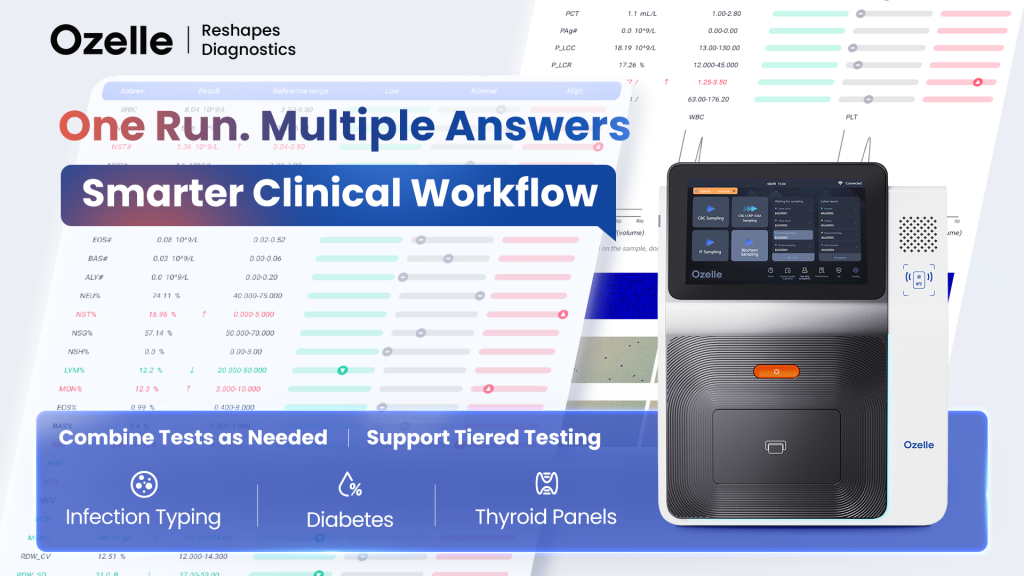
Un minilaboratorio todo en uno que consolida tres modalidades de análisis en un único sistema automatizado: hemograma de 7 diferenciales con análisis avanzado de morfología celular, capacidades de inmunoensayo y análisis bioquímico en seco. El EHBT-50 ofrece esta integración con más de 37 parámetros hematológicos (incluidos marcadores avanzados: NST, NSG, NSH, NLR, PLR, ALY, PAg, RET) más inmunoensayos (CRP, SAA, PCT, troponina cardiaca, hormonas tiroideas, hormonas sexuales, marcadores de inflamación) y pruebas bioquímicas (glucosa, lípidos, función renal, función hepática, metabolismo óseo, HbA1c).
A diferencia de los métodos tradicionales, que requieren la división de las muestras en varios instrumentos, el EHBT-50 procesa una única extracción venosa o capilar (30-100 µl) mediante un pretratamiento automatizado y, a continuación, realiza simultáneamente el hemograma, la detección de inmunoensayos y la colorimetría bioquímica. Una interfaz de pantalla táctil unificada gestiona todo el flujo de trabajo.
B. Características de diseño que permiten la consolidación
Arquitectura de cartucho de un solo uso: El EHBT-50 emplea cartuchos de prueba individuales preenvasados, sin tuberías, sin almacenamiento de reactivos líquidos, sin ciclos de lavado diarios. Este diseño elimina la principal carga de mantenimiento que afecta a los analizadores tradicionales. Los cartuchos se almacenan a temperatura ambiente durante dos años, lo que elimina la infraestructura de refrigeración y el riesgo de deterioro de los reactivos.
Funcionamiento sin mantenimiento: Al carecer de tuberías internas, el instrumento no requiere protocolos de limpieza diaria, ciclos de calibración mínimos ni intervenciones del servicio técnico por líneas obstruidas o arrastre de reactivos. Esto reduce drásticamente el tiempo de intervención de los técnicos y las dependencias de los contratos de servicio.
Flujo de trabajo unificado: Una interfaz de pantalla táctil de 10,1 pulgadas guía a los operadores a través de la carga de muestras, permite realizar pruebas con un solo clic y genera informes integrados en aproximadamente 6 minutos. La formación del personal requiere el aprendizaje de una única interfaz en lugar de tres sistemas independientes. El rendimiento alcanza las 10 muestras por hora, lo que resulta adecuado para volúmenes clínicos y de laboratorio pequeños, a la vez que admite unidades de alto funcionamiento.
Conectividad: La integración LIS/HIS a través de WiFi, Ethernet, USB y Bluetooth garantiza un flujo de datos perfecto. Los resultados se introducen directamente en las historias clínicas electrónicas sin necesidad de transcripción manual, lo que elimina una de las principales fuentes de error de los operadores.
C. IA y morfología sanguínea completa (CBM) como motor
La principal innovación del EHBT-50 es la tecnología CBM basada en IA. En lugar de basarse únicamente en el recuento de impulsos de impedancia (que solo proporciona el tamaño y el número de células), el sistema combina imágenes ópticas de alta resolución con una clasificación de aprendizaje profundo entrenada en más de 40 millones de muestras de sangre clínicas reales.
Cómo funciona: La tinción automatizada y las imágenes microscópicas de alta velocidad captan las características morfológicas tridimensionales de cada célula. Las redes neuronales convolucionales (CNN) clasifican las células con precisión granular, identificando no solo los tipos de glóbulos blancos (neutrófilos, linfocitos, monocitos), sino también las morfologías anormales fundamentales para el diagnóstico: esquistocitos que indican anemia hemolítica microangiopática, esferocitos que sugieren esferocitosis hereditaria, granulocitos inmaduros (NST) que indican infección o estrés de la médula ósea.
Ventaja clínica: Este enfoque basado en la morfología reduce la dependencia de la revisión microscópica manual. Los indicadores de células anormales aparecen automáticamente; la supervisión del patólogo pasa a ser confirmatoria en lugar de obligatoria. Para los laboratorios clínicos y de atención primaria, esto evita la necesidad de un laboratorio de referencia regional para las revisiones de frotis sanguíneos, lo que reduce los retrasos y los costes logísticos.
Informes de diagnóstico asistidos por IA: Más allá del simple informe de resultados, el sistema proporciona contexto de diagnóstico asistido por IA. Cuando un paciente presenta un nivel elevado de PCR, un porcentaje elevado de neutrófilos y bandas de neutrófilos inmaduros, el informe indica “posible infección bacteriana aguda” con un contexto de referencia. Esta orientación respalda la toma de decisiones clínicas sin sustituir la opinión del médico, una distinción fundamental que respeta la autoridad diagnóstica al tiempo que mejora el acceso a análisis sofisticados.
IV. De dónde procede el ahorro de costes del 40-60%
A. Reducción de los gastos de capital (CapEx)
Sustituya 3-5 analizadores distintos por un único EHBT-50 y la aritmética será sencilla:
- Configuración tradicional: Analizador de hemograma ($60K) + Analizador de bioquímica ($50K) + Analizador de inmunoensayo ($45K) = $155.000 de capital inicial
- EHBT-50 consolidado: ~$x'x,000-$x'x,000(Para precios específicos, póngase en contacto con nosotros.)
- Ahorro directo de CapEx: $55.000-$70.000 (reducción de 35-45%)
Además, la amortización de capital en un único dispositivo que cubre múltiples modalidades de prueba genera un mejor rendimiento de la inversión. Una única plataforma que cubra cuatro categorías de pruebas mejora la eficiencia de los gastos de capital en comparación con las plataformas que cubren menús reducidos. Esto es importante para las clínicas con problemas de liquidez que evalúan la financiación de la deuda o los acuerdos de arrendamiento.
B. Gastos de explotación (OpEx) y coste total de propiedad
Surgen ahorros reales en las operaciones:
- Mantenimiento y consolidación de servicios
Un único contrato de servicios (~$8.000/año) sustituye a tres contratos (~$24.000-$30.000/año combinados). Los códigos de error se producen en una plataforma, gestionada a través de una relación con un proveedor. Se acabó el coordinar múltiples visitas in situ o gestionar escaladas de soporte paralelas.
Una comparación de cinco años: $40.000 (consolidado) frente a $120.000-$150.000 (fragmentado) = $80.000-$110.000 ahorrados sólo en costes de servicio, lo que compensa una parte significativa del mayor precio de compra inicial del EHBT-50.
- Control de calidad Consolidación
Un único programa de CC sustituye a tres. Una clínica que utilizaba el EHBT-50 consolidó sus controles de calidad diarios de 3×2 niveles en un único control coordinado que abarcaba las tres modalidades simultáneamente.
Cálculo:
- Fragmentado (3 analizadores): 6 controles de calidad/día × $6/vial × 2 niveles × 365 días = $26.280/año
- Consolidado: 2 controles diarios × $6/vial × 2 niveles × 365 días = $8.760/año
- Ahorro en cinco años: $87.600
- Simplificación de la cartera de reactivos
Los laboratorios fragmentados mantienen entre 30 y 50 referencias distintas de reactivos en tres plataformas. Los sistemas consolidados reducen esta cifra a 15-20. La gestión del inventario se simplifica, el desperdicio disminuye (menos reactivos caducados) y los descuentos por compras al por mayor son más factibles.
Los estudios muestran una reducción de costes por prueba de 5-10% mediante la adquisición consolidada de reactivos, lo que supone $2.000-$5.000 anuales para una clínica típica.
- Eficiencia laboral y de formación
La incorporación de un técnico requiere aprender una interfaz en lugar de tres. El tiempo de formación inicial se reduce de 40-60 horas a 20-25 horas. Para un laboratorio de tres personas que añade un técnico al año, esto supone un ahorro de $1.200-$1.800 en costes de formación.
El funcionamiento continuo también se beneficia. La resolución diaria de problemas requiere experiencia en un solo sistema. Los intervalos de mantenimiento programado se acortan porque solo un dispositivo requiere tiempo de inactividad en lugar de un mantenimiento escalonado en tres plataformas.
Ahorro anual estimado en mano de obra: $3.000-$5.000 para laboratorios de tamaño medio; potencialmente $8.000-$12.000 para instalaciones más grandes con técnicos biomédicos dedicados.
- Espacio e infraestructuras
El tamaño del EHBT-50 (350 × 400 × 450 mm, ~15 kg) sustituye a los instrumentos que consumen entre 2,5 y 3 metros lineales de espacio de mesa. Esta reducción de 60-70% espacio libera valiosos bienes inmuebles, lo que puede aplazar los costes de ampliación de las instalaciones o permitir la reasignación a funciones de mayor valor (áreas de pacientes, estaciones de flebotomía).
Para un hospital que planifica la construcción de un nuevo laboratorio, los equipos consolidados reducen los metros cuadrados necesarios, lo que disminuye directamente los costes de construcción y calefacción, ventilación y aire acondicionado. Una instalación diseñada en torno a 5 instrumentos en lugar de 12 podría requerir entre 500 y 800 metros cuadrados menos, lo que supondría un ahorro potencial de $50.000-$100.000 en gastos de construcción.
C. Modelo de coste total de propiedad: Hospital de 200 camas
Pensemos en un hospital de tamaño medio que procesa 500 hemogramas al día, además de análisis químicos e inmunoensayos rutinarios (150.000 muestras al año):
Configuración fragmentada:
- Equipamiento (amortizado): $135.000 ÷ 5 años = $27.000/año
- Mantenimiento y servicio: $24.000/año
- Materiales de control de calidad: $22.000/año
- Consumibles (reactivos, controles, residuos): $48.000/año
- Mano de obra (técnico dedicado): $55.000/año
- TCO a cinco años: $298.000
Consolidated EHBT-50 Setup:$x'x,000(Para precios específicos, póngase en contacto con nosotros.)
Ahorro: 46% de reducción del TCO
Este modelo excluye los envíos al laboratorio de referencia evitados para casos complejos (estimados en $20.000-$40.000 adicionales anuales para los grandes centros) y la mejora de los ingresos derivada de la ampliación de la capacidad de pruebas internas.
V. Transformación del flujo de trabajo: De complejo a racionalizado
A. Recorrido de la muestra de extremo a extremo
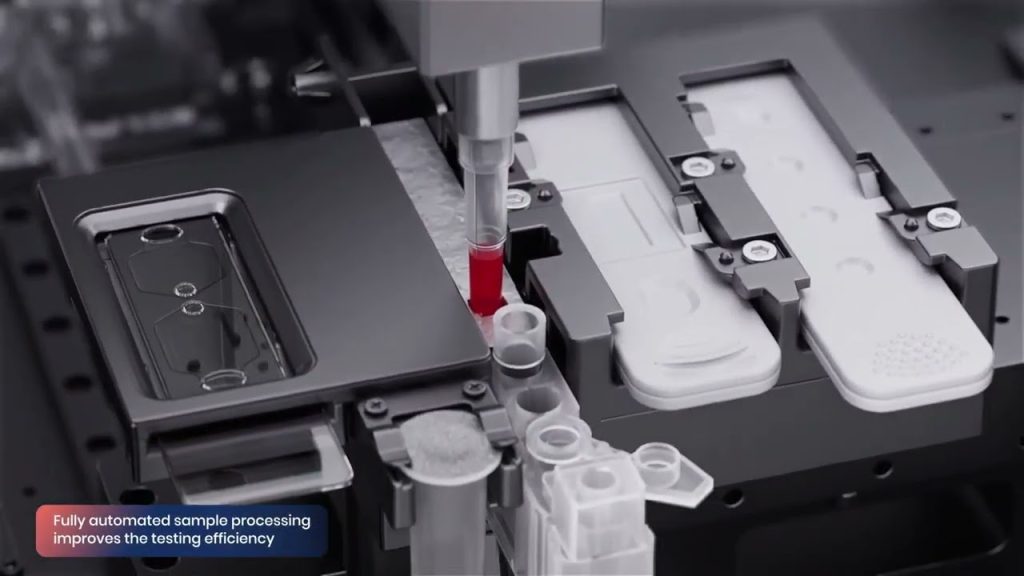
Recogida de muestras → Carga (30 segundos): El flebotomista recoge 30-100 µL de sangre capilar o venosa en el tubo de recogida. El técnico carga el tubo en el carrusel de muestras del EHBT-50.
Pretratamiento automatizado (1-2 minutos): El sistema realiza automáticamente la tinción diferencial de células sanguíneas, la dilución para el recuento de hematíes y la preparación de muestras para las modalidades de inmunoensayo y bioquímica, tareas que requerían múltiples pasos manuales en plataformas fragmentadas.
Análisis simultáneo (3-4 minutos): Mientras se realiza la imagen óptica del hemograma y el recuento por impedancia, la detección por fluorescencia del inmunoensayo y la colorimetría de la bioquímica se ejecutan en paralelo.
Generación de informes (6 minutos en total): El informe integrado muestra más de 37 parámetros hematológicos, resultados de inmunoensayos (PCR, SAA, troponina, etc.), valores bioquímicos (glucosa, lípidos, marcadores renales) y contexto de diagnóstico asistido por IA, todo ello a partir de una única muestra.
B. Impacto clínico en la toma de decisiones
Consideremos un paciente que acude a urgencias con fiebre y dolor torácico. Flujo de trabajo tradicional:
- Analítica enviada al analizador hematológico (10 min de espera, resultado en 15 min)
- Panel químico enviado al instrumento de bioquímica (10 min de espera, resultado en 20 min)
- Troponina/PCR enviada a inmunoensayo (5 min de espera, resultado en 30 min)
- El médico espera ~45 minutos para una evaluación completa
Con EHBT-50:
- Carga de una muestra (1 min)
- Resultados completos en 6 minutos
Beneficio clínico: reducción de 39 minutos en el tiempo de diagnóstico. En la evaluación del síndrome coronario agudo o la sepsis, esto se traduce directamente en una intervención más temprana, intervenciones críticas en las que cada minuto mejora la probabilidad de resultados.
C. Calidad y coherencia
El análisis morfológico basado en IA estandariza la interpretación de la analítica entre turnos y técnicos. Las revisiones manuales de frotis introducen variabilidad entre observadores (tasas de desacuerdo de 10-15% documentadas en la literatura); los algoritmos de CBM proporcionan una clasificación reproducible.
Los procesos de control de calidad unificados sustituyen a los programas de validación paralelos, lo que reduce el riesgo de que se produzcan fallos de calidad asíncronos en los que un analizador rinde menos de lo esperado mientras otros no se detectan.
VI. Casos de uso en distintos entornos sanitarios
A. Laboratorios centrales de hospitales y servicios de urgencias
Los minilaboratorios consolidados funcionan como plataformas satélite que complementan a los analizadores centrales de gran volumen. Durante las horas de menor actividad o los periodos de sobrecarga, el EHBT-50 gestiona paquetes de evaluación rápida (hemograma, PCR, troponina y función renal básica) sin necesidad de hacer cola en los instrumentos centrales.
Ejemplo de protocolo de sepsis: Paciente ingresado con fiebre e hipotensión. El EHBT-50 ofrece hemograma (identificación de desviación a la izquierda por elevación del NST), PCR (marcador de inflamación), PCT (gravedad de la infección) y función renal (lactato, creatinina) en 6 minutos. El médico inicia la administración de antibióticos basándose en los datos completos a los 10 minutos de la llegada, frente a los 45-60 minutos de demora de los laboratorios de referencia.
B. Clínicas de atención primaria y centros de salud comunitarios
Este caso de uso transforma la economía clínica. Una típica clínica de atención primaria que examina a 100 pacientes al día puede ofrecer ahora análisis de hemograma, PCR, HbA1c, lipidograma y función renal de calidad de laboratorio en la propia clínica, pruebas que antes se subcontrataban a laboratorios de referencia a $8-$15 por prueba.
Impacto económico:
- 100 pacientes × 4 pruebas/paciente = 400 pruebas/mes
- Coste del laboratorio de referencia: 400 × $12 = $4.800/mes
- Coste EHBT-50: 400 × $2,50 (consumible) + $666 (equipo/mantenimiento amortizado) = $1.666/mes
- Ahorro mensual: $3,134
- Ahorro anual: $37.600
El umbral de rentabilidad se alcanza en 2-3 meses. Más allá de este umbral, cada prueba genera ingresos netos, lo que mejora la rentabilidad de la clínica al tiempo que mejora la experiencia del paciente (resultados en el mismo día, menos visitas de retorno).
C. Regiones en desarrollo y programas descentralizados
El almacenamiento de cartuchos a temperatura ambiente, el funcionamiento sin mantenimiento, los requisitos mínimos de agua y la eficiencia energética hacen que el EHBT-50 sea ideal para entornos con recursos limitados. El despliegue en Indonesia da servicio a 15 clínicas en zonas rurales que antes dependían de un laboratorio de referencia que tardaba 2-3 días en responder. Las unidades móviles con sistemas EHBT-50 permiten abrir clínicas sin necesidad de una infraestructura de laboratorio permanente.
D. Plataformas híbridas humano-veterinarias
El EHVT-50 de Ozelle extiende este modelo a la medicina veterinaria, creando sinergias para las organizaciones que atienden tanto a la población humana como a la animal. Los proveedores de diagnósticos integrados pueden estandarizar plataformas para ambos mercados, multiplicando la utilización de los equipos y amortizando el capital en líneas de servicio más amplias.
VII. Perspectiva estratégica para directores financieros y responsables de laboratorios
A. Construir el caso de negocio ROI
La contratación pública debe exigir transparencia sobre el coste de la vida útil:
- CapEx: Adquisición o arrendamiento de equipos
- OpEx: Previsiones quinquenales de consumibles basadas en los volúmenes reales del laboratorio
- Mantenimiento: Acuerdos de servicio con límites de llamadas de error por escrito
- Mano de obra: Reducción de las necesidades de personal cuantificada en horas/semana
- Espacio: Reducción de metros cuadrados valorada al coste inmobiliario o ampliación aplazada.
Una clínica de California lo documentó:
- Coste del equipo: $85.000
- Consumibles quinquenales: $160.000
- Mantenimiento quinquenal: $40.000
- Ahorro de mano de obra (contratación evitada): $120.000
- Evitación de espacio (renovación aplazada): $75.000
- Beneficio neto total: $170.000
La inversión en equipos de $85.000 generó un valor de $170.000: un ROI de 200% en cinco años.
B. Gestión de riesgos y escalabilidad
La consolidación reduce la complejidad de los proveedores. Las redes multisede pueden estandarizarse en una única plataforma, lo que permite negociar servicios en bloque, unificar la formación del personal y simplificar la gestión del inventario. Un contrato de servicio cubre entre 5 y 10 instrumentos en todos los departamentos, frente a 15 o 20 contratos paralelos.
La estrategia de copia de seguridad es importante: las organizaciones deben mantener redundancia para las funciones críticas (por ejemplo, dos EHBT-50 en un hospital para garantizar que un fallo no detenga los diagnósticos), pero esto sigue costando menos que mantener sistemas de copia de seguridad fragmentados.
C. Prepararse para el futuro mediante la IA y las actualizaciones en directo
Las actualizaciones de software amplían los menús de pruebas sin necesidad de sustituir el hardware. Ozelle ofrece actualizaciones OTA (over-the-air) que añaden nuevos biomarcadores, paneles ampliados y mejoras en el modelo de IA. Un centro que invierte hoy en EHBT-50 obtiene acceso a las capacidades de diagnóstico del mañana sin reinversión de capital.
Esto concuerda con las estrategias de salud digital que hacen hincapié en la integración en la nube, el análisis predictivo y el apoyo a la toma de decisiones basado en datos, capacidades cada vez más importantes para los flujos de trabajo clínicos.
VIII. Hoja de ruta para la aplicación
Paso 1: Evaluación de referencia
Realice un inventario de los analizadores actuales, los contratos de servicio, los volúmenes de pruebas mensuales y el tamaño de los equipos. Calcular el coste total de propiedad actual a cinco años (que suele revelar $300.000-$500.000+ para laboratorios de tamaño medio).
Paso 2: Despliegue piloto
Implemente EHBT-50 en un departamento (urgencias, clínica de atención primaria o laboratorio satélite). Seguimiento: tiempo de respuesta, coste por prueba, tasas de error, satisfacción del personal y comentarios clínicos.
Paso 3: Ampliar y optimizar
En función de los resultados del proyecto piloto, extenderlo a otros centros. Estandarizar los protocolos, las plantillas LIS y los programas de formación en toda la red.
Paso 4: Mejora continua
Utilice los datos generados por el analizador para optimizar la agrupación de pruebas, identificar los paneles de alta utilización y predecir las necesidades de inventario de consumibles.
IX. Conclusiones: La nueva normalidad del diagnóstico
Las plataformas de minilaboratorio todo en uno representan un cambio fundamental en la estrategia de diagnóstico. Al consolidar sistemas fragmentados en plataformas unificadas, los laboratorios consiguen reducir el coste total de propiedad 40-60% al tiempo que mejoran la capacidad clínica, los plazos de entrega y el acceso al diagnóstico.
Para los directores financieros que se enfrentan a presiones presupuestarias, los directores que gestionan la complejidad operativa y los administradores de clínicas que no pueden justificar la realización de pruebas internas, las plataformas consolidadas ofrecen una rentabilidad convincente. Los primeros en adoptarlas obtienen una ventaja competitiva gracias a mejores márgenes, una experiencia superior para el paciente y una infraestructura preparada para el futuro.
El cálculo de la inversión está claro: la cuestión ya no es si la consolidación aporta valor, sino por qué cualquier centro mantendría la ineficacia de los diagnósticos fragmentados.
Más información sobre las soluciones de diagnóstico "todo en uno" en https://ozellemed.com/en/