
 Español
  English
  Français
  Русский
  Deutsch
  Português
  العربية
  Italiano
When selecting a clinic CBC machine for a customer, distributors should look beyond device specifications, footprint, and testing functions. The selection process should reflect the clinic’s everyday workflow, including sample collection, routine and peak workload, result reporting, staff responsibilities, quality-control procedures, consumable supply,local regulatory requirements, and local service support.
Ozelle’s human hematology portfolio includes compact 3-diff morphology, dedicated 7-diff hematology, and integrated multi-functional configurations for different testing and workflow requirements.This provides distributors and clinics with diverse references when selecting a CBC analyzer that fits their required testing scope and operating conditions.
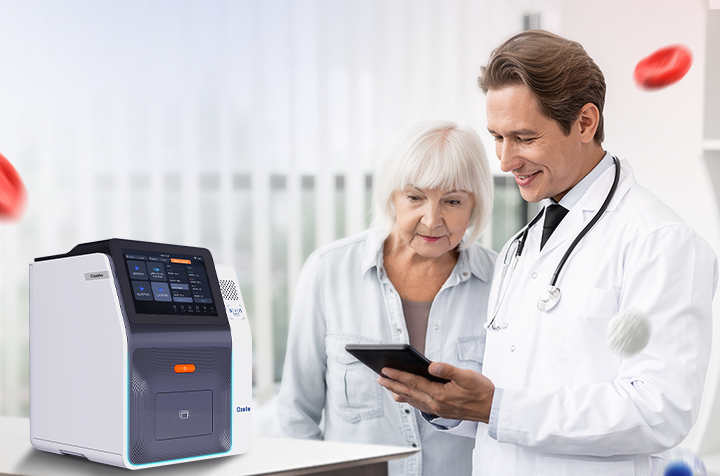
Clinic CBC Machine Requirements
Before recommending a clinic CBC machine, distributors should confirm the clinic’s intended CBC testing scope: the routine test menu, the hematology information clinicians expect to review, the types of cases commonly handled, the level of white-cell differentiation required, and whether morphology-related information is needed within the reporting workflow. This assessment should also clarify which results are routinely reported, which findings require additional laboratory review, and whether the clinic has staff and procedures to manage more detailed cell-classification outputs.
Once these requirements are defined, the distributor can determine whether a compact 3-diff configuration, a 7-diff configuration with expanded cell information, or another hematology workflow is appropriate. This sequence prevents specifications such as sample volume, analyzer size, or connectivity from driving the decision before the clinic’s actual testing needs are understood.A broader differential is useful only when it matches the clinic’s intended use and review capability.
Sample Collection Requirements
Choose an analyzer that supports the sample types used in the clinic’s routine workflow—venous whole blood, capillary blood, or both—and confirm that the sample volume fits local collection practice. The selection should also account for the clinic’s procedures for specimen identification, anticoagulant use, mixing, clot checks, storage, and timely analysis, because these pre-analytical steps affect whether the CBC workflow can be performed reliably.
The collection method should be considered alongside the clinic’s physical layout and staffing. A configuration that fits the clinic’s usual phlebotomy practice, sample-labeling process, and specimen transport route is generally easier to integrate than one that requires new steps or frequent workarounds.
Morphology Information Requirements
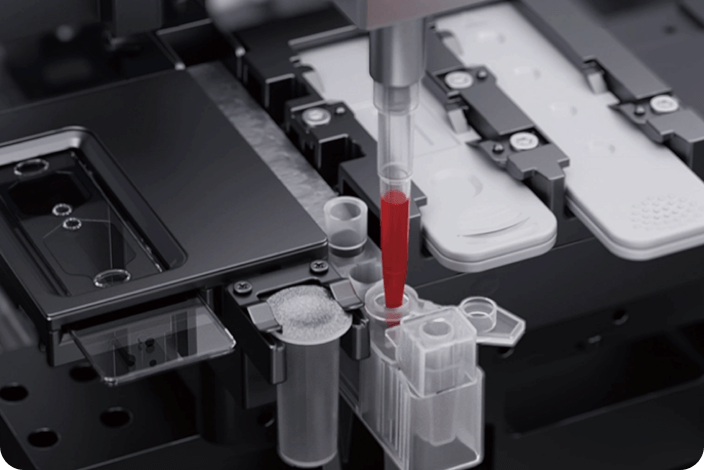
The clinic should define whether routine numerical CBC results are sufficient or whether morphology-related information is also needed in the report-review process. Image-based cell morphology may provide information relating to cell size, shape, structure, and selected cell subtypes, giving appropriately trained testing personnel more context when reviewing flags or unexpected output patterns.
The practical value of morphology information depends on the clinic’s result-review pathway. Distributors should confirm who reviews images or additional cell-classification outputs, how these findings are documented, and which local procedures apply when the result needs further laboratory attention.
Daily Workload and Workflow Capacity
Daily average sample volume is not enough to define a suitable analyzer. Distributors should identify when samples arrive, whether there are concentrated collection periods, how many trained operators are available, when QC is performed, and how much time is needed for repeat testing, report verification, and documentation.
The complete workflow includes sample receipt, identification, preparation, loading, testing, reporting, and review. Automation may simplify particular steps, but the selected analyzer should still fit the clinic’s actual staffing plan, training level, available bench space, and ability to manage exceptions during busy periods.
QC and Calibration Requirements
The analyzer should fit a QC and calibration process that the clinic can perform and document consistently. Before selection, distributors should verify QC material storage, testing frequency, recordkeeping, corrective-action procedures, calibration responsibilities, material supply, and local access to technical support.
Quality procedures should be part of the deployment plan from the beginning. A clinic needs clear ownership for routine QC, calibration, result release, incident handling, and record retention; otherwise, a technically suitable analyzer can become difficult to operate consistently over time.
Reporting, Connectivity, and Support Requirements
Reporting features should match the clinic’s actual data flow. Some clinics need printed reports and local recordkeeping, while others need barcode workflows, local data storage, USB or network connections, or integration with an existing laboratory information environment. The useful configuration is the one that supports traceable reporting without creating unnecessary complexity.
Consumables, training, and service support should be evaluated as part of the same decision. Clinics need a practical plan for test-kit storage, QC-material supply, installation, operator training, troubleshooting, maintenance arrangements, and service response. These factors often determine whether a CBC workflow remains stable after initial installation.
Model Selection by Clinic Requirement
Once the clinic’s testing scope, sample process, workload, quality procedures, reporting needs, and service conditions are defined, the distributor can match those requirements to a suitable analyzer configuration.
| Ozelle model | Suitable configuration direction | Clinic requirement |
| EHBT-25 | analizador de morfología celular 3-diff | Routine CBC, 3-diff WBC classification, image-based morphology, and compact operation |
| EHBT-50 | CBC + broader in-house testing | CBC plus selected immunoassay and dry-chemistry testing in one in-house workflow |
| EHBT-75 | 7-diff cell morphology analyzer | Detailed white-cell classification, image-based morphology information, and automated loading, staining, and mixing |

EHBT-25 for Routine CBC Workflows
EHBT-25 is a 3-diff cell morphology analyzer for routine CBC workflows requiring basic white-cell classification and morphology-oriented screening. It supports capillary and venous whole blood, uses 40 µL of sample, processes 8 samples per hour, operates with a four-step workflow, and uses individual test kits with a dry-type QC card. USB 2.0 and LAN connectivity are available, while a thermal printer is optional.
This configuration is relevant when the clinic’s defined testing scope does not require a more detailed 7-diff result set, while the workflow still benefits from compact dimensions, cell morphology analysis, and a structured routine CBC process.
EHBT-50 for Broader In-House Testing
EHBT-50 is a multi-functional analyzer for clinics that need CBC testing alongside selected immunoassay and dry-chemistry tests within one in-house workflow. It supports 7-diff Complete Blood Morphology (CBM), immunofluorescence immunoassay, and dry chemistry, with single, dual, or triple test combinations available in one batch.
The analyzer supports capillary and venous whole blood, serum, and plasma, with a sample-volume range of 30–70 µL. It processes 8 samples per hour and supports dry-type QC cards, liquid QC, automatic calibration, LIS, Wi-Fi, USB, and LAN connectivity. This configuration is relevant when the clinic’s established test menu extends beyond CBC and the team can support the related QC, consumable, reporting, and result-review processes.
EHBT-75 for Expanded CBC Information
EHBT-75 is a 7-diff cell morphology analyzer for clinics that require more detailed cell classification and image-based morphology-related information. It supports capillary and venous whole blood, uses 30–100 µL for loading and 30 µL for testing, and processes 7–8 samples per hour.
It combines liquid-based staining, image-based detection, high-resolution imaging, and AI-assisted classification. Its report includes routine CBC parameters together with NST, NSG, NSH, ALY, PAg, and RET-related information. Connectivity options include USB, Ethernet, Wi-Fi, Bluetooth, and external thermal or A4 printer support.
Pre-Purchase Checklist
- Confirm the clinic’s routine CBC test menu and required report content.
- Clarify whether the clinic needs basic or more detailed white-cell classification and morphology-related information.
- Verify sample types, sample volume, collection method, and specimen-handling procedures.
- Assess peak workload, QC, repeat testing, reporting, result-review time, and available operators.
- Define procedures for flags, unexpected outputs, sample-quality concerns, and additional laboratory review.
- Confirm QC format, calibration responsibilities, storage requirements, documentation, and supply continuity.
- Review bench space, power, consumable storage, reporting workflow, and connectivity needs.
- Verify installation, training, technical support, and consumable availability from the distributor or local partner.
- Estimate ongoing costs for consumables, QC, calibration, service, training, maintenance, and expected utilization.
Planning Clinic CBC Workflows for Sustainable Operation
A clinic CBC machine is not defined by analyzer specifications alone. It depends on how the clinic’s testing scope, sample collection, daily and peak workload, quality-control procedures, result review, reporting process, trained personnel, consumable supply, and local service support operate together.
For distributors, planning should consider the type of clinics being served, their routine CBC requirements, expected sample volume, available bench space, staff capability, and future service needs. A suitable hematology workflow should support consistent sample handling, manageable quality procedures, traceable reporting, and a practical implementation plan that local teams can sustain after installation.
If you are evaluating clinic CBC analyzers for your market, customer portfolio, or distribution projects, contacto Ozelle to discuss clinic workflow requirements, product configurations, training resources, and local support options. You can also reach the team at info@ozellepoct.com.