
 Español
  English
  Français
  Русский
  Deutsch
  Português
  العربية
  Italiano
| Producto | Analyzer Category | Indicative Price Range |
| EHBT-25 | 3-part AI CBC analyzer | Entry to Mid Range |
| EHBT-50 | 7-diff multi-functional AI analyzer | Upper-Mid to Premium Range |
| EHBT-75 | 7-diff AI hematology analyzer | Upper-Mid to Premium Range |
Introducción
In many developing countries, complete blood count testing has shifted from being a central laboratory privilege to a basic expectation in everyday clinical practice. As this shift continues, Precio de un analizador de hemograma completo has become a practical concern for healthcare providers trying to balance diagnostic access, budget limits, and long-term opevrational sustainability.
At the same time, hematology analyzers are no longer defined only by cell counting. AI-powered systems now combine image-based morphology, automation, and digital connectivity, which changes how institutions assess value when comparing a complete blood count machine price across product tiers.

Market Context in Developing Countries
Across developing countries, demand for reliable CBC testing is rising in hospitals, private clinics, pharmacies, and decentralized care settings. In these markets, the discussion around Precio de un analizador de hemograma completo is tied closely to accessibility, ease of operation, and the ability to support routine clinical decisions for anemia, infection, and inflammatory conditions.
This has created space for compact and automated human-use hematology analyzers that can fit a wide range of healthcare environments without relying on highly specialized laboratory infrastructure. Ozelle’s human product line, including EHBT‑25, EHBT‑50, and EHBT‑75, reflects how manufacturers are segmenting CBC solutions according to analytical depth, automation level, and digital capability.
Technical Evolution and Its Impact on Pricing
The economics of CBC analyzers cannot be separated from the evolution of the underlying technology. The field has moved from manual microscopy to impedance methods, then to flow cytometry, and more recently to AI-driven image analysis and Complete Blood Morphology (CBM).
This technical progression matters because each generation changes what buyers are paying for. In older systems, price was often associated with basic counting performance, while newer analyzers increasingly bundle value in software, morphology recognition, automation, and data interpretation.
AI cell morphology has become especially relevant in this transition. By combining high-resolution imaging, liquid-phase staining, deep learning, and large image databases, modern analyzers can identify abnormal or immature cells beyond standard differential counting. As a result, Precio de un analizador de hemograma completo is now often evaluated in relation to diagnostic depth rather than instrument hardware alone.
Key Price Drivers in Developing Countries
Several factors shape how healthcare buyers interpret a complete blood count machine price in developing countries. The first is analytical capability, including whether the system provides a 3-part or 7-part WBC differential and whether it incorporates image-based morphology support.
The second is the architecture of maintenance and consumables. Systems designed around maintenance-free operation, sealed reagent handling, or single-use test structures can reduce service dependence and help control hidden operational costs. This is particularly important in settings where engineering support and replacement logistics are inconsistent.
A third driver is digital infrastructure. Connectivity with LIS or HIS systems, remote management, and equipment tracking tools may not always change the sticker price directly, but they can influence overall purchasing preference by reducing administrative burden and improving oversight.
Price Segmentation by Human-Use Application
The human CBC analyzer market in developing countries can be viewed through three broad pricing and capability layers. These layers are not defined only by the purchase price of the instrument, but by the relationship between diagnostic scope, automation, and expected clinical value.
Community Clinics and Pharmacy-Oriented CBC Systems
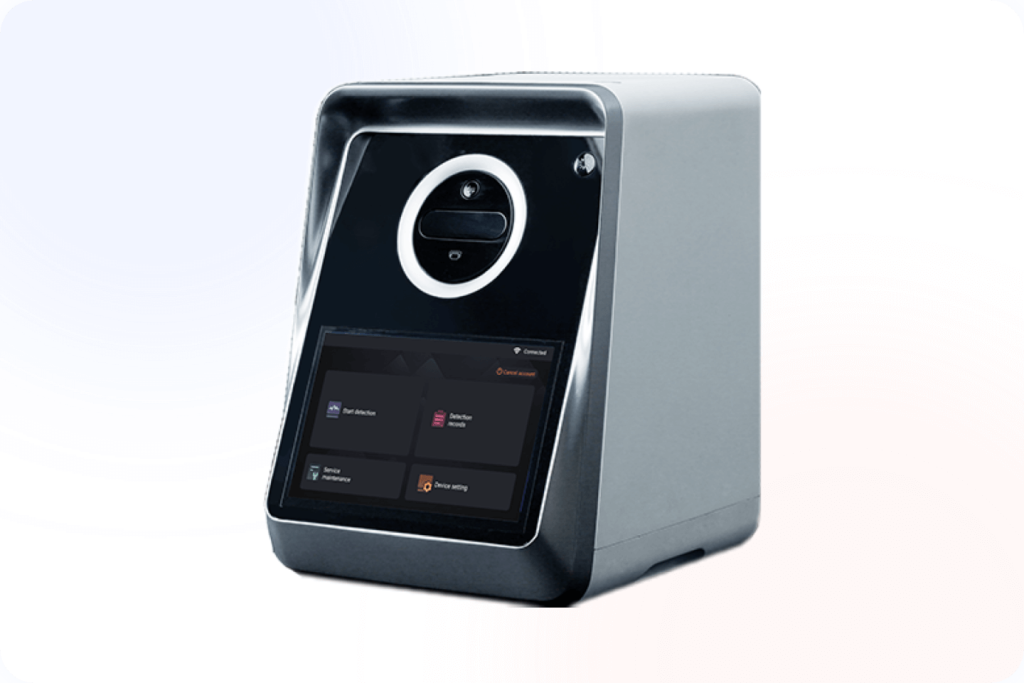
For institutions focused on routine screening and first-line diagnostic support, the market often favors compact analyzers that provide core CBC information with simplified operation. In this part of the market, Precio de un analizador de hemograma completo is usually assessed against practicality: how easily staff can run the test, how predictable the operating model is, and whether the analyzer supports everyday clinical use without adding procedural complexity.
En 3-diff CBC analyzer for community clinics reflects this positioning. EHBT‑25 uses image-assisted cell morphology review, supports capillary or venous whole blood, and is presented as a maintenance-free human hematology analyzer with individual test kits and simplified operation. In developing countries, systems in this category are often considered when buyers want to expand CBC access while maintaining tight control over equipment-related costs.
Multi-Functional CBC Platforms
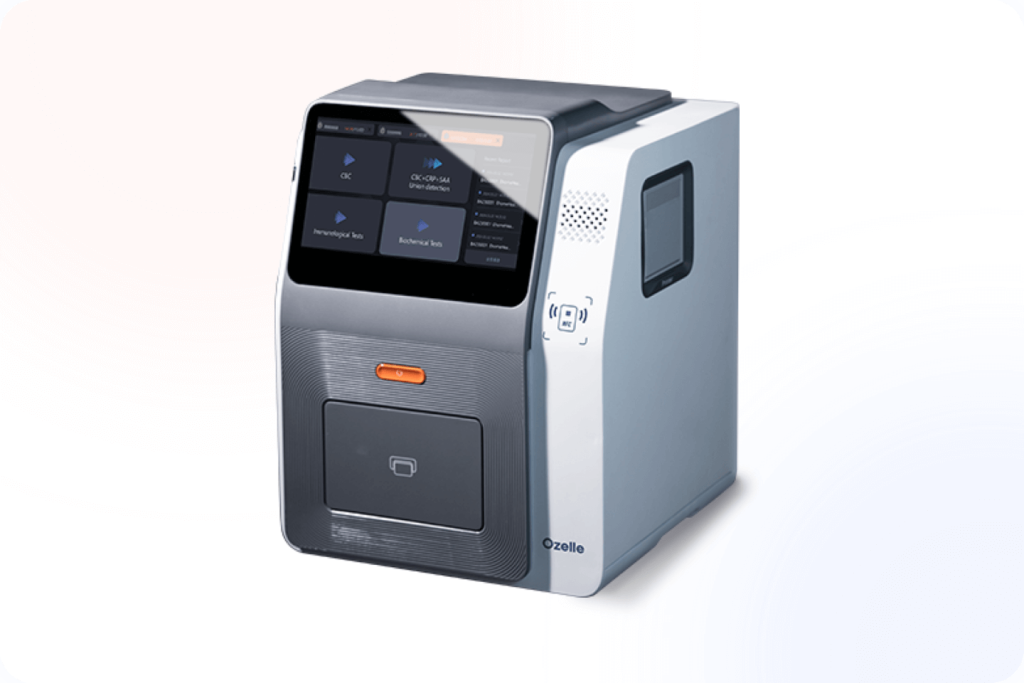
Another product positioning within this market includes analyzers that combine CBC testing with additional diagnostic functions. Rather than being considered only as hematology instruments, these systems are often evaluated as integrated diagnostic platforms that can support a broader testing menu within one device.
Within this segment, the EHBT-50 is positioned as a 7‑diff CBM hematology analyzer that also integrates immunoassay and biochemistry functionality. By consolidating multiple test domains into a single instrument, EHBT‑50 allows facilities to build flexible panels for inflammation, cardiac markers, metabolic risk, and other common clinical questions without deploying separate analyzers. At the same time, using one common platform for hematology, immunoassay, and biochemistry can simplify staff training and daily operation in developing-country settings. Procurement teams often evaluate the combined diagnostic capacity of the platform rather than the CBC module alone.
AI Morphology-Based CBC Systems
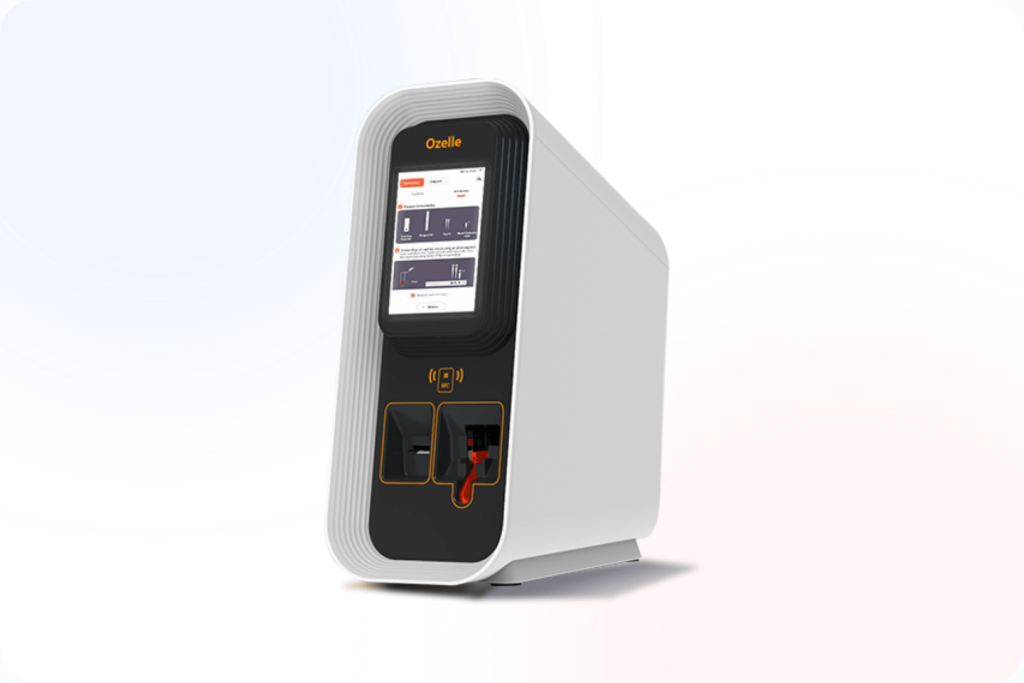
Another product positioning in this market includes analyzers centered on morphology-rich CBC interpretation and dedicated hematology use. In this segment, the discussion around Precio de un analizador de hemograma completo tends to focus less on basic affordability and more on the value of standardized morphology reporting, image-based analysis, and dedicated CBC workflow design.
As a 7‑diff auto hematology analyzer built on AI‑based Complete Blood Morphology (CBM), the EHBT-75 combines CBC counting with high‑resolution imaging and deep learning to provide additional abnormal cell and morphology‑related insights. In developing countries, this type of analyzer may be considered where institutions place greater emphasis on dedicated hematology application and digital diagnostic support.
Advanced AI Morphology-Based CBC Systems
At the upper end of the market are analyzers positioned around morphology-rich diagnostics and AI-supported interpretation. In this segment, the discussion around Precio de un analizador de hemograma completo tends to focus less on basic affordability and more on the clinical value of deeper cell analysis, standardized morphology reporting, and automated detection of abnormal findings.
As a 7‑diff auto hematology analyzer built on AI‑based Complete Blood Morphology (CBM), Ozelle’s AI‑enhanced 7‑diff hematology analyzer combines CBC counting with high‑resolution imaging and deep learning to provide additional abnormal cell and morphology‑related insights. In developing countries, this level of analyzer may be considered where institutions place greater emphasis on richer hematology interpretation and digital diagnostic support.
| Analizador | Analytical Positioning | Human-Use Focus | Price Sensitivity Level |
| EHBT-25 | 3-part CBC with AI-assisted cell morphology and photoelectric colorimetry for hemoglobin. | Routine CBC support where simplicity, maintenance-free use, and predictable operation are important. | Alta |
| EHBT-50 | 7-diff CBM analyzer with integrated multi-functional diagnostic capability. | Human-use settings evaluating CBC as part of a broader diagnostic equipment strategy. | Medium to High |
| EHBT-75 | 7-diff CBM analyzer focused on dedicated hematology application. | Human diagnostic settings prioritizing standalone CBC and morphology-based analysis. | Medium to High |
From Device Price to Per-Test Economics
A growing number of healthcare buyers in developing countries no longer assess equipment only through the lens of purchase price. Instead, they evaluate per-test economics, which can offer a more realistic picture of long-term affordability than the listed complete blood count machine price alone.
This shift is important because cost per test is shaped by multiple variables, including reagent handling, maintenance requirements, storage conditions, and the degree of operational standardization built into the analyzer. For example, systems such as EHBT‑75 use all-in-one disposable cartridges and room-temperature reagent storage concepts that may simplify logistics and reduce service-related unpredictability over time.
A similar logic applies to integrated platforms such as EHBT‑50. When CBC, immunoassay, and biochemistry are combined in one device, the economic discussion may move from “What is the machine price?” to “How much diagnostic capacity is created per equipment investment?” In developing countries, this broader financial view can be more useful than comparing instrument prices in isolation.
Digital and IoT Factors Influencing Price Perception
The value of a modern CBC analyzer increasingly extends beyond the testing module itself. Connected diagnostics platforms now include equipment tracking, consumables management, data systems, and remote oversight, all of which influence how buyers interpret complete blood count machine price over the life of the instrument.
Ozelle’s broader digital diagnostics ecosystem reflects this trend. According to the available materials, the company supports equipment and sample management platforms, operational data systems, and IoT-based tools designed to connect hardware, distributors, and end users. In developing countries, such capabilities can improve transparency and reduce friction in device management, especially where healthcare delivery is distributed across multiple sites.
These digital layers do not always appear in a headline price comparison, but they can materially shape procurement decisions. An analyzer linked to centralized oversight and consumables tracking may offer stronger long-term control than a cheaper device with no connected support environment.
Practical Considerations for Buyers in Developing Countries
For healthcare institutions comparing CBC analyzers, the most useful approach is to align product category with diagnostic expectations and operating conditions rather than selecting purely on the lowest initial quote. A lower complete blood count machine price may appear attractive at the purchasing stage, but it can be less favorable if the analyzer lacks the analytical scope, digital support, or maintenance model required in practice.
Procurement teams should therefore assess at least four dimensions: CBC differential level, morphology capability, consumable and maintenance structure, and digital integration. These dimensions help clarify whether a human-use analyzer is intended for essential CBC screening, broader integrated diagnostics, or advanced AI-supported morphology analysis.
In developing countries, this framework also supports more rational capital planning. Rather than treating all CBC analyzers as interchangeable, buyers can distinguish between entry-level access models, integrated diagnostic platforms, and morphology-driven AI systems with different price sensitivities and value assumptions.
Outlook: How AI Will Continue to Reshape CBC Pricing
The next phase of CBC pricing in developing countries is likely to be shaped by AI software as much as by physical instrument design. As morphology databases grow and diagnostic algorithms become more capable, a larger share of analyzer value will come from decision-support information, automation, and data services rather than from mechanical components alone.
This may gradually change how the market understands Precio de un analizador de hemograma completo. Instead of evaluating only the hardware purchase, providers may increasingly compare analyzers based on diagnostic intelligence, software-upgrade pathways, and the efficiency gains delivered through connected management systems.
For developing countries, this creates an important shift in procurement logic. The future conversation is likely to center less on the cheapest CBC device and more on which platform offers the most sustainable balance between affordability, clinical utility, and digital support over time.