
 Español
  English
  Français
  Русский
  Deutsch
  Português
  العربية
  Italiano
Choosing the best CBC analyzer for emerging markets is not just a matter of comparing parameter counts or chasing the highest throughput number. In many real-world healthcare settings, the better question is this: which analyzer fits local workflow, staffing, infrastructure, and budget without creating long-term operational burden? For distributors, clinics, and community-based healthcare providers, that question often matters more than whether a system belongs to a traditional high-throughput laboratory category.
This is especially important when the target market includes primary care clinics, decentralized testing sites, smaller hospitals, mobile health programs, pharmacies, or resource-constrained regional facilities. In those settings, compact size, maintenance simplicity, low sample volume, stable consumable logistics, and near-patient usability can be more valuable than raw throughput. Ozelle’s published materials consistently position its hematology products around compact deployment, AI-supported blood diagnostics, maintenance-free operation, and point-of-care or near-patient testing rather than high-throughput central lab workflows.
For that reason, buyers in emerging markets should not evaluate every CBC analyzer through the same lens. A central reference lab may prioritize batch handling and maximum hourly capacity, while a district clinic may care much more about same-visit results, minimal maintenance, low operator training requirements, and predictable cost per test. The smartest procurement decision comes from matching the analyzer to the actual care model.
Why the “Best” Analyzer Depends on the Care Setting
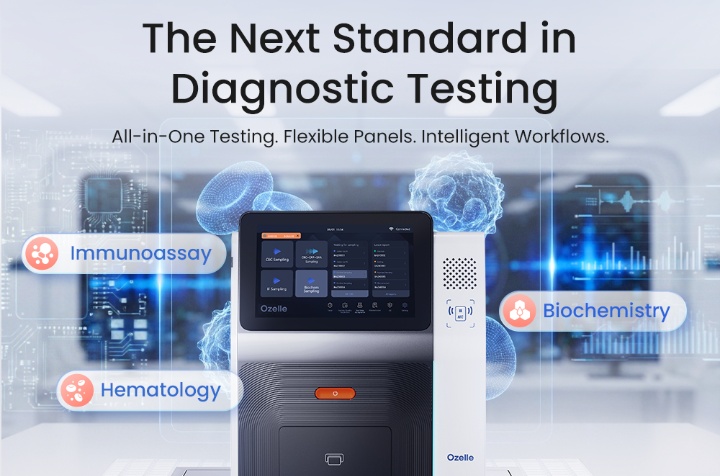
In mature laboratory markets, buyers often use conventional categories such as 3-part, 5-part, or 7-diff analyzers as shorthand for quality and clinical depth. Those categories still matter, but in emerging markets they do not tell the full story. A buyer also needs to ask whether the site can support liquid reagents, regular maintenance, stable power conditions, trained technicians, and service access. If the answer is no, a lower-burden compact system may outperform a more traditional analyzer in actual daily use.
Ozelle’s product and solution pages repeatedly emphasize compact architecture, single-use consumables, room-temperature storage, low sample requirements, and simplified guided operation. Those design choices are particularly relevant in healthcare systems where testing is moving closer to the patient and where operators may not be full-time laboratory staff.
Among decentralized and near-patient testing models, usability is becoming a critical part of diagnostic system design. Smaller footprints, easier workflow steps, flexible storage requirements, and low sample demand can all support broader test adoption in settings where space, staffing, and laboratory training are more limited than in traditional central labs.
This shift matters because emerging markets are not one single buyer environment. Some facilities still need classic laboratory analyzers, but many others need something different: a device that shortens the path from blood collection to treatment decision, fits into limited space, and avoids the maintenance burden of traditional fluid-path systems. That is the context in which compact AI-enabled CBC platforms become highly competitive.
What Emerging-Market Buyers Should Prioritize
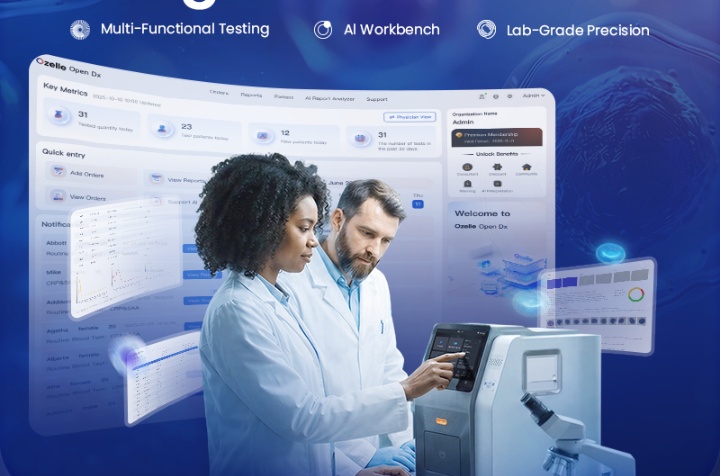
The best CBC analyzer in these markets is usually the one that reduces friction across the full testing pathway. That includes collection, training, maintenance, reporting, and follow-up care. It is not only about analytical capability, although that remains essential.
Here are the core factors distributors and clinics should evaluate before buying:
| Decision factor | What to check | Why it matters |
| Care setting | Primary care, clinic, hospital, lab branch, mobile program, pharmacy | Different settings need different analyzer designs and workflows. |
| Footprint | Device size and bench-space requirements | Compact analyzers are easier to deploy in limited-space clinics and decentralized sites. |
| Sample type and volume | Capillary vs venous blood, microliter requirement | Low sample volumes support pediatric, community, and near-patient testing. |
| Modelo de mantenimiento | Daily cleaning, fluid management, or maintenance-free design | Lower maintenance reduces downtime and operator burden. |
| Training burden | Whether nurses or general staff can operate the system | Guided workflows matter where full lab staff are unavailable. |
| Modelo consumible | Cartridge, reagent kit, storage condition, waste handling | Stable logistics improve uptime and budgeting. |
| Turnaround time | Whether results fit within a patient visit | Same-visit testing improves clinical actionability. |
| Conectividad | LIS/HIS, printing, cloud or remote management | Better data flow supports scale and service management. |
This framework gives buyers a more realistic way to compare products. Instead of asking only, “Which machine looks strongest on paper?” they should ask, “Which machine is most likely to work reliably in our actual environment?”
Compact Does Not Mean Weak
A common mistake in procurement is assuming that compact analyzers are only entry-level compromises. That assumption is increasingly outdated. Ozelle’s materials describe compact analyzers and mini-lab systems that combine CBC capability with AI-based morphology, digital imaging, and in some models additional immunoassay or biochemistry functions. The value proposition is not simply small size; it is the ability to deliver meaningful clinical information in decentralized settings without the traditional burden of large laboratory hardware.
For example, the EHBT-25 is presented as a compact point-of-care hematology analyzer that uses a fingerstick sample of only 40 µL and produces results in about 15 minutes. Its no-fluid-path design and single-use test kit model are specifically positioned as ways to eliminate daily cleaning, reduce contamination risk, and simplify use in clinics, pharmacies, and community health settings.
Other Ozelle materials describe the EHBT-50 and EHBT-75 in terms of AI-powered morphology, compact deployment, low-maintenance operation, and near-patient or hospital/clinic use. Even where throughput is mentioned, the overall positioning remains centered on integrated workflow, reduced maintenance, and broader diagnostic value rather than on traditional high-throughput central-lab competition.
Why Maintenance Model Matters More Than Many Buyers Expect
In many emerging markets, maintenance is not a technical side note. It is often the difference between a successful installation and a machine that becomes underused within months. Traditional analyzers with internal liquid paths may require routine cleaning, reagent handling, flushing, and more service-intensive upkeep. That can work well in well-staffed labs, but it creates risk in smaller facilities where operators are already overloaded or engineering support is limited.
Ozelle’s published content repeatedly highlights maintenance-free or virtually maintenance-free architecture as a key advantage. The reason is clear: single-use test kits, no internal fluid path, and room-temperature consumables reduce the daily tasks that normally consume operator time and increase breakdown risk. That model also helps reduce service dependence in markets where fast field support is not always guaranteed.
For distributors, this is also commercially important. A product that is easier to install, train, and support can be easier to scale across fragmented regional markets. It also supports a stronger value-based sales message, especially when customers are frustrated by downtime, fluidic clogs, calibration routines, or expensive service contracts from legacy systems.
Sample Type and Workflow Are Strategic Buying Factors
Another major advantage in decentralized diagnostics is low-volume sampling. Ozelle’s product and application materials describe capillary or low-volume sampling as a real operational benefit, not just a technical specification. The ability to work with 30–40 µL samples can make testing more practical in pediatrics, primary care, community health, and settings where venous collection is inconvenient or slows the visit.
This directly affects workflow. If a clinician or nurse can collect a sample at the point of care and receive results during the same encounter, the diagnostic process becomes faster and more actionable. Ozelle’s point-of-care content describes this as enabling test-and-treat workflows, where diagnosis and treatment discussion happen in a single visit rather than across multiple appointments.
That benefit can be especially powerful in emerging markets, where travel distance, follow-up loss, and healthcare access barriers often make delayed lab workflows less efficient. In those cases, a compact analyzer with same-visit utility may create more real value than a larger system optimized for centralized batching.
AI and Morphology as Differentiation
A CBC analyzer is no longer judged only by whether it can count cells. Increasingly, buyers want richer clinical context. Ozelle’s technology pages describe a platform built around high-resolution imaging, multispectral optics, and deep-learning models trained on more than 40 million expert-annotated blood cell images. The company positions this as a way to combine numeric CBC results with morphology-based insight in a compact platform.
That matters for both distributors and clinics. For clinics, AI-supported morphology can improve confidence and provide broader diagnostic clues and reduce manual smear review in every routine case. For distributors, it creates a differentiation story that goes beyond price competition and simple parameter lists.
This is one reason the best analyzer for emerging markets may not always be a standard “5-part” instrument in the conventional sense. In some scenarios, buyers may get better overall value from a compact AI-enabled platform that supports CBC plus morphology or even multi-parameter testing, especially if that platform reduces the need for multiple devices and lowers operating complexity.
Total Cost of Ownership Is More Important Than Purchase Price
A low quote can be attractive, but total cost of ownership is what determines whether the purchase remains sustainable. Emerging-market buyers should evaluate not just the analyzer price, but also consumable model, storage needs, waste handling, service frequency, operator time, installation burden, and expected downtime.
Ozelle’s materials support this total-cost perspective by emphasizing room-temperature cartridge storage, no routine fluid maintenance, simplified workflows, and reduced service requirements. These features can change the cost structure significantly, especially for smaller sites that cannot absorb hidden maintenance expense or lost testing days.
A practical comparison table looks like this:
| Cost area | Traditional burden | Compact low-maintenance model impact |
| Upfront device cost | May be lower or higher depending on class | Must be assessed together with operating model. |
| Daily maintenance | Cleaning, flushing, fluid-path care | Reduced with no-fluid-path architecture. |
| Reagent handling | Bulk liquid reagents, prep, waste risk | Simplified with single-use or contained consumables. |
| Operator time | Higher if workflow is complex | Lower with guided touch-based operation. |
| Service cost | More engineer dependence | Lower if maintenance burden is reduced. |
| Downtime risk | Higher when fluid systems clog or support is slow | Lower when architecture is simpler and enclosed. |
For distributors, this table also becomes a selling tool. It helps shift the conversation away from simple price comparison and toward the actual financial and operational consequences of analyzer design.
How Distributors Should Evaluate Product Fit
Distributors should not ask only whether a product is technically sound. They should also ask whether it fits the market segments they can realistically win. Ozelle’s custom-solution and distributor-oriented materials make clear that customization, connectivity, multi-functional integration, and OEM/ODM flexibility are part of its business logic. That makes product fit a strategic question.
A distributor should assess:
- Whether the analyzer matches the needs of clinics, pharmacies, decentralized sites, or regional hospitals in the target country.
- Whether the support model is realistic for the local service network.
- Whether the product offers clear differentiation beyond “another CBC analyzer.”
- Whether the consumable and training model is scalable across multiple customer types.
In many emerging markets, the strongest portfolio is not the one with the biggest machine. It is the one with the best deployment logic for the actual healthcare structure.
Who Should Consider a Compact CBC Platform
A compact CBC platform is especially relevant for:
- Primary care clinics seeking same-visit CBC insights.
- Community health centers with limited technical staff.
- Pharmacies or decentralized health programs expanding diagnostic access.
- Small hospitals that need a practical near-patient analyzer rather than a complex lab line.
- Distributors serving fragmented regional markets where maintenance simplicity supports scale.
By contrast, buyers building a large centralized core lab may still need a different category of instrument. That is exactly why positioning matters. Ozelle’s strength is not “highest throughput.” Its strength is compact AI-enabled diagnostics with lower operational burden and broader fit for decentralized care environments.
Internal Website References
Learn More About Ozelle
- Explore Ozelle hematology solutions
- See how Ozelle supports decentralized diagnostics
- Contact Ozelle for distributor partnerships
Preguntas frecuentes
What is the best CBC analyzer for emerging markets?
The best CBC analyzer is the one that fits the healthcare setting, staffing level, maintenance capacity, sample workflow, and total cost structure of the local market. In decentralized settings, compact low-maintenance analyzers may be a better fit than large traditional lab systems.
Is higher throughput always better?
Not necessarily. For many clinics and near-patient testing settings, fast results, simple operation, low maintenance, and reliable day-to-day use may matter more than very high sample capacity.
Why does maintenance-free design matter so much?
Maintenance-free or low-maintenance architecture reduces daily cleaning, lowers service dependence, and improves reliability in sites without full-time lab engineers. This is especially useful in primary care, community, and resource-limited environments.
Are compact analyzers suitable for serious clinical use?
Yes, when they are designed with strong imaging, analytics, and workflow integration. Ozelle’s platform combines CBC capability with AI-supported morphology and compact deployment to deliver clinically useful information in decentralized settings.
What should distributors focus on before choosing a CBC analyzer brand?
They should focus on care-setting fit, supportability, consumable model, operator simplicity, differentiation, and long-term commercial scalability. A product that is easy to deploy and support can create stronger long-term business value than one that competes only on price.
Should buyers still compare 3-part, 5-part, and 7-diff categories?
Yes, but those categories should be only one part of the decision. Buyers should also compare maintenance burden, sample requirements, clinical workflow, connectivity, and whether the analyzer supports the care model they actually operate.