
 Español
 English
 Français
 Русский
 Deutsch
 Português
 العربية
 Italiano

An abnormal laboratory result is a starting point for interpretation, not a diagnosis. A value outside its reference interval may be clinically important, but its significance depends on the animal’s signalment, history, clinical signs, examination findings, and related test results. Instrument flags may also indicate findings or analytical concerns that require further review.
Veterinary lab test interpretation is therefore more than translating abbreviations or listing abnormal measurements. It develops an explanation of how the findings fit together and what they contribute to the clinical question. AI-assisted report review can help veterinarians organize findings, examine possible relationships between results, and explore targeted follow-up questions. These outputs provide additional support for clinical review while leaving interpretation and decision-making with the veterinarian.
This guide explains a practical approach to veterinary laboratory interpretation and shows how Ozelle’s Veterinary AI Workbench can support interactive review of the reported findings.

Start with the Clinical Question
The reason for testing gives laboratory results their clinical context. Screening, investigation of current symptoms, and follow-up assessment each create different priorities. Signalment, history, clinical signs, examination findings, and other diagnostic information should guide the initial review.
Reference intervals provide a starting point, but their interpretation depends on species, age, breed, physiological status, and analytical method. Defining the clinical question helps prioritize relevant findings without overlooking unexpected abnormalities that may require further assessment.
Establish the Context Behind the Measurement

Review sample and analytical factors
Before interpreting an abnormal result, consider whether sample collection, handling, or analytical factors may have affected the measurement. Hemolysis, lipemia, delayed processing, and other specimen-related factors can influence certain tests, depending on the method. In feline CBC testing, platelet clumping is another important consideration because it can produce an inaccurately low automated platelet count.
Cornell University’s eClinPath recommends considering artifacts and non-disease factors before interpreting laboratory patterns and possible disease mechanisms. This provides a useful framework for reviewing both conventional reports and AI-assisted explanations.eClinPath Test Interpretation
Separate findings from explanations
Laboratory interpretation should distinguish measured findings from possible explanations. An increased or decreased value is an observation; identifying related patterns and considering possible physiological or pathological mechanisms are subsequent steps. An AI-assisted assessment should make this distinction clear, allowing veterinarians to identify which reported findings support a proposed interpretation and which aspects remain uncertain.
Read the CBC as Connected Information
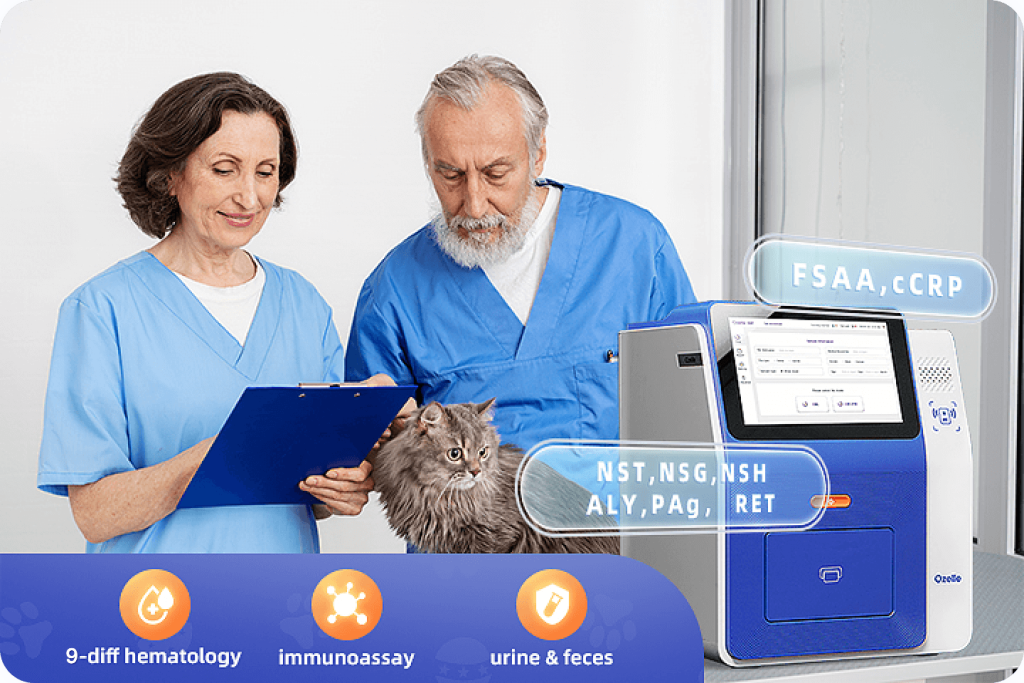
Reviewing CBC Patterns Across Cell Groups
A complete blood count can be approached through the erythrogram, leukogram, and thrombogram: the red blood cell, white blood cell, and platelet components. These groups provide a practical structure for reviewing the report before bringing the findings together.
Within the erythrogram, RBC counts, hemoglobin, hematocrit, indices, and morphology provide complementary information. Reticulocyte evaluation helps assess the regenerative response in anemia, although interpretation depends on species and should consider absolute reticulocyte counts where applicable.
The leukogram brings together total WBC counts, absolute leukocyte counts, differential information, and relevant cellular morphology. Evaluating these findings together can help veterinarians recognize patterns that require further clinical correlation.
The thrombogram considers platelet counts and related findings. Unexpectedly low counts, particularly in cats, may require assessment for platelet clumping before thrombocytopenia is interpreted as a true biological finding.
Together, these components provide a more complete hematologic picture. During AI-assisted report review, veterinarians can examine how related abnormalities are grouped, which reported findings support a suggested interpretation, and whether additional clinical information or testing is needed.
Add Cellular Detail Through Morphology
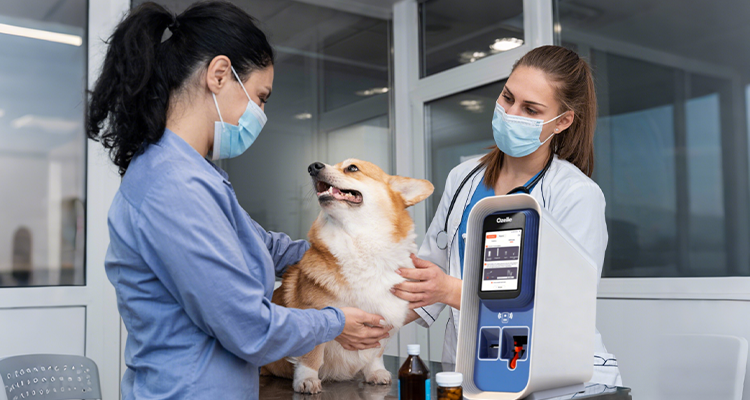
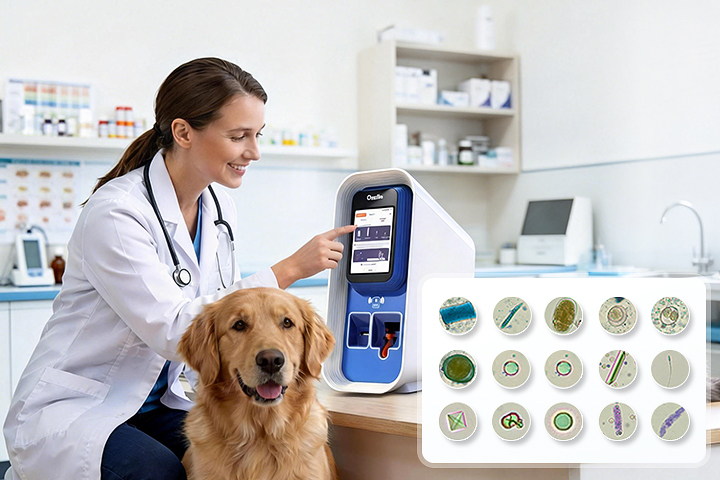
Cell morphology adds information about cellular appearance alongside quantitative hematology results. This can include red-cell characteristics, leukocyte morphology, and platelet-related findings that contribute to veterinary hematologic assessment.
En Ozelle EHVT-75 combines AI-assisted 9-diff hematology with digital cell morphology. Its reported outputs include reticulocyte-related and selected red-cell morphology parameters, such as SPH, providing additional information that veterinarians can consider together with CBC results and relevant clinical findings.
During AI-assisted report review, the useful question is how morphology-related findings contribute to the overall hematologic picture. Such findings should be interpreted in context and followed by additional examination where indicated.
Connect Findings Across Diagnostic Reports
Bring related evidence into one assessment
Veterinary laboratory findings are often more informative when interpreted in the context of related tests. For example, urinalysis may provide useful information alongside selected clinical chemistry results when evaluating renal or urinary concerns. Which reports should be considered together depends on the clinical question rather than the number of available test categories.
The clinical question provides the organizing principle. Results that contribute to the same question can be examined together even when they originate from different samples or appear in separate sections of the record.
This is a direct connection to integrated AI report review. The Veterinary AI Workbench brings together blood, urine, feces, and immunology report interpretation, providing a shared setting for discussing these categories of diagnostic information.
The useful point to examine is how the assessment connects that information. Look at which findings are discussed together, what evidence is presented, and how the explanation relates to the problem under investigation.
Give unexpected findings a clear place
Unexpected or discordant findings deserve particular attention. Before assigning clinical significance, veterinarians should consider sample-related artifacts, physiological variation, medication effects, and whether the result agrees with the broader clinical picture. AI-assisted consultation can help organize questions about these findings, but the underlying measurements and proposed explanations still require professional review.
A Practical Framework for Veterinary Lab Test Interpretation
A defined task makes a report interpretation demo more informative. The framework below connects the professional review process with specific aspects of the AI-generated assessment to examine.
| Interpretation task | Qué comprobar | Example question |
| Establish clinical context | Species, signalment, presenting signs and clinical question | What information is needed to interpret this result? |
| Check result reliability | Reference intervals, sample quality and possible artifacts | Could a sample-related factor explain this finding? |
| Identify relevant patterns | Relationships among RBC, WBC, platelet and other results | Which findings should be considered together? |
| Examine supporting findings | Whether the interpretation matches reported measurements | Which results support this explanation? |
| Review uncertainty | Discordant findings and alternative explanations | What other factors could account for this pattern? |
| Consider next steps | Need for repeat testing, smear review or other investigations | What should the veterinarian verify next? |
This framework provides a practical way to evaluate an AI-generated interpretation. The goal is not simply to obtain a more detailed explanation, but to check whether it accurately reflects the available findings, recognizes uncertainty, and supports appropriate professional review.
Example: Reviewing a Low Platelet Count in a Cat
Consider a feline CBC report showing a platelet count below the reference interval. The initial observation is thrombocytopenia, but the finding should not immediately be treated as evidence of a platelet disorder. Cats are particularly prone to platelet clumping during sample collection, which can produce falsely low automated counts.
A veterinarian reviewing this report would consider sample quality, analyzer findings, and blood smear examination where indicated. An AI-assisted report review can help organize these considerations and highlight questions that need clarification, such as whether platelet aggregation was noted or whether the result is consistent with the animal’s clinical presentation.
The purpose of this review is not to confirm a diagnosis from the automated count alone, but to determine whether the finding is reliable and what additional assessment may be needed.
Use the Demo as an Interactive Report Review
Begin with the structured insights
Ozelle’s Veterinary AI Workbench presents structured preliminary findings, related report information, suggested areas for further assessment, and conversational report consultation. These features allow veterinarians to move from an overview of the results to a more focused examination of particular abnormalities or patterns.
When exploring the demo, begin with the main findings and identify one result or pattern that warrants closer attention. Review the measurements cited in the explanation, then use a targeted question to explore their possible clinical significance or limitations.
Ask Focused Follow-Up Questions
Interactive consultation allows veterinarians to explore specific findings beyond the initial AI-assisted assessment. Rather than requesting another overall summary, they can ask targeted questions about abnormal values, related patterns, or possible explanations.
For example, useful questions include:
- Which reported findings support this interpretation?
- Could sample-related factors or species differences affect this result?
- What additional information would help clarify the finding?
These questions help veterinarians examine the relationships between results, consider alternative explanations, and identify areas that may need further assessment. The value of interactive review lies in making the report easier to explore while keeping clinical interpretation and decision-making with the veterinarian.
Relate the discussion back to the patient
Laboratory findings should always be interpreted in the context of the individual animal. When relevant clinical history, examination findings, or previous results are available to the system, they may provide additional context for AI-assisted review. If that information has not been supplied, the interpretation should not be treated as a complete clinical assessment.
Veterinarians remain responsible for determining whether the suggested explanations agree with the patient’s presentation and whether further testing or clinical action is warranted.
Explore Veterinary AI-Assisted Report Interpretation
Veterinary laboratory interpretation involves more than identifying abnormal values. Reliable assessment requires attention to sample quality, related findings, possible mechanisms, and the animal’s clinical condition. AI-assisted review can help veterinarians organize this information and explore specific questions while keeping clinical decisions in professional hands.
Explore the Ozelle Veterinary AI Report Demo to see how structured findings and interactive consultation can support everyday veterinary report review. Sign in or register to access the demo and examine how individual results are presented and discussed.