Tyler

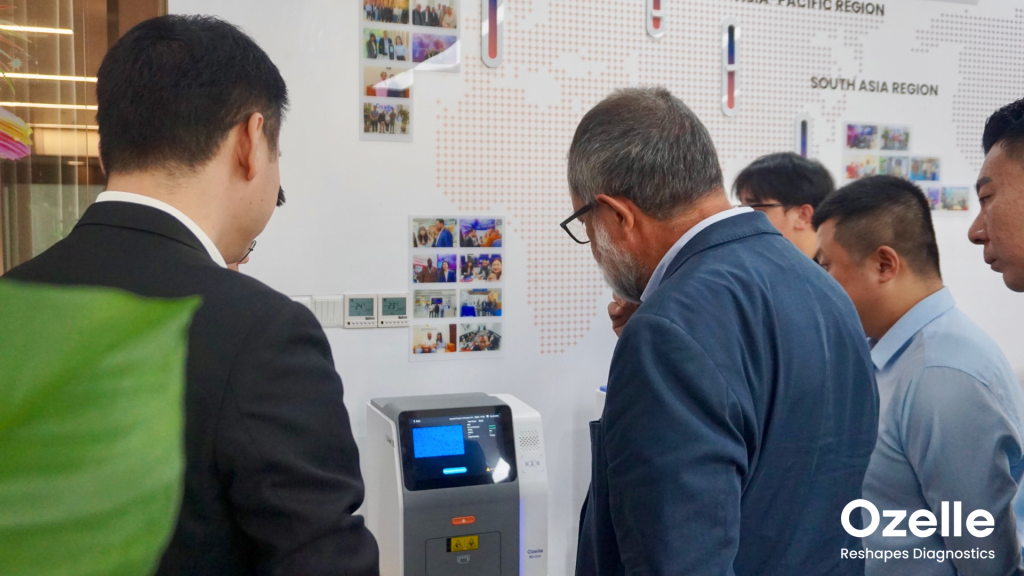
IFCC Secretary Prof. Sergio Bernardini Visits Ozelle 2026

Selecting a Blood Test Analyser: A Guide for Clinics and Laboratories

When clinic and laboratory buyers evaluate a blood test analyser, the decision usually involves more than selecting a test menu or comparing an initial quotation. The analyser needs to fit the tests performed each day, the information required from each sample, the way staff manage the workflow, and the resources available to operate and support […]

Selecting a Blood Test Analyser: A Guide for Clinics and Laboratories Read More »

AI-Assisted Morphology Analysis in Hematology: From Cell Images to Structured Hematology Review

AI-assisted morphology analysis combines image-based cell evaluation, automated image acquisition, algorithm-supported recognition, and structured result presentation in hematology workflows. It brings cell-level visual information into automated hematology testing alongside CBC parameters, leukocyte differentials, flags, histograms, and other analyzer outputs. In integrated image-based systems, this can bring cell-level visual information together with CBC parameters, leukocyte differentials,

AI-Assisted Morphology Analysis in Hematology: From Cell Images to Structured Hematology Review Read More »

Clinical Blood Analyzer for Pet Hospitals: How Much Testing Capability Do You Really Need?

Pet hospitals handle different types of cases every day, so their testing needs can change quickly. Routine blood checks may be followed by cases involving vomiting, diarrhea, lethargy, appetite loss, urinary abnormalities, or systemic conditions. The challenge is finding a clinical blood analyzer that provides enough diagnostic capability without making the daily workflow unnecessarily complicated.

Clinical Blood Analyzer for Pet Hospitals: How Much Testing Capability Do You Really Need? Read More »

Reliable Hematology Analyzer: Key Features for Veterinary Laboratories

What should a veterinary laboratory expect from a reliable hematology analyzer? Reliability goes beyond obtaining blood cell counts. It also involves the quality of diagnostic information, practical sample requirements, workflow efficiency, maintenance, and how easily results can be managed. Our approach brings these factors together through AI-powered Complete Blood Morphology (CBM), practical sample handling, and

Reliable Hematology Analyzer: Key Features for Veterinary Laboratories Read More »

Laboratory Blood Analyzer for Small Labs: Which Blood Analyzer Fits Your Workflow?

Choosing a laboratory blood analyzer for a small laboratory requires a clear understanding of daily testing volume, sample requirements, available workspace, and routine operating needs. A compact system can be a practical fit when its testing capacity and functions align closely with the laboratory’s actual workflow. For small labs, details such as sample volume, throughput,

Laboratory Blood Analyzer for Small Labs: Which Blood Analyzer Fits Your Workflow? Read More »

How to Choose Blood Diagnostics Equipment as Diagnostic Technology Evolves

Blood diagnostics technology is moving beyond conventional blood cell counting toward more intelligent, connected, and efficient testing workflows. AI-assisted morphology analysis, automated testing, flexible sampling, and digital connectivity are becoming increasingly relevant to modern laboratory operations. As these capabilities continue to develop, choosing blood diagnostics equipment requires more than comparing basic specifications. Testing volume, diagnostic

How to Choose Blood Diagnostics Equipment as Diagnostic Technology Evolves Read More »

Hospital Blood Diagnostic Machine Technologies and Industry Trends

How is blood diagnostics changing as hospitals expect faster testing, richer diagnostic information, and more connected laboratory workflows? The role of a hospital blood diagnostic machine is no longer limited to producing cell counts. Laboratories are increasingly looking for systems that can combine quantitative analysis, morphology, imaging, automation, and data connectivity within a practical workflow.

Hospital Blood Diagnostic Machine Technologies and Industry Trends Read More »

How Can a Feces Analyzer Improve Testing in a Pet Clinic?

Fecal testing can become a regular part of veterinary diagnostics when pets present with gastrointestinal or urinary-related symptoms. For a busy pet clinic, the challenge is keeping this testing practical while managing other diagnostic needs at the same time. A feces analyzer can help bring fecal testing into a more streamlined workflow, particularly when it

How Can a Feces Analyzer Improve Testing in a Pet Clinic? Read More »

What Should You Look for When Choosing a Digital Blood Analyzer?

A laboratory may process dozens or hundreds of blood samples in a day, and the right analyzer needs to keep pace with that workload without making routine testing unnecessarily complicated. Testing volume, sample availability, result requirements, and laboratory workflow all influence which digital blood analyzer is the right fit. The technology behind blood analysis is

What Should You Look for When Choosing a Digital Blood Analyzer? Read More »

Login

Enter your email address and we'll send you a verification code to reset your password.

Scroll to Top
Info Us
Whats App