

For many modern animal clinics, the key laboratory question is no longer “Do we need CBC testing?” but “Should we bring CBC testing in‑house with a portable veterinary hematology analyzer, or keep sending samples to an external lab?” This decision directly affects clinical speed, diagnostic accuracy, client experience, and your practice’s profitability.
This guide explains how to evaluate that decision, using real‑world scenarios, cost models, and technology comparisons, with a focus on portable veterinary hematology analyzers and point‑of‑care workflows. You can explore more about AI‑powered veterinary hematology analyzers in the veterinary diagnostics section on the official Ozelle website (ozellemed.com/en/veterinary-hematology/).
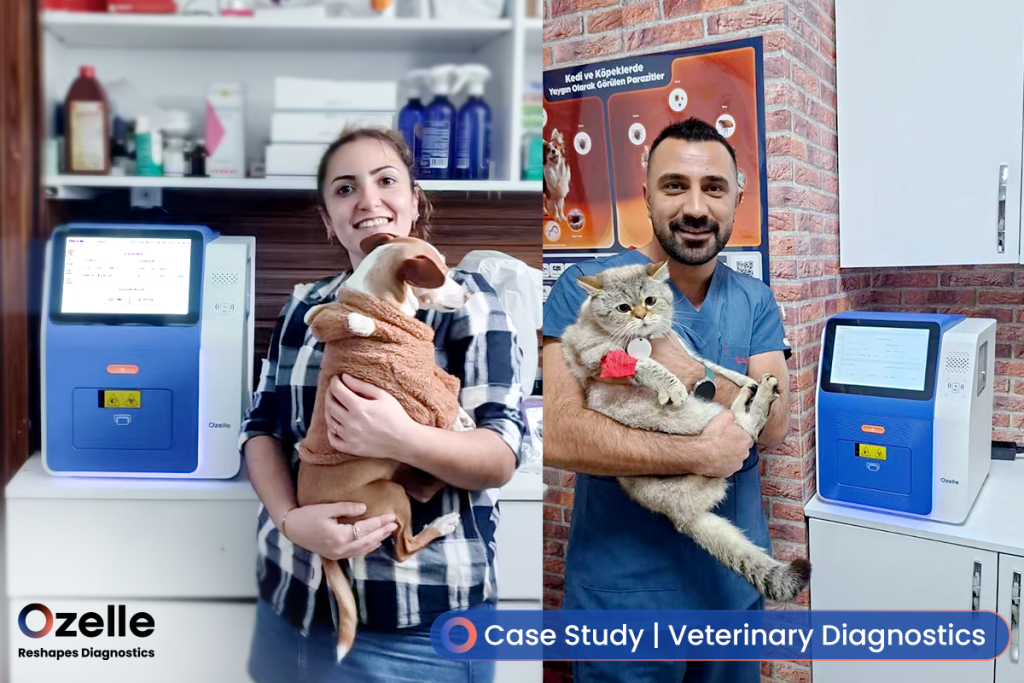
Why Clinics Consider a Portable Veterinary Hematology Analyzer
Veterinary medicine is shifting rapidly toward in‑house, point‑of‑care diagnostics, especially for CBC and basic blood profiles. Portable veterinary hematology analyzers make this possible even for small, space‑constrained clinics and mobile vets.
Key reasons include faster decision‑making, improved client experience, and better financial control. Same‑visit CBC results support emergency triage, pre‑surgical screening, and treatment planning without waiting days for reference lab reports. Pet owners increasingly expect human‑hospital‑level diagnostics on site, and point‑of‑care veterinary diagnostics has become one of the fastest‑growing segments in the animal health market.
Clinical Scenarios Where In‑House CBC Matters Most
A portable veterinary hematology analyzer is not just a gadget; it reshapes how a clinic manages specific high‑value scenarios.
Pre‑anesthetic screening
Dogs and cats scheduled for surgery benefit from same‑day CBC to screen for anemia, infection, or platelet issues before anesthesia. A portable analyzer lets the team detect risk and adjust plans immediately, instead of delaying surgery or proceeding without complete information.
Emergency and urgent care
Cases involving shock, sepsis, heatstroke, or unexplained collapse depend on rapid assessment of red cells, white cells, and platelets. Waiting 24–48 hours for an external lab result can mean missed therapeutic windows and more uncertain decision‑making.
Chronic disease and therapy monitoring
Long‑term therapy, such as chemotherapy, NSAIDs, or immunosuppressants, demands regular CBC checks to monitor for bone marrow suppression and other side effects. In‑house analyzers make it practical to schedule frequent, low‑friction monitoring visits that are easier for both clients and staff.
Rural or mixed‑animal practice
In remote areas, courier pickup times and transport delays can make external CBCs slow and inconsistent. A portable analyzer gives the practice reliable access to results regardless of local logistics, which is especially valuable for large‑animal or farm visits.
In these situations, the decision is less about having advanced equipment and more about the clinic’s ability to deliver timely, evidence‑based care.
Technology Basics: What “Portable Veterinary Hematology Analyzer” Really Means
Not all “portable” analyzers are equivalent, and understanding the core technology helps you judge whether a device truly fits your clinical and business needs.
Impedance analyzers use electrical resistance changes to count and size cells, offering affordability and compact design but limited differentiation of white cell subtypes and more vulnerability to interferences such as platelet clumps. Laser or flow‑cytometry analyzers use laser scatter to assess cell granularity and complexity, improving white cell differentiation and reticulocyte measurement, and they often appear in mid‑ to high‑end compact instruments.
AI digital morphology analyzers go a step further by capturing actual cell images and using AI algorithms to classify morphology, mimicking a pathologist’s manual smear review. These analyzers provide visual evidence alongside numerical data and can automatically flag suspicious abnormal cells, reducing the need for manual microscopy in many routine cases.
Ozelle’s EHVT series, including the EHVT‑50 and EHVT‑75, are examples of compact, AI‑powered analyzers that integrate hematology with other tests, designed specifically for veterinary practices with limited space. You can view detailed specifications and use cases for the EHVT‑50 portable veterinary hematology and the EHVT‑75 7‑diff veterinary hematology analyzer is described in detail at https://ozellemed.com/en/veterinary-hematology/.
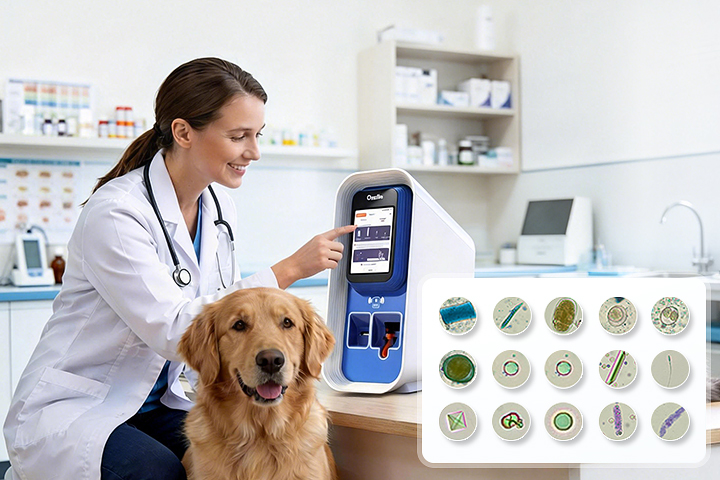
Financial Decision: In‑House Analyzer vs External Lab
The central business question is whether a portable veterinary hematology analyzer will pay for itself, or whether outsourcing remains more economical at your current volume.
Assume an average reference lab charges 15–20 USD per CBC and your clinic performs about 10 CBC tests per day, or roughly 3,000 tests per year. Outsourcing all CBCs at that rate generates an annual cost in the range of 45,000–60,000 USD, without providing asset ownership or full control over scheduling and quality.
By contrast, a portable analyzer might cost around 15,000–30,000 USD for a mid‑range AI or multi‑functional veterinary system, which corresponds to about 3,000–6,000 USD per year when spread over a five‑year depreciation period. Per‑test consumables—reagents, QC materials, or cartridges—commonly range between 6 and 12 USD per multi‑modal workup (CBC plus associated panels), depending on the model and volume, so 3,000 annual CBC‑based profiles at an average of 8–10 USD would cost approximately 24,000–30,000 USD per year in disposables. Adding an estimated 1,000–2,000 USD per year in service or maintenance brings the total in‑house cost to roughly 28,000–38,000 USD per year, depending on configuration and test mix.
This rough model shows that at moderate volumes, an in‑house analyzer can still substantially reduce annual CBC‑related costs compared with sending everything to an external lab, while also improving clinical speed and flexibility—especially if you consolidate CBC, urine, fecal, and inflammatory markers on a single multi‑functional platform.
Cost and Workflow Comparison Table
| العامل | Keep Outsourcing CBC | Buy Portable Veterinary Hematology Analyzer |
| Result turnaround | 12–72 hours, depending on courier and lab load | ≈10mins at point of care |
| Up‑front investment | لا يوجد | Medium (device cost) with simple installation |
| Per‑test cost | High (lab fee + logistics) | Low–moderate (reagents, QC, cartridges) |
| Revenue retention | Most testing revenue goes to reference lab | Test revenue and margin retained by clinic |
| Clinical control | Limited; cannot repeat immediately | Full control; repeat and add tests on demand |
| Staff training | Minimal (sample draw and packing) | Basic analyzer operation training needed |
| Dependence on logistics | High reliance on courier and lab schedule | Low; practice becomes self‑sufficient |
For clinics with even moderate CBC demand, a portable veterinary hematology analyzer is usually more economical and clinically advantageous than outsourcing alone.
What to Look for in a Portable Veterinary Hematology Analyzer
Once your numbers support in‑house CBC, selecting the right device becomes the next crucial step.
- Confirm species coverage and validation for your main patient types, making sure canine and feline profiles are well established and that any additional species you see are supported or on the roadmap.
- Evaluate workflow fit by considering sample volume, turnaround time, maintenance requirements, staff training needs, and integration with your practice management or LIS system.
- Decide whether a hematology‑only analyzer or a multi‑functional mini‑lab that supports CBC plus immunoassay, urine sediment, and fecal analysis better matches your current and future service mix.
Species coverage and validation are particularly important because veterinary analyzers must account for different cell morphology in dogs, cats, and other animals. Sample volume and collection methods also matter; low‑volume, capillary‑friendly analyzers are easier to use with small patients and reduce stress in anxious animals.
Maintenance and consumables influence staff workload and operating costs, and devices that avoid complex fluidics and daily flushing simplify daily routines. Integration and data management capabilities, such as LIS or PIMS connectivity, prevent transcription errors and make it easier to track trends across multiple visits.
Finally, multi‑functional analyzers like the EHVT‑50 consolidate CBC, immunoassay, urine sediment, and fecal parasite analysis in one compact unit, reducing bench‑top clutter and expanding diagnostic offerings. Clinics interested in this “mini‑lab” concept can also review Ozelle’s multi‑functional analyzer solutions for vets at ozellemed.com/en/multi-functional-analyzer-for-vet/.
Example Features of a Modern Veterinary Mini‑Lab (EHVT‑50)
For a full overview of this mini‑lab solution, see the EHVT‑50 product page on Ozelle’s official site (ozellemed.com/en/ehvt-50/).
| الميزة | EHVT‑50 Veterinary Multi‑Functional Analyzer |
| Core technology | AI‑powered cell morphology with high‑resolution imaging |
| Main tests | 7‑diff CBC, immunoassay, urine sediment, fecal parasite and cell analysis |
| الأنواع | Canine and feline support with roadmap for additional species |
| الإنتاجية | Several samples per hour with integrated multi‑modal workflow |
| الصيانة | Pipeline‑free, single‑use reagent kits and minimal daily upkeep |
| Footprint | Compact “mini‑lab” form factor suited to small clinics and branches |
| Reports | AI‑assisted diagnostic reports with visual cell images for client communication |
The veterinary diagnostics section of Ozelle’s official site provides more detailed information on the EHVT series and related solutions.https://ozellemed.com/en/veterinary-hematology/
Simple Decision Checklist for Clinic Owners
This short checklist helps clarify whether a portable veterinary hematology analyzer aligns with your clinic’s strategy.
- Do you perform or reasonably expect to perform at least 5–10 CBCs per day over the next one to two years, based on your caseload and growth plans?
- Do you regularly handle emergencies, surgeries, or chronic therapies where delayed CBC results constrain your ability to treat cases effectively or safely?
- Are courier delays, lab turnaround times, or rising reference lab costs limiting your service quality, revenue retention, or client satisfaction?
If the majority of answers point toward higher volumes, clinical urgency, and frustration with outsourcing, a portable veterinary hematology analyzer is usually a strategic upgrade rather than a luxury purchase.

FAQs About Portable Veterinary Hematology Analyzer
What is a portable veterinary hematology analyzer?
A portable veterinary hematology analyzer is a compact device that performs complete blood counts for animals directly in the clinic, using small blood samples and delivering results within minutes. Unlike large reference‑lab instruments, portable analyzers are optimized for ease of use, small footprints, and point‑of‑care workflows in veterinary hospitals and clinics.
Are portable analyzers accurate enough compared with reference labs?
Modern analyzers based on advanced optics, flow cytometry, or AI‑powered morphology can deliver lab‑grade accuracy for routine CBC parameters when properly validated for veterinary species. Many clinics rely on in‑house CBC for primary decision‑making and use reference labs mainly for complex cases or confirmatory testing.
How much does a portable veterinary hematology analyzer cost?
Pricing varies by technology, throughput, and feature set, but many veterinary CBC analyzers fall in the mid‑four‑ to low‑five‑figure range. Consumable costs typically range from about 1 to 3 USD per test for reagents and quality control materials, with multi‑functional systems sometimes commanding slightly higher per‑test costs due to broader capabilities.
What is the typical payback period for an in‑house analyzer?
For clinics running around 5–10 CBCs per day, the payback period can be as short as one to two years when the difference between lab fees and in‑house per‑test costs is considered alongside additional revenue and improved client retention. Higher test volumes or bundled diagnostic panels such as CBC plus biochemistry and urine can shorten the payback further.
Are portable analyzers suitable for mobile veterinary services?
Many portable analyzers are designed with small footprints and simple workflows that can be integrated into mobile units as long as power and environmental conditions are appropriate. For fully mobile practices, devices with minimal maintenance, robust construction, and cartridge‑based consumables are especially advantageous.
How does AI improve a veterinary hematology analyzer?
AI improves analyzers by automatically classifying cells, recognizing morphological abnormalities, and generating structured, clinician‑friendly reports that aid interpretation. Systems like Ozelle’s EHVT series combine AI with high‑resolution imaging, providing visual cell evidence and reducing reliance on manual smear review for many common cases.
What about training and daily operation?
Most modern analyzers are designed for everyday veterinary staff, so routine operation usually involves loading the sample, selecting the species or panel, and reviewing the report on screen or print‑out. Devices that eliminate complex liquid pipelines and use single‑use reagent kits further reduce daily maintenance and simplify staff training across shifts.
الخاتمة
A well‑chosen portable veterinary hematology analyzer turns CBC testing from a delayed, outsourced service into an immediate, in‑clinic decision tool that supports faster diagnoses, safer anesthesia, and better long‑term monitoring. For small and mid‑sized clinics that perform regular CBCs and manage emergencies or chronic therapies, the combination of stronger medical control and attractive ROI often makes in‑house testing the smarter long‑term choice. By carefully matching device capabilities, maintenance model, and multi‑functional options to your specific workflow, your practice can upgrade from “sending out blood” to running a compact, AI‑enabled mini‑lab at the point of care, with detailed platform information available through the hematology and veterinary sections of ozellemed.com/ar.
 English
  Français
  Русский
  Español
  Deutsch
  Português
  العربية
  Italiano