

For millions of patients living far from urban hospitals, getting a blood test has always meant the same frustrating cycle: travel long distances, wait days for results, then return for a follow-up consultation. For clinicians in rural or resource-limited settings, this delay is not just inconvenient — it directly impacts patient outcomes. Infections go undetected. Anemia is managed based on guesswork. Referrals pile up because there is no in-house data to justify or rule out clinical decisions.
A portable hematology analyzer changes this equation entirely. By bringing lab-grade blood diagnostics directly to the point of care, these compact, AI-powered devices allow rural clinicians to access complete blood count (CBC) results, inflammatory markers, and metabolic panels — all within minutes, from a single fingertip drop of blood. This article explores how that transformation works in practice, what clinicians should look for in a portable analyzer, and how analyzers like the أوزيل EHBT-50 are redefining diagnostics at the primary care level.
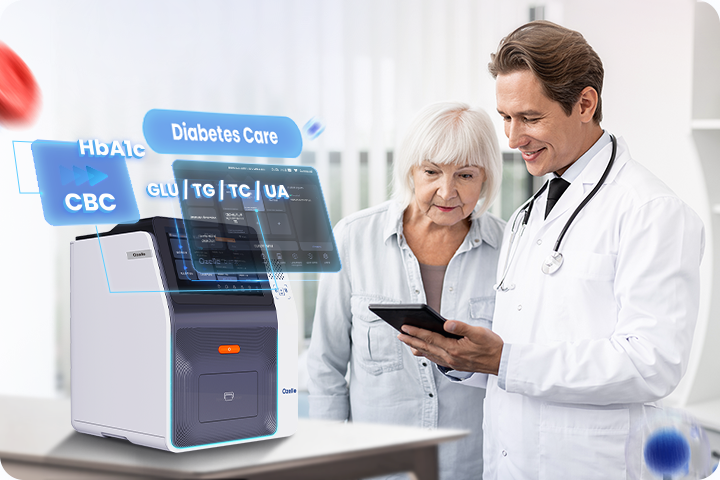
The Rural Diagnostic Gap: Why It Still Exists
Despite advances in medical technology, access to timely diagnostics remains deeply unequal. In many rural, semi-urban, and low-resource healthcare settings, clinics and general practitioners operate without an on-site laboratory. Patient samples must be collected, transported to a central lab, processed, and then reported back — a pipeline that can take anywhere from 24 hours to several days.
This delay creates a cascade of problems:
- Delayed treatment decisions for conditions where time is critical, such as bacterial infections, sepsis risk, or severe anemia
- Unnecessary referrals that overburden secondary and tertiary hospitals with cases that could be managed locally with the right data
- Increased patient burden, especially for elderly, pediatric, or mobility-limited patients who must travel repeatedly for tests and follow-ups
- Missed diagnoses, particularly for conditions like leukemia precursors, reticulocyte abnormalities, or thrombocytopenia that require CBC analysis to detect
The core problem is not a lack of clinical skill. Rural doctors and nurses are well-trained. What they lack is timely, accurate diagnostic data at the moment of clinical decision-making. A portable hematology analyzer solves exactly this problem — putting the data in the hands of the clinician, at the right time, in the right place.
ما هو جهاز تحليل الدم المحمول؟
A portable hematology analyzer is a compact, point-of-care device that automates complete blood count testing and related diagnostics outside of a traditional laboratory environment. Unlike large benchtop analyzers designed for hospital labs, portable analyzers are engineered for:
- Small physical footprint — designed to fit on a standard clinical desk
- Minimal sample volume — typically requiring only 30–100 µL of capillary or venous blood
- Automated processing — no manual staining, pipetting, or pre-treatment required
- Fast turnaround — delivering results in as little as 6 minutes per sample
- Intuitive operation — designed for general practitioners and nurses with minimal laboratory training.
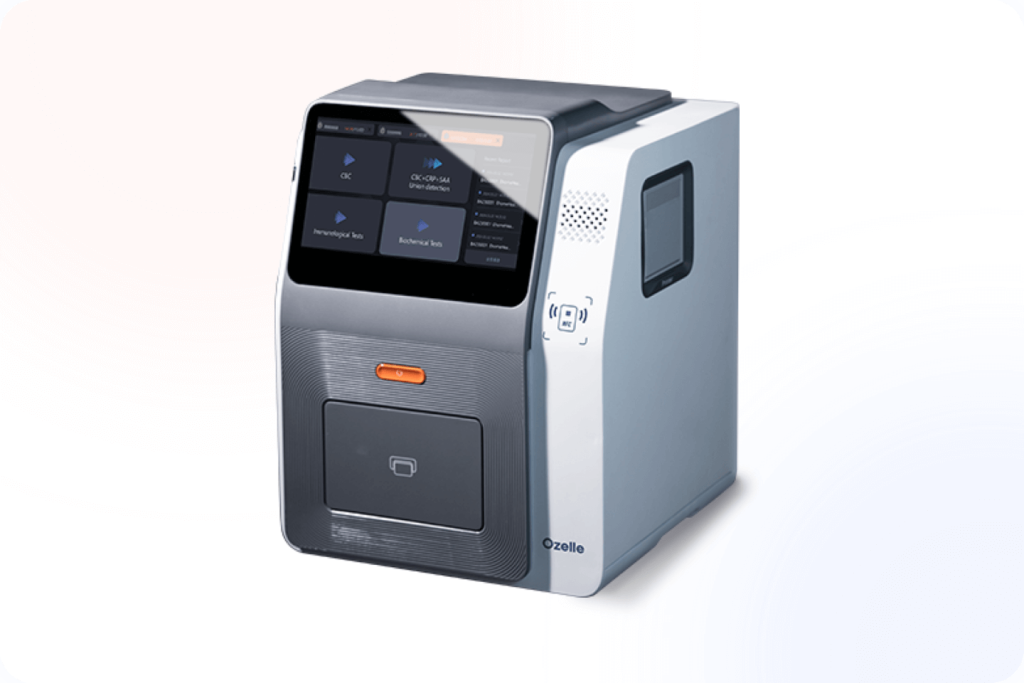
Modern AI-powered portable analyzers go beyond basic 3-part CBC counting. Advanced analyzers now deliver 7-part differential white blood cell analysis, morphological abnormality flagging (such as identifying immature neutrophils and abnormal red blood cell shapes), and even combined immunoassay and biochemistry testing — all from a single test run.
Key Features to Look for in a Portable Hematology Analyzer for Rural Settings
Not all portable analyzers are equal. For a rural or primary care environment, the following features matter most:
| الميزة | Why It Matters for Rural Use |
| Capillary blood sampling | Eliminates need for venous draw expertise; only a fingertip prick required |
| Maintenance-free design | No laboratory technician or daily cleaning routines needed |
| تخزين الكواشف في درجة حرارة الغرفة | No cold chain or refrigeration infrastructure required |
| All-in-one testing capability | Combines CBC, immunoassay, and biochemistry in one device — replacing multiple instruments |
| AI-powered cell morphology | Flags abnormal cells automatically, reducing reliance on specialist review |
| Built-in LIS/HIS connectivity | Enables digital record-keeping and integration with clinic management systems |
| Long test kit shelf life | Reduces waste and restocking burden in remote locations |
| Compact dimensions | Fits within existing clinic space without renovation |
Each of these features reflects a real operational challenge that rural clinics face. A device that requires cold storage, frequent reagent pipeline cleaning, or specialist calibration becomes a liability — not an asset — in a setting without on-site laboratory support.
The Ozelle EHBT-50: A Portable Mini-Lab Built for Exactly This Problem
إن أوزيل EHBT-50 is a multi-functional portable hematology analyzer that combines 7-diff hematology, immunoassay, biochemistry testing into a single AI-powered device. Designed with primary care and rural diagnostics in mind, it eliminates the compromises that have historically forced rural clinics to choose between affordability and diagnostic depth.
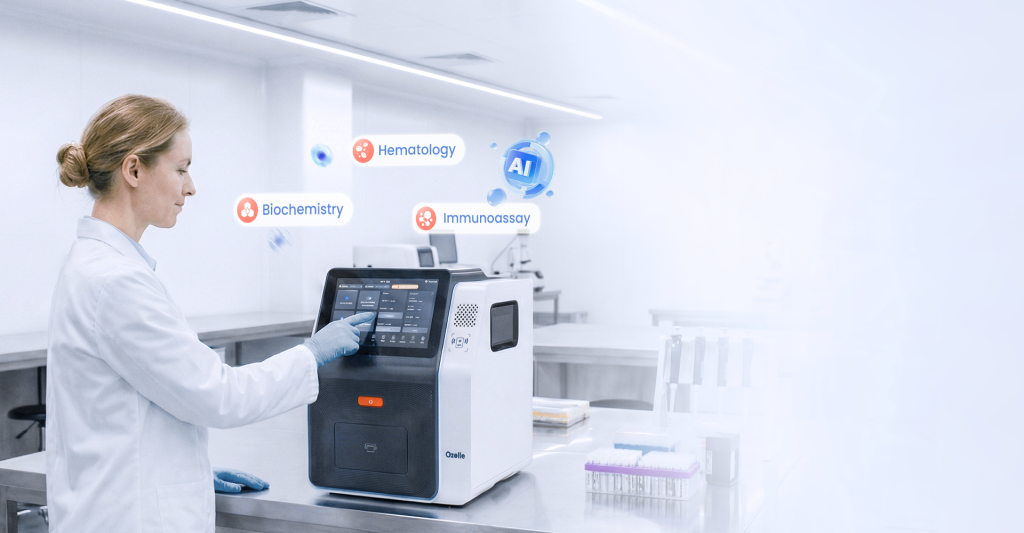
How the EHBT-50 Addresses the Rural Lab Gap
- Only 30 µL of capillary blood required.
A single fingertip prick provides enough sample for a full 7-diff CBC analysis with 41 parameters. This is particularly important for pediatric patients and elderly individuals for whom venous blood draws are difficult or distressing.
- Results in 6 minutes per sample.
The EHBT-50 processes up to 10 samples per hour. In a busy rural clinic where every consultation counts, this throughput means patients receive actionable data before they leave the room.
- Maintenance-free, individual test kits.
Each test uses a disposable single-use cartridge. There are no reagent pipelines to clean, no risk of cross-contamination between patients, and no daily maintenance protocols. The test kit can be stored and transported at room temperature, with a shelf life of 2 years for hematology cartridges — eliminating cold chain dependency entirely.
- AI-powered cell morphology
The EHBT-50 is powered by Ozelle’s Complete Blood Morphology (CBM) technology, trained on over 50 million real clinical samples. It does not just count cells — it identifies their size, shape, and morphological characteristics, automatically flagging abnormal cells such as:
- NST (Neutrophilic Stab Granulocytes) — immature neutrophils indicating bone marrow stress or bacterial infection
- NSH (Neutrophilic Hypersegmented Granulocytes) — suggesting dysregulated cell maturation
- Schistocytes, echinocytes, and teardrop cells — abnormal RBC morphologies linked to hemolytic anemia and other serious conditions
- PAg (Platelet aggregates) and RET (Reticulocytes) — critical markers for bone marrow function and anemia management
- All-in-one panel combinations.
Beyond hematology, the EHBT-50 supports a wide range of combinable test panels in a single run:
| Panel Combination | Clinical Application |
| CBC + CRP + SAA | Infection typing (bacterial vs. viral) |
| CBC + PCT | Infection severity assessment |
| CBC + HbA1c + GLU + TG + TC + UA | Diabetes management panel |
| اتفاقية مكافحة التصحر + معاهدة الحظر الشامل للتجارب النووية + معاهدة الحظر الشامل للتجارب النووية + معاهدة الحظر الشامل للتجارب النووية + معاهدة الحظر الشامل للتجارب النووية + معاهدة الحظر الشامل للتجارب النووية + معاهدة الحظر الشامل للتجارب النووية + معاهدة الحظر الشامل للتجارب النووية | Thyroid function evaluation |
| CBC + NT-proBNP | Heart failure screening |
| CBC + β-HCG + Progesterone | Early pregnancy assessment |
| CBC + CysC + UA + Creatinine + Urea | Kidney function evaluation |
| CBC + 25-OH-VD | Osteoporosis/bone metabolism screening |
This flexibility means that a rural GP can run a comprehensive metabolic and hematological workup on a single patient visit, with a single device, at a fraction of the cost of sending samples to a central lab.
Real-World Clinical Workflow: Before and After a Portable hematology Analyzer
To understand the practical impact, consider a typical scenario in a rural general practice clinic:
Before portable hematology analyzer:
A 55-year-old patient presents with fatigue, pallor, and mild dyspnea. The GP suspects anemia but cannot confirm type or severity without a CBC. The patient is referred to a district hospital for blood tests. Results arrive 2 days later. A follow-up appointment is needed. Total time to diagnosis: 4–7 days. The patient may deteriorate in the interim, or simply not return.
After deploying the EHBT-50:
The same patient presents. A 30 µL fingertip blood sample is collected in under a minute. The device processes the sample automatically. Within 6 minutes, the clinician has a full 41-parameter CBC report including RBC morphology, reticulocyte count, iron deficiency markers (Ferritin), and inflammatory markers. The GP identifies iron-deficiency anemia, initiates treatment on the spot, and eliminates the need for a referral. Total time to diagnosis: under 10 minutes.
This workflow transformation is not theoretical. With over 50,000 units installed globally and data from more than 50 million samples, Ozelle’s portable analyzers are actively deployed in primary care facilities, pharmacies, mobile units, ambulances, and emergency departments across multiple countries.
Certifications and Quality Standards
For any medical device deployed in a clinical setting, regulatory compliance is non-negotiable. The Ozelle EHBT-50 holds the following certifications:
- CE Mark (European conformity)
- ISO 13485:2016 (Medical device quality management system)
- ISO 9001 (Quality management)
- CQC Certification
Ozelle’s AI recognition algorithm was also recognized at the 2022 World Artificial Intelligence Conference (WAIC) — one of the most prestigious international AI certification bodies — validating the clinical reliability of its cell morphology analysis engine.
FAQs: Portable Hematology Analyzers for Rural and Primary Care Settings
Q1: Can a portable hematology analyzer replace a full laboratory CBC?
Modern AI-powered portable analyzers like the Ozelle EHBT-50 deliver 37-parameter 7-diff CBC results with accuracy comparable to international reference-grade benchtop analyzers. Clinical correlation data shows correlation coefficients (R²) above 0.98 for key parameters including WBC, RBC, HGB, and PLT — confirming lab-grade precision in a portable format.
Q2: How much blood sample is needed?
The EHBT-50 requires only 30 µL of capillary blood for testing (60 µL for loading), collectible from a simple fingertip prick. This makes it suitable for pediatric, geriatric, and needle-averse patients.
Q3: Does the device require cold storage for reagents?
No. The EHBT-50’s individual test kits are stored and transported at room temperature, with a 2-year shelf life for hematology cartridges. This eliminates the need for cold chain logistics — a critical advantage for rural and mobile deployments.
Q4: How long does it take to get results?
Results are ready in 6 minutes per sample, with a throughput of up to 10 samples per hour. The AI diagnostic report — including morphological analysis, abnormality flags, and clinical interpretation — is generated automatically.
Q5: Does the device need a trained lab technician to operate?
No. The EHBT-50 is designed for minimal training requirements. Its intuitive touchscreen interface, smart built-in camera that auto-detects correct consumable placement, and liquid-free design eliminate the need for laboratory expertise. General practitioners, nurses, and clinic staff can operate it confidently after a brief onboarding session.
Q6: Can the device connect to clinic management or hospital information systems?
Yes. The EHBT-50 supports LIS, HIS, WiFi (IEEE 802.11 b/g/n), LAN (RJ45), USB, SIM, and Bluetooth connectivity, enabling full integration with existing digital health infrastructure and remote data monitoring via Ozelle’s IoT platform.
Q7: Is the EHBT-50 only for hematology, or can it run other tests?
The EHBT-50 is a true all-in-one mini-lab. In addition to 7-diff CBC, it runs immunoassay panels (thyroid, cardiac, inflammation, hormones, diabetes), dry chemistry biochemistry (liver, kidney, lipids, glucose), and has expandable urine and fecal testing capabilities via OTA updates.
Q8: What makes portable AI hematology analyzers better than traditional impedance-based analyzers?
Traditional impedance-based analyzers count cells by measuring electrical pulses — they can quantify but not visually identify cell morphology. AI cell morphology analyzers like the EHBT-50 use optical imaging, liquid-based staining, and deep learning (trained on 50 million samples) to identify cell shape, structure, and abnormalities with a level of detail that approaches expert pathologist review.
Who Should Consider a Portable Hematology Analyzer?
A portable hematology analyzer is the right investment for any healthcare setting that needs reliable blood diagnostics but lacks full laboratory infrastructure:
- Rural general practices and family medicine clinics with no on-site lab
- Community health centers and primary care networks serving dispersed populations
- Pharmacies in markets where testing services are permitted (US, Brazil, France, Australia, Italy, Ireland, Kenya, and others)
- Mobile medical units and ambulances requiring point-of-care diagnostics in the field
- Emergency departments needing rapid triage data before central lab results are available
- Cosmetic and wellness centers offering preventive health screening services
The gap between where patients are and where diagnostic laboratories are located does not have to translate into delayed care. With a portable hematology analyzer that delivers 41-parameter AI-powered CBC results in 6 minutes from a single fingertip drop, rural and primary care clinicians now have the tools to make timely, evidence-based decisions — without sending patients anywhere. To learn more about the Ozelle EHBT-50 and the full range of AI-powered diagnostic solutions, visit https://ozellemed.com/en/.
 English
  Français
  Русский
  Español
  Deutsch
  Português
  العربية
  Italiano