

Point‑of‑care testing (POCT) in emergency medical services (EMS) is moving core diagnostics out of the central lab and into ambulances, mobile units and emergency departments. Paramedics and emergency physicians often face delays associated with central laboratory workflows. Point-of-care testing enables access to key blood parameters within minutes during early assessment or transport.
Within this shift, automated hematology analyzer play a central role because a fast, reliable complete blood count (CBC) is one of the most informative tests in emergency care. AI‑powered systems from Ozelle—especially the EHBT‑50 and EHBT‑75—are built to deliver lab‑grade CBC and complete blood morphology at the point of care, while also consolidating immunoassay and biochemistry testing when a broader panel is needed.

What Is an Automated Hematology Analyzer in the POCT Era?
An automated hematology analyzer is a blood testing instrument that automatically measures and classifies blood cells to generate a complete blood count (CBC) and related indices. It typically reports parameters such as white blood cell count, red blood cell count, hemoglobin, hematocrit, red cell indices and platelet count, and may also provide white blood cell differentials and derived ratios. For many years these analyzers were large benchtop systems used mainly in central laboratories, but newer generations are more compact and require less routine maintenance,making them increasingly suitable for near-patient testing in emergency departments and selected point-of-care settings.
Building on this evolution, Ozelle’s automated hematology analyzers add AI‑powered Complete Blood Morphology (CBM) and high‑resolution imaging on top of standard CBC testing, and some models also integrate immunoassay and biochemistry modules in the same platform. This combination allows a single analyzer to deliver both traditional hematology results and richer morphology information within a point‑of‑care workflow.
How Ozelle Automated Hematology Analyzer Fit EMS POCT
To understand the value of automated hematology analyzers in EMS, it helps to look at specific device types rather than talk about technology in the abstract. Ozelle’s portfolio includes analyzers that consolidate CBC, morphology, immunoassay and biochemistry into portable systems that fit directly into POCT workflows.
Ozelle EHBT‑50: All‑in‑One Mini Lab for EMS
Ozelle EHBT‑50 is an all‑in‑one diagnostic analyzer that combines 7‑part hematology, immunoassay, biochemistry in a single compact unit. It is built for micro‑scale, multi‑scenario use and focuses on delivering high‑precision, rapid testing in time‑critical environments such as emergency departments, mobile medical units and EMS hubs. You can find the full technical overview of the EHBT‑50 on its product page at https://ozellemed.com/en/ehbt-50/.
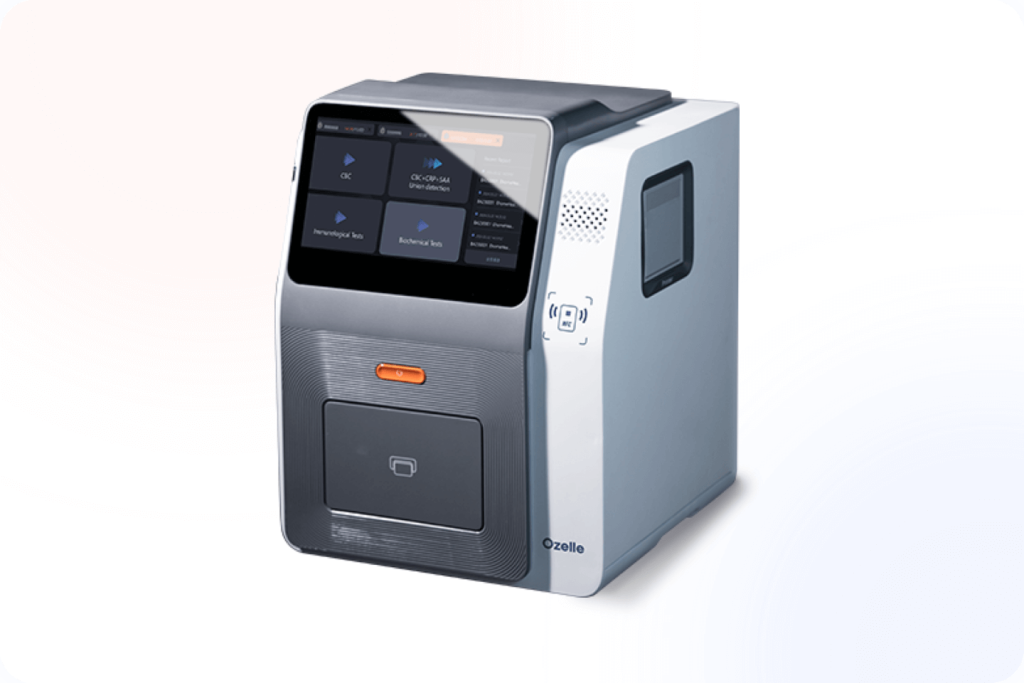
Core testing capabilities
- Hematology: EHBT‑50 uses AI‑driven 7‑part cell morphology analysis based on CBM (Complete Blood Morphology) technology. It recognizes multiple cell types and abnormalities—including NST, NSG, ALY, RET and abnormal red cells—and outputs around 41CBC‑related parameters with accuracy comparable to major international brands.
- Immunoassay: supports selected panels such as cardiac markers, inflammation markers, hormones, and specific protein biomarkers.
- Biochemistry: covers routine parameters including glucose, lipids, and liver and kidney function markers.
For EMS and emergency care, EHBT‑50 can generate integrated panels—such as CBC + CRP + troponin + basic renal function—from a single blood draw in minutes, which matches the time window of early assessment after ambulance arrival.
Key product advantages
- Easy to use and maintenance‑free: A 10.1‑inch touchscreen provides a guided workflow, while sealed independent reagent kits remove the need for daily maintenance, manual flushing or open‑bottle reagent handling. The closed‑cartridge design reduces cross‑contamination and clogs, which is crucial for busy emergency and EMS settings.
- Micro‑sample and efficient: EHBT‑50 typically requires around 30–100 µL of blood and can process about 10 samples per hour, making it suitable for pediatric, elderly and difficult‑access patients.
- Portable and connected: With a footprint of about 350 × 400 × 450 mm and net weight around 15 kg, the device can be installed in emergency rooms, mobile medical units or larger ambulances. It supports LIS/HIS integration and connectivity via Wi‑Fi, USB and LAN, and includes a built‑in thermal printer for immediate result printouts.
- Stable and precise: Automatic calibration and dry QC routines help keep performance stable, while validation data show strong correlation (WBC R² ≈ 0.996, RBC R² ≈ 0.979, PLT R² ≈ 0.987) against reference analyzers. EHBT‑50 supports venous and capillary for hematology testing, and serum or plasma for immunoassay and biochemistry assays, giving EMS and ED teams flexibility in sampling.
Application scenarios
Because EHBT‑50 combines optical photometry, immunofluorescence and dry chemistry in one device, it supports rapid diagnostics across hospitals, clinical laboratories, emergency departments, mobile medical units and ambulance‑adjacent triage zones. In EMS workflows, EHBT‑50 is particularly effective as a “hub” analyzer in emergency stations or short‑stay units, where patients arrive directly from ambulances and benefit from complete panels before conventional lab results are ready.
Ozelle EHBT‑75: AI 7‑Diff Hematology Analyzer for Deep Cell Morphology
While EHBT‑50 covers most panel‑based needs in EMS hubs and emergency admissions, some hospitals also require a more specialized platform for advanced hematology and in‑depth morphology workups. For those cases, Ozelle provides the EHBT‑75, a dedicated 7‑part automated hematology analyzer built to deliver high‑resolution cell morphology and AI‑assisted interpretation from very small blood volumes, reducing the need for manual smear preparation in routine cases. A detailed overview of the EHBT‑75’s hardware and workflow is available at https://ozellemed.com/en/ehbt-75/.
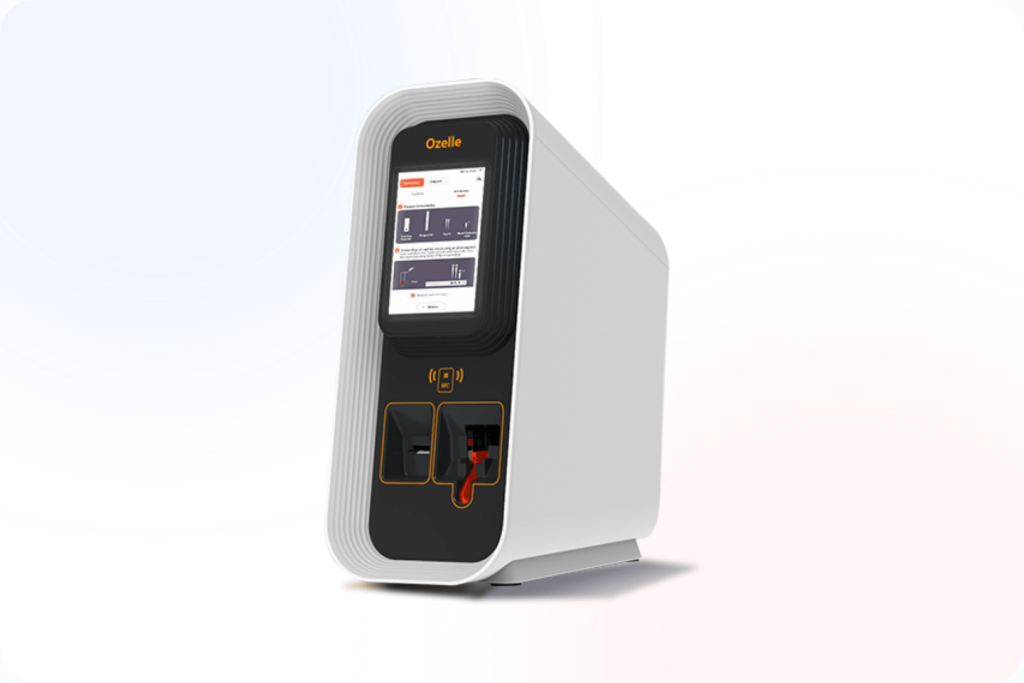
AI‑powered precision hematology
EHBT‑75 integrates deep learning algorithms with high‑resolution imaging and liquid‑based cytology staining. It accurately identifies and classifies multiple cell types and abnormalities—including NST, NSG, NSH, ALY, PAg and RET—and returns both numeric parameters and rich morphology images. This gives clinicians morphology detail that previously required manual microscopy, while keeping the process fully automated.
Fully automated workflow
The analyzer automates sample loading, staining, mixing, imaging, AI analysis and report generation. Users load 30–60 µL of venous or capillary whole blood, and the system delivers a 7‑diff CBC with morphology in about 6 minutes, with throughput of roughly 8–10 samples per hour. This model fits busy emergency departments that need detailed CBC output within a single patient encounter.
Smart consumables and one‑time cartridges
EHBT‑75 uses single‑use testing kits that store at room temperature and require no daily maintenance or liquid reagents. This simplifies inventory and ensures consistent performance even when staffing and storage conditions vary across shifts and departments.
Key configuration and connectivity
The analyzer delivers a comprehensive 37-parameter CBC profile, which includes a complete 7-part white blood cell differential, extended morphology parameters (e.g., NST, NSG, ALY, PAg, RET), and clinically useful ratios such as NLR and PLR.
It features a 7‑inch touchscreen and supports USB, Ethernet, Wi‑Fi and Bluetooth communication, with the option to connect external thermal or A4 printers. With dimensions around 415 × 203 × 483 mm and low power consumption, EHBT‑75 is easy to place near ED triage or in small satellite labs. It is produced in Germany and carries CE certification, which is important for hospitals that require compliance with European regulatory standards.
Where EHBT‑75 fits in EMS pathways
Although EHBT‑75 is usually installed in hospital emergency departments rather than ambulances, it directly impacts EMS pathways by shortening the time from arrival to high‑quality CBC with morphology. When emergency teams can obtain a 7‑diff CBC with morphology in about six minutes at the point of care rather than waiting in a central lab queue, they can bring detailed hematology data into the very first round of decision‑making for suspected sepsis, hematologic crises and complex inflammatory cases.
Why Automated Hematology Analyzer Matter in EMS POCT
The EMS environment is defined by time pressure, uncertainty and limited resources. Automated hematology analyzers bring objective, quantitative data into that environment within the same time window as initial assessment and stabilization.
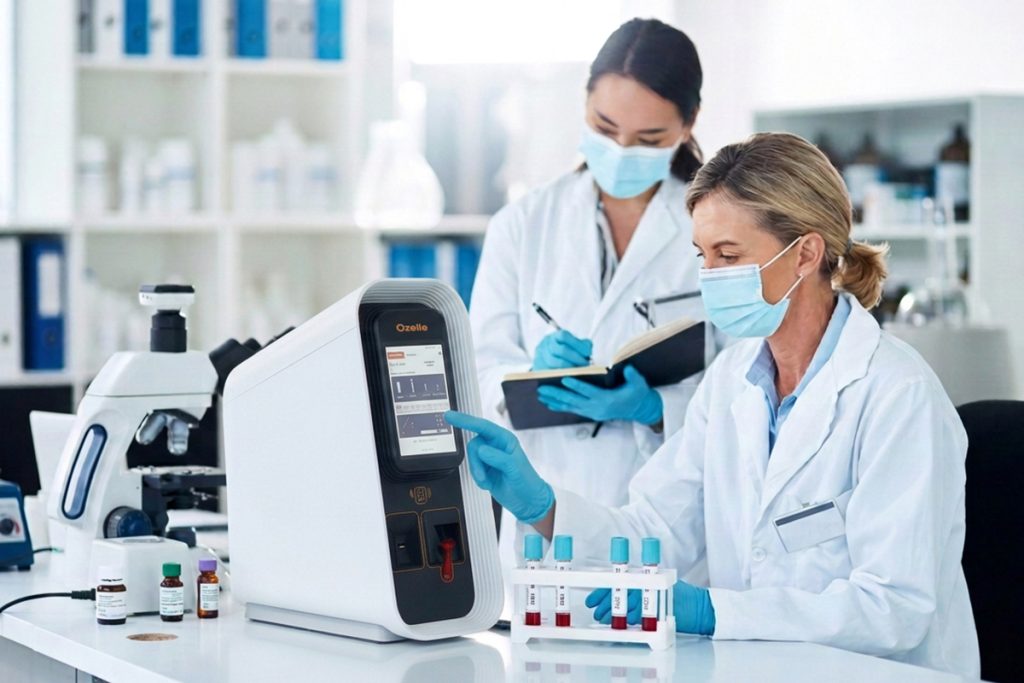
Faster Time to Critical Interventions
Research in emergency medicine shows that POCT can shorten time to interventions such as thrombolysis, intubation and central line placement by delivering lab data at the bedside instead of waiting for central lab processing. In EMS, similar benefits appear when paramedics or ED teams use POCT hematology to identify high‑risk patterns—like marked leukocytosis or severe anemia—within the first 10 minutes of patient contact.
Better Triage and Destination Decisions
The EMS POCT scoping review highlights that on‑scene testing can support better triage and destination decisions, although current practice is highly variable. CBC and related morphology parameters support:
- Early sepsis recognition when combined with clinical signs and markers such as CRP or lactate.
- Hemorrhage and anemia assessment in trauma, GI bleeding and obstetric emergencies.
- Baseline evaluation in chest pain, dyspnea and acute heart failure, especially when integrated with cardiac markers on analyzers like EHBT‑50.
By integrating automated hematology analyzers into EMS pathways, systems can direct patients more accurately to the right level of care and activate specialized teams earlier.
Standardized Quality and Connectivity
A study from emergency medical services programs in the Canadian province of Alberta found that poor device management, harsh environmental conditions and inconsistent oversight can significantly undermine the benefits of POCT in the field. In response to these types of failure modes, automated hematology analyzers that use single‑use cartridges, built‑in quality control and digital connectivity offer a more standardized way to run tests across multiple bases and fleets, while still allowing central laboratory teams to oversee performance.
EHBT‑50 and EHBT‑75 support LIS/HIS integration, enabling results to flow into the same electronic record as central lab data and be overseen by laboratory teams. This supports both clinical continuity and quality governance across EMS and hospital care.
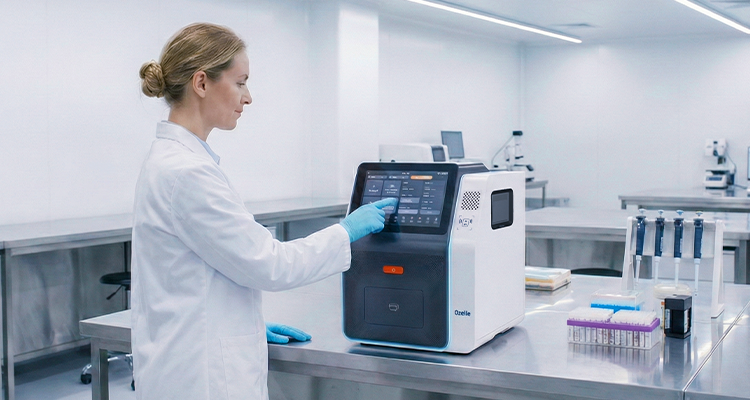
Conclusion: Bringing Lab‑Grade Hematology to the Front Line of Emergency Care
As POCT becomes more deeply integrated into EMS and emergency medicine, automated hematology analyzers are evolving from “nice to have” devices into essential tools for time‑critical decision‑making. Ozelle’s EHBT‑50 and EHBT‑75 show how AI‑driven CBC, detailed morphology, immunoassay and biochemistry can be delivered in compact, maintenance‑free systems that match the pace and constraints of real‑world EMS workflows.
By putting fast, reliable blood data into the hands of paramedics and emergency physicians—within minutes of first contact—these analyzers help close the gap between suspicion and action in sepsis, trauma, cardiac emergencies and more, ultimately supporting better outcomes for patients and more efficient use of limited emergency resources. Healthcare teams who want to explore these solutions further can start from Ozelle’s English homepage at https://ozellemed.com/en/, then dive into the EHBT‑50 and EHBT‑75 product pages for detailed specifications and clinical use cases. Real‑world results, however, will always depend on local clinical judgment, protocols and system‑level factors in addition to the performance of any single diagnostic device.
Advanced FAQs About Ozelle Automated Hematology Analyzer in EMS POCT
How do EHBT‑50 and EHBT‑75 handle challenging EMS conditions such as vibration, temperature shifts and intermittent power?
Both analyzers are designed with solid‑state components, sealed cartridges and wide‑range power adapters to tolerate typical temperature and voltage fluctuations seen in emergency environments, and validation protocols include stress testing for transport, vibration and ambient changes. For mobile use, Ozelle recommends pairing the devices with stabilized power supplies and basic environmental checks to ensure consistent performance.
Can Ozelle analyzers support research or protocol development projects in EMS?
Yes. Because EHBT‑50 and EHBT‑75 generate rich parameter sets—including advanced morphology flags and ratios like NLR and PLR—their data can be exported and analyzed for research on sepsis scoring, inflammatory indices and pathway optimization, and several institutions already use Ozelle CBC data to refine ED and inpatient protocols.
How do these analyzers fit into multi‑vendor POCT environments where blood gases, electrolytes and lactate are already deployed?
EHBT‑50 and EHBT‑75 are designed to coexist with existing POCT ecosystems by focusing on hematology, morphology and selected protein markers, while other devices handle blood gases and electrolytes; through LIS/HIS integration, results from all POCT analyzers can be consolidated into unified dashboards and EHR views for EMS and ED clinicians.
What options exist for remote service, software updates and long‑term lifecycle management of Ozelle analyzers in EMS networks?
Ozelle supports remote diagnostics, firmware and assay updates (including OTA for EHBT‑50), as well as centralized fleet monitoring for large customers, which helps EMS networks roll out new parameters, standardize configurations and manage device lifecycles without frequent on‑site visits. This model is particularly valuable when analyzers are distributed across multiple bases, rural outposts or partner facilities connected to a single EMS system.
 English
  Français
  Русский
  Español
  Deutsch
  Português
  العربية
  Italiano