
 العربية
  English
  Français
  Русский
  Español
  Deutsch
  Português
  Italiano
Community clinics and primary care settings often work within real-world constraints. Limited space, lean staffing, and a steady flow of routine consultations mean that even common tests like CBC need to fit smoothly into daily practice rather than add extra operational burden.
That is also where many frontline providers face a practical challenge. CBC testing is important for initial assessment, follow-up monitoring, and routine hematology screening, but if the analyzer is difficult to operate, requires frequent maintenance, or does not match the pace of outpatient care, it can disrupt workflow instead of supporting it.
This article explores how to address that challenge through Ozelle’s diagnostic solutions.

Why CBC Testing Matters in Primary Care
Complete blood count (CBC) testing is a routine part of first-line clinical assessment in community clinics and primary care settings because it supports common tasks such as basic blood testing, anemia assessment, infection-related evaluation, and ongoing follow-up.
In primary care, the value of a hematology analyzer CBC machine is closely tied to whether it can deliver this information without creating extra workflow pressure for staff. For that reason, CBC equipment in smaller care settings should be assessed not only by test capability, but also by how well it fits daily clinical operations.
A Common Challenge in Community Clinics
A typical community clinic may see patients with fever, fatigue, and chronic disease follow-up in the same morning. In that setting, clinicians often need CBC results quickly to support early clinical assessment, but limited bench space, limited staffing, and repeated daily use mean that overly complex systems can interfere with patient flow.
This is why CBC equipment in primary care is not only a diagnostic tool, but also part of the clinic’s operational design. A suitable hematology analyzer cbc machine should support routine testing in a way that aligns with short consultation cycles and practical day-to-day workloads.
EHBT-25 for Routine CBC Workflows in Small Clinics
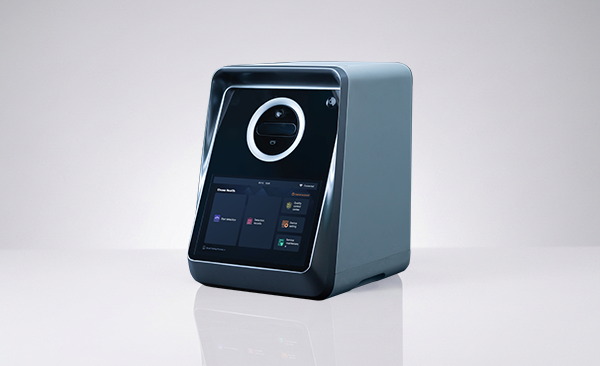
For small clinics that mainly need routine CBC testing, EHBT-25 for routine CBC workflows fits a compact and simplified operating model. Its overall design is aligned with frontline settings where CBC needs to be integrated into daily consultations without introducing unnecessary operational complexity.
Compact Design for Limited-Space Settings
EHBT-25 is designed as a compact analyzer for healthcare environments where bench space is limited. The brochure lists dimensions of 293 mm x 357 mm x 400 mm and a weight of 8.1 kg, which makes it easier to place in small consultation rooms, treatment areas, or other decentralized care settings where equipment footprint matters.
In community clinics, this compact form factor is relevant because routine blood testing often needs to happen close to the point of care. The ability to deploy an analyzer in a restrained space can determine whether CBC testing is feasible at the frontline rather than being deferred to a central laboratory.
Routine CBC Support with Simplified Operation
For day-to-day use, EHBT-25 supports 3-diff CBM(Complete Blood Morphology ) and works with capillary and venous whole blood, using a 40 μL sample volume. This makes it suitable for routine CBC-related work in smaller clinics that need straightforward blood testing without moving into broader multi-assay workflows.
The analyzer uses a four-step operation process and provides throughput of 8 samples per hour. In primary care, this kind of simplified workflow can help fit testing into repeated daily consultations while keeping staff workload manageable.
Cell Morphology and Low-Maintenance Workflow
EHBT-25 uses cell morphology imaging technology to provide visual information on cell size, shape, and structure, adding morphology-related context to routine CBC results.
Its maintenance approach is also relevant to smaller facilities. EHBT-25 uses individual test kits, no-fluid-path architecture, and room-temperature storage, which together support a lower-maintenance workflow that is easier to manage in routine clinic operations.
Connectivity and Frontline Usability
From an implementation perspective, EHBT-25 includes USB 2.0 and LAN RJ45 communication, along with a 10.1-inch touch screen. These features support everyday usability in smaller care environments where staff often need a compact analyzer that is easy to operate and simple to integrate into existing clinical routines.
For clinics that primarily focus on routine CBC in limited-space scenarios, EHBT-25 represents an option that combines morphology information, compact design, and relatively straightforward operation in one analyzer.
EHBT-50 for Clinics Looking to Expand Testing Beyond CBC
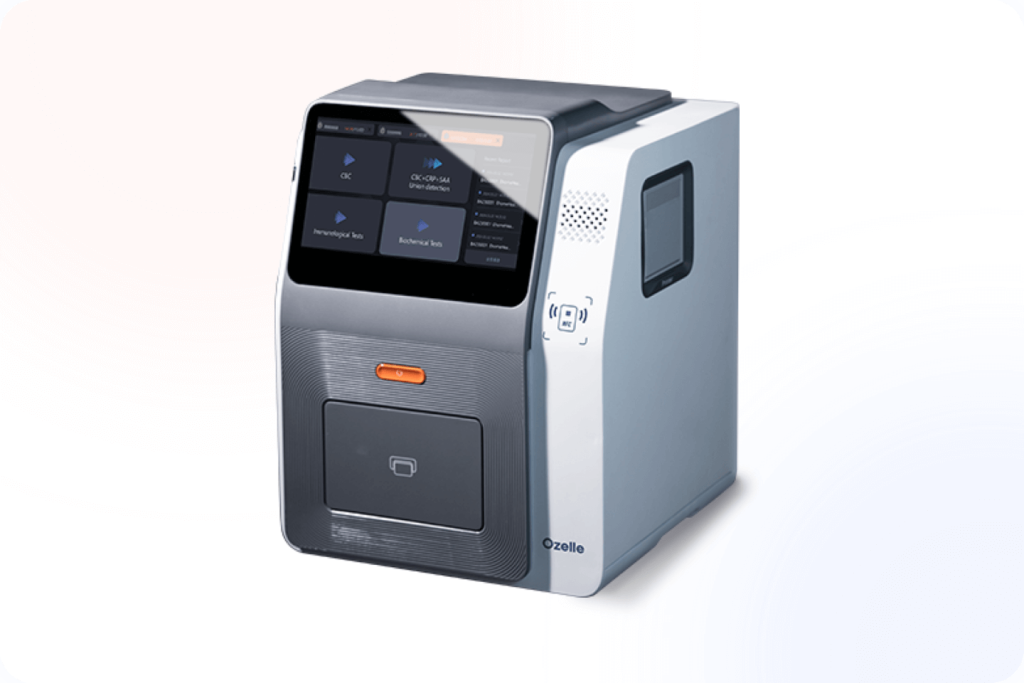
For clinics looking to expand testing functions beyond complete blood count (CBC), EHBT-50 for broader clinic testing needs offers a broader application path. Its design is more suited to institutions that want to start from hematology and gradually extend into a wider testing structure based on evolving service needs.
Broader Analyzer Structure for Growing Testing Needs
EHBT-50 is described as a multi-functional analyzer that supports triple-panel combined testing across 7-part differential hematology, immunoassay, and biochemistry. Users can configure single, dual, or triple test combinations in one batch, which provides flexibility for clinics trying to broaden their service range over time.
This broader analyzer structure matters in growing clinics and small hospitals because testing demand rarely stays fixed. A more flexible configuration can support step-by-step service expansion without requiring a separate dedicated instrument for each new assay category.
Expanded Hematology Information in Decentralized Care
On the hematology side, EHBT-50 supports AI-powered 7-diff analysis together with complete blood morphology. The brochure states that it can identify multi-classified blood cells including neutrophil-related subsets, atypical lymphocyte-related indicators, platelet aggregate-related indicators, and reticulocytes, such as NST, NSG, NSH, ALY, PAg, and RET, which broadens the level of hematology information available compared with more basic routine CBC workflows.
For decentralized diagnostic settings, this means the analyzer is not limited to routine count reporting alone. It is positioned to provide a more detailed view of blood cell patterns for facilities that need broader diagnostic support while remaining outside the structure of a large central laboratory.
Flexible Sample and Panel Configuration
EHBT-50 is compatible with capillary and venous whole blood as well as serum and plasma, with a sample volume range of 30-100 uL. This wider sample compatibility supports different testing combinations in clinics that are handling more varied diagnostic tasks.
Its customizable panels are another key feature. The materials describe a design that allows users to choose panels based on actual testing needs, helping institutions avoid fixed testing structures and align analyzer use more closely with practical clinical demand.
Automated Workflow and Maintenance Advantages
In addition to broader testing menus, EHBT-50 is designed around workflow integration. The brochure highlights a fully automated process, intuitive operation, and maintenance-free single-use integrated consumables that are intended to reduce manual handling and cross-contamination risk in routine use.
For clinics expanding beyond standard CBC, this type of workflow design can be important because operational complexity tends to increase as more testing functions are added. A compact analyzer with automated processing and simplified consumable management may support that transition more smoothly.
From an overall perspective, EHBT-50 sits closer to the needs of institutions that want CBC to act as an entry point into a more connected testing model rather than a standalone procedure.
How to Choose the Right Hematology Analyzer CBC Machine for a Clinic
Choosing the right hematology analyzer CBC machine for a clinic is usually a matter of workflow fit rather than headline specifications alone. A smaller primary care site may need a compact analyzer that supports repeatable routine CBC testing, while a growing clinic may place more value on menu flexibility and broader diagnostic integration.

| الطراز | Typical clinic need | Hematology capability | Sample support | Workflow focus |
| EHBT-25 | Routine CBC in compact primary care settings | 3-diff CBM | Capillary and venous whole blood, 40 uL | 4-step operation, compact footprint, maintenance-free design |
| EHBT-50 | Broader testing needs in growing clinics | AI-powered 7-diff CBM | Capillary/venous whole blood, serum, plasma, 30-100 uL | Flexible panel combinations, automated workflow, maintenance-free consumables |
If the clinic’s priority is to complete routine CBC testing within a compact and repeatable frontline workflow, EHBT-25 aligns with that operating model. If the clinic is expanding its testing pathway and needs an analyzer that can connect hematology with additional assays, EHBT-50 offers a broader structure for that direction.
Integrating CBC into Primary Care Workflows
For community clinics, the more practical question is not how to add more system complexity, but how to make CBC testing work more naturally within everyday care. In real-world settings, that usually means choosing a hematology analyzer cbc machine that matches the clinic’s workflow, staffing pattern, and testing scope.
Within that framework, EHBT-25 and EHBT-50 reflect two different application paths for frontline care. Clinics can start by identifying whether their needs are limited to routine CBC testing or require a more comprehensive diagnostic workflow that integrates hematology, immunoassay, and biochemistry testing. Evaluating these requirements can help guide equipment selection and laboratory planning.
For more information about available analyzer options, explore Ozelle’s diagnostic solutions.