
 English
  Français
  Русский
  Español
  Deutsch
  Português
  العربية
  Italiano
If you run a veterinary clinic and you’re still sending routine blood work to an external lab, you are paying twice — once in money, and once in time. A veterinary CBC machine brings complete blood count analysis in-house, returning results in minutes instead of hours. But not all analyzers are priced the same, built the same, or appropriate for the same clinical setting. This guide breaks down what each tier actually costs, which technology suits which scenario, and how to make a defensible purchasing decision in 2026.
Why In-House CBC Matters Now
The average external laboratory turnaround for a routine CBC is 4–6 hours. For a same-day sick visit, that delay either forces the veterinarian to treat empirically — increasing risk — or sends the pet owner home with no answers and a follow-up appointment that may never happen. Neither outcome is good medicine or good business.
Modern in-clinic analyzers deliver results within 5–10 minutes, enabling same-visit treatment decisions, faster patient throughput, and a tangible improvement in client experience. The question for clinic managers in 2026 is no longer whether to invest in a CBC machine, but which tier of machine matches your caseload, your staff, and your budget.
The Three Clinic Scenarios — and What Each One Needs
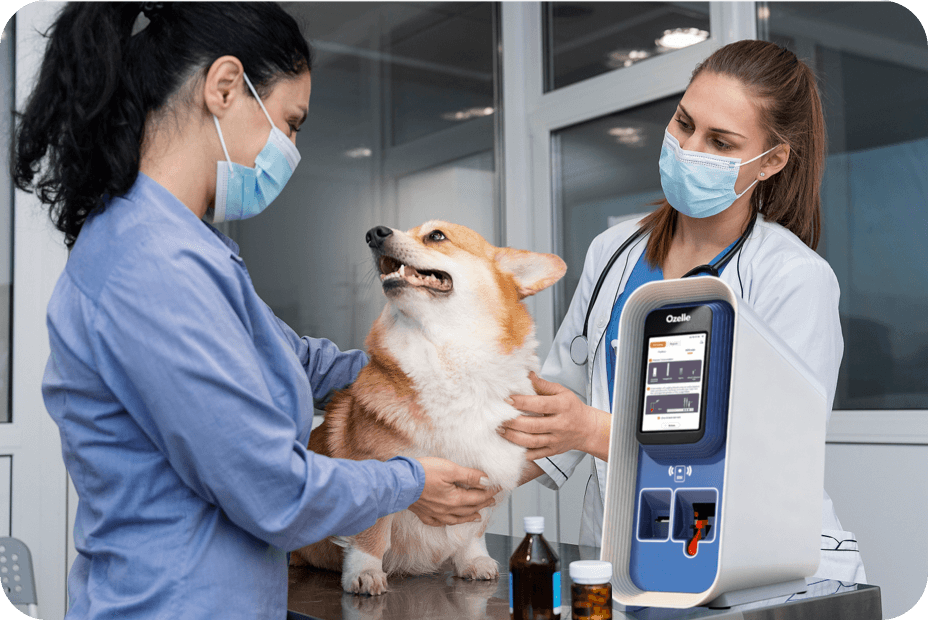
Every purchasing decision starts with an honest assessment of your clinical reality. The table below maps the three most common veterinary practice types to their diagnostic needs and the right analyzer category.
| Clinic Type | Daily CBC Volume | Priority | Recommended Analyzer Tier |
| Startup / single-doctor clinic | 3–10 CBCs/day | Simplicity, low maintenance, essential accuracy | Entry-level 3- or 5-part impedance |
| Established small animal hospital | 10–40 CBCs/day | CBC + urine + fecal + CRP in one workflow | Mid-range AI multi-modal (e.g., Ozelle EHVT-50) |
| Emergency / referral centre | 40–100+ CBCs/day | Maximum throughput, rapid triage | High-throughput laser flow cytometry (e.g., IDEXX ProCyte Dx) |
Scenario A — The Startup Clinic: A single veterinarian seeing 15–20 appointments per day does not need a system that generates 42 hematology parameters per test. An entry-level 3-part impedance analyzer provides WBC, RBC, and platelet counts reliably at a low acquisition cost. The trade-off is limited morphological detail and the need for manual smear follow-up on flagged results.
Scenario B — The Growing Small Animal Hospital: This is where most purchasing decisions in 2026 are concentrated. Clinics in this range handle a meaningful volume of GI cases (vomiting, diarrhea), urinary disease, infection workups, and pre-surgical screens. Sending urine sediment, fecal parasite detection, and CRP to an external lab on top of CBC costs is operationally inefficient and delays same-day clinical decisions. A multi-functional AI analyzer becomes economically justified and clinically superior.
Scenario C — The Emergency and Referral Centre: Speed and volume are the dominant requirements. A high-throughput system processing 30–60 samples per hour with a 2-minute result time is the standard of care here. The Ozelle EHVT-50, with 8 samples per hour, is not designed for this tier and should not be positioned for it. High-throughput environments need dedicated laser flow cytometry platforms.
Technology Comparison: What You’re Actually Paying For

The price of a veterinary CBC machine reflects its underlying technology. Understanding the difference helps avoid overpaying for features you won’t use — or underpaying for a system that can’t handle your caseload.
| Technology | How It Works | WBC Differential | Morphology Detail | Typical Use Case |
| Electrical impedance | Cell size changes resistance in an electrical field | 3-part | Low — histogram only | Basic counting, entry-level clinics |
| Laser flow cytometry | Laser scatter + fluorescence identifies cell populations | 5-part | Medium — population-based | High-volume clinics and labs |
| AI digital cell morphology | High-res images + neural network classification | 7-part | High — actual cell images | Small/mid clinics needing deep diagnostics |
The key distinction for Scenario B clinics is that AI digital morphology (the approach used in Ozelle’s EHVT-50) does not just count and size cells — it captures real images of each cell and classifies them using deep learning models trained on over 40 million patient samples. This means the system can identify immature neutrophil subforms (NST, NSG, NSH), abnormal red cell morphologies, and unusual platelet directly from images, rather than inferring them from histogram patterns that can be misleading in veterinary species.
Veterinary CBC Machine Price Ranges in 2026
Pricing varies widely based on technology tier, brand, service contract terms, and regional market. The figures below reflect general market ranges — always request a formal quote for your specific configuration.
| Tier | Technology | Estimated Acquisition Cost | Cost Per Test (Consumables) | Throughput |
| Entry-level impedance | 3–5 part impedance | $3,000 – $8,000 | $2 – $5 | 10–20 samples/hr |
| Mid-range laser/optical | 5-part laser flow | $12,000 – $25,000 | $4 – $8 | 20–40 samples/hr |
| AI multi-modal (e.g., EHVT-50) | 7-part AI morphology + urine + fecal + immunoassay | $15,000 – $30,000 | $6 – $12 (multi-modal) | 6–8 samples/hr |
| High-throughput reference-grade | Laser cytometry (e.g., IDEXX ProCyte Dx) | $25,000 – $50,000+ | $8 – $15 | 30–60+ samples/hr |
Total Cost of Ownership (TCO) matters more than sticker price. A $6,000 impedance analyzer that requires $180/month in external lab fees for urine, fecal, and CRP tests costs more over 3 years than a multi-modal system that eliminates those referrals entirely. For a clinic running 15 CBC + urine + fecal + CRP workups per day, the math shifts significantly in favor of consolidation.
What the Ozelle EHVT-50 Actually Is
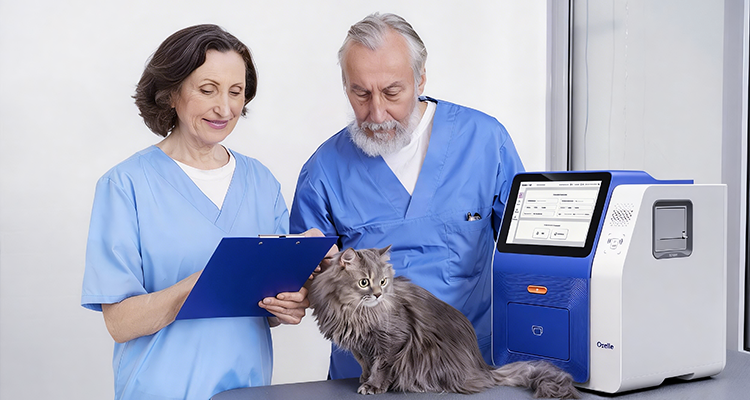
The Ozelle EHVT-50 Multi-Functional Analyzer for Vet is a compact, maintenance-free AI diagnostic system designed for small to mid-size veterinary clinics. It is important to understand its positioning accurately before making a purchasing decision.
What it is:
- A 7-part CBC analyzer reporting 42 hematology parameters, including advanced neutrophil maturation markers (NST, NSG, NSH), reticulocytes (RET), and comprehensive platelet indices
- A urine formed element analyzer with 29 parameters, covering casts, crystals, RBC, WBC, epithelial subtypes, bacteria, yeast, and fungi — all AI-identified from actual images
- A fecal parasite detection system recognizing hookworm, tapeworm, Giardia, Coccidia, and other common pathogens
- An immunoassay platform for inflammation markers (cCRP, fSAA), pancreatitis markers (cPL, fPL), kidney markers (SDMA, Cys-C), and infectious disease panels
- A maintenance-free system using single-use wet-staining kits and a pipeline-free design that requires no daily flushing or reagent calibration
What it is not:
- It is not a high-throughput system. At 8 samples per hour, it is designed for clinics processing up to approximately 40–50 CBCs per day in routine workflows. Emergency centres or referral labs processing 50–100+ samples per day require a different platform
- It is not a replacement for specialist pathology review in complex or rare hematological disorders — though AI-generated cell images in every report support pathologist review when needed
For practices that match Scenario B, the EHVT-50 consolidates what would otherwise require 3–4 separate devices into a single benchtop footprint, reducing capital expenditure, bench space, and technician time simultaneously.
CBC Parameters: What the Numbers Mean for Clinical Decisions

A 7-part CBC machine reports significantly more than basic counting. The table below shows the clinical utility of key parameter groups.
| Parameter Group | Key Markers | Clinical Decisions Enabled |
| WBC Differential | NEU, LYM, MON, EOS, BAS | Distinguish bacterial vs. viral infection; flag immune suppression |
| Neutrophil Maturation | NST, NSG, NSH | Identify left shift, bone marrow stress, sepsis severity |
| RBC Indices | HGB, HCT, MCV, MCH, MCHC, RDW | Classify anemia type (iron-deficient, hemolytic, regenerative) |
| Reticulocytes | RET, RET% | Determine if bone marrow is responding to anemia |
| Platelet Indices | PLT, MPV, PDW, PCT, P-LCR | Assess clotting risk, distinguish consumptive vs. production thrombocytopenia |
| Inflammation | cCRP, fSAA | Quantify systemic inflammation; differentiate infection from stress |
For a small animal hospital, the neutrophil maturation triad (NST/NSG/NSH) is one of the most clinically valuable additions over a standard 5-part differential. It provides an early, objective signal of bone marrow stress that a basic lymphocyte/neutrophil split cannot capture.
Calculating ROI: A Practical Model for a 15-CBC/Day Clinic
Consider a clinic performing the following in-house tests after purchasing an Ozelle EHVT-50:
| Test Type | Frequency (per day) | External Lab Cost Saved | Annual Saving |
| CBC (7-diff) | 15 | $25/test → $375/day | ~$113,000 |
| Urine sediment analysis | 8 | $18/test → $144/day | ~$43,000 |
| Fecal parasite screen | 5 | $15/test → $75/day | ~$22,000 |
| CRP / SAA | 6 | $20/test → $120/day | ~$36,000 |
| Estimated Total Annual Saving | ~$214,000 |
Note: These are illustrative figures using common external lab fee ranges. Actual savings depend on your local lab pricing, consumable costs, and test volumes. Deduct annual consumable costs (estimated $25,000–$40,000 at this volume) to calculate net ROI.
Even with conservative assumptions, a multi-modal AI analyzer at this volume typically reaches payback within 12–18 months. For practices already running in-house CBC but still outsourcing urine, fecal, and CRP, the incremental upgrade cost to a multi-modal platform is often smaller than the annual external lab spend on those ancillary tests.
Species Coverage and Reference Ranges
Modern veterinary CBC machines include built-in species-specific reference ranges. Using human reference ranges on animal blood samples produces systematically misleading results. Confirm the following before purchasing any system:
| Species | Parameters to Verify | Notes |
| Canine | WBC, PLT, HCT, reticulocytes | PLT clumping common; automated PLT count may underestimate |
| Feline | PLT, eosinophils, HCT | Feline platelets are large and prone to in vitro clumping |
| Exotic / Avian | WBC morphology, RBC (nucleated) | Most impedance systems are not calibrated for avian samples |
The EHVT-50 currently supports canine and feline species modes, with additional species expansion planned as the platform’s AI training database grows. For mixed-animal practices with significant avian or exotic caseloads, confirm current species support with Ozelle before purchasing.
Frequently Asked Questions (FAQs)
Q1: How much does a veterinary CBC machine cost in 2026? Entry-level impedance analyzers start around $3,000–$8,000. Mid-range AI multi-modal systems like the Ozelle EHVT-50 fall in the $15,000–$30,000 range depending on configuration and region. High-throughput laser flow cytometry platforms (IDEXX ProCyte Dx) typically cost $25,000–$50,000+. Always factor in consumable costs and service contracts when comparing.
Q2: What is the difference between a 5-part and 7-part CBC differential in veterinary diagnostics? A 5-part differential reports neutrophils, lymphocytes, monocytes, eosinophils, and basophils. A 7-part differential additionally identifies NST (immature band-form neutrophils), NSG (segmented mature neutrophils), and NSH (hypersegmented neutrophils), providing an objective picture of neutrophil maturation and bone marrow stress. This information is particularly valuable in acute bacterial sepsis, early infection detection, and inflammatory disease monitoring.
Q3: Can one machine handle both CBC and urine analysis? Yes — multi-modal analyzers like the Ozelle EHVT-50 integrate CBC, urine formed element imaging, fecal parasite detection, and immunoassays in a single benchtop system. This consolidation eliminates 3–4 separate devices, saves bench space, and reduces per-test labor time significantly.
Q4: What blood sample volume is required? The EHVT-50 requires approximately 55 µL of blood for CBC testing — a small volume that is practical even for kittens, puppies, and critically ill patients where large blood draws are not advisable. Entry-level impedance analyzers may require larger volumes; always confirm with the manufacturer.
Q5: How long does a veterinary in-house CBC take? Most modern analyzers complete a full CBC in 5–10 minutes. The EHVT-50 delivers CBC results in approximately 6 minutes, with urine, fecal, and immunoassay modules adding additional time depending on which tests are ordered in the same run.
Q6: What maintenance does an AI veterinary CBC machine require? The EHVT-50 uses a pipeline-free, single-use wet-staining kit design with no daily liquid flushing, no reagent calibration routines, and dry-type QC cards for quality control. Reagent kits are stored at room temperature. This design is specifically built for clinics without dedicated lab staff and significantly reduces unplanned downtime.
Q7: How do I calculate whether the investment is justified for my clinic? Add up your current monthly external lab spend on CBC, urinalysis, fecal parasite screens, and CRP/SAA testing. Compare that to the estimated annual consumable cost for an in-house multi-modal analyzer at your volume. If your external lab spend exceeds consumable costs plus a reasonable annual amortization of the device, the investment is typically justified within 12–24 months.
Q8: Does AI morphology analysis replace the need for manual blood smear review?
For the majority of routine and monitoring cases, AI image-based analysis significantly reduces the need for manual smear review. The EHVT-50 includes actual cell images in every report, which allows clinicians to visually confirm automated findings. For complex or rare hematological presentations, specialist pathologist review remains the gold standard.
Q9: Where can I get full product specifications and pricing for the Ozelle EHVT-50? Detailed specifications, use cases, and clinic scenario guides are available directly at ozellemed.com/en. You can also explore supporting clinical content on the Ozelle knowledge base for AI-powered veterinary diagnostics.
Making the Final Decision
A veterinary CBC machine is a 5–7 year capital investment. The wrong choice — typically either underpowering a busy clinic or over-specifying for a low-volume practice — creates ongoing operational friction and limits your return on investment. Use the framework below before signing any purchase agreement:
- Count your actual daily CBC volume for the past 3 months — not your estimated volume
- List every test you currently outsource that an in-clinic system could replace
- Calculate your current external lab spend on those tests annually
- Match your volume to the throughput tier — 8 samples/hr for up to ~40 CBCs/day; 30–60+ samples/hr for busier facilities
- Request a demo or pilot from shortlisted vendors to assess real workflow fit
- Compare total 3-year cost (acquisition + consumables + service) against 3-year external lab spend
For clinics in the small-to-mid-size sweet spot, the Ozelle EHVT-50 delivers a combination of diagnostic depth, multi-modal consolidation, and maintenance-free operation that is difficult to match with single-function alternatives at the same price point. For high-volume emergency and referral facilities, throughput requirements point toward a different product category entirely — and choosing the right tool for the right scenario is the most important decision in this entire process.