
 English
  Français
  Русский
  Español
  Deutsch
  Português
  العربية
  Italiano
Introduction: Silent Health Risks and Baseline Blood Testing
Many serious health conditions progress silently in their earliest stages, before patients experience noticeable symptoms. Early infections may smolder undetected for days. Anemia develops gradually without obvious warning signs. Diabetes and prediabetes often exist unrecognized for years. Cardiovascular dysfunction and declining renal function rarely announce themselves until significant damage has occurred.
The key to catching these silent health risks lies in blood testing—specifically, comprehensive blood analysis that goes beyond traditional complete blood count (CBC) metrics. Modern blood test analyzers now integrate CBC panels with biochemistry markers, immunoassay results, and advanced cellular morphology imaging to deliver a complete health snapshot in minutes, not days.
For primary care physicians, pharmacists, and family medicine clinics, this capability is transformative. Point-of-care blood test analyzers now enable rapid, multi-parameter screening in community health centers, family medicine practices, and pharmacy clinics—settings where patient access, cost efficiency, and turnaround time are critical. The integration of point-of-care testing (POCT) with artificial intelligence-powered interpretation has fundamentally changed how early disease detection works at the grassroots level of healthcare delivery.
What Are Blood Test Analyzers: From Traditional to AI Mini Lab

Blood test analyzers are sophisticated laboratory instruments that measure and count blood cells, detect biomarkers, and analyze chemical composition—all from a small sample of blood. The core technology rests on foundational principles that have evolved dramatically over decades.
Traditional CBC Analysis Methods:
The earliest blood counting methods relied on manual microscopy in the 1850s. By the 1950s, impedance counting emerged—a technique in which blood cells passing through an electrical field generate voltage pulses. The number and size of these pulses correspond to cell count and volume. The 1970s introduced flow cytometry, which uses laser light and fluorescent staining to identify and classify individual cells as they flow through a detection chamber.
Each method had limitations. Manual microscopy was labor-intensive and operator-dependent. Early automated systems required extensive maintenance and produced limited data.
Next-Generation Multi-Functional Analyzers:
Modern blood test analyzers have transcended these constraints. Contemporary devices now combine:
- Cell morphology imaging: High-resolution multispectral imaging at oil-immersion quality (Sub-micron resolutio) captures detailed cellular structure
- Artificial intelligence analysis: Deep learning models trained on millions of real clinical samples identify normal versus abnormal cell patterns
- Single-use disposable cartridges: Individual, sealed test cartridges eliminate cross-contamination, maintenance requirements, and cold-chain complexity
- One-button full automation: Sample loading to result generation occurs with minimal user intervention
- Rapid turnaround: Complete multi-parameter analysis in approximately 6 minutes
- Multi-functional capability: A single device performs CBC analysis, biochemistry testing, immunoassay detection, and even urine/fecal analysis
These advances make blood test analyzers practical for primary care environments where space is limited, technical expertise varies, and patient throughput is high.
Why Primary Care Settings Matter: Scenarios and Pain Points
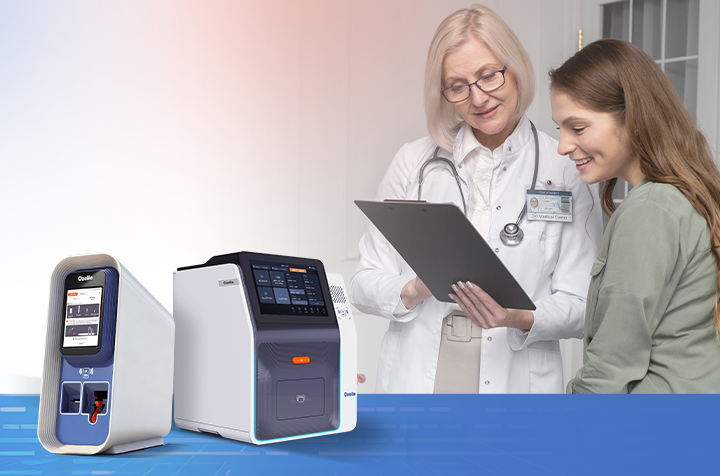
Primary care is the critical gateway to health equity. Family medicine clinics, community health centers, pharmacy-based testing services, and small-town health stations serve as the frontline for millions of patients. Yet traditional laboratory-based testing creates persistent barriers.
The Problem with Traditional Lab Models:
Conventional testing requires patients to provide blood samples at a clinic, then wait—often days—for results to return from an external laboratory. During this wait, patients may not follow up to learn their results. Critical infections go undetected for a week or more. Medication decisions are delayed. High-risk patients slip through the cracks.
Additionally, traditional labs operate under strict infrastructure requirements: expensive cold-chain logistics for specimen transport, rigorous quality control protocols that demand trained technicians, complex maintenance schedules, and high per-test costs that strain community health budgets.
Point-of-Care Blood Test Analyzers Address These Gaps:
When blood test analyzers sit inside the primary care clinic itself, the entire care dynamic shifts:
- Immediate results: Physicians receive data during the patient visit, enabling same-day clinical decisions
- Low operational complexity: Modern analyzers require minimal training, no special cold-chain preparation, and maintenance-free operation
- Multi-dimensional insight: Instead of ordering separate tests that arrive at different times, primary care providers obtain comprehensive data in one sitting
- Cost efficiency: Lower per-test consumable costs and elimination of transport/logistics overhead improve clinic economics
- Patient engagement: Immediate result availability increases patient compliance with follow-up recommendations
Core Capabilities: How Blood Test Analyzers “Capture” Disease Signals
Parameter Dimensions: CBC to Multi-System Integration
Blood test analyzers capture data across multiple physiologic systems simultaneously:
CBC (Complete Blood Count) measures:
- White blood cells (WBC), including differential counts of neutrophils, lymphocytes, monocytes, eosinophils, and basophils
- Red blood cells (RBC), hemoglobin concentration, and indices like mean cell volume (MCV) and mean cell hemoglobin (MCH)
- Platelets (PLT) and platelet volume indices
- Immature cell populations like reticulocytes and band neutrophils
These parameters signal bacterial infections (elevated neutrophils), viral infections (elevated lymphocytes), allergic responses (elevated eosinophils), anemia (low hemoglobin), and bone marrow stress (immature cell populations).
Combined Biochemistry and Immunoassay Panels add:
- Infection markers: CRP (C-reactive protein) and SAA (serum amyloid A) quantify systemic inflammation severity
- Glucose metabolism: HbA1c and glucose reveal diabetes status and control
- Cardiac function: NT-proBNP detects heart failure risk
- Renal function: Creatinine, BUN, and cystatin C assess kidney health
- Hepatic function: ALT, AST, bilirubin, and albumin evaluate liver status
- Thyroid function: TSH and free T3/T4 screen for thyroid disease
When integrated into a single test panel, these parameters create a comprehensive health assessment that catches multi-system disease patterns.
AI + Cellular Morphology: From Numbers to Image Evidence
Modern blood test analyzers incorporate artificial intelligence at a fundamental level. Beyond reporting numeric values, they capture high-resolution images of individual cells using proprietary optical systems and patented Z-stack imaging technology that creates 3D cellular reconstructions.
Deep learning algorithms then analyze thousands of cellular features:
- Nuclear characteristics (segmentation, hypersegmentation, immature morphology)
- Cytoplasmic appearance and granularity
- Red blood cell shape abnormalities (schistocytes, echinocytes, teardrop cells)
- Platelet aggregation patterns
These visual patterns, combined with numeric parameters, generate AI-powered clinical interpretations that translate raw data into actionable physician guidance. Rather than confronting a list of numeric values, clinicians receive structured reports that explain “possible disease mechanisms” and “clinical implications”—for example:
- “Elevated immature neutrophils plus lymphocytopenia indicates a cellular pattern consistent with acute bacterial infection and bone marrow stress; clinical correlation and evaluation for sepsis protocol are recommended.
- “Microcytic anemia pattern with abnormal RBC morphology suggests iron-deficiency anemia; recommend iron metabolism testing and GI bleeding screening.”
- “Elevated NT-proBNP with anemia and mild inflammation suggests heart failure risk; recommend echocardiography and cardiology evaluation.”
One Test, Multiple Panel Combinations
Flexibility in test panel composition allows primary care providers to tailor testing to clinical scenarios:
- Infection workup: CBC + CRP/SAA + PCT rapidly classifies infection type (bacterial vs. viral) and severity
- Diabetes screening: CBC + HbA1c + glucose + lipid panel enables comprehensive metabolic assessment
- Cardiovascular risk: CBC + NT-proBNP + troponin + lipids screen for heart disease and failure
- Pre-medication evaluation: CBC + renal function panel + liver function panel ensure safe drug initiation
- Preventive health: CBC + metabolic panel + lipids serve as annual screening baseline
This modularity means primary care clinics purchase technology that grows with their needs.
Real-World Case Collection: Generic, De-Identified Scenarios

Case One: Asymptomatic High-Risk Infection
Clinical scenario: A middle-aged patient presents to community health clinic with mild fatigue and low-grade fever (38.1°C). Physical examination reveals no focal findings. Without blood testing, this presentation is easily dismissed as a viral syndrome warranting supportive care only.
Blood test analyzer results: CBC reveals elevated neutrophils with left shift (elevated band cells/NST), reduced lymphocytes, and elevated monocytes. CRP and SAA are markedly elevated. The CBC differential morphology shows immature granulocytes consistent with bone marrow stress response.
Clinical action: The AI report identifies “high-probability morphological markers for bacterial infection (Left Shift). Findings support clinical suspicion of systemic infection; correlate with patient symptoms for antimicrobial stewardship. The primary care physician, armed with objective data, initiates appropriate antibiotic therapy and schedules 48-hour follow-up. This early intervention prevents progression to pneumonia or bacteremia.
Case Two: Hidden Anemia in Routine Screening
Clinical scenario: A 28-year-old office worker undergoes routine health screening at a pharmacy clinic. Chief complaint: “I’ve been tired lately.” Physical examination is unremarkable. Traditional screening might detect only mild anemia without determining cause.
Blood test analyzer results: CBC shows hemoglobin 11.2 g/dL (low), MCV 68 fL (microcytic), MCH 22 pg (low), and RDW elevated. Peripheral blood morphology imaging reveals hypochromic microcytic RBCs with occasional target cells—the visual signature of iron-deficiency anemia.
Clinical action: The AI report recommends “iron-deficiency anemia; assess for GI blood loss or heavy menstrual bleeding.” The pharmacist or primary care provider initiates iron supplementation, obtains dietary history, and—depending on risk factors—refers for colonoscopy or gynecology evaluation. Early detection prevents progression to severe anemia and enables identification of underlying bleeding source.
Case Three: Asymptomatic Prediabetes in Family Medicine
Clinical scenario: A 45-year-old with BMI 32 kg/m² and family history of diabetes presents for annual wellness visit. She reports no polyuria, polydipsia, or weight changes. Fasting glucose alone might miss prediabetes; HbA1c trends are invaluable.
Blood test analyzer results: CBC shows no abnormalities. HbA1c measures 5.8% (prediabetic range). Fasting glucose is 108 mg/dL. Lipid panel shows elevated triglycerides and low HDL.
Clinical action: Results are available during the clinic visit. The family medicine physician counsels on lifestyle modification (diet, exercise, weight loss), schedules repeat HbA1c testing in 3 months, and enrolls the patient in a community health program. This immediate feedback dramatically improves patient motivation and engagement compared to results arriving days later via mail.
Case Four: Occult Heart Failure Risk in Community Follow-Up
Clinical scenario: A 72-year-old with hypertension and prior myocardial infarction reports dyspnea with exertion and reduced exercise tolerance over recent weeks. He attributes this to aging and reduced activity. His primary care provider suspects possible heart failure but needs objective data.
Blood test analyzer results: CBC shows mild chronic anemia (Hgb 11.9 g/dL) with normal morphology. NT-proBNP is 900450 pg/mL (elevated). CBC differential shows elevated monocyte percentage—suggestive of chronic inflammation.
Clinical action: The AI interpretation highlights “elevated NT-proBNP with mild anemia suggests heart failure risk. Recommend echocardiography and cardiology consultation.” The primary care physician, empowered by objective biomarker data, convinces the patient of the urgency, facilitates rapid cardiology referral, and adjusts medications. Timely intervention stabilizes cardiac function before acute decompensation occurs.
Case Five: Incidental Renal Dysfunction Detected Pre-Medication
Clinical scenario: A 58-year-old with newly diagnosed hypertension requires pharmacotherapy. Before initiating an ACE inhibitor, the primary care physician orders baseline labs to check renal function—standard practice that often occurs days after the office visit.
Blood test analyzer results: Creatinine is 1.4 mg/dL (elevated), BUN is 28 mg/dL (elevated), and eGFR estimates 45 mL/min/1.73m² (Stage 3 chronic kidney disease). CBC and electrolytes are otherwise normal.
Clinical action: The AI report flags: “Detected abnormal renal function indicators; eGFR < 60 suggests potential Stage 3 CKD or acute renal impairment. Caution: Re-evaluate ACE inhibitor dosage.” The physician, receiving these results instantly, avoids prescribing a full-dose medication that could have led to drug accumulation or acute kidney injury. Instead, the physician initiates a workup for the cause of renal decline and schedules a follow-up test to confirm if the condition is chronic. This incidental discovery allows for early lifestyle and medical interventions to preserve remaining kidney function.
How AI Reports Support Decision-Making—Not Replace Physicians
A critical principle: blood test analyzers and AI interpretation augment physician judgment; they do not replace clinical decision-making.
The Role of AI-Powered Reports:
Modern blood test analyzers generate structured interpretations that translate raw numeric data into clinical frameworks. Rather than forcing physicians to mentally integrate 30+ parameters, AI reports organize findings into “probable diagnoses,” “risk stratification,” and “recommended actions.” For example:
- Risk levels (low, moderate, high)
- Disease probability rankings
- Suggested follow-up investigations
- Contraindications or safety concerns
This organization dramatically reduces cognitive load and decreases the likelihood of missed diagnoses—especially in resource-limited primary care settings where clinician experience is heterogeneous.
Physician Remains the Final Authority:
Critically, physicians retain final decision-making authority. They integrate blood test results with clinical history, physical examination findings, and patient values. A high NT-proBNP might warrant cardiology referral in one patient but reassurance and conservative management in another, depending on clinical context. An AI-generated suggestion is exactly that—a suggestion, not a directive.
This collaborative human-AI framework optimizes both efficiency and safety.
Key Considerations for Primary Care Deployment
Successfully implementing blood test analyzers in community health settings requires attention to multiple domains:
Device Specifications:
- Truly maintenance-free operation with no routine calibration or cleaning protocols
- Single-use, sealed disposable cartridges preventing cross-contamination
- Room-temperature specimen storage and transport (no cold chain requirement)
- Multi-functional capability (hematology, biochemistry, immunoassay, urine analysis)
- CE, ISO 13485, and relevant national regulatory certifications
Workflow Integration:
- Seamless data transfer to existing HIS/LIS systems
- Secure cloud connectivity for telemedicine consultation and remote supervision
- Simple process mapping: specimen collection point, analyzer location, result delivery method
- Training protocols that require minimal specialized laboratory background
Operational Sustainability:
- Straightforward quality control procedures with transparent result validity rules
- Clear consumables management and reorder systems
- Transparent cost accounting (cost per test, annual consumables budget)
- Service support and troubleshooting protocols
Future Vision: From Device to Community Health Platform
The ultimate vision extends beyond individual devices to an integrated ecosystem. When thousands of primary care blood test analyzers connect via secure IoT platforms, they generate unprecedented regional health data. This data enables:
- Chronic disease registries: Population-level tracking of diabetes, hypertension, and chronic kidney disease prevalence and control
- Infection surveillance: Real-time detection of emerging pathogens and infection outbreaks
- Health equity research: Identification of disparities in disease screening and outcomes across geographic regions
- Continuous AI improvement: Each additional test result trains updated machine learning models, progressively improving diagnostic accuracy
- Integrated care management: Seamless referral pathways from primary care to specialists based on test results
As large language models and multimodal AI advance, future blood test analyzer reports will provide increasingly personalized clinical guidance adapted to individual patient complexity, comorbidity patterns, and treatment preferences.
Conclusion
Blood test analyzers represent a fundamental shift in primary care diagnostics. By combining rapid, multi-parameter analysis with AI-powered clinical interpretation, these instruments democratize access to sophisticated laboratory medicine. Silent health risks—early infections, metabolic disease, cardiac dysfunction, renal impairment—are no longer silent when comprehensive blood analysis occurs at the point of care.
For family medicine providers, community health centers, and pharmacy clinics, modern blood test analyzers transform the landscape of preventive and acute care. The result: earlier disease detection, improved medication safety, and better health outcomes at the community level.
Discover how AI-powered blood test analyzers can enhance your primary care practice. Visit https://ozellemed.com/en/ to explore integrated diagnostic solutions designed for modern healthcare delivery.