
 English
  Français
  Русский
  Español
  Deutsch
  Português
  العربية
  Italiano
As a private diagnostic lab grows, adding new collection sites and client hospitals, the central challenge becomes clear: how do you scale testing without turning your laboratory analyzer fleet into a patchwork of incompatible machines? Choosing the right mix of AI‑powered laboratory analyzers for complete blood count (CBC) and related tests can determine whether your lab stays efficient and profitable—or ends up juggling maintenance schedules and inconsistent results.
AI CBC platforms from the Ozelle official website are designed specifically to help labs build scalable analyzer line‑ups, combining entry‑level, multi‑functional, and high‑throughput hematology systems that share the same core technology.
What a Modern Laboratory Analyzer Really Does Today
The term “laboratory analyzer” used to mean a standalone instrument that counted cells or ran chemistry panels in isolation. Today, particularly in hematology, a modern laboratory analyzer is an integrated AI platform that converts a small blood sample into a complete CBC with morphology images, derived ratios, and sometimes additional biomarkers in just a few minutes.
According to Ozelle’s hematology content, an AI laboratory analyzer typically:
- Automates measurement of CBC parameters: WBC, 5‑ or 7‑part differential, RBC indices, hemoglobin, hematocrit, and platelet metrics.
- Uses complete blood morphology (CBM) with high‑resolution imaging and deep learning to classify cells and detect abnormalities.
- Generates a structured report with numbers, graphs, flags, and AI‑assisted clinical hints within about 6 minutes per sample.
This means the analyzer is no longer just a counter; it is a diagnostic engine that pushes clinically relevant insights right to the LIS or clinician’s screen.
Why Growing Labs Need a Laboratory Analyzer Line‑Up, Not a Single Machine
In early stages, a lab can often survive with a single CBC analyzer. But as you add locations, serve multiple hospitals, or expand operating hours, relying on just one laboratory analyzer introduces serious risks.
Key reasons to design a line‑up rather than buy one “big box” include:
- Workload stratification – Not all sites need the same depth; satellite collection centers may only need basic CBC, while the core lab handles complex morphology and integrated panels.
- Redundancy and uptime – Having multiple analyzers across tiers ensures that maintenance or unexpected downtime does not stop the entire CBC workflow.
- Cost optimization – Entry‑level AI analyzers can handle high‑volume routine CBC at lower per‑test cost, while more advanced analyzers are reserved for cases that truly need deeper insight.
- Future‑proofing – A modular AI platform lets you add new functions (e.g., additional biomarkers, panel types) without replacing the whole fleet.
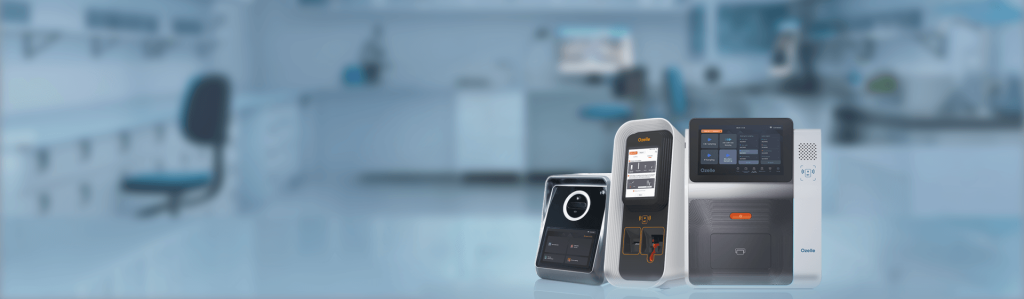
Ozelle’s CBC analyzer machine guide illustrates this with a three‑tier EHBT line‑up: EHBT‑25, EHBT‑50, and EHBT‑75, each aimed at specific lab roles.
The EHBT Series: Three Laboratory Analyzers for Different Roles
On Ozelle’s human diagnostics page, the EHBT series is presented as a portfolio of AI‑powered hematology and multi‑functional analyzers designed for diverse laboratory settings. For a growing lab, understanding how each model fits is crucial.
EHBT‑25: Entry-Level Morphology Analyzer
EHBT‑25 is described as a compact, 3‑diff cell morphology analyzer optimized for primary care, community clinics, and small labs.
- Uses AI‑driven CBM with digital microscopy to deliver 21 core CBC parameters from just 40 µL of fingertip or venous blood.
- Offers maintenance‑free operation with individual test kits and room‑temperature storage, simplifying logistics for satellite sites.
- Throughput is around 8–10 samples per hour, ideal for moderate daily volumes.
EHBT‑50: Multi‑Functional Mini Lab Analyzer
EHBT‑50 is positioned as a multi‑functional AI CBC mini lab, integrating hematology, immunoassay, and dry biochemistry in a single unit.
- Provides 7‑diff hematology with roughly 37 parameters, including NST, NSG, NSH, and reticulocytes (RET).
- Adds immunoassay for markers like CRP, SAA, HbA1c, thyroid hormones, cardiac markers, and more.
- Adds dry chemistry for GLU, lipid profile, liver and kidney function, and other biochemical tests.
This makes the EHBT‑50 an ideal “middle tier” laboratory analyzer for core labs that want an all‑in‑one mini lab for outpatient clusters or specialty clinics.
EHBT‑75: Professional 7‑Diff Auto Hematology Analyzer
EHBT‑75 sits at the top of the AI laboratory analyzer line‑up as a professional 7‑diff auto hematology analyzer with deep morphology.
- Delivers 37 parameters, including WBC subsets (NEU, NST, NSG, NSH, LYM, MON, EOS, BAS, ALY), RBC indices, RET, and advanced platelet metrics.
- Uses AI + CBM to produce high‑resolution cell images and detailed morphological classification for complex hematology cases.finance.
- Designed for core labs, specialist hospitals, and diagnostic centers that require deep diagnostic insight and higher throughput.
Together, these three models illustrate how a laboratory analyzer line‑up can cover everything from routine CBC screening to highly specialized morphology and integrated panels.
Example: Designing a Laboratory Analyzer Line‑Up for a Growing Diagnostic Center
Ozelle’s guide on building an AI CBC line‑up describes how a private diagnostic center can configure these analyzers across its network.
A practical arrangement might look like this:
- Satellite collection sites and small partner clinics
- Deploy EHBT‑25 units to provide on‑site CBCs, reducing sample transport time and giving clinicians rapid results.
- Mid‑size regional hubs
- Use EHBT‑50 as a multi‑functional mini lab to handle CBC + biomarkers + basic biochemistry for outpatient and day‑case workflows.
- Central reference lab
- Install EHBT‑75 systems as the primary hematology analyzers, reserved for high‑volume throughput, complex morphology, and specialist cases sent from all sites.
Because these analyzers share an AI CBM core and similar cartridge/logistics ecosystem, the lab can standardize training, QC procedures, and data interpretation across the network.
Labs that want to explore this modular approach can review Ozelle’s hematology analyzer & CBC machine portfolio, which summarises the EHBT models and their main clinical scenarios.
Table: Example Role Mapping for EHBT Laboratory Analyzers
| Analyzer | Role in Lab Network | Key Strengths | Ideal Settings |
| EHBT‑25 | Entry CBC & morphology | 3‑diff CBC, AI morphology, 40 µL sample, maintenance‑free | Community labs, satellite centers, mobile units |
| EHBT‑50 | Multi‑functional mini lab | 7‑diff hematology + immunoassay + biochemistry, flexible panels | Regional hubs, outpatient centers, day hospitals |
| EHBT‑75 | Professional hematology core | 7‑diff hematology, 37 parameters, deep morphology, higher throughput | Central labs, specialist hospitals, high‑volume labs |
This structured approach lets lab managers align each laboratory analyzer with the right workload and complexity level.
Workflow and Integration: Making Laboratory Analyzers Work as a System
A modern laboratory analyzer has to fit into LIS, HIS, and sometimes cloud‑based dashboards, not just sit on a bench. Ozelle’s CBC machine usage guides emphasize streamlined setup and connectivity:
- Connectivity options – USB, LAN, Wi‑Fi, and sometimes Bluetooth; analyzers can integrate into LIS for automatic order/result transfer.
- Automated self‑checks and QC – start‑up self‑tests and dry‑type QC cards help maintain calibration without extensive manual maintenance.
- Single‑use test kits – pre‑calibrated cartridges combine counting chambers, reagents, and waste handling, eliminating liquid‑waste plumbing and simplifying supplies.
For labs planning supplies and logistics, Ozelle’s laboratory and analytical supplies guide explains how to forecast cartridge, QC card, and reagent usage across multiple AI mini labs.
Clinical Value: From Morphology to Interpreted Insights
The real value of an AI laboratory analyzer comes from turning raw numbers into clinically meaningful patterns.
Ozelle describes how AI + CBM enables:
- Enhanced abnormal cell detection – accurate recognition of immature granulocytes, abnormal lymphocytes, and RBC shape abnormalities that can signal serious pathology.finance.
- Scenario‑ready panels – pre‑built combinations like CBC + CRP + SAA for infection profiling, or CBC + HbA1c for diabetes follow‑up, all run in one go.
- AI workbench for interpretation – some analyzers incorporate an “AI workbench” that highlights risks, suggests possible clinical implications, and supports trend analysis on follow‑up samples.
This helps laboratories not only produce accurate numbers, but also deliver reports that clinicians can interpret quickly, improving perceived value and clinical impact.
FAQs: Laboratory Analyzer for Growing Diagnostic Labs
Q1. What is a laboratory analyzer in modern hematology?
A modern hematology laboratory analyzer is an AI‑powered CBC system that automates cell counting, differential, RBC indices, and platelet metrics, often with complete blood morphology imaging and integrated biomarkers.
Q2. Why should a growing lab invest in a line‑up instead of a single analyzer?
A line‑up lets you match analyzer complexity to site needs, improve redundancy, reduce per‑test costs, and scale without constantly replacing equipment, especially when all analyzers share the same AI platform.
Q3. How fast do AI laboratory analyzers deliver results?
Most Ozelle CBC analyzers complete a full AI CBC morphology report in about 6 minutes per sample, with throughput around 8–10 samples per hour for point‑of‑care models and higher for core lab units.
Q4. What is the difference between EHBT‑25, EHBT‑50, and EHBT‑75?
EHBT‑25 is an entry‑level AI morphology analyzer for basic CBC; EHBT‑50 is a multi‑functional mini lab adding immunoassay and biochemistry; EHBT‑75 is a professional 7‑diff hematology analyzer for deep morphology and high‑volume labs.
Q5. Where can I see all laboratory analyzers in the same place?
You can review the full EHBT series and related CBC systems on Ozelle’s hematology product hub, which outlines each analyzer’s parameters, sample volume, and clinical scenarios.
Building a Future‑Ready Laboratory Analyzer Strategy
For a growing diagnostic lab, the question is no longer “Which single analyzer should we buy?” but “How do we design a laboratory analyzer line‑up that grows with us?” By combining entry‑level morphology devices, multi‑functional mini labs, and professional 7‑diff analyzers on one AI CBM platform, you can align throughput, diagnostic depth, and cost across your entire network.
If you are evaluating your next wave of hematology investments, exploring the Ozelle AI‑powered hematology platform is a practical way to compare laboratory analyzers side by side and map them to your current and future workloads.