
 English
  Français
  Русский
  Español
  Deutsch
  Português
  العربية
  Italiano
Complete blood count testing suppots many routine decisions in internal medicine, emergency care, oncology, and primary care. When hospitals and clinics plan to buy cbc machine, they are not only purchasing an analyzer but also shaping how blood test data will flow through clinical workflows for years. Alongside traditional impedance- and flow-based hematology systems, image-based morphology, AI-assisted review, and integrated diagnostic platforms are becoming increasingly important considerations for procurement teams.

Technical fundamentals for buy cbc machine
A CBC analyzer typically reports white blood cell, red blood cell, and platelet counts, along with indices such as hemoglobin, hematocrit, mean corpuscular volume, and red cell distribution width. Many entry-level instruments rely on a 3-part differential of leukocytes, while more advanced platforms support a 7-part differential that separates neutrophils, lymphocytes, monocytes, eosinophils, basophils, and additional subpopulations. In parallel, cell morphology imaging technology has emerged, capturing high-resolution images of cells to characterize size, shape, and structural details.
When combined with AI algorithms, this image-based approach improves the recognition of abnormal cells and provides a richer context than purely numerical outputs. For institutions planning to buy a cbc machine, this means that the choice is no longer only about 3-part versus 7-part differential. Decision-makers must consider whether image-based morphology, AI-supported classification, and visual reporting are required to support their clinicians’ diagnostic practices. This evaluation often depends on the types of patients served, the role of the laboratory within the care network, and how results will be integrated into broader diagnostic pathways.
Matching analyzer types to care settings
Healthcare providers vary widely in scale, patient mix, and laboratory infrastructure, which directly affects how they should buy a cbc machine. Community clinics and outpatient centers often work within tight spatial constraints and rely on compact analyzers that can deliver consistent routine CBC results with minimal maintenance. In these settings, the number of samples per day is moderate, and the focus is on reliability, ease of use, and predictable operating costs rather than on maximum panel breadth.
By contrast, specialized outpatient centers or small hospitals may need CBC results alongside immunoassay and biochemistry tests within the same workflow. For these institutions, flexible panel configuration and support for multiple sample types can be more important than adding another stand-alone CBC instrument. Within this landscape, Ozelle offers three CBC-focused solutions for human use that reflect different configuration models:
- EHBT-25 as a compact morphology-based CBC analyzer.
- EHBT-50 Minilab as a multi-functional analyzer that combines CBC with immunoassay and biochemistry.
- EHBT-75 as a dedicated AI cell morphology CBC system.
They address different operational priorities rather than forming a linear progression from basic to advanced.
EHBT-25: Compact morphology-based CBC for primary care
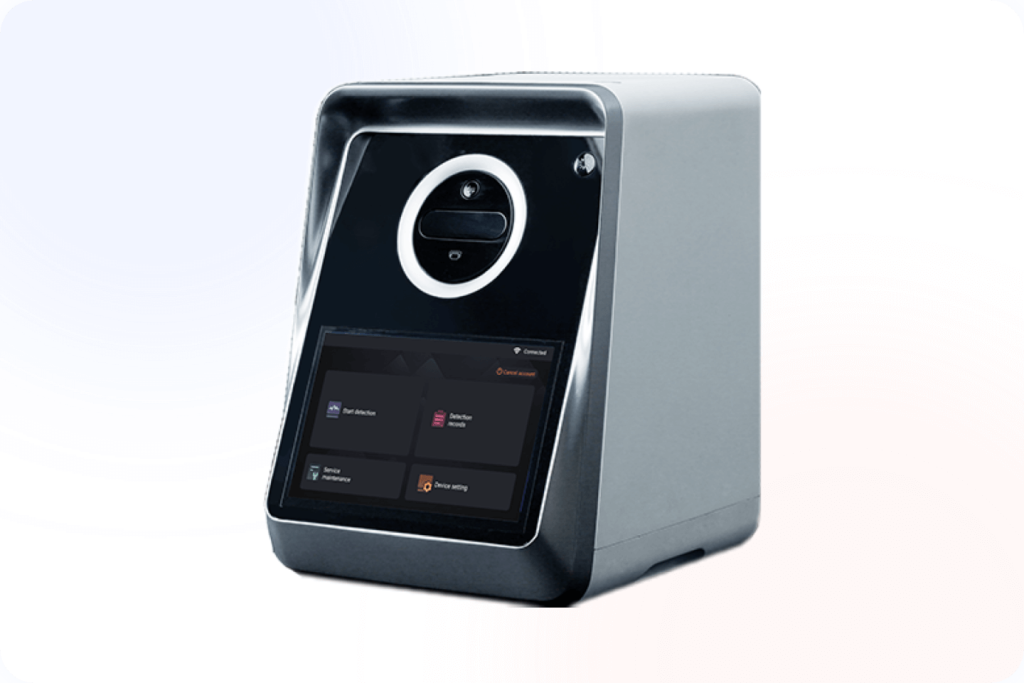
The EHBT-25 represents a compact cell morphology CBC analyzer designed for human use in primary and community care. It uses morphology imaging technology to analyze white and red blood cells and platelets, providing both numerical parameters and microscopic views that provide additional visual context for morphology review. The system applies individual test kits without internal piping, enabling a maintenance-free workflow and reducing the risk of cross-contamination. Its small footprint and lightweight design make it suitable for clinics where benchtop space is limited.
From a budget and operations perspective, the EHBT-25 typically aligns with institutions that have moderate sample volumes and need a compact CBC option with morphology information under a relatively modest investment level. In many markets, analyzers of this class offer a smaller overall investment while still meeting most routine CBC requirements when appropriately integrated into established quality control programs.In primary care settings where space, workflow simplicity, and routine hematology needs are central considerations, compact CBC analyzer is one example of how morphology-based CBC systems are positioned for practical day-to-day use.
EHBT-50 Minilab: Multi-functional CBC-based platform
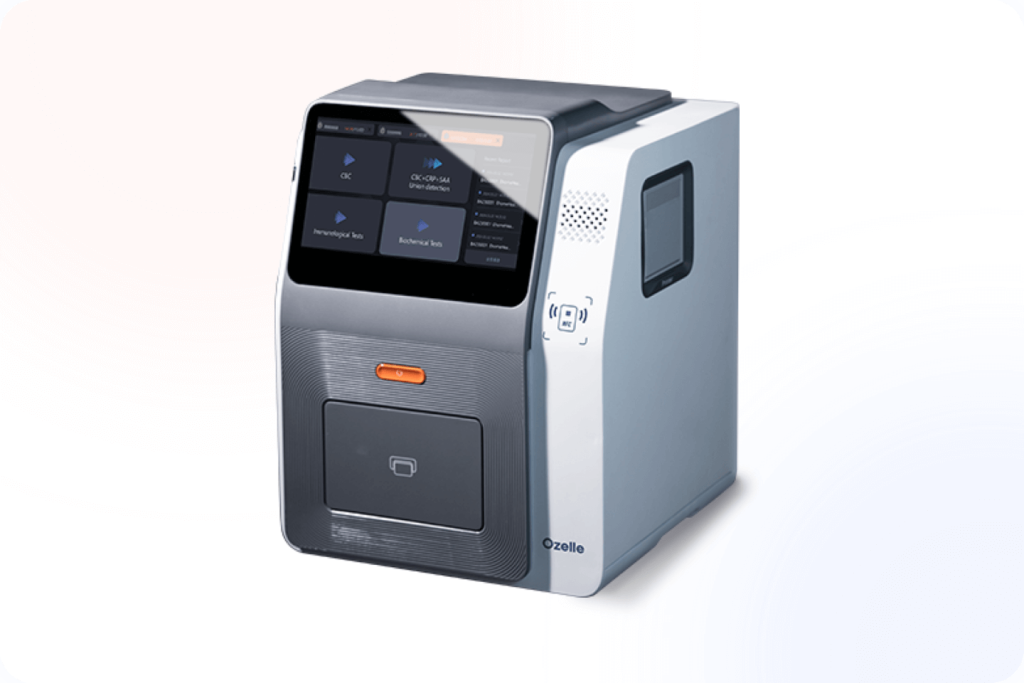
The EHBT-50 Minilab illustrates how CBC analysis can be combined with immunoassay and biochemistry within a single analyzer. It supports flexible configurations, allowing users to run CBC only, CBC plus immunoassay, or CBC with both immunoassay and biochemistry in one batch. The hematology channel delivers 7-part differential CBC with AI-powered cell morphology, and the system can process multiple sample types, including venous whole blood, capillary blood, serum, and plasma. This architecture enables laboratories to design panel-based testing strategies aligned with their most frequent clinical questions.
For facilities that frequently require inflammatory markers, cardiac markers, thyroid function tests, and basic biochemistry alongside CBC, a multi-functional analyzer can simplify sample handling and reduce the need for separate devices. The EHBT-50 uses single-use, integrated consumables to support maintenance-free operation, while on-demand panel selection helps control reagent consumption and avoid unnecessary tests. Its built-in quality control mechanisms, including dry-type QC cards and auto calibration, are designed to fit into established laboratory quality management systems. When laboratories plan to buy a cbc machine as part of a broader consolidation strategy, a multi-functional CBC analyzer that combines hematology with immunoassay and biochemistry is often evaluated alongside stand-alone CBC platforms.
EHBT-75: AI cell morphology CBC analyzer
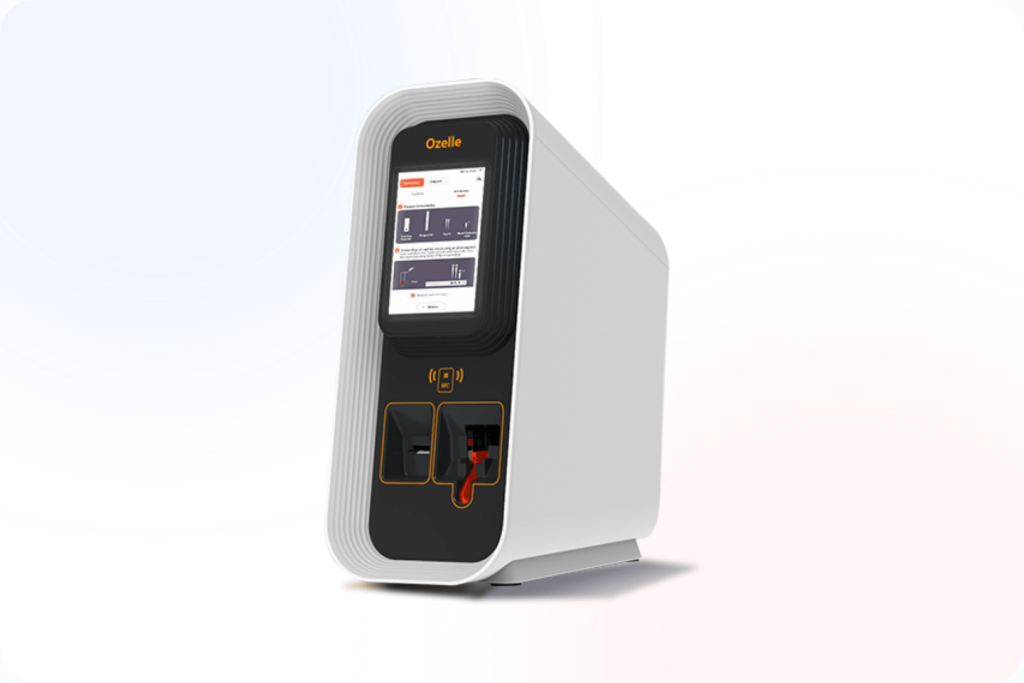
The EHBT-75 is a 7-diff auto hematology analyzer that focuses on AI-powered cell morphology analysis for human samples. It uses deep learning algorithms to identify and classify multiple cell types, including NST, NSG, NSH, ALY, PAg, and RET, and presents results with high-resolution images. A single-use cartridge design that can be stored at room temperature supports a maintenance-free operation model, while automated loading, staining, mixing, and counting reduce hands-on time. Liquid-based staining delivers richer color information, improving the visualization of subtle morphological changes.
Institutions that prioritize morphology-focused hematology workflows may incorporate an AI cell morphology hematology analyzer into their equipment portfolio, using high-resolution image data and AI-powered classification to complement existing immunoassay and biochemistry systems and to strengthen visual evidence for clinical decision-making.
Workflow, maintenance, and quality control
When institutions buy cbc machine, it is essential to examine the entire workflow from specimen collection to report delivery, rather than just analyzer specifications. Automated sample processing, including loading, mixing, staining, and counting, has direct implications for turnaround time, staffing requirements, and operator variability. In this context, Ozelle designs the EHBT series with single-use cartridges or individual test kits to reduce internal contamination risks and simplify daily maintenance routines.
Quality control strategies must also be aligned with institutional policies. Ozelle’s CBC analyzers use dry-type QC cards, auto calibration, and predefined QC procedures to support consistent performance over time and to facilitate integration into existing quality management systems. However, laboratories still need to evaluate how frequently QC runs are required, who will be responsible for monitoring them, and how QC data will be stored and reviewed. A device with strong automation capabilities but poorly integrated QC management may not deliver the anticipated efficiencies in real-world use.
Data connectivity and system integration
Modern CBC analyzers rarely operate in isolation; they are expected to exchange data with laboratory information systems and hospital information systems. Common connectivity options include USB ports, Ethernet interfaces, and WiFi, which allow instruments to be placed flexibly within laboratories while still transmitting results in real time. The EHBT-25, EHBT-50, and EHBT-75 support combinations of USB, LAN, and wireless connections, enabling integration into diverse IT environments.
In practice, connectivity requirements should be defined early in any plan to buy a cbc machine. Institutions need to confirm that communication protocols are compatible with their LIS/HIS, that cybersecurity policies are upheld, and that the middleware or interfaces used can handle error messages and QC data as well as routine results. Laboratories that anticipate growth in data analytics, research projects, or multi-site networking may prioritize analyzers that offer flexible connection options and robust data export capabilities.
Budget planning and price ranges
Budget planning for CBC equipment is best approached from a total cost of ownership perspective, taking into account analyzer investment, consumables, service, and staff time.
Instead of focusing on exact prices, institutions can position different analyzer types within approximate investment ranges and evaluate them against their expected sample volumes and test menus.
| Analyzer type | Typical use case | Relative investment band | Key cost drivers |
| Compact morphology-based CBC analyzer | Community clinics and primary care centers | Entry to mid level | Analyzer cost, CBC consumables, QC cards |
| Multi-functional CBC analyzer (CBC + immunoassay + biochemistry) | Specialized outpatient centers and small hospitals | Mid to upper-mid level | Multi-panel cartridges, service packages |
| AI cell morphology CBC analyzer | Laboratories with enhanced morphology needs | Mid to upper-mid level, with overlap versus multi-functional systems | Morphology cartridges, image data management |
Example configuration scenarios
To illustrate how different CBC analyzers can be combined, consider a community clinic that sees a steady but moderate patient volume. In this setting, a compact CBC analyzer with morphology imaging, such as a system similar to the EHBT-25, may be sufficient to support routine diagnosis and follow-up while keeping equipment and training demands manageable.
A small specialized center focusing on chronic disease management might instead benefit from a multi-functional CBC analyzer that offers integrated immunoassay and biochemistry panels, resembling the configuration of the EHBT-50 Minilab.
A small hospital laboratory that wants to strengthen morphological assessment without changing its existing immunoassay and biochemistry platforms could adopt an AI cell morphology CBC analyzer similar to the EHBT-75 alongside its existing analyzers.
| Scenario type | Typical patient volume | Key testing needs | Representative analyzer concept |
| Community or family clinic | Low to moderate | Routine CBC with basic morphology support | Compact morphology-based CBC analyzer, such as EHBT-25 |
| Specialized outpatient center | Moderate | CBC plus targeted immunoassay or biochemistry | Multi-functional CBC analyzer, such as EHBT-50 Minilab |
| Small hospital laboratory | Moderate | Morphology-focused hematology workflows | AI cell morphology CBC analyzer, such as EHBT-75 |
These scenarios are not prescriptive, but they highlight how different device architectures can be combined to address specific institutional needs.
When planning procurement, laboratories can use such patterns as starting points and then adjust for local guidelines, staffing, and IT capacity.
Building a context-aware buy cbc machine strategy
Choosing to buy CBC machine is a strategic decision that should align with clinical workflows, laboratory information systems, staffing capacity, and long-term service models. AI-assisted morphology, flexible testing panels, simplified maintenance design, and connectivity are becoming increasingly important purchasing considerations, especially for institutions that want to expand in-house diagnostics without adding unnecessary operational complexity.
Reflecting these trends, Ozelle structures its CBC portfolio to cover compact analyzers, multi-functional platforms, and morphology-focused systems so that institutions can configure equipment around their own test menus and operational constraints. By analyzing their patient profiles, test menus, and budget frameworks, hospitals and clinics can define whether a compact CBC analyzer, a multi-functional platform, an AI morphology-focused system, or a combination of these will best support their diagnostic strategies over the coming years.
For broader product-line context, related solutions can also be reviewed through the hematology diagnostics portfolio.