
 English
  Français
  Русский
  Español
  Deutsch
  Português
  العربية
  Italiano
Over the last two decades, CBC analyzers have moved from simple 3‑part impedance counters to 5‑part optical systems and, more recently, to 7‑differential, image‑based platforms with AI‑driven complete blood morphology. Traditional devices focused mainly on cell counts and basic indices, while modern analyzers such as Ozelle’s AI × CBM platforms integrate numerical CBC with digital morphology, transforming how laboratories generate and interpret hematology data.
For laboratories planning the next upgrade cycle, the key task is to decide where each level of technology fits: when a 3‑part analyzer is sufficient, when a 5 part CBC analyzer should become the new baseline, and when a 7‑diff, AI‑enhanced system adds clear value. Instead of viewing these options in isolation, it is more helpful to map them against the laboratory’s case mix, test volume, staffing, and budget, then choose the analyzer generation that best matches real clinical needs.
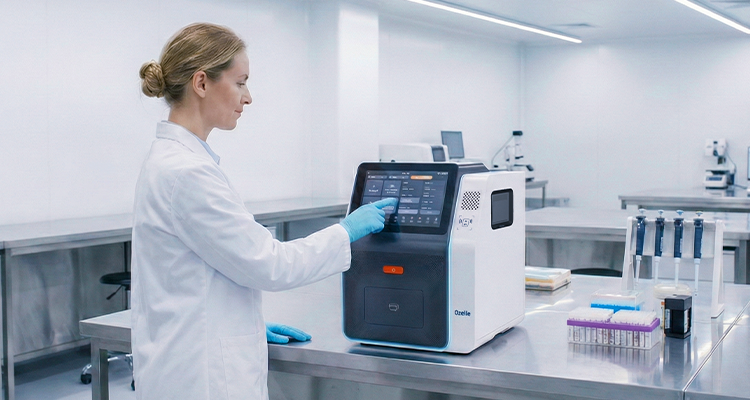
From 3‑Part Screening to Modern CBC: How Analyzers Started
The earliest widely adopted automated hematology analyzers used electrical impedance to count and size red blood cells and platelets and to generate a three‑part white blood cell differential. In a 3‑part CBC analyzer, leukocytes are separated into three broad categories: lymphocytes, a “mid‑cell” group (including monocytes and some eosinophils), and granulocytes.
This method allowed basic infection screening and anemia evaluation at scale, but it had clear limitations:
- Eosinophils and basophils are not reported as distinct populations.
- Many abnormal or borderline samples require manual smear review.
- Pattern recognition for complex hematology and oncology cases is poor.
As patient populations and clinical demands became more complex, laboratories increasingly needed more granular leukocyte differentials and better automated flagging, which led to the adoption of 5‑part technology.
5-Part CBC Analyzer: The New Baseline for Modern Labs
The 5 part CBC analyzer represents the current baseline standard for hospital and regional laboratory hematology. In addition to a full CBC, it provides a five‑subtype differential of white blood cells—neutrophils, lymphocytes, monocytes, eosinophils, and basophils—using a combination of impedance for RBC/PLT and optical or flow cytometric methods for WBC analysis.
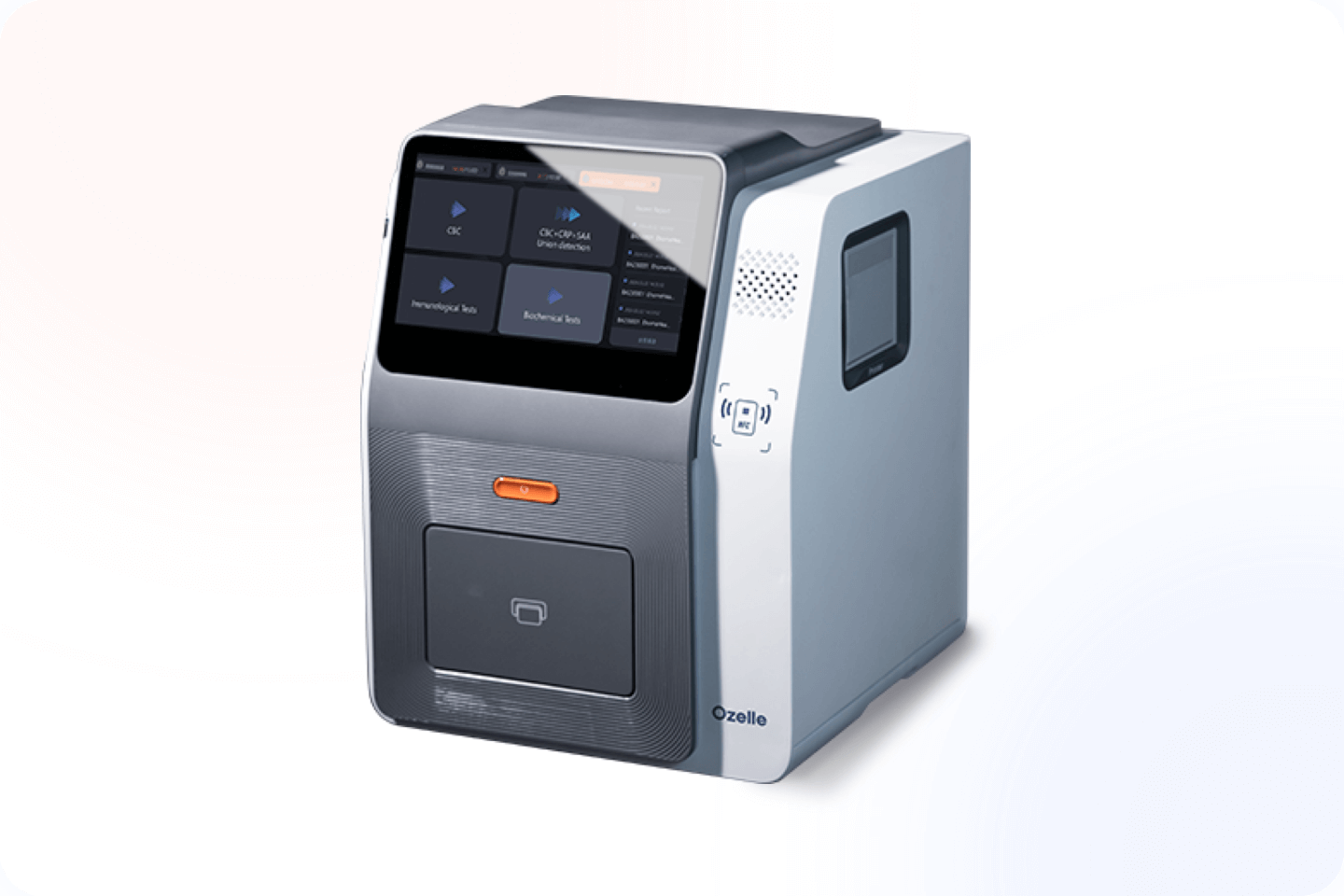
How a 5-Part CBC Analyzer Works
Most 5‑part analyzers draw a whole‑blood sample into separate analytical channels.
- In the red cell/platelet channel, electrical impedance is used: cells pass through an aperture, and changes in electrical resistance are translated into counts and size distributions.
- In the white cell channel, red cells are lysed, leukocytes are selectively prepared with reagents, and then pass through a flow cell where a laser and multiple detectors measure forward scatter, side scatter, and sometimes side fluorescence.
These scatter signatures correlate with cell volume, internal granularity, and nuclear properties, allowing the analyzer to classify events into neutrophil, lymphocyte, monocyte, eosinophil, and basophil clusters and to generate a five‑part differential. Software algorithms compare each event to reference clusters and apply decision rules to flag abnormalities or patterns that may require microscopic confirmation.
3‑Part vs 5‑Part: Technical Comparison
From a methods perspective, the step from 3‑part to 5‑part is not only about more WBC categories; it reflects a shift in how leukocytes are characterized.
| Dimension | 3‑part CBC analyzer | 5 part CBC analyzer |
| WBC differential | 3 broad groups (LYM, MID, GRAN). | 5 distinct subtypes (NEU, LYM, MON, EOS, BAS). |
| Core principle | Electrical impedance for all cell types, sometimes with basic optical thresholds. | Impedance for RBC/PLT plus multi‑angle optical scatter or flow cytometry for WBC. |
| Information depth | Limited granularity; EOS/BAS not separated, morphology largely inferred from counts. | Enhanced granularity and pattern recognition for infection, allergy, and hematology monitoring. |
| Manual smear demand | Higher, especially for flagged or borderline samples. | Lower, due to more robust differential and more specific flags. |
This is why 5‑part analyzers are now widely adopted as the default choice in hospitals and regional laboratories, while 3‑part devices are more often used as entry‑level solutions in low‑acuity settings.
7‑Diff and Image‑Based AI Morphology: Moving Beyond Counts
Even with advanced 5‑part optical and flow‑based analyzers, many laboratories still turn to manual smears and microscopes whenever they need deeper morphological insight or when complex flags appear. Five‑part systems remain excellent for high‑volume CBC counts and differentials, but clinics, hospitals, and independent labs that want faster, more standardized access to morphology, richer differential categories, and consolidated reporting are increasingly looking to 7‑diff, image‑based AI × CBM platforms as a natural next step.
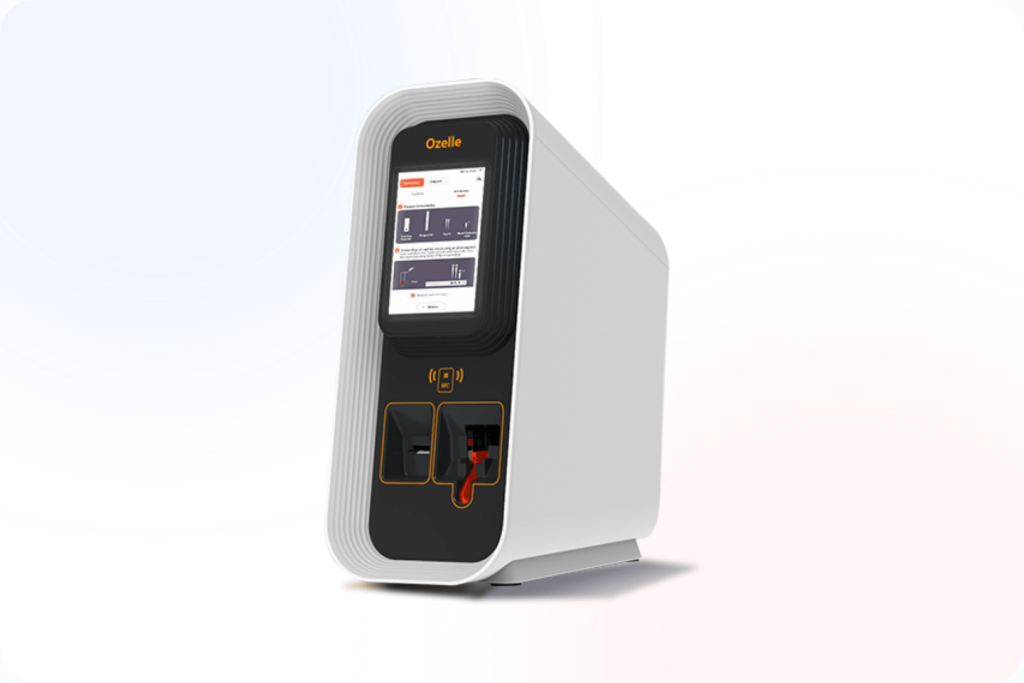
Ozelle’s answer to this demand is AI × CBM (AI × Complete Blood Morphology), a next‑generation approach that adds 7‑differential and high‑resolution image‑based morphology on top of conventional CBC. In this architecture, analyzers such as the EHBT‑50 and EHBT‑75 7‑diff auto hematology analyzer integrate:
- A full 7‑diff white blood cell classification, including immature and reactive populations (e.g., NST, NSG, NSH, ALY) in addition to standard NEU/LYM/MON/EOS/BAS.
- Image‑based cell morphology using digital microscopy and advanced optics to capture thousands of cell images per sample.
- Deep learning models trained on tens of millions of annotated blood cell images, enabling robust recognition of normal and pathological morphologies.
Ozelle’s EHBT‑75 7‑diff auto hematology analyzer combines AI with image‑based complete blood morphology (CBM) trained on this large‑scale dataset, significantly reducing the need for routine manual smear review while still preserving microscopic examination as an important tool for selected complex or rare cases.
Instead of outputting only numerical CBC values, an AI × CBM analyzer produces an integrated report that combines quantitative counts with rich morphological information, effectively delivering image-assisted morphology insights directly from the analyzer.
Traditional 5-Part vs Ozelle 7‑Diff AI × CBM
| Dimension | Conventional 5 part CBC analyzer | Ozelle 7‑diff AI × CBM analyzer (e.g., EHBT‑50 / EHBT‑75) |
| WBC differential | 5 subtypes (NEU, LYM, MON, EOS, BAS). | 7‑diff including immature and atypical cell populations (such as NST, NSG, NSH, ALY), plus extended flags. |
| Core methods | Impedance for RBC/PLT, optical scatter or flow cytometry for WBC. | CBC + 7‑diff counts plus high‑resolution image‑based cell morphology with AI × CBM. |
| Morphology | Limited; morphology still mainly manual on glass smears. | Automated, AI‑assisted morphology integrated into the analyzer workflow and report. |
| Clinical insight | Solid for routine infection and baseline hematology. | Deeper insight into abnormal and immature cells, sepsis risk, and complex hematology patterns. |
In other words, where a 5 part CBC analyzer is the modern standard for counts and basic differential, Ozelle’s 7‑diff AI × CBM systems push hematology into a “morphology‑native” era, making digital morphology accessible even outside large reference laboratories.
3‑Part vs 5‑Part vs 7‑Diff: Technology Evolution at a Glance
To understand where each analyzer generation fits, it helps to compare them side by side from a technology and use‑case perspective. The 5 part CBC analyzer remains the central reference point, but 3‑part and 7‑diff systems define the lower and upper ends of the spectrum.
| Feature | 3‑part CBC analyzer | 5 part CBC analyzer | 7‑diff AI × CBM analyzer (Ozelle) |
| WBC groups | 3 groups: LYM, MID, GRAN. | 5 subtypes: NEU, LYM, MON, EOS, BAS. | 7‑diff including immature and abnormal subsets (e.g., NST, NSG, NSH, ALY) plus flags. |
| Methods | Impedance, basic optical detection. | Impedance + optical/flow cytometry with laser scatter. | CBC + flow/optical + high‑resolution image‑based morphology with AI × CBM. |
| Morphology | Manual smear only. | Mostly manual smear, limited automated flags. | Integrated AI morphology, digital smear‑like insights. |
This progression explains why many institutions now view 3‑part analyzers as transitional technology and focus their next purchases on 5‑part or 7‑diff systems.
How to Choose: When 3‑Part, 5‑Part, or 7‑Diff Makes Sense
Although 3‑part analyzers still have a place in low‑volume, low‑acuity settings, most hospitals and diagnostic centers now standardize on at least a 5‑part differential. The decision is less about whether to reach 5‑part and more about whether to stop there or move straight to 7‑diff AI morphology.
When a 3‑Part Analyzer Is Still Acceptable
- Very small practices with low test volumes and minimal case complexity.
- Settings where eosinophil and basophil counts, and detailed leukocyte patterns, rarely influence management.
- Highly cost‑constrained environments where any analyzer is a step up from fully manual counts.
Why Most Labs Should Standardize on a 5 Part CBC Analyzer
For the majority of hospital laboratories and independent diagnostic centers, at least a 5 part CBC analyzer is now the recommended baseline because it:
- Provides full NEU/LYM/MON/EOS/BAS differentiation required for contemporary internal medicine, infectious disease, allergy, and oncology practice.
- Significantly reduces manual smear rates compared with 3‑part systems, which improves workflow and cost‑effectiveness.
- Aligns with standard expectations for routine hematology reporting across hospital departments.
When to Consider Upgrading Directly to 7‑Diff AI × CBM
Ozelle’s 7-diff AI × CBM analyzers are particularly relevant in laboratory settings where more consistent access to morphology information is needed alongside routine CBC testing. Typical scenarios include:
- Laboratories managing moderate to high case complexity, where morphological review is frequently required to support interpretation of abnormal or flagged results.
- Clinical environments with increasing demand for faster turnaround, where reliance on manual smear preparation may limit workflow efficiency.
- Settings with limited availability of experienced personnel for routine microscopy, creating variability in morphology interpretation across shifts or sites.
- Institutions aiming to integrate quantitative CBC data with image-based morphology insights within a single workflow, improving consistency of reporting.
In these contexts, moving beyond a conventional 5-part analyzer to a 7-diff AI × CBM system can help standardize morphology-related workflows, reduce manual smear burden, and provide additional image-supported information to assist clinical interpretation—while still preserving manual microscopy for selected complex cases.
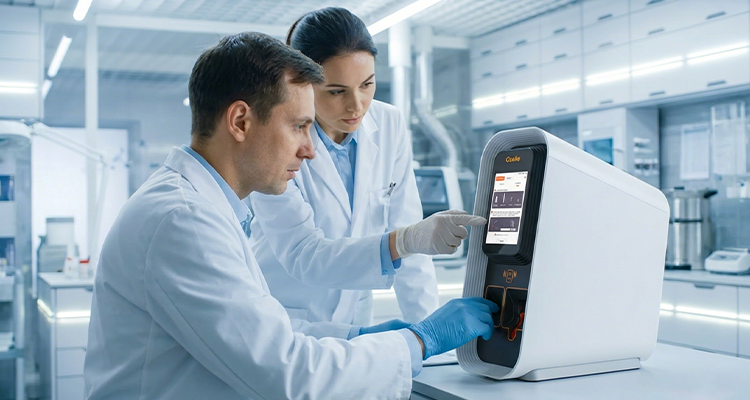
FAQs: 3‑Part, 5‑Part, and 7‑Diff CBC Analyzers
Why is a 5 part CBC analyzer considered the new baseline for modern labs?
Because it delivers a full five‑subtype leukocyte differential (NEU, LYM, MON, EOS, BAS), which is necessary for contemporary infection, allergy, and oncology practice, and it significantly reduces manual smear rates compared with 3‑part systems.
What can a 5‑part analyzer not do that a 7‑diff AI × CBM analyzer can?
A conventional 5‑part analyzer cannot provide high‑resolution morphology or robust automated recognition of immature and atypical cells; Ozelle’s 7‑diff AI × CBM platforms add image‑based morphology and a richer set of differential categories and flags.
Does adding 7‑diff and AI morphology replace the need for manual smears entirely?
AI × CBM greatly reduces reliance on manual smears by automating much of morphology review, but expert microscopic examination remains important for selected complex cases and for confirmation of rare entities.
If a lab currently uses a 3‑part analyzer, should it upgrade first to 5‑part or directly to 7‑diff?
The decision depends on case mix, budget, and staffing, but most hospitals should at least move to a 5 part CBC analyzer as a baseline; labs with high complexity, morphology‑heavy workloads, or limited smear capacity should strongly consider upgrading directly to a 7‑diff AI × CBM system.
How do Ozelle’s AI × CBM analyzers fit into existing hematology workflows?
They are designed as drop‑in hematology analyzers that produce standard CBC and differential parameters plus an integrated AI morphology layer, allowing labs to retain familiar CBC workflows while gaining image-assisted morphology insights from the same instrument.
How to Move Forward with Your Next CBC Analyzer
For laboratories planning an upgrade, a practical approach is to review current hematology volumes and case complexity, decide whether a 3‑part analyzer still makes sense or whether a 5 part CBC analyzer should be the new minimum, and then evaluate whether 7‑diff AI × CBM aligns with clinical needs for morphology, sepsis work‑ups, and oncology support; by comparing analytical performance, morphology capabilities, workflow impact, and long‑term cost of ownership across 3‑part, 5‑part, and Ozelle’s 7‑diff AI × CBM analyzers, labs can select a platform that not only meets today’s requirements but also positions them for the next wave of AI‑enabled hematology.
This progression explains why many institutions now view 3‑part analyzers as transitional technology and focus their next purchases on 5‑part or 7‑diff systems.
How to Choose: When 3‑Part, 5‑Part, or 7‑Diff Makes Sense
Although 3‑part analyzers still have a place in low‑volume, low‑acuity settings, most hospitals and diagnostic centers now standardize on at least a 5‑part differential. The decision is less about whether to reach 5‑part and more about whether to stop there or move straight to 7‑diff AI morphology.
When a 3‑Part Analyzer Is Still Acceptable
- Very small practices with low test volumes and minimal case complexity.
- Settings where eosinophil and basophil counts, and detailed leukocyte patterns, rarely influence management.
- Highly cost‑constrained environments where any analyzer is a step up from fully manual counts.
Why Most Labs Should Standardize on a 5 Part CBC Analyzer
For the majority of hospital laboratories and independent diagnostic centers, at least a 5 part CBC analyzer is now the recommended baseline because it:
- Provides full NEU/LYM/MON/EOS/BAS differentiation required for contemporary internal medicine, infectious disease, allergy, and oncology practice.
- Significantly reduces manual smear rates compared with 3‑part systems, which improves workflow and cost‑effectiveness.
- Aligns with standard expectations for routine hematology reporting across hospital departments.
When to Consider Upgrading Directly to 7‑Diff AI × CBM
Ozelle’s 7-diff AI × CBM analyzers are particularly relevant in laboratory settings where more consistent access to morphology information is needed alongside routine CBC testing. Typical scenarios include:
- Laboratories managing moderate to high case complexity, where morphological review is frequently required to support interpretation of abnormal or flagged results.
- Clinical environments with increasing demand for faster turnaround, where reliance on manual smear preparation may limit workflow efficiency.
- Settings with limited availability of experienced personnel for routine microscopy, creating variability in morphology interpretation across shifts or sites.
- Institutions aiming to integrate quantitative CBC data with image-based morphology insights within a single workflow, improving consistency of reporting.
In these contexts, moving beyond a conventional 5-part analyzer to a 7-diff AI × CBM system can help standardize morphology-related workflows, reduce manual smear burden, and provide additional image-supported information to assist clinical interpretation—while still preserving manual microscopy for selected complex cases.