
 English
  Français
  Русский
  Español
  Deutsch
  Português
  العربية
  Italiano
Diagnostics in Veterinary Medicine Are Shifting
For many veterinary hospitals, the in‑house laboratory still feels like a black box.
A sample goes in, numbers come out, and the burden falls on the clinician to reconcile CBC, CRP, and biochemistry panels into a coherent story—often under time pressure and with incomplete context.
When cases become complex, the response is usually “add more tests.” The diagnostic path becomes longer, more fragmented, and harder to communicate to pet owners.
Across the industry, three expectations are steadily rising:
- Pet owners want faster, clearer answers. They are less patient with long waits and vague explanations.
- Veterinarians want insights, not just numbers. A printout of values and reference ranges is no longer enough; they need actionable patterns.
- Hospital leaders focus on efficiency, standardization, and total cost. Every new device should improve workflow, not add complexity.
Ozelle’s view is simple: real progress in diagnostics is not about adding another analyzer. It is about turning each test run into a reliable source of clinical guidance, rather than a passive collection of values.
Ozelle: From Silicon Valley Lab to Digital Diagnostics Platform
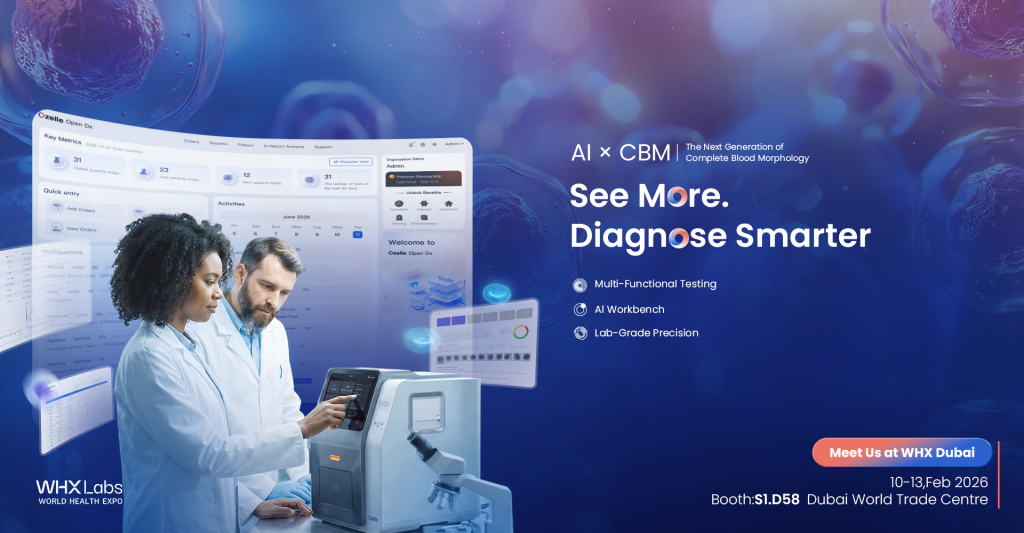
Ozelle began in 2014 as a laboratory team in Silicon Valley, USA, with a clear mission: apply AI and IoT technologies to modernize both human and veterinary diagnostic workflows.
In the years since, Ozelle has grown into a global digital diagnostics provider:
- 50,000+ units installed worldwide in medical and veterinary settings
- 50+Million Cell Images Generated Daily
- 100+ Billion Cell Data Points Accumulated
- AI Algorithms Validated by Real-World Data
- Industry-Exclusive Quality Control System
This foundation supports a broader objective:
to condense the capabilities of a traditional laboratory into an AI‑enabled Mini‑Lab that can sit inside any veterinary practice, giving clinicians near‑specialist‑level insight at the point of care.
Four Pain Points in Traditional Veterinary Lab Workflows
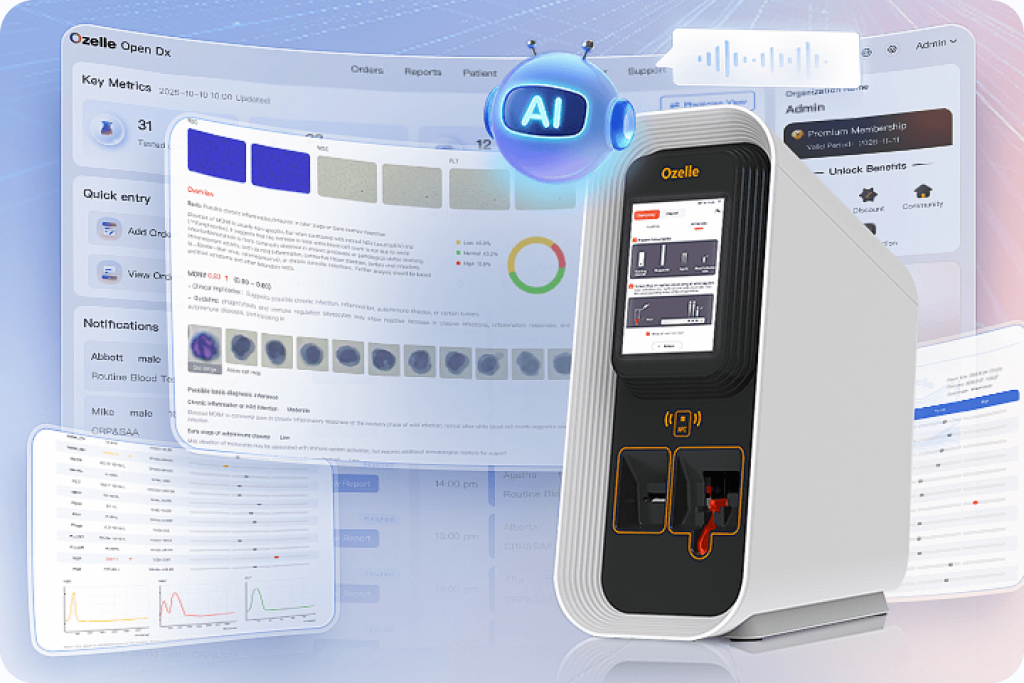
Many veterinary hospitals still operate under a “stack of devices” model. The result is functional, but rarely optimal. Common pain points include:
3.1 Multiple analyzers, multiple reagent systems
CBC, biochemistry, and immunoassays often run on separate instruments, each with its own reagents, calibration routines, and maintenance needs.
Clinicians must switch between several reports to understand a single patient, and critical relationships between parameters can be overlooked.
3.2 Heavy manual steps and limited standardization
Pipetting, dilution, loading, timing, recording—every manual step introduces variation.
Standardizing technique across shifts and staff is difficult, especially in busy hospitals or locations with high turnover.
Beyond variability, manual handling increases the risk of contamination and biohazard exposure.
3.3 Bio‑safety and maintenance burden
Open reagents, exposed waste, and daily cleaning routines require time and careful handling.
For small and mid‑size practices, the combination of space constraints, staffing limitations, and maintenance demands can cap how far their in‑house diagnostics can go.
3.4 Numbers without visualization or interpretation
Most printouts still present rows of values with reference ranges.
What is often missing:
- Cell morphology images
- Automated pattern recognition
- Clear interpretive comments that align with clinical questions
This leaves clinicians to manually connect lab data with clinical signs and imaging. It works—but it consumes valuable time and cognitive bandwidth.
If practices want to improve quality, efficiency, and client experience at the same time, the entire diagnostic workflow, not just individual instruments, needs to be reconsidered.
The AI Mini‑Lab: CBC, Morphology, Immunoassay, and Biochemistry in One System
To address these gaps, Ozelle has developed an AI‑enabled Mini‑Lab designed specifically for integrated, point‑of‑care diagnostics in veterinary settings.
In a single run, the Mini‑Lab can perform:
- Complete blood count (CBC)
- Peripheral blood smear morphology
- Key immunoassays (e.g., CRP, SAA, PCT, cardiac and inflammatory markers)
- Dry chemistry biochemistry tests (e.g., liver, kidney, lipids, glucose)
All of this is consolidated into a single disposable, sealed cartridge that:
- Handles sample pretreatment
- Manages reactions and detection
- Captures and contains all waste fluid
For the user, that translates into a straightforward experience:
- A small sample volume (e.g., 30–40 µL of whole blood)
- One loading step
- A comprehensive report in approximately 6 minutes
There is no need to manage multiple instrument platforms for routine blood work, and no need to align separate service contracts and calibration programs. The sealed‑cartridge approach also substantially reduces bio‑safety risk and day‑to‑day maintenance workload, which is particularly important in smaller facilities.
Three Core Clinical Benefits: Earlier Signals, Broader Perspective, Easier Execution
5.1 Earlier signals: CBC + Complete Blood Morphology (CBM)
Rather than treating CBC and blood smear review as separate tasks, Ozelle unifies them into Complete Blood Morphology (CBM)—CBC plus high‑quality digital blood film imaging.
Supported by an AI model trained on more than 40 million real clinical samples, the system identifies and flags:
- Red blood cell abnormalities (e.g., shape changes, fragmentation)
- White blood cell patterns and left shifts
- Platelet morphology and distribution
Instead of only noting “elevated white blood cells,” clinicians can directly review cell images and morphology flags. This helps detect inflammatory, immune, or bone‑marrow related issues at an earlier stage and provides stronger support for decisions on further testing or referrals.
5.2 Easier execution: Standardized workflow, visual reports, AI‑assisted comments
From sample loading through staining, imaging, and analysis, the process is fully automated. Key technologies include:
- A high‑precision mechanical arm with sub‑micron positioning accuracy
- Custom optical components for high‑resolution imaging
- High‑speed scanning with multi‑spectral pathways
- AI‑powered image enhancement and classification
The final report does more than list values. It includes:
- Histograms and scatter plots
- Representative cell images
- Morphology summaries
- Contextual interpretive statements aligned with literature and clinical patterns
Clinicians can spend less time mentally decoding raw data and more time focusing on clinical decisions and communication with pet owners.
Three Typical Use Cases in Veterinary Practice
6.1 Emergency and critical care triage
For patients presenting with acute vomiting, respiratory distress, suspected intoxication, or other emergencies, time‑to‑answer matters.
With a Mini‑Lab, an emergency clinician can obtain CBC + inflammatory markers + key biochemistry in a single run within minutes. This supports rapid decisions on:
- Admission vs discharge
- ICU vs general ward
- Need for imaging, surgery, or immediate stabilization
Fast, integrated data can be the difference between escalation at the right moment and a missed window of intervention.
6.2 Chronic disease management and follow‑up
Chronic kidney disease, congestive heart failure, endocrine disorders, diabetes, obesity-related conditions, and other metabolic diseases require sustained monitoring. In reality, frequent send‑out testing often leads to delays, low compliance, or both.
By offering consistent, point‑of‑care panels during each follow‑up visit, clinics can:
- Track trends in hematology, biochemistry, and inflammatory markers
- Support therapy adjustments based on timely data rather than delayed reports
- Visualize disease progression or stability for pet owners, improving adherence
When patients and owners can see concrete changes on each visit, long‑term management becomes more structured and transparent.
6.3 Multi‑site networks: main hospital, branches, and partners
In a network of branches or referring clinics, the Mini‑Lab can be installed at satellite locations as a standardized front‑line diagnostic node.
Samples are tested locally; results are shared digitally with the main hospital via Ozelle’s smart connectivity options. This helps:
- Ensure consistent test quality across sites
- Shorten time from presentation to preliminary assessment
- Enable specialists at the main site to make timely recommendations based on unified, structured reports
The result is a more coherent diagnostic journey for patients and a higher level of service across the entire network.
Inside the Technology: AI + CBM in Plain Language
Behind the Mini‑Lab’s user‑friendly interface lies a comprehensive technology stack.
7.1 Advanced optics and multi‑spectral imaging
Ozelle’s systems use:
- Custom‑designed optical lenses
- High‑resolution imaging sensors
- Multi‑spectral illumination and detection paths
In essence, this optical system is not merely a camera; it is a calibrated imaging pathway designed to convert a blood sample into a standardized, high-resolution digital dataset of cell images. This dataset provides the structured input required for the downstream AI engine, enabling consistent cell classification and morphology flagging within Ozelle’s Complete Blood Morphology (CBM) framework.
7.2 Deep learning recognition engine
On the analytical side, Ozelle’s AI engine is trained on over 50 million real blood cell samples, covering diverse pathologies and morphological variants.
A convolutional neural network (CNN) architecture:
- Classifies major cell types
- Detects morphological abnormalities
- Distinguishes subtle variations within the same class
An Auto‑ML framework supports ongoing optimization of the model as more data and cases are incorporated over time.
7.3 Smart IoT connectivity
Ozelle’s Mini‑Labs are designed to connect with hospital information systems (HIS) and laboratory information systems (LIS) via standard interfaces.
This enables:
- Automatic result upload to the electronic medical record
- Remote support and quality control
- Software updates and feature enhancements over the network
These capabilities pave the way for deeper integration with teleconsulting, centralized data analytics, and decision support tools in the future.
For clinicians, this complexity is hidden. What they see is a consistent user experience: simple loading, fast output, clear reports—and the confidence that every image and flag is backed by a large, continuously refined knowledge base.
Implementing an Ozelle Mini‑Lab in Your Veterinary Hospital
For practices considering an Ozelle Mini‑Lab, a structured rollout plan can maximize impact.
Step 1: Define initial use cases
Rather than deploying the system for “everything” on day one, identify a few high‑value, high‑frequency scenarios, such as:
- Baseline CBC + basic biochemistry for all hospitalized patients on admission
- Pre‑anesthetic panels that include CBC + inflammatory markers for surgical cases
Once staff and workflows adapt, indications can be expanded stepwise.
Step 2: Redesign workflows, not just add a device
Before installation, map out:
- Who collects and labels samples
- Who operates the instrument on each shift
- How results flow into the medical record
- When and how clinicians review reports with owners
- How lab results interact with imaging, internal medicine consults, and referrals
The goal is to let the Mini‑Lab become an integral part of clinical decision‑making, not an isolated testing station.
Step 3: Prepare clear client‑facing explanations
Train team members to explain the Mini‑Lab in simple terms, for example:
- It delivers a more complete and visual picture of the pet’s health within minutes.
- It helps the team identify issues earlier and avoid unnecessary delays or repeat visits.
Clear communication increases acceptance of recommended testing and builds trust in the clinic’s medical capabilities.
Step 4: Build a quality and education loop
Set up regular case reviews where clinicians and technicians:
- Review notable reports and cell images
- Compare AI‑assisted findings with clinical outcomes
- Discuss how lab data influenced decisions
This not only serves as internal quality assurance, but also as continuous education, steadily raising the team’s diagnostic confidence.
Who Will Define the Next Stage of Veterinary Diagnostics?
Diagnostic medicine is not about running more tests for their own sake.
Its purpose is to support better clinical decisions, clearer conversations with pet owners, and ultimately, better patient outcomes.
By consolidating CBC, morphology, immunoassays, and biochemistry into an AI‑driven Mini‑Lab, Ozelle aims to help veterinary teams move from reactively receiving fragmented data to proactively working with integrated insights at the point of care.
What this next stage of veterinary diagnostics looks like will be shaped jointly by technology providers and the clinicians who use these tools daily.
The question is no longer whether such capabilities exist, but how soon each hospital chooses to make them part of its standard of care.
Frequently Asked Questions (FAQ)
Q1. Is the Ozelle Mini‑Lab intended only for large referral hospitals?
No. The system is designed to fit both general practices and larger centers. Its compact footprint, sealed cartridge design, and automated workflow make it suitable for space‑ and staff‑constrained clinics, while the breadth of parameters and advanced morphology support the needs of specialists.
Q2. How difficult is it to train staff to use the Mini‑Lab?
Most day‑to‑day operations involve a few simple steps: loading the cartridge, inserting the sample, and starting the run. Training typically focuses on sample handling, basic troubleshooting, and understanding the structure of the reports, rather than complex manual procedures.
Q3. What about quality control and regulatory compliance?
Ozelle operates under certified quality management systems and holds relevant certifications such as ISO 9001 and ISO 13485 for the design, development, production, and service of its analyzers and related reagents.
Built‑in quality control procedures and standardized cartridges further support consistent performance in daily use.
Q4. Can the Mini‑Lab integrate with our existing HIS/LIS?
Yes. The platform supports common connectivity standards to transmit results directly into hospital and laboratory information systems, reducing transcription errors and ensuring lab data is available wherever clinicians review records.
Q5. Does AI replace the veterinarian’s judgment?
No. AI is used to standardize detection, highlight patterns, and provide visual and textual support. Final interpretation and clinical decision‑making remain with the veterinarian. The goal is to give clinicians better information in less time—not to automate medical judgment.
Q6. How does Ozelle handle ongoing updates and improvements?
Through its smart IoT platform, Ozelle can deliver software and algorithm updates over the network, enabling enhancements without hardware replacement.
As more data and feedback are collected, the system’s performance and feature set can continue to evolve.
Q7. What types of tests are available beyond CBC?
Depending on the configuration, the Mini‑Lab can support a broad panel of tests, including inflammatory markers (CRP, SAA, PCT), cardiac markers (e.g., NT‑proBNP, cTnI), kidney and liver function, thyroid hormones, vitamin D, and more.
This allows clinics to design panels that closely match their patient population and case mix.