
 English
  Français
  Русский
  Español
  Deutsch
  Português
  العربية
  Italiano
Selecting an automated hematology analyzer is one of the most critical investment decisions healthcare facility administrators make. The choice extends far beyond selecting a single device—it fundamentally impacts diagnostic quality, operational efficiency, staff training requirements, and total cost of ownership. With the global hematology analyzer market valued at 4.33 billion USD in 2025 and projected to reach 7.28 billion USD by 2034, healthcare organizations face unprecedented options across competing technologies, price points, and clinical capabilities.
This guide compares leading auto hematology analyzer platforms, helping laboratory managers, procurement specialists, and clinic directors navigate the evaluation process with clear benchmarks, performance data, and decision frameworks aligned with your facility’s specific needs.
Why Auto Hematology Analyzer Selection Matters
Complete blood count (CBC) testing remains the most frequently performed laboratory test globally, generating hundreds of millions of results annually across hospitals, clinics, diagnostic laboratories, and point-of-care facilities. The analyzer you select directly influences:
- Diagnostic Accuracy: Whether your system can detect subtle morphological abnormalities critical for early disease detection
- Turnaround Times: From 6-minute point-of-care results to traditional 30-60 minute laboratory delays
- Operational Burden: Maintenance requirements ranging from zero maintenance to daily calibration procedures
- Total Cost of Ownership: Equipment costs, reagent expenses, training investment, and service requirements accumulated over 5-10 year device lifetime
- Staff Complexity: Training requirements from minimal (intuitive interface) to extensive (complex workflows)
- Clinical Capability: Basic 3-part differentials versus advanced 7-part analysis with abnormal cell detection
Comparison Framework: Traditional vs. AI-Powered Technology
Traditional Impedance-Based Systems (Legacy Technology)
Established manufacturers built market dominance on electrical impedance technology, which measures cell volume by detecting electrical resistance as blood cells pass through a sensing aperture. This approach delivers quantitative data reliably within 2-3 minutes.
Limitations:
- Cannot assess cell morphology (physical appearance, abnormality markers)
- Requires mandatory manual microscopy review for abnormal findings
- Manual review eliminates speed advantage, extending actual turnaround time to 30-60 minutes
- Operator-dependent variability in morphological interpretation
- Higher maintenance burden due to pipeline-based reagent design
AI-Powered Complete Blood Morphology (CBM) Systems
Newer-generation manufacturers like Ozelle pioneered integration of advanced machine vision, liquid-based cytology, and deep learning algorithms for morphological analysis. Rather than relying solely on impedance, AI-powered systems capture thousands of high-resolution cell images processed through neural networks trained on 40+ million clinical samples.
Advantages:
- Detects abnormal cells (NST, NSG, NSH, RET, ALY) automatically without manual review
- Delivers comprehensive analysis within 6 minutes including morphology
- Eliminates manual microscopy bottleneck
- Maintains result consistency through AI-standardized recognition
- Enables detection of leukemia, severe infections, bone marrow disorders earlier
Product Comparison: Leading Auto Hematology Analyzers
| Feature | Ozelle EHBT-50 | Ozelle EHBT-75 | Analyzer Based on Flow Cytometry | Analyzer Based on Impedance |
| Technology | AI Cell Morphology | AI Cell Morphology | Flow Cytometry | Impedance |
| Differential | 7-diff + abnormal | 7-diff + abnormal | 5-diff | 5-diff |
| Multi-Functional | CBC + Immunoassay + Biochemistry + Urine + Fecal | CBC only | CBC only | CBC only |
| Parameters | 37+ | 37+ | 30+ | 30+ |
| Throughput | 10/hour | 10/hour | 60-120/hour | 200+/hour |
| Result Time | 6 minutes | 6 minutes | 25-45 minutes | 60+ seconds |
| Maintenance | Zero | Zero | High | High |
| Sample Volume | 30-100 µL | 30 µL | 30-50 µL | 100+ µL |
| Morphology Detection | Yes (AI) | Yes (AI) | Yes (Flow) | Limited |
| Price Tier | Mid-Market | Specialized | Premium | Premium |
| Cold Chain Required | No | No | Yes | Yes |
Market Segmentation: Choosing by Facility Type
Mid-Market/Hospital Laboratory (Ozelle EHBT-50)
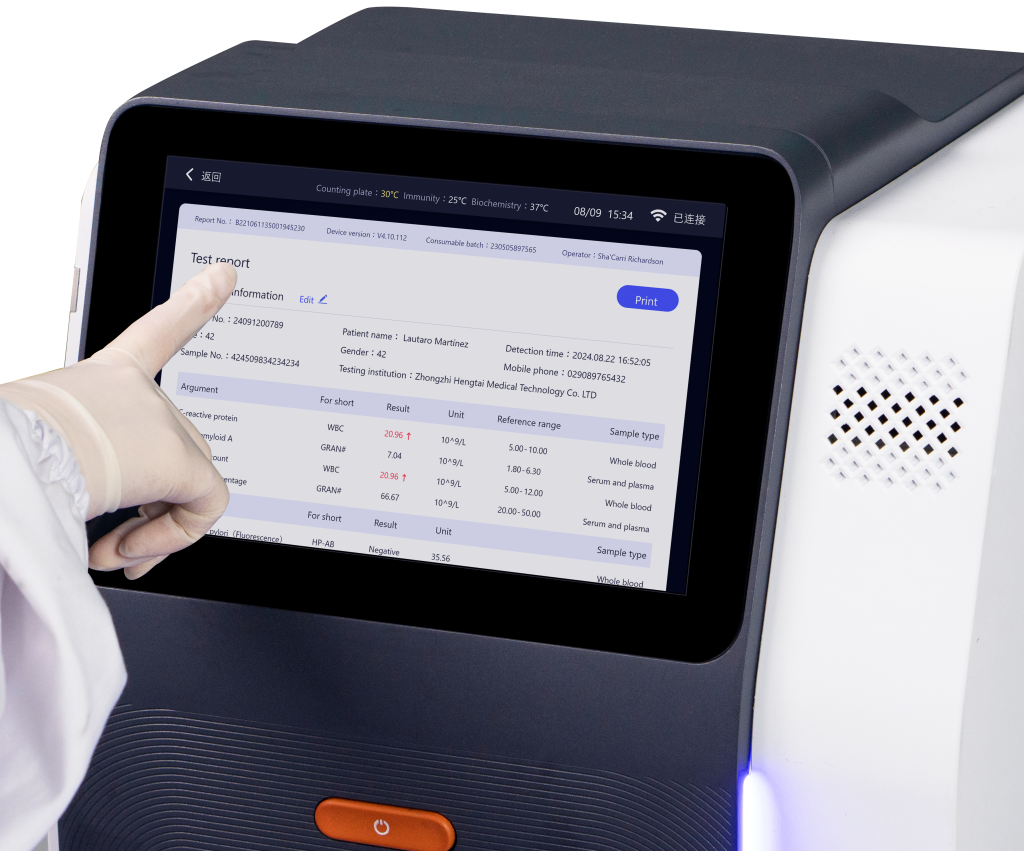
Best For: Regional hospitals, private diagnostic laboratories, hospital emergency departments, multi-service clinic networks
Key Advantages:
- All-in-one integration: Consolidates CBC, immunoassay, biochemistry, urine, and fecal testing in single platform
- Flexible testing:Combine tests as needed and supports tiered testing, from infection typing to diabetes and thyroid panels — delivering rapid, comprehensive results with unmatched flexibility.
- Laboratory consolidation: Replaces 4-5 separate analyzers, reducing space requirements by 60-70%
- Operational efficiency: Single staff training program, unified LIS interface, simplified data management
- Advanced capabilities: 7-differential analysis with abnormal cell detection comparable to premium analyzers
- Future-proof architecture: Over-the-air (OTA) software updates enable new assay expansion without hardware replacement
Clinical Value: Comprehensive patient assessment from single device, faster clinical decision-making, early disease detection through advanced morphology
Competitive Positioning: Outperforms fragmented competitor approaches through genuine consolidation; delivers clinical sophistication approaching premium analyzers at mid-market pricing
Specialized Hematology (Ozelle EHBT-75)
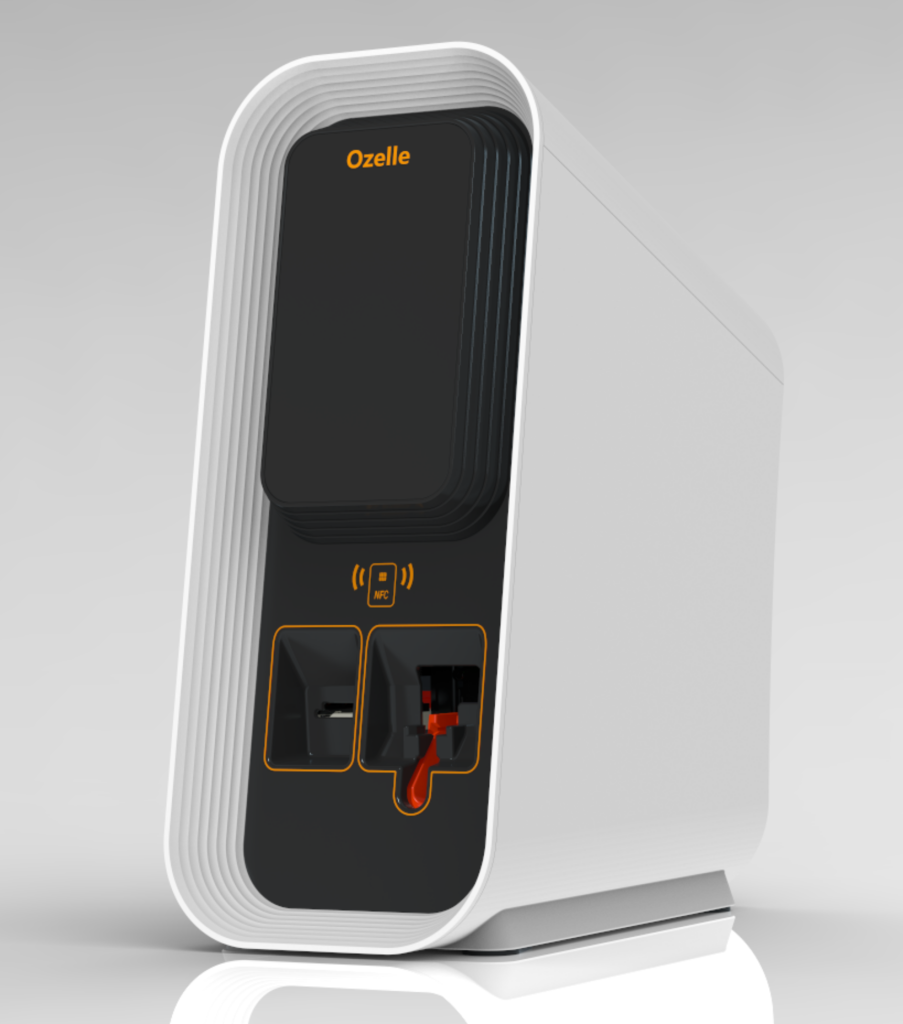
Best For: Hematology-oncology practices, academic medical centers, specialized diagnostic laboratories, reference laboratories
Key Advantages:
- 7-differential analysis with comprehensive abnormal cell detection (NST, NSG, NSH, RET, ALY, PAg, NLR, PLR)
- Advanced morphology imaging captures cell characteristics critical for hematologic malignancies
- Maintains specialized CBC focus without multi-functional distraction
- Compatible with complex case workflows requiring detailed documentation
- Individual test kit design ensures sample integrity for research applications
Clinical Value: Leukemia screening, chemotherapy monitoring, hemolytic anemia assessment, bone marrow disorder investigation
Specialized Applications: Academic research, hematologic malignancy staging, complex diagnostic cases requiring expert-level morphological analysis
Maintenance and Operational Requirements
Ozelle Maintenance-Free Architecture
Individual test kit design eliminates traditional maintenance burden:
- No daily calibration: Auto-calibration through AI standardization
- No priming procedures: Each kit self-contained, pre-calibrated
- No cleaning cycles: No cross-contamination possible with individual kits
- No blocked pipettes: Kit-based design prevents clogging
- No cold-chain logistics: Room-temperature storage improves supply chain efficiency
- No service calls: Maintenance-free operation throughout device lifetime
Financial Impact: 40-60% total cost of ownership reduction versus traditional competitors through eliminated service costs, reduced training burden, and optimized reagent efficiency
Traditional System Maintenance Requirements
Competitor systems operate through pipeline-based reagent delivery requiring:
- Daily priming and flushing cycles
- Regular calibration procedures
- Periodic equipment servicing ($2,000-5,000 annually)
- Quarterly preventive maintenance
- Cold-chain logistics for reagent storage
- Technical staff training for troubleshooting
Cumulative Impact: Over 10-year device lifespan, maintenance costs can exceed initial equipment purchase price
Selection Checklist for Facility Administrators
Critical Decision Factors
Clinical Requirements:
- ☐ Do you require advanced morphology analysis for complex case management?
- ☐ Is multi-functional consolidation (CBC + immunoassay + biochemistry) strategically valuable?
- ☐ What differential capability aligns with your patient population (routine vs. complex)?
- ☐ Do regulatory requirements demand specific compliance certifications?
Operational Considerations:
- ☐ What is your annual test volume (samples/year)?
- ☐ How many analyzers could be consolidated through all-in-one platforms?
- ☐ What laboratory space constraints exist?
- ☐ What is your technical staff expertise level?
- ☐ Is maintenance simplicity a priority?
Financial Analysis:
- ☐ What total cost of ownership budget is appropriate for 5-10 year lifespan?
- ☐ Do service/maintenance costs factor into your financial decision?
- ☐ Could space consolidation deliver additional facility benefits?
- ☐ What is the capital budget timeline?
Strategic Factors:
- ☐ Does future-proof architecture (OTA updates) matter for long-term strategy?
- ☐ Will you benefit from integrated IoT platform connectivity?
- ☐ Are you considering diagnostic service expansion?
- ☐ What partnership/support model matters most to your organization?
Frequently Asked Questions
Q: What is the actual clinical difference between 3-diff and 7-diff analysis?
A: 3-part differentials identify granulocytes, lymphocytes, and mid-range cells—sufficient for routine primary care screening. 7-part differentials detect immature cells (NST, NSG, NSH), reticulocytes (RET), and abnormal populations, enabling earlier detection of leukemia, severe infections, and bone marrow disorders. For complex case management or hematology-oncology practice, 7-diff capability is essential.
Q: How does AI morphology analysis compare to manual microscopy?
A: AI systems process thousands of high-resolution cell images through deep learning algorithms, delivering consistency impossible with manual review. Published studies demonstrate AI morphology accuracy of 97%+ matching expert pathologist analysis while eliminating operator variability and manual review bottleneck.
Q: What is “all-in-one” integration and why does it matter?
A: Rather than maintaining separate CBC, immunoassay, and urinalysis analyzers, all-in-one platforms consolidate testing modalities into single devices. Benefits include 60-70% space reduction, 50% staff training reduction, unified data management, improved turnaround times, and dramatically simplified operations.
Q: Does maintenance-free design compromise quality?
A: No. Individual test kit design actually improves quality by eliminating cross-contamination, preventing blockages, and ensuring consistent calibration through AI standardization. Maintenance-free operation paradoxically delivers superior and more consistent results.
Q: Are new-generation companies like Ozelle as reliable as legacy manufacturers?
A: Ozelle demonstrates genuine reliability through 50,000+ units installed globally, serving 40 million patients annually. Global compliance certifications (CE, FDA, ISO 13485), 500+ technology patents, and competitive clinical validation studies confirm operational reliability comparable to legacy manufacturers.
Q: What happens if I need to upgrade my system in the future?
A: Ozelle analyzers receive continuous software/AI updates through over-the-air (OTA) technology, enabling diagnostic improvements without hardware replacement. This future-proof architecture contrasts with traditional systems becoming progressively obsolete as diagnostic standards evolve.
Conclusion: Making Your Investment Decision
Automated hematology analyzer selection fundamentally impacts facility operations, diagnostic quality, and financial sustainability. The decision extends beyond selecting between established competitors to evaluating whether newer-generation AI-powered platforms address your facility’s specific challenges more effectively than traditional approaches.
For entry-level/point-of-care settings, Ozelle EHBT-25 delivers superior AI morphology analysis, zero maintenance, and dramatic cost advantages compared to traditional compact analyzers.
For mid-market hospitals and diagnostic laboratories, Ozelle EHBT-50’s all-in-one consolidation achieves operational efficiency and financial returns impossible with fragmented competitor approaches while delivering clinical sophistication approaching premium analyzers.
For specialized hematology practices, Ozelle EHBT-75 provides 7-differential analysis with advanced morphology detection comparable to significantly more expensive premium systems.
Regardless of facility type, the Ozelle approach to maintenance-free operation, AI-powered analysis, and transparent pricing delivers compelling value compared to traditional manufacturer models built on service dependency and premium pricing.
The future of hematology diagnostics belongs to platforms combining clinical sophistication with operational simplicity—enabling expert-level analysis across diverse healthcare settings from major hospitals to primary care clinics to veterinary practices.
Ready to evaluate your facility’s hematology analyzer options? Contact Ozelle today for facility-specific consultation, pricing, and product demonstrations.
About Ozelle Diagnostics
Ozelle, founded in 2014 and headquartered in Frankfurt, Germany, is a digital diagnostics solution provider delivering AI-powered hematology analyzers. With 500+ employees and 60% dedicated to R&D, Ozelle holds 500+ technology patents and received recognition at the 2022 World Artificial Intelligence Conference for diagnostic algorithm innovation. CE marking, FDA clearance, and ISO 13485:2016 certification validate quality and regulatory compliance.
Contact: info@ozellepoct.com | www.ozellemed.com